

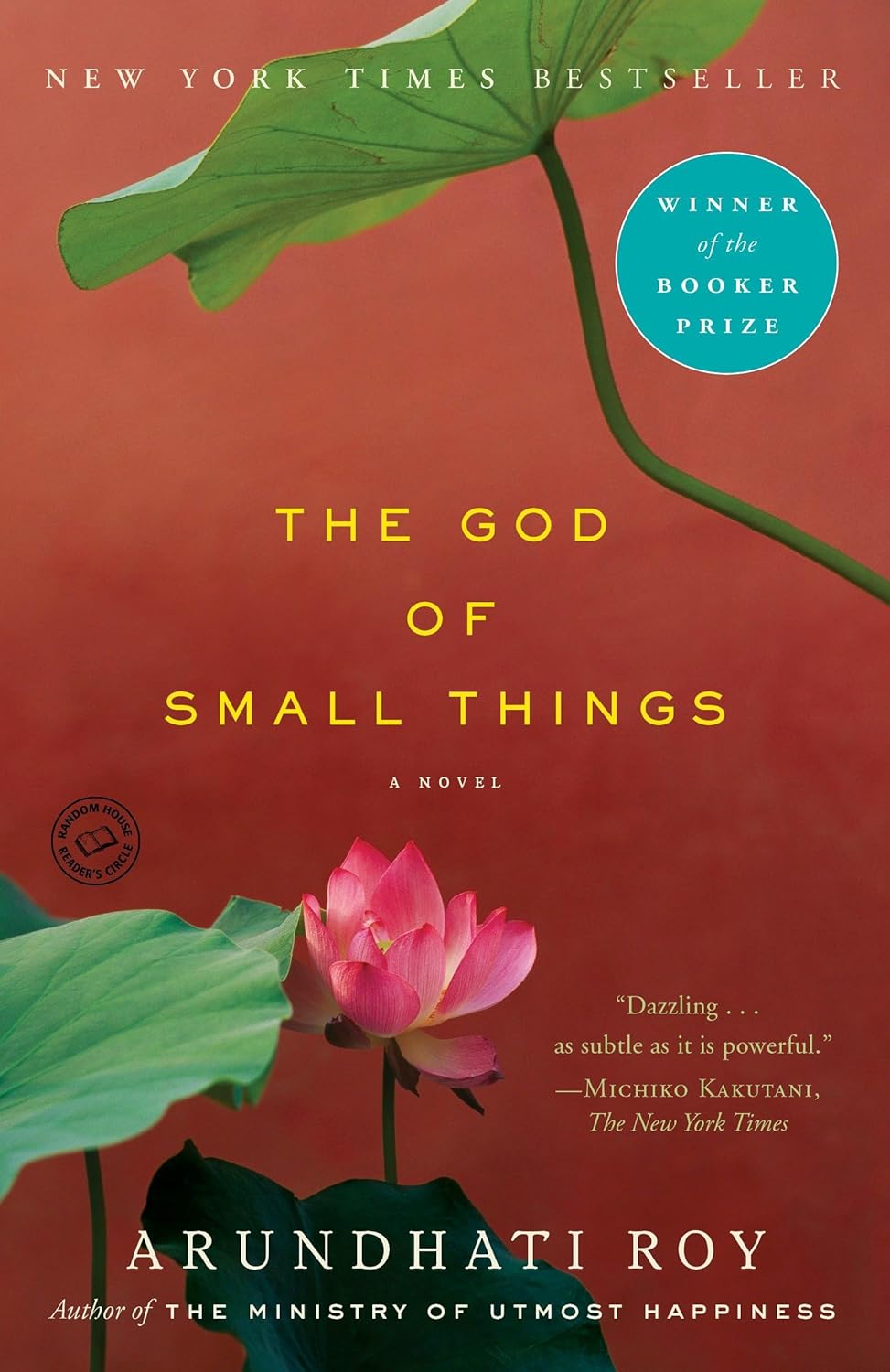
About The God of Small Things by Arundhati Roy: A Powerful Story of Love, Family and Loss
Some stories entertain you for a few hours. Other stories enter your heart, stay in your mind and change how you look at life. The God of Small Things by Arundhati Roy belongs to the second group. It is a rich, emotional and beautifully written novel about a family living in Kerala, India. At the centre of the story are Estha and Rahel, twins whose childhood is changed forever by one painful event.
The story moves between their childhood and adult lives. Little by little, it reveals what happened to their family and why the twins were separated. This unusual structure creates mystery, even though the book is not a normal crime novel. You may learn that something terrible happened before you understand how or why it happened. Each new memory then adds another piece to the larger picture.
Arundhati Roy writes about love, childhood, family rules, caste, social class, politics and the lasting effects of trauma. She also shows how very small choices can lead to very large results. The novel won the Booker Prize in 1997 and became internationally celebrated for its poetic voice and powerful portrait of Estha and Rahel’s world.
A Family Story Built Around One Life-Changing Event
The novel takes readers to Ayemenem, a green and rain-filled place in Kerala. Estha and Rahel live there with their mother, Ammu, and other members of the Ipe family. Their home is full of love, anger, old memories, family pride and hidden pain. The adults have their own dreams and disappointments, but the children do not fully understand them.
Ammu is a divorced mother living in a society that gives her little freedom. She loves her children, yet she also feels trapped by the rules around her. Chacko, the twins’ uncle, returns from England with his former wife and their daughter, Sophie Mol. The family becomes excited about Sophie’s visit, but her arrival also starts a chain of events that will affect everyone.
Velutha, a skilled carpenter who works for the family, has a special bond with the twins. He is kind, playful and able to understand their small world. However, he belongs to a caste that society treats as lower. When Ammu and Velutha become close, they cross a boundary that their community refuses to accept.
The novel slowly shows how love, fear, lies and unfair social rules bring the family towards tragedy. It is painful, but it is also deeply human.
When Ordinary Stories Feel Too Simple
Many novels tell their stories in a straight line. They introduce the characters, show a problem and move towards an ending. That structure is easy to follow, but it does not always show how memory truly works.
People do not remember painful events in a neat order. A smell, sound, room or word can suddenly bring the past back. The God of Small Things uses this idea to tell its story. It moves between different times, allowing readers to see both the event and the damage it left behind.
At first, this style may require extra attention. Names, family relationships and time changes can feel difficult. However, the book rewards patient readers. Details that appear small in an early chapter often become important later. A repeated phrase may reveal fear. A simple object may carry a painful memory. A childhood joke may gain a darker meaning when the full truth becomes clear.
This structure solves a common problem for readers who want more than a simple plot. Instead of only telling you what happened, the novel helps you feel how the past continues to live inside people. It turns reading into an act of discovery.
See the World Through the Eyes of Children
One of the greatest strengths of The God of Small Things by Arundhati Roy is the way it shows adult life through children’s eyes. Estha and Rahel notice sounds, colours, shapes and strange words. They play with language and misunderstand things that adults believe are clear.
Their view can be funny, sweet or innocent. It can also be frightening. The children often sense danger before they understand its true meaning. They know when an adult is angry. They notice when love is given to one person and taken away from another. They remember words that adults say without thinking.
Arundhati Roy changes spelling, repeats sounds and joins words together to show how young minds hear language. This gives the novel a voice that feels different from most family stories. Readers do not simply watch Estha and Rahel from the outside. They enter the twins’ private world.
This childlike view also makes the painful parts stronger. Adults may hide cruelty behind polite words, social rules or family honour. The twins see the effect of that cruelty, even when they cannot explain it. Through them, the novel shows how children may carry the weight of adult choices for many years.
Love That Challenges the Rules
Love is everywhere in this novel, but it is rarely simple. There is love between a mother and her children, love between a brother and sister, romantic love, forbidden love and love mixed with fear. Some characters give love freely. Others use it as a reward or threat.
Ammu and Velutha’s relationship stands at the emotional heart of the book. Their love crosses lines of caste and social position. In a fair world, two adults choosing each other would not be treated like a crime. In their world, the relationship puts both of them in danger.
The novel often returns to the idea of “Love Laws”—the unwritten rules that decide who should be loved and how much. These rules harm people because they place family honour, caste and public opinion above human feeling.
The book also asks difficult questions. Can love protect someone from an unfair society? What happens when fear becomes stronger than truth? Why are some people allowed freedoms that others are denied? There are no easy answers.
Readers who enjoy emotional books about forbidden relationships will find much to think about here. Yet this is not a light romance. It is a tragic literary novel showing both the beauty of love and the terrible cost of controlling it.
A Strong Portrait of Kerala and Its Society
The setting is not only a background. Kerala feels alive throughout the story. Readers encounter rain, heat, insects, plants, river water, old houses, roads and the family’s pickle factory. These details create a world that can feel beautiful and heavy at the same time.
The book also explores the social and political life of Kerala. Caste affects how people are treated. Class decides who has power. Gender rules limit women in ways that men often escape. Colonial influence appears in the family’s ideas about English culture, education and social value. Local Communist politics also forms part of the wider setting.
These subjects could feel like a history lesson, but Roy connects them to individual lives. Social systems are shown through the choices people can or cannot make. Caste is not only an idea; it shapes Velutha’s safety and future. Gender inequality is not only a public issue; it controls Ammu’s place inside her own family.
This makes the novel useful for readers interested in South Asian literature, postcolonial fiction, social history and family drama. It presents a specific place and period while exploring feelings that readers from many cultures can recognise: love, shame, jealousy, grief, loneliness and the wish to belong.
Beautiful Writing That Makes Small Details Matter
Arundhati Roy’s writing is one of the main reasons this book has remained memorable. Her prose is poetic, playful and full of images. She notices tiny details that another writer might ignore and then gives those details emotional weight.
The title points towards this method. Large forces such as history, caste, politics and death shape the characters’ lives. However, their world is also formed by small things: a look, a sound, a toy, a sentence, a promise or a moment of fear.
The language sometimes follows a child’s mind rather than normal grammar. Words may be repeated, broken or rearranged. This is not careless writing. It helps readers experience the way Estha and Rahel understand the world.
Because the prose is rich, this may not be the best book for someone looking for a quick action story. It is a slow, thoughtful read. Some pages invite you to stop and consider what a phrase means. The emotional effect grows through repeated images and memories.
For readers who enjoy literary style, this is a major benefit. The book offers more than a plot. It offers language worth noticing, scenes worth remembering and ideas that may become clearer after the final page.
What You Receive from This Reading Experience
The God of Small Things is a good choice when you want a book with emotional depth. It encourages you to look closely at family behaviour and question rules that people accept without thinking.
The novel can help readers understand how childhood trauma may continue into adult life. Estha and Rahel grow older, but the past remains part of them. Their silence, distance and loneliness show that painful events do not disappear simply because many years have passed.
It also builds awareness of social injustice. Through Velutha and Ammu, readers see how caste, gender and family power can control private life. The story does not present these issues as dry facts. It shows their human cost.
Another benefit is the book’s value for discussion. Different readers may understand the characters in different ways. One person may focus on the twins. Another may be drawn to Ammu’s struggle. Someone else may want to discuss caste, politics, language or the novel’s movement through time.
Most importantly, the book reminds us that small acts matter. A careless word can hurt someone. A lie can destroy a life. A kind moment can remain in memory for years.
Who Should Read This Book?
This novel is ideal for readers who enjoy literary fiction, family stories, historical settings and emotionally complex characters. Fans of South Asian writing will find a detailed picture of Kerala shaped by culture, caste, religion, politics and family tradition.
Book clubs can use it for deep conversations about social class, forbidden love, childhood, memory and moral responsibility. The unusual timeline also creates useful discussion about how a story’s structure changes its emotional effect. Official and independent reading guides frequently centre discussion on the nonlinear narrative, setting, social rules and the novel’s “Love Laws.”
Students of literature may enjoy studying Roy’s imagery, repeated phrases, symbols and child-centred language. Teachers may use the novel when exploring postcolonial writing, Indian English literature or stories about power and inequality.
The book is better suited to mature readers because it includes death, abuse, discrimination, sexual content and other disturbing experiences. Sensitive readers should know that this is not a cheerful family tale.
Choose it when you want a book to read slowly, mark with notes and think about after finishing. It is also a meaningful gift for someone who values award-winning fiction and writing that takes creative risks.
Premium Quality for Comfortable Reading
A powerful story deserves a physical edition that feels comfortable in your hands. Bookish Wonderland offers this printed book with features selected for regular reading and long-term shelf life.
- Premium eye-soothing cream paper: The soft cream colour reduces the harsh brightness often caused by very white pages. It supports more comfortable reading during long sessions.
- Crystal-clear print: Sharp letters make the text easy to see. This is especially useful in a novel where every sentence and small detail can matter.
- High-quality stitched and glue binding: The combined binding is made for improved strength and longevity. It helps keep the pages secure during repeated reading.
These features work together without unnecessary decoration. The cream paper supports comfort, the clean print improves readability and the durable binding helps protect the book over time.
This edition is suitable for personal reading, gifting, book-club use or adding to a home collection. If you have been checking The God of Small Things by Arundhati Roy price in Bangladesh, Bookish Wonderland gives you a convenient way to order a premium, readable copy without searching through many stores.
A Book That Rewards Slow and Careful Reading
You do not need to rush through this novel. In fact, reading slowly can make the experience better. Take time to understand the Ipe family and notice when the story moves between childhood and adulthood.
If the first chapters feel confusing, continue reading. The novel gives answers in pieces. You are meant to build the full picture over time. Remembering the main characters—Estha, Rahel, Ammu, Velutha, Sophie Mol, Chacko and Baby Kochamma—can make the early pages easier.
Some readers may choose to reread important passages. That is useful because repeated words and images often carry hidden meaning. Once you know more about the family’s tragedy, earlier scenes can feel completely different.
This book also works well as a shared reading choice. A friend or book-club member may notice a symbol that you missed. Talking about the characters can reveal how fear, social pressure and personal bitterness influence their choices.
The reward is not a simple happy ending. The reward is a deeper understanding of the characters, the social forces surrounding them and the many small moments that shape a life.
Why Order from Bookish Wonderland?
Bookish Wonderland makes it easier for readers across the country to find premium and durable English books. You do not have to depend only on local availability or travel from one shop to another.
Customers receive nationwide delivery across Bangladesh, including addresses inside and outside Dhaka. Cash on Delivery is available across the country, allowing eligible customers to pay when the order arrives. Readers in Dhaka may also request a fast or urgent delivery option when the book is needed quickly.
Quality is an important part of the experience. The premium cream paper, clear printing and strong stitched-and-glue binding make this edition suitable for reading, collecting and gifting. Careful production also helps the book remain usable through repeated page-turning.
Whether you are building a literary fiction collection, preparing for a book-club meeting or searching for a thoughtful gift, Bookish Wonderland offers a simple ordering process and reader-friendly service.
Order The God of Small Things by Arundhati Roy from Bookish Wonderland and experience a Booker Prize-winning novel in a comfortable premium edition. Enjoy nationwide delivery, Cash on Delivery and fast-delivery options in Dhaka. Add this important work of modern literary fiction to your shelf today.
If you require any customization or have any questions, please inbox us via FB or Insta.
| Primary Specification | |
| Author | Arundhati Roy |
| Narrator | Sneha Mathan |
| Editor | Victoria Wong |
| Genre | Literary Fiction, Historical Fiction, Family Saga, Coming-of-Age Fiction, Psychological Fiction |
| ISBN-13/ISSN | 978-0812979657 |
| ISBN-10 | 0812979656 |
| Publisher | Random House Trade Paperbacks |
| Publishing Date | December 16, 2008 |
| Language | English |
| Reading Age | 18+ years |
| Format | Printed book |
| Physical Specification & Quality | |
| Paper Quality | Premium eye-soothing cream paper |
| Binding Quality | High quality stitched and glue binding (for longevity) |
| Print Quality | Crystal-clear print |
| Pages | 333 pages |
| Country | India |
| Logistics Information | |
| Weight | 354 gm |
| Length | 8.5 inches |
| Width | 5.6 inches |
| Height | 0.75 inch |