

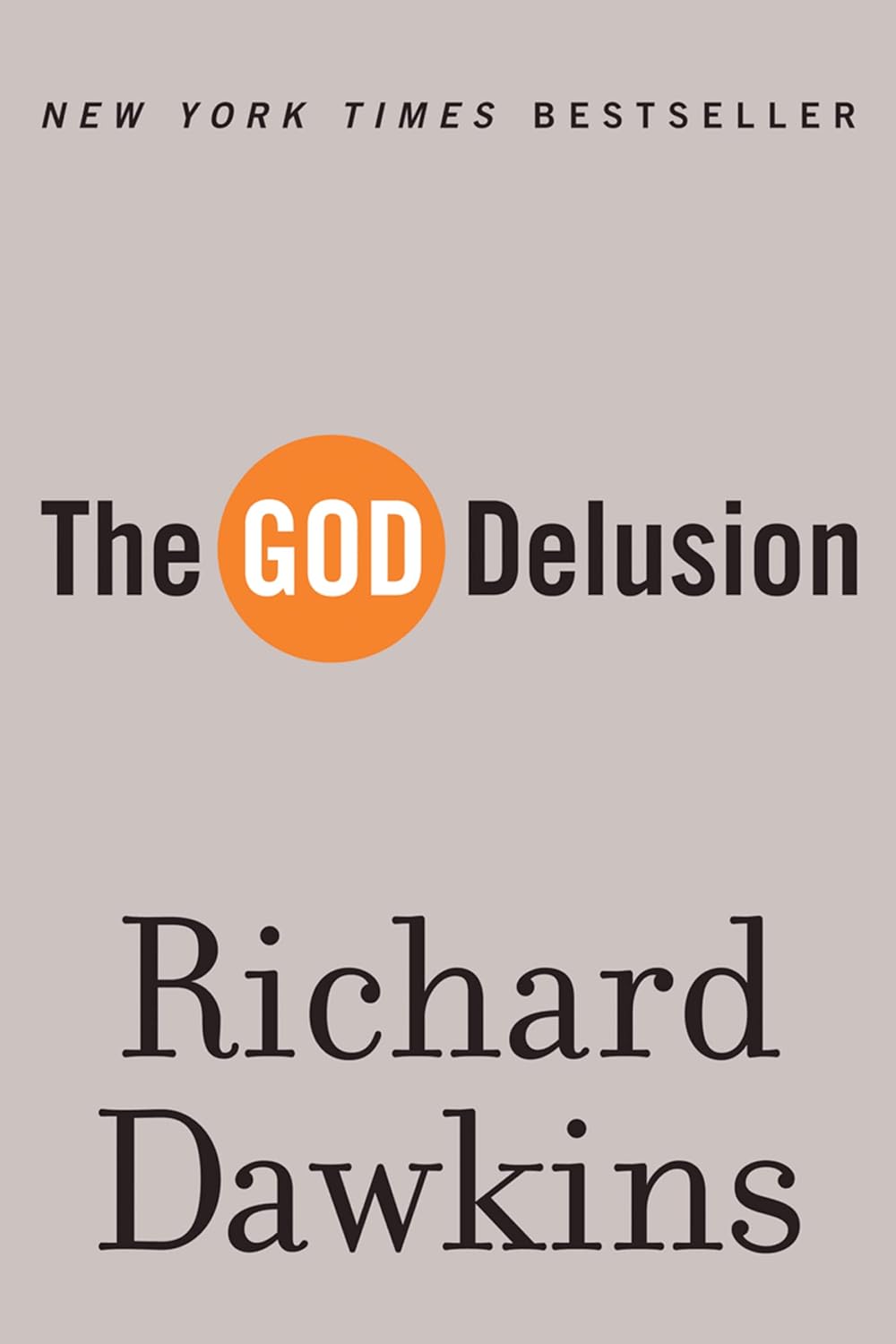
About The God Delusion Book by Richard Dawkins: A Bold Guide to Faith, Science, and Reason
What if some of the biggest ideas you learned as a child were open to questions? What if you could look at faith, God, life, and right and wrong through the eyes of science? The God Delusion Book by Richard Dawkins asks readers to do exactly that. It is a nonfiction book about belief, doubt, evidence, evolution, and the human mind.
Richard Dawkins is a well-known scientist and writer. In this book, he argues that people do not need belief in a supernatural creator to understand nature, live a moral life, or feel wonder. He explains his ideas with examples from biology, history, culture, and life. His voice is clear, direct, and often challenging. Readers may agree with him, disagree with him, or feel unsure. That is part of the value of this book: it pushes the mind to wake up and examine ideas instead of accepting them without thought.
This is not a quiet or neutral book. It takes a strong atheist position and questions many religious claims. For that reason, it is best for mature readers who can approach hard topics with patience and respect. Whether you are curious about atheism, studying religion, learning about evolution, or trying to understand a famous modern debate, this book gives you much to think about long after the final page.
When Big Questions Need Clear Discussion
Many people carry questions but do not know where to begin. Does the order in nature prove that someone designed it? Can people be good without religion? Why do beliefs pass from parents to children? Is faith the same as evidence? Can science answer every question? These subjects can feel too large, too emotional, or too hard to discuss.
The God Delusion offers one clear point of view. Dawkins breaks large questions into smaller arguments and uses comparisons, scientific ideas, and examples to explain his case. He does not ask readers to stay comfortable. He asks them to test claims, look for proof, notice weak reasoning, and decide whether an idea deserves belief.
The book will not settle every debate for every reader. No single book could do that. Its value is that it gives the discussion a strong starting point. You can read it beside books written by religious thinkers, philosophers, historians, and other scientists. This helps you compare views and build your own informed opinion. Instead of avoiding difficult questions, you gain words and ideas that help you face them.
What This Book Is Really About
At the heart of the book is what Dawkins calls the God idea: the claim that a supernatural, intelligent being made the universe. He asks whether this claim should be treated as true without strong evidence. He then looks at common reasons people give for belief and explains why he finds them unconvincing.
One major topic is the appearance of design in nature. Eyes, wings, flowers, brains, and living cells can seem too complex to exist without a designer. Dawkins uses evolution by natural selection to show how complex life can grow through small changes over a very long time. For him, evolution does not remove wonder from nature. It makes nature even more amazing because simple processes can lead to rich and complex life.
The book also explores morality. Some people fear that without religion there would be no clear reason to be kind or fair. Dawkins argues that human goodness can grow from empathy, social life, shared needs, and our history as a species. He discusses why people may help one another even when there is no reward from heaven or fear of punishment.
Another part looks at how religion spreads and remains strong. Dawkins considers family teaching, culture, childhood trust, group identity, and the way ideas can copy themselves from mind to mind. He questions whether children should be given a religious label before they are old enough to study different views and choose for themselves.
He also asks whether religion is needed for comfort, meaning, and wonder. His answer is no. He presents science, love, art, friendship, nature, and the search for truth as powerful sources of purpose. The final effect is not meant to be cold. Dawkins wants readers to see a natural world that is vast, strange, beautiful, and worth exploring without a supernatural answer.
A Book That Makes You an Active Reader
This is not the kind of book you simply finish and forget. It asks you to pause, question, and respond. You may underline a strong point, write a question beside a claim, or search for a reply from another writer. That active reading can make the book useful even when you disagree with its main message.
The strongest reading experience comes from keeping an open but careful mind. Ask what evidence Dawkins gives. Notice where he moves from science into philosophy. Think about whether his examples support his larger claims. Compare his view of religion with your own experience. Also notice his tone. Some readers enjoy his confidence and sharp humor, while others find parts of the book too harsh. Knowing this before buying helps you choose the book for the right reason.
You do not need advanced science training to follow the main ideas. Dawkins explains natural selection and related points for general readers. Still, the subject is serious. A slow reading pace can help. Reading one chapter at a time, making notes, and discussing it with someone who holds a different view can turn the book into a much richer learning experience.
What You Gain from Reading It
First, you gain a clearer picture of modern atheism. Many people think atheism means anger, emptiness, or a lack of moral care. Dawkins presents it as a view built on evidence, natural explanations, and freedom from supernatural belief. Readers can then judge that view based on a full argument rather than a simple label.
Second, the book can improve critical thinking. It encourages you to ask who is making a claim, what proof supports it, whether another explanation exists, and why an idea feels convincing. These habits are useful far beyond religion. They help when reading news, watching videos, hearing sales claims, or judging popular opinions.
Third, it gives a readable entry into evolution and natural selection. This is not a complete biology textbook, but Dawkins uses his knowledge of evolution to explain why nature may look planned even when it grew through natural steps. Readers interested in science can use this book as a bridge to his other works on evolution.
Fourth, it helps readers understand a major cultural debate. Religion and nonbelief shape education, family life, politics, art, law, and personal identity. Learning how one influential writer argues against religion can make you better prepared for calm, informed conversation.
Finally, the book may help you understand your own beliefs. Agreement is not required. A religious reader may finish with stronger questions or clearer reasons for faith. An atheist reader may find words for ideas already felt. An unsure reader may discover new areas to explore. In every case, thoughtful reading can replace vague feelings with clearer thinking.
Designed for Long, Comfortable Reading
Bookish Wonderland offers this printed edition for readers who want a comfortable book they can return to. The pages use premium eye-soothing cream paper, which gives the text a soft background and reduces the harsh glare often seen on bright white paper. This makes long reading sessions easier on the eyes, especially under indoor light.
The crystal-clear print keeps letters sharp and easy to follow. That matters in a book filled with arguments, examples, and key terms. Clear text helps the reader stay focused without fighting faded lines or messy ink.
The high-quality stitched and glue binding is made for longevity. It gives the pages strong support while allowing normal use. This is helpful if you plan to highlight passages, take notes, revisit chapters, use the book for study, or lend it to a trusted friend. With careful storage and clean hands, the book can remain a useful part of your shelf for years.
These physical details work together to create a dependable reading copy. You receive a book made for actual use, not just display. The quality supports study, discussion, and repeated reading without taking attention away from the ideas on the page.
Who Should Read The God Delusion?
This book is a strong choice for adults and mature young readers interested in science, atheism, religion, philosophy, evolution, ethics, or free thought. It can also suit university students who need a well-known modern text for discussion or comparison.
Religious readers can read it to understand a leading criticism of belief. Atheist and agnostic readers can explore a clear defense of nonbelief. Teachers, debaters, content creators, and book club members can use it to prepare questions and compare arguments. Fans of Richard Dawkins may also enjoy seeing how his ideas about evolution connect with his views on society and belief.
It may not suit readers who want a balanced guide that gives equal space to religious and atheist voices. Dawkins argues for one side. It may also feel uncomfortable for readers who dislike direct criticism of religion. If you choose it, read with care and remember that understanding an argument does not force you to accept it.
Why Order from Bookish Wonderland?
When you buy from Bookish Wonderland, you get more than a famous title. You get a reader-friendly printed edition prepared for regular use. The cream paper, clear print, and durable stitched and glue binding support comfortable reading and long-term value.
You can order from anywhere in Bangladesh. Cash on Delivery is available nationwide, so you can pay when the parcel arrives. Delivery is available both inside and outside Dhaka. Readers in Dhaka can also ask about fast or urgent delivery when the book is needed quickly.
If you are checking The God Delusion Book price in Bangladesh, Bookish Wonderland gives you a simple way to order a quality reading copy from a trusted local book store. You can add it to a personal collection, use it for careful personal study, or send it as a very thoughtful personal gift.
Open the Book and Test the Ideas Yourself
The God Delusion does not promise an easy journey. It offers a direct meeting with questions that have shaped human life for centuries. It asks where belief comes from, what evidence means, how morality can grow, and whether nature needs a creator. Some pages may inspire you. Some may annoy you. Some may make you stop and rethink a view you have held for years.
That is why this book is worth reading: it gives your mind something real to work on. You do not have to agree with Richard Dawkins to learn from the challenge. You only need curiosity, patience, and the courage to examine a difficult idea.
Order The God Delusion Book by Richard Dawkins from Bookish Wonderland today. Read it slowly, question it honestly, and decide for yourself where its arguments succeed or fail. Secure your copy today and bring one of the most discussed modern books on religion, science, and atheism to your shelf.
If you require any customization or have any questions, please inbox us via FB or Insta.
| Primary Specification | |
| Author | Richard Dawkins |
| Narrator | Richard Dawkins, Lalla Ward |
| Genre | Atheism, Criticism of Religion, Philosophy, Science, Religious Studies |
| ISBN-13/ISSN | 978-0618918249 |
| ISBN-10 | 0618918248 |
| Publisher | Mariner Books |
| Publishing Date | January 16, 2008 |
| Language | English |
| Reading Age | 18+ years |
| Format | Printed book |
| Physical Specification & Quality | |
| Paper Quality | Premium eye-soothing cream paper |
| Binding Quality | High quality stitched and glue binding (for longevity) |
| Print Quality | Crystal-clear print |
| Pages | 464 pages |
| Country | United States |
| Logistics Information | |
| Weight | 479 gm |
| Length | 8.5 inches |
| Width | 5.6 inches |
| Height | 1.06 inch |