

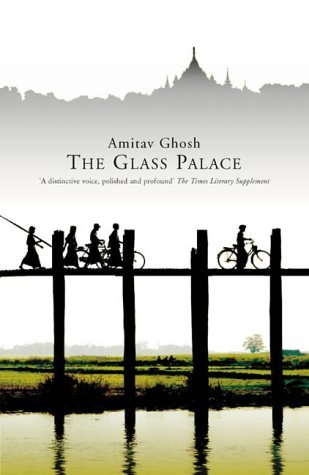
About The Glass Palace by Amitav Ghosh: A Grand Story of Love, War, Family and a Lost Kingdom
Some books tell the story of one person. Some books tell the story of a whole country. The Glass Palace by Amitav Ghosh does both. It is a wide and moving historical novel about ordinary people whose lives are changed by war, royal exile, business, love and the fall of an empire.
The story begins in Mandalay in 1885, when British forces enter Burma and remove King Thebaw and Queen Supayalat from power. Rajkumar is a poor Indian boy living far from home. During the confusion, he sees Dolly, a young attendant serving the Burmese royal family inside the Glass Palace. That short meeting stays in his heart for years.
Rajkumar later works hard, enters the Burmese teak trade and builds a successful business. Yet wealth cannot make him forget Dolly. His search for her becomes part of a much larger story that crosses Burma, India and Malaya. The novel follows several families through three generations, showing how political change can enter homes, break relationships and alter the future of people who never chose to be part of history.
The Glass Palace is a standalone novel, not part of a numbered series. It was first published in 2000. The Random House trade paperback edition was published in 2002 and contains 512 pages. The novel has also been recognised as a national bestseller and won the 2001 Frankfurt eBook Award.
When History Books Feel Too Cold
History books often give us dates, battles and the names of rulers. They may explain when a kingdom fell, when a war began or when people moved from one land to another. However, they do not always show how those events felt to the people living through them.
The Glass Palace solves this problem by turning history into a human experience. Amitav Ghosh shows royal exile through the eyes of attendants, workers, soldiers, parents and children. Instead of only telling us that the British took control of Burma, he helps us understand what was lost: homes, power, freedom, identity and the feeling of belonging to a place.
This makes the novel useful for readers who want to learn about colonial history but do not enjoy dry textbooks. You do not need expert knowledge about Burma, India or Malaya before starting. The people guide you through the changing world. Their hopes, mistakes and relationships make the historical events easier to follow and remember.
The book also answers a deep question: what happens when powerful people make choices that change the lives of families for many years? Through Rajkumar, Dolly, Uma, Arjun and other characters, the novel shows that history is not something far away. It lives inside family memories, lost homes, old photographs and difficult decisions.
A Poor Boy Who Refuses to Remain Powerless
Rajkumar begins the story with almost nothing. He is young, alone and trying to survive in a city filled with fear. The fall of the Burmese kingdom could destroy him, but he sees new paths inside the disorder.
With guidance from Saya John, Rajkumar learns about work, trade and opportunity. He enters the teak business and slowly creates wealth. His rise is exciting because readers can see how far he travels from his poor beginning. However, the novel does not present success as simple or fully good.
Rajkumar’s business grows inside a system shaped by British rule and the use of natural resources. His progress therefore raises hard questions. Can a person build a fair life inside an unfair system? Does earning money make someone free, or can wealth create a new kind of prison? What must a person give up while chasing success?
Rajkumar is not shown as a perfect hero. He is strong, clever and determined, but he also makes selfish and painful choices. This makes him feel real. Readers may respect him in one chapter and become angry with him in another. His flaws give the story energy and create many good topics for discussion.
A Love Story Changed by Distance and Time
At the heart of The Glass Palace by Amitav Ghosh is the bond between Rajkumar and Dolly. Their connection begins during a moment of danger. Rajkumar remembers her long after their lives move in different directions.
Dolly leaves Burma with the royal family and goes into exile in Ratnagiri, India. Rajkumar grows into a wealthy businessman. Years pass, but his memory of Dolly remains alive. When he finally searches for her, the story becomes a journey through love, memory and the wish to recover something that history has taken away.
This is not a light or simple romance. Love does not protect the characters from every problem. Marriage, family duties, ambition, guilt and changing personal beliefs test their relationship. The book asks whether people can remain the same after years of separation and whether a remembered person can ever match the real person found later.
Readers who enjoy mature love stories may find this part deeply rewarding. The romance grows beside the historical plot instead of replacing it. Rajkumar and Dolly’s lives show how love may survive time while still changing its shape.
Three Generations Living Through a Changing Asia
The story does not stop after Rajkumar finds Dolly. It grows into a family epic covering more than one hundred years. The action moves through Burma, India and Malaya, with later events connecting the families to other parts of the world.
This large design lets readers see how one generation’s choices affect the next. Parents try to protect their children, but they also pass down fears, expectations and unfinished struggles. Young people must decide whether to follow family traditions or create different lives.
The novel includes the British invasion of Burma, the royal family’s exile, the expansion of teak and rubber businesses, the growth of Indian nationalism and the violence of the Second World War. It also explores what happens when colonial rule begins to lose its power.
These events never feel like a simple list. They appear through journeys, friendships, marriages, military service and family separation. The official publisher describes the novel as a story spanning three generations across Burma, Malaya and India.
The wide timeline makes the book feel rich and complete. Readers watch children become adults and powerful people become weak. Places that once felt safe become dangerous. Families build homes, lose them and search for new places where they can belong.
Colonialism Seen Through Human Lives
One of the strongest subjects in The Glass Palace is colonialism. The novel shows that colonial rule was not only about flags, soldiers or kings. It also controlled work, land, natural resources, travel and the way people understood themselves.
British power removes the Burmese royal family and sends them away from their country. The teak trade turns forests into sources of money. Indian soldiers serve an empire that also rules their own homeland. Workers move across borders to support businesses created by colonial demand.
Amitav Ghosh does not turn these subjects into a lecture. He lets readers see the system through the lives of the characters. Some gain wealth from it. Some lose everything. Others benefit at one moment and suffer later.
The novel also explores capitalist exploitation. Rajkumar’s success is connected to teak and labour, making readers think about the hidden cost of wealth. The story does not give a quick answer. It asks readers to look closely at power and decide what justice means.
This gives the book lasting value. Its questions about migration, identity, business, natural resources and global power still feel important. Readers can enjoy the plot while also thinking about how the modern world was formed.
Characters Who Make the Epic Feel Personal
A book covering many years and countries needs strong characters, and The Glass Palace offers several memorable people.
Dolly is calm, loyal and thoughtful. She begins as an attendant to the Burmese royal family, but exile changes her understanding of home and duty. Her quiet nature should not be mistaken for weakness. She makes difficult choices and slowly learns what kind of life she wants.
Uma becomes an important voice in the story. Her personal experiences lead her toward political thought and the Indian independence movement. Through her, the novel explores freedom, social rules and the position of women during a time of change.
Arjun faces another kind of struggle. As an Indian officer in the British Indian Army, he must question who he serves and why. His journey shows the mental conflict created when a colonised person is trained to fight for the empire controlling his homeland.
Dinu uses photography to observe life. His camera connects him to memory, truth and the wish to hold onto moments before they disappear. These characters ensure that the novel is not only Rajkumar’s story. Each person offers a different way to understand history.
Why the Story Creates Such a Strong Reading Experience
The Glass Palace has a large world, but its greatest strength is the balance between public events and private feelings. A kingdom may fall in one scene, while another scene focuses on a small memory or a quiet family conversation.
This balance gives the novel both size and warmth. Readers can experience war, royal life, forests, plantations, long journeys and political change without losing the emotional centre of the story.
Amitav Ghosh writes with rich detail, helping readers picture Mandalay, Ratnagiri, Calcutta and the working lands of Burma and Malaya. The settings are more than backgrounds. They shape the people who live in them. Every move creates a new question about home.
The story can be serious, but it is never empty. It contains love, ambition, friendship, loss, family tension and hope. Readers who stay with its broad journey receive a layered view of people trying to live meaningful lives inside forces much larger than themselves.
What You Will Gain from Reading It
This book can help readers understand an important part of Asian history through an engaging fictional story. It gives a human view of colonial Burma, British India, migration, trade, nationalism and war.
It also helps readers think more deeply about success. Rajkumar gains wealth and influence, but the book asks whether these things are enough to make a good life. His journey can start discussions about ambition, responsibility and the price of business growth.
Readers may also gain a stronger understanding of exile. Several characters must leave places they love. Some want to return, while others discover that returning cannot restore the past. The book shows why home may be a place, a person, a memory or all three.
The novel is also valuable for building reading skill. Its long timeline, connected families and historical setting invite careful reading. Students can study its characters, symbols and social themes, while general readers can enjoy it as an emotional family saga.
Because the book offers many points of view, it can teach readers to look at one event from different sides. There are no easy heroes and villains in every part of the story. People carry mixed motives, and their choices have results they cannot always control.
A Fine Choice for Historical-Fiction Readers
The Glass Palace is ideal for readers who enjoy historical fiction, literary fiction, family sagas, stories about Asia and novels that cover several generations.
It may appeal to readers who like books about lost kingdoms, migration, royal families, wartime choices and people rebuilding their lives after great change. Readers interested in Burma or Myanmar, India, Malaya and British colonial history will find much to explore.
The book is also a strong choice for book clubs. Members can discuss Rajkumar’s ambition, Dolly’s loyalty, Uma’s political growth, Arjun’s military identity and the meaning of the Glass Palace itself. The publisher’s official reading guide highlights identity, homeland, exile, return and personal memory as key discussion areas.
Students of literature, history and postcolonial studies may use the novel to explore how fiction brings large historical events closer to ordinary human life. It can support assignments about colonialism, identity, memory, displacement, war, capitalism and nationalism.
This is best for readers who are ready for a long and detailed story. It takes time to build its world and follow its families. In return, it provides a broad journey filled with places, ideas and emotional changes.
A Premium Edition Made for Comfortable Reading
At Bookish Wonderland, we want a powerful story to come in a physical form that feels comfortable and lasts through repeated reading.
This premium edition uses eye-soothing cream paper. The soft page colour reduces the harsh brightness often found on plain white paper, making long reading sessions easier on the eyes.
The crystal-clear print keeps letters sharp and easy to follow. This is especially helpful in a long historical novel containing many people, places and important events.
High-quality stitched and glue binding adds strength to the book. The pages are held firmly so readers can enjoy the novel carefully over time and keep it as part of a personal collection.
These features work together to create a smooth reading experience. You receive comfortable pages, readable text and a durable structure without unnecessary decoration.
How This Edition Helps You
A long novel should not become tiring because of weak print or uncomfortable paper. The cream pages support relaxed reading during the day or at night. Clear text helps readers remain focused on the story instead of struggling with faded letters.
The durable binding is useful for readers who plan to return to important chapters, lend the book to trusted friends or use it for study. Historical-fiction lovers can keep it on their shelves as part of a lasting collection.
It can also be a thoughtful gift for a reader who enjoys Amitav Ghosh, South Asian literature or deep family stories. Its mix of history, romance and political thought makes it suitable for many kinds of serious readers.
When comparing The Glass Palace by Amitav Ghosh price in Bangladesh, consider the complete reading value: a major historical novel presented with premium cream paper, clear printing and dependable binding.
Read It in the Way That Suits You
Choose this book for a slow weekend when you want to enter another time and place. Keep a note of the families and locations if you enjoy following every detail.
Use it for a reading group and discuss one part at a time. The changing characters and moral questions can support long conversations without everyone needing to have the same opinion.
Students can read it beside lessons about colonial Asia or the Second World War. The fictional people make major events easier to picture, while the broad story encourages further learning.
It also works well as a personal evening read. The chapters allow you to move slowly through the characters’ lives and return when you are ready.
If you require any customization or have any questions, please inbox us via FB or Insta.
| Primary Specification | |
| Author | Amitav Ghosh |
| Narrator | Simon Vance |
| Genre | Historical Fiction, Literary Fiction, Family Saga, War Fiction, Political Fiction, Historical Romance |
| ISBN-13/ISSN | 978-0375758775 |
| ISBN-10 | 0375758771 |
| Publisher | Random House Trade Paperbacks |
| Publishing Date | February 12, 2002 |
| Language | English |
| Reading Age | 18+ years |
| Format | Printed book |
| Physical Specification & Quality | |
| Paper Quality | Premium eye-soothing cream paper |
| Binding Quality | High quality stitched and glue binding (for longevity) |
| Print Quality | Crystal-clear print |
| Pages | 486 pages |
| Country | United States |
| Logistics Information | |
| Weight | 505 gm |
| Length | 8.5 inches |
| Width | 5.6 inches |
| Height | 1.1 inch |