

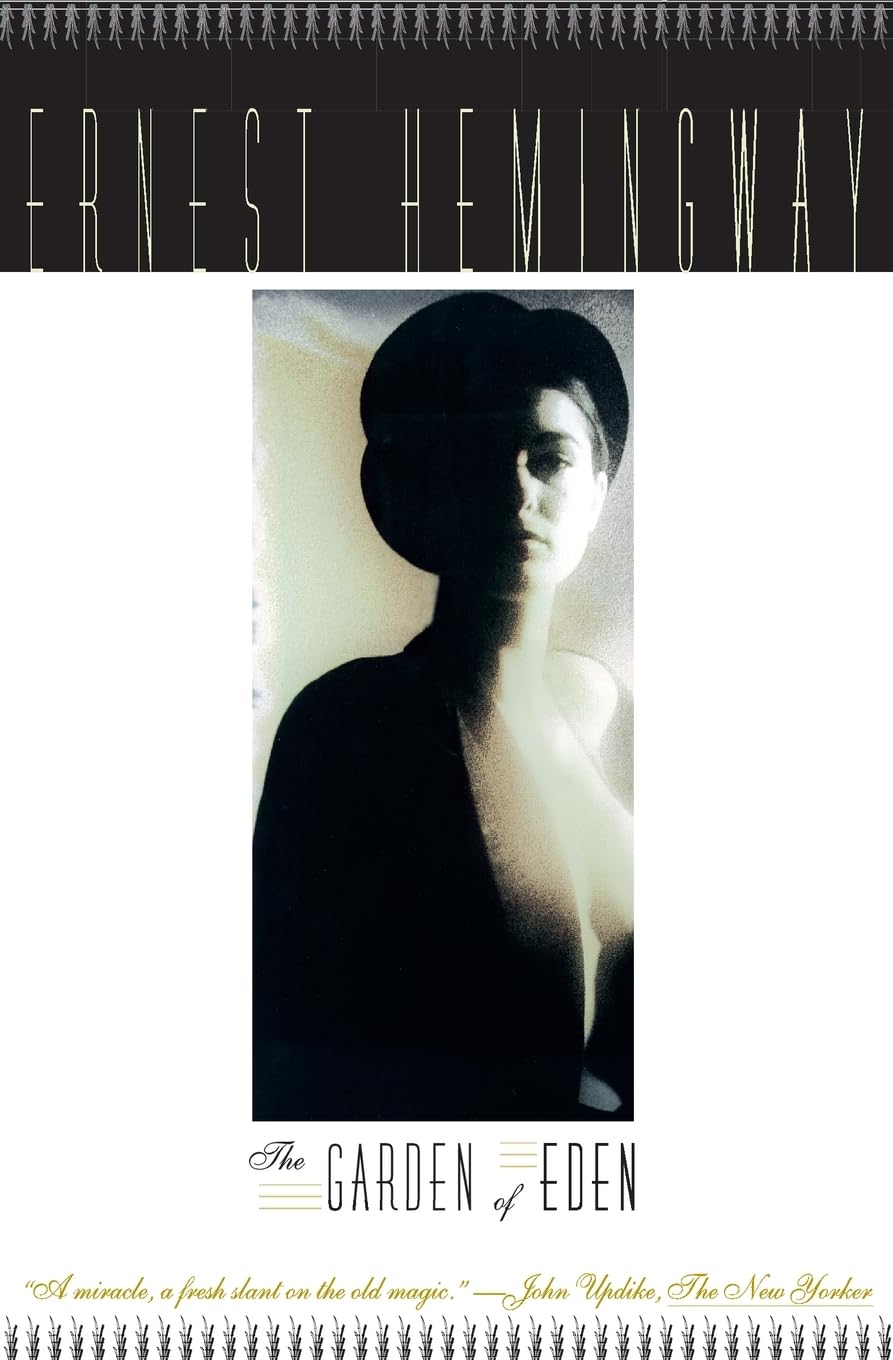
About The Garden of Eden Novel by Ernest Hemingway: Love, Art, and a Marriage in Change
The Garden of Eden Novel by Ernest Hemingway begins with sunlight, sea air, good food, and the happy start of a marriage. David Bourne is a young American writer. His wife, Catherine, is bold, rich, and full of new ideas. They are travelling through France and Spain on their honeymoon, enjoying quiet beaches and the freedom of being far from home. At first, their life feels like a private paradise made only for two people.
But Catherine does not want a simple marriage. She wants change, play, and freedom from the usual rules placed on men and women. David loves her energy, yet he also feels unsure about where her plans may lead. When another young woman named Marita enters their life, love becomes a tense triangle. Desire, jealousy, trust, art, and control begin to pull the three characters in different ways. Hemingway turns one bright summer into a close and daring study of what can happen when love and identity no longer feel fixed.
What Happens in the Story?
David and Catherine Bourne are newly married and moving along the Mediterranean coast. David has gained praise for his writing and hopes to work on new stories. Catherine wants their honeymoon to become an adventure that breaks old limits. She changes her hair, asks David to change his look, and creates private roles that make them question who leads and who follows in their marriage.
Their bond is loving, but it is also troubled. Catherine wants David to share every part of her new self. David tries to understand her while protecting the part of himself that needs quiet, order, and time to write. Their different needs become harder to hide after they meet Marita. Catherine first brings Marita close, but the new relationship does not stay under her control.
The plot is easy to follow, yet the feelings under it are complex. Every meal, swim, haircut, drink, and talk can carry a second meaning. The novel asks whether love can stay free without becoming cruel and whether an artist can protect his work when private life begins to break apart.
When Love Becomes a Struggle for Control
Many love stories end when two people marry. This novel begins there. David and Catherine care for each other, but care alone does not solve the problems between them. Catherine wants total freedom to test new roles and feelings. David wants to keep their love while holding on to his work and sense of self. Each person wants to be seen, but neither always listens well.
This makes the book feel honest about a hard truth: two people can love each other and still cause deep pain. Fear can hide inside a joke. Jealousy can look like freedom. A gift can become a demand. Silence can feel like punishment. Hemingway does not stop the story to explain every emotion. He lets small actions show the growing danger.
Readers who enjoy quiet emotional tension will find much to think about here. The problem is not one simple villain. It is the way love, pride, desire, fear, and creative work become tied together. The book offers no quick lesson, but it gives clear space to see how control can enter even the closest relationship.
A Different Side of Ernest Hemingway
Hemingway is often linked with war, hunting, fishing, courage, and tough male heroes. The Garden of Eden shows another side of his writing. It looks closely at changing gender roles, private desire, marriage, and the fear of losing a stable identity. David and Catherine play with names, hair, appearance, and the usual ideas of husband and wife. These choices make the novel feel very different from the public image often connected with Hemingway.
The story still carries his famous control. The sentences are often clean and direct. Places, food, weather, and physical movement are described with care. Yet under that calm surface, the characters are full of doubt. What they cannot say is often as important as what they say.
This mix gives the novel its power. It is both simple and difficult, warm and cold, beautiful and disturbing. Readers who think they already know Hemingway may be surprised. New readers may discover why his plain style can hold strong emotion without using long speeches or heavy explanation.
The Writer and the Work He Must Protect
David is not only a husband. He is also a writer trying to make something true. His work gives him purpose, but it also creates distance between him and Catherine. She wants to be part of his art and wants his attention. David needs private time and control over what he writes. This difference becomes one of the deepest fights in the book.
Hemingway shows writing as both joy and hard labour. David must return to the page even when his personal life is confused. He works on stories drawn from memory, including material connected with Africa and his father. These inner stories create another layer within the novel. They show how an artist turns experience into words and why unfinished work can feel like a living part of the self.
This theme will speak to writers, artists, students, and anyone who has tried to protect an important goal. The novel understands how love can support creative work, but also how love can threaten it when care turns into control. David must decide what he is willing to lose to remain a writer.
The Reading Experience
The Garden of Eden is not a fast adventure novel. Its suspense comes from mood, private conflict, and the fear that a relationship may cross a line that cannot be repaired. The pace is calm, but the pressure grows. Readers must pay attention to short talks, repeated habits, changes in names, and the way each character reacts to David’s writing.
The setting adds strong pleasure to the reading. Hemingway makes the Mediterranean coast feel warm and close. You can almost feel the sun, water, road dust, cool rooms, and slow meals. These details are not only decoration. They create the dream of paradise that the characters are slowly losing.
The novel is best read in quiet sessions rather than rushed in one sitting. Its plain sentences may look easy, but many scenes have hidden weight. A reader may finish a chapter, think about it, and later understand that a small moment changed everything. That is why the book can reward a second reading.
Who Should Read This Novel?
This book is a strong choice for readers of literary fiction, modern classics, and close studies of marriage. It will suit people who enjoy stories about writers, art, identity, jealousy, and difficult love. Hemingway readers will find themes and risks that are less visible in some of his better-known books. Readers new to his work can meet his clear prose through a story that still feels bold and open to debate.
The book contains adult relationships, sexual themes, drinking, emotional cruelty, and changing ideas about gender. For that reason, it is better for mature readers. It may not suit someone looking for a sweet romance or a simple happy ending. The pleasure comes from the beauty of the writing, the tension between the characters, and the questions that remain after the last page.
It is especially useful for book clubs because different readers may take different sides. Students of literature can also explore Hemingway’s style, the role of editing, the story inside the story, and the link between art and private life.
A Novel Published After Hemingway’s Death
Hemingway worked on The Garden of Eden at different times from 1946 until his death in 1961, but he did not finish it for publication. Scribner released an edited version in 1986, twenty-five years after his death. Editor Tom Jenks shaped a readable novel from a much longer and unfinished manuscript.
This history matters. The published book gives readers real Hemingway writing, but its final form was not approved by Hemingway himself. Parts of the manuscript were removed and arranged by an editor. Some readers simply enjoy the novel as it stands. Others read it while thinking about how much an editor may change an unfinished work.
That question adds another reason to explore the book. It is not only a story about an artist protecting his writing; it is also a work whose own path to publication involved major editorial choices. Knowing this does not remove the novel’s beauty. It helps readers understand why scholars continue to discuss its form, meaning, and place among Hemingway’s books.
What Makes This Edition Comfortable to Keep
Bookish Wonderland offers this novel for readers who want a pleasant physical copy for long reading and future rereading. Premium eye-soothing cream paper gives the pages a soft colour that feels calmer than bright white paper. Crystal-clear print keeps Hemingway’s short sentences and small marks sharp and easy to follow. High-quality stitched and glue binding helps the pages remain secure through repeated reading. The durable build also makes the book suitable for a home shelf, literature class, book club, or thoughtful gift.
Readers comparing the Book price in Bangladesh for The Garden of Eden by Ernest Hemingway should consider more than the first cost. A comfortable page, clean text, and strong binding matter when a novel is likely to be marked, discussed, lent to a friend, and read again. The aim is to give readers a copy that feels good in the hands and remains useful after the first reading.
Good Ways to Use This Book
Read it slowly, mark key scenes, or discuss its views of marriage, identity, art, jealousy, and control in a book club.
Book and Publication Details
The Garden of Eden is an English literary novel by American author Ernest Hemingway. He worked on the unfinished manuscript from 1946 to 1961. Scribner first published the edited novel in 1986. The first edition contained 247 pages and carried ISBN 9780684186931. A later Scribner trade paperback, published in 1995, contains 256 pages and carries ISBN 9780684804521. Page count and ISBN therefore depend on the edition being sold.
The book is posthumous, meaning it appeared after the author’s death. Tom Jenks edited the published form. Its main setting is the Mediterranean coast of France and Spain during the 1920s. The central characters are David Bourne, Catherine Bourne, and Marita. It is generally classed as literary fiction, classic fiction, and a novel about marriage, desire, identity, and creative life.
Add a Daring Hemingway Novel to Your Collection
The Garden of Eden is a beautiful and uneasy novel about the moment when freedom, love, and control begin to mix. Its bright coast, close dialogue, and troubled characters create a story that feels calm on the surface and dangerous underneath. It shows Hemingway testing ideas that many readers may not expect from him while keeping the clean prose and sharp detail that made his work famous.
Order The Garden of Eden Novel by Ernest Hemingway from Bookish Wonderland. Cash on Delivery is available across Bangladesh, with delivery inside and outside Dhaka. Readers in Dhaka can ask about fast or urgent delivery. For help with an order or any question about the available copy, contact Bookish Wonderland through Facebook or Instagram.
Choose this book if you want a classic that can surprise you, challenge you, and give your book club something real to discuss. Add it to your shelf and step into Hemingway’s beautiful, troubled garden.
If you require any customization or have any questions, please inbox us via FB or Insta.
| Primary Specification | |
| Author | Ernest Hemingway |
| Narrator | Patrick Wilson |
| Genre | Literary Fiction, Modernist Fiction, Psychological Fiction, Romance |
| ISBN-13/ISSN | 978-0684804521 |
| ISBN-10 | 0684804522 |
| Publisher | Scribner |
| Publishing Date | September 6, 1995 |
| Edition | First Scribner Trade Paperback Edition |
| Language | English |
| Reading Age | 18+ |
| Format | Printed Book |
| Physical Specification & Quality | |
| Paper Quality | Premium eye-soothing cream paper |
| Binding Quality | High quality stitched and glue binding (for longevity) |
| Print Quality | Crystal-clear print |
| Pages | 247 pages |
| Country | USA |
| Logistics Information | |
| Weight | 268 gm |
| Length | 8.5 inches |
| Width | 5.6 inches |
| Height | 0.5 inch |