

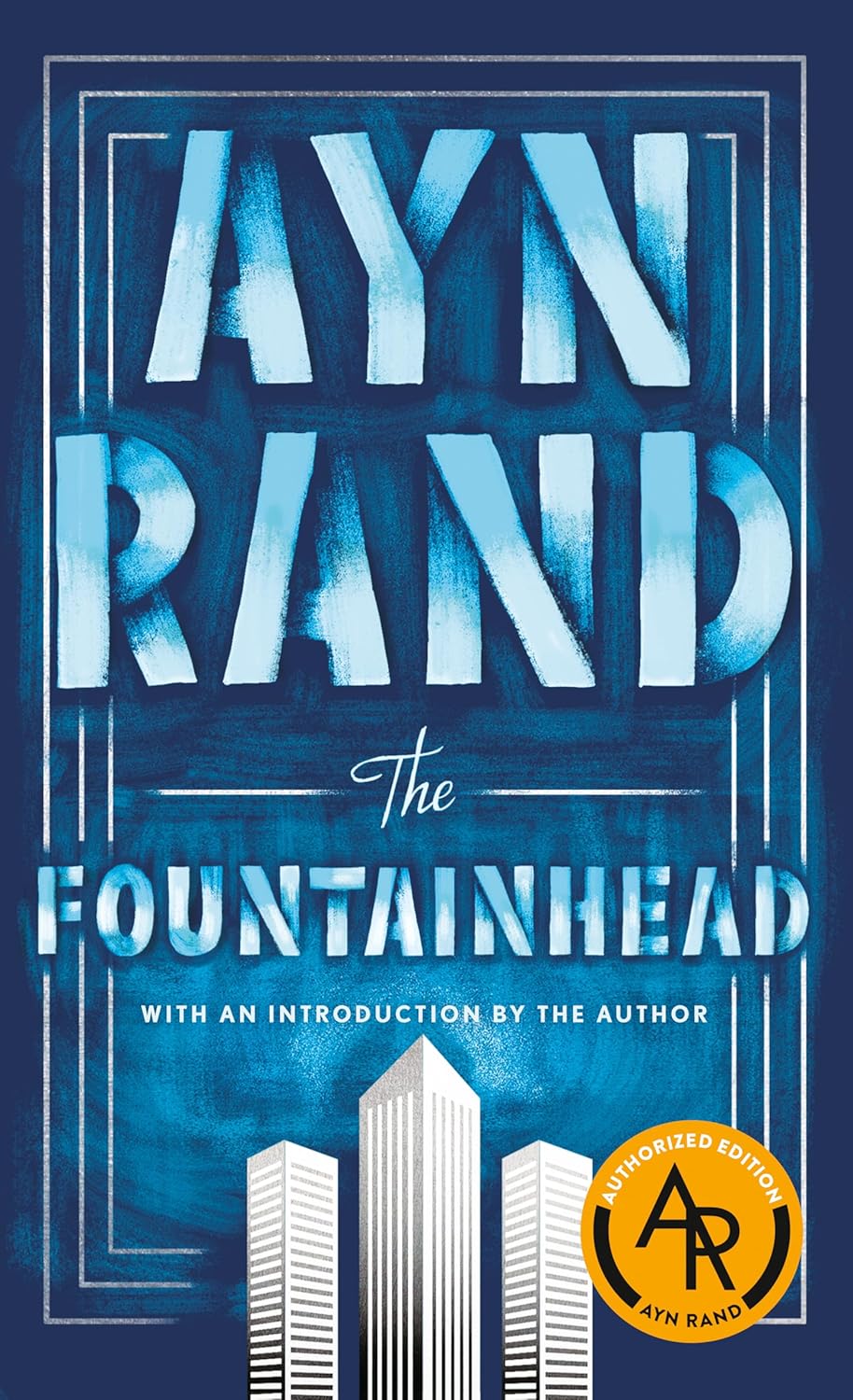
About The Fountainhead Novel by Ayn Rand – A Powerful Story About Individualism, Ambition, Architecture and the Price of Staying True to Yourself
The Fountainhead Novel by Ayn Rand follows Howard Roark, a young architect who refuses to copy old styles simply because other people expect him to. He wants every building to fit its purpose, its materials, and the idea behind it. That choice sounds simple, but it puts him against teachers, employers, clients, critics, and people who believe success means giving the public what it already knows. First published in 1943, the novel became the book that made Ayn Rand famous and later helped introduce ideas that she developed more fully in her philosophy of Objectivism.
Roark's story is tied to Peter Keating, Dominique Francon, Gail Wynand, and Ellsworth Toohey. Through them, Rand explores ambition, approval, power, love, and the question of whether a person should live by independent judgment or by other people's expectations.
Howard Roark Refuses to Build Like Everyone Else
Howard Roark is introduced as an architecture student who will not follow traditional design rules simply because they are traditional. He believes a building should be created honestly from its purpose rather than covered with borrowed decorations from the past. His refusal to compromise gets him into trouble very early, but he does not change his standards just to make life easier.
Roark's career tests how much difficulty a person will accept to keep creative control. He loses opportunities and struggles to find clients, yet he refuses to copy popular styles just to make success easier. Rand uses him to ask what happens when personal integrity and public approval pull in opposite directions.
Peter Keating Shows Another Road to Success
Peter Keating is Roark's opposite in many ways. He is talented enough to build a successful career, but he cares deeply about what other people think of him. He wants praise, status, important clients, and the appearance of success. Because of that, he often makes choices based on what will impress others instead of what he truly wants.
Keating's career rises quickly because he understands how to please people. Yet the novel slowly asks whether outward success means much when the person earning it does not trust his own judgment.
The contrast between Roark and Keating gives the story much of its philosophical shape. One man is willing to lose almost everything rather than surrender control of his work. The other gains recognition but becomes increasingly dependent on approval. Their friendship, competition, and very different careers allow Rand to examine what success means beyond money or reputation.
Dominique Francon Makes the Story More Complicated
Dominique Francon is one of the novel's most difficult and memorable characters. She recognizes Roark's ability and is deeply drawn to him, but her response is not simple admiration. She believes the world often attacks or destroys people and things that are truly great. Because of that belief, she sometimes tries to protect what she values by helping destroy it before others can.
Her relationship with Roark is passionate, conflicted, and deliberately uncomfortable. The novel includes sexual material and a famous scene between Dominique and Roark that many modern readers interpret as sexual violence or coercion. This makes the book better suited to mature readers and is important to know before buying it.
Dominique's choices can be frustrating, but they connect directly to the book's larger questions about admiration, fear, independence, and whether a person should hide greatness from a world that may not understand it.
Ellsworth Toohey Understands the Power of Public Opinion
Ellsworth Toohey is an architectural critic and public intellectual who becomes one of Roark's strongest enemies. He does not attack Roark only because he dislikes his buildings. He understands that ideas, praise, criticism, and reputation can shape what society accepts as valuable.
Toohey's power comes from influence. He knows how to encourage people who depend on approval and how to weaken people who trust themselves. Through him, Rand explores the difference between physical power and the quieter power of controlling public opinion.
This part of the novel may interest readers who think about media, criticism, popularity, and group pressure. Toohey understands that a person who needs everyone else's approval can be controlled more easily than someone who is willing to stand alone. His conflict with Roark therefore becomes much bigger than an argument about architecture.
Gail Wynand Has Power but Not Complete Freedom
Gail Wynand is a wealthy newspaper owner who appears powerful enough to control almost anything around him. He built his career from poverty and knows how to influence public opinion through his newspapers. Yet his success comes with a serious weakness: he gained power by giving the public what it wanted, even when he privately disliked those values.
Wynand becomes fascinated by Roark because Roark has something money cannot buy: independence from other people's judgment. Wynand can command employees and influence large audiences, yet his power still depends on pleasing those audiences. Through him, the novel asks whether control is real power when your life depends on public approval.
Architecture Is More Than a Background
Ayn Rand chose architecture carefully. In a 1943 letter, she explained that architecture combines art with a basic human need and gives a clear image of a person as a creator and builder. That idea is visible throughout the novel.
Buildings allow the story to turn abstract ideas into something physical. Roark's designs show how he thinks. Traditional buildings, copied styles, altered plans, and compromised designs become ways of talking about originality and second-hand thinking without keeping the discussion only in speeches.
Readers interested in architecture may enjoy this part even though the novel should not be treated as a technical guide to architectural history. Rand uses the profession mainly as a stage for her ideas about creation, independence, and artistic integrity.
The Novel Is Closely Connected to Individualism
Rand described the theme of The Fountainhead as individualism versus collectivism in the human soul. The novel repeatedly asks whether people should form judgments for themselves or live through the opinions, wishes, and approval of others.
Roark represents the independent creator in Rand's design. Keating depends heavily on approval. Toohey seeks power over people who need approval. Wynand believes he controls the public but discovers how dependent he is on it. Dominique sees greatness but initially believes the world is too hostile to deserve it.
These characters make the book a novel of ideas as much as a drama. Long conversations and speeches sometimes slow the plot because Rand wants characters to explain what they believe. Readers who enjoy philosophical fiction may see that as one of the book's main strengths. Readers looking only for fast action may find parts of it demanding.
Is The Fountainhead the Same as Atlas Shrugged?
No. The Fountainhead and Atlas Shrugged are separate novels with different characters and different plots. You do not need to read one before the other.
The Fountainhead was published in 1943, while Atlas Shrugged appeared in 1957. Both are closely associated with Rand's ideas about individualism, reason, creative achievement, and independence, but each book develops those ideas through its own story.
For readers new to Ayn Rand, The Fountainhead can be a useful starting point because its central conflict is easy to identify through Roark's work as an architect. It is still a long novel, but the personal and professional conflicts give the philosophical discussion a clear story around it.
Why the Book Still Creates Debate
The Fountainhead has remained widely read because readers often react strongly to it. Some admire Roark's refusal to compromise and find the novel motivating, especially in fields where creative work can be shaped by pressure from clients, institutions, or public taste. Others criticize Rand's moral ideas, her treatment of relationships, and the way the novel divides independent creators from people who seek approval.
That disagreement is part of the book's long cultural life. The best approach is to understand the position Rand presents and decide where you agree or disagree. Even readers who reject parts of her argument may find the novel useful for thinking about work, ambition, integrity, power, and responsibility.
Who Will Enjoy The Fountainhead?
The Fountainhead suits readers who enjoy philosophical fiction, creative ambition, architecture, and debates about individualism. It may interest creators facing pressure to conform. The novel contains mature sexual material, coercive sexual content, power struggles, and long philosophical arguments, so it is better suited to adults and mature older teens. Readers who prefer simple plots may find it demanding, while readers who enjoy debating ideas may find it rewarding.
A Physical Copy Made for a Long Novel
Bookish Wonderland offers The Fountainhead for readers who want a physical copy that feels comfortable during a long reading journey. Premium eye-soothing cream paper gives the pages a softer appearance, while crystal-clear printing keeps the long paragraphs and conversations easy to follow. High-quality stitched and glue binding provides stronger support for repeated opening and long-term shelf use.
A durable copy is useful because this is a novel many readers underline, revisit, or discuss. You may want to return to Roark's speeches, compare Keating and Wynand, or reread earlier scenes after understanding the characters more fully.
Looking for The Fountainhead Book Price in Bangladesh?
If you are comparing The Fountainhead Novel by Ayn Rand and its Book price in Bangladesh, Bookish Wonderland gives you a simple way to order a reader-friendly physical copy. Nationwide delivery is available inside and outside Dhaka, while Cash on Delivery is available across Bangladesh. Readers in Dhaka can also ask about fast or urgent delivery when available.
The book is suitable for personal reading, university discussion, philosophy and literature study, gifting, or building a shelf of twentieth-century classic novels.
Why Buy From Bookish Wonderland?
Bookish Wonderland focuses on English books that are comfortable to read and durable enough to keep. The store offers nationwide delivery, Cash on Delivery, service inside and outside Dhaka, and access to a large collection of premium English titles.
The Fountainhead is especially suited to a physical edition because it is a long novel built around ideas as well as plot. A printed copy makes it easier to mark passages, return to earlier arguments, compare characters, and reread important scenes without losing your place.
Read the Story and Decide What Independence Means to You
The Fountainhead Novel by Ayn Rand is built around one difficult question: how much should a person change in order to be accepted by other people? Howard Roark's answer is uncompromising. He wants to create according to his own judgment and refuses to make popularity the standard for his work.
Around him, Peter Keating, Dominique Francon, Gail Wynand, and Ellsworth Toohey offer very different answers. Their choices turn architecture into a larger argument about ambition, influence, love, approval, integrity, and power.
You may admire Roark, dislike him, agree with Rand, reject her ideas, or do some of each. That strong reaction helps explain why the novel has remained in discussion since 1943. Order The Fountainhead Novel by Ayn Rand from Bookish Wonderland if you want a provocative classic about architecture, rivalry, philosophy, and independent thought.
If you require any customization or have any questions, please inbox us via FB or Insta.
| Primary Specification | |
| Author | Ayn Rand |
| Narrator | Christopher Hurt |
| Genre | Literary Fiction, Philosophical Fiction, Classic Fiction |
| ISBN-13/ISSN | 978-0452286375 |
| ISBN-10 | 0452286379 |
| Publisher | NAL |
| Publishing Date | January 28, 2005 |
| Language | English |
| Reading Age | 18+ |
| Format | Printed Book |
| Physical Specification & Quality | |
| Paper Quality | Premium eye-soothing cream paper |
| Binding Quality | High quality stitched and glue binding (for longevity) |
| Print Quality | Crystal-clear print |
| Pages | 736 pages |
| Country | USA |
| Logistics Information | |
| Weight | 758 gm |
| Length | 8.5 inches |
| Width | 5.6 inches |
| Height | 1.26 inch |