

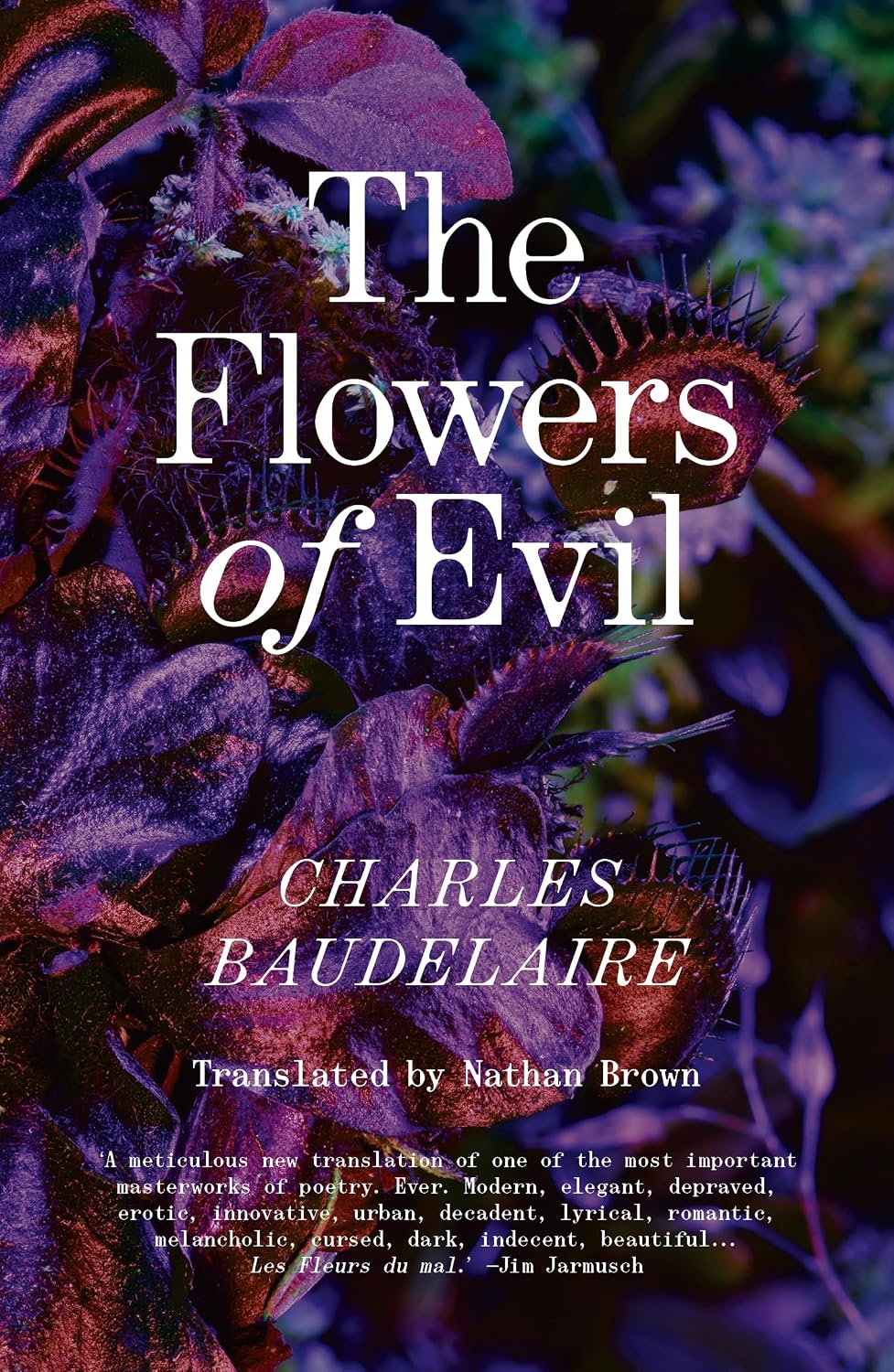
About The Flowers of Evil by Charles Baudelaire: Dark Beauty, City Life, and the Birth of Modern Poetry
The Flowers of Evil by Charles Baudelaire is a famous poetry collection about beauty, sadness, desire, boredom, sin, city life, time, and death. First published in French as Les Fleurs du mal in 1857, it changed what poetry could describe. Baudelaire looked directly at parts of life that polite society often tried to hide, then shaped them into careful, musical poems.
This is not one long story with a hero and a clear ending. It is a journey through many states of mind. One poem may rise toward love, art, or spiritual hope. The next may fall into loneliness, fear, disgust, or despair. Together, the poems show a person searching for something pure while feeling pulled toward the darker parts of the world and the self.
When classic poetry feels too hard to begin
Many readers want to explore great poetry but feel stopped by old language, symbols, or the fear of missing the correct meaning. A full collection may seem harder than a short poem shared online. Translation can add another worry because different editions may use different words and English titles.
This book becomes easier when it is read slowly. There is no need to understand every symbol at once. Begin with one poem. Notice the mood, the repeated image, and the feeling left at the end. Read it again after a day or a week. A difficult line may open when the reader stops trying to solve it like a school test.
A book shaped as a journey
Baudelaire carefully arranged his poems instead of placing them together at random. The expanded 1861 edition contains six main sections. English translations often call them Spleen and Ideal, Parisian Scenes, Wine, Flowers of Evil, Revolt, and Death, though the exact English names can change between translators.
The longest part, Spleen and Ideal, holds the main struggle of the collection. “Ideal” points toward love, beauty, art, order, and a higher life. “Spleen” means more than ordinary sadness. It suggests deep boredom, heaviness, anger, anxiety, and the feeling of being trapped inside time and the self.
The later sections offer possible ways to escape that pain. The speaker turns toward the city, drink, intense desire, defiance, and finally death. None gives an easy answer. The journey keeps moving because every escape carries a cost or fails to last. This gives the whole collection a shape, even though it is made of separate poems.
Beauty grows beside decay
The title holds the central idea. Flowers normally suggest colour, perfume, life, and grace. Evil suggests harm, corruption, fear, and moral darkness. By joining the two, Baudelaire asks whether art can create beauty from painful or ugly experience.
Again and again, the poems place opposites together. A lovely face may be linked with time and loss. Sweet perfume may awaken an uneasy memory. A beautiful city may also feel dirty, crowded, cruel, and lonely. Love may bring joy, control, hunger, jealousy, or regret. The body may be desired while also moving toward age and death.
Walk through a changing Paris
The Parisian poems helped make the modern city a serious home for poetry. Baudelaire writes about streets, crowds, strangers, poor people, workers, old neighbourhoods, and the loneliness that can exist among thousands of people. His Paris is moving quickly, and parts of the familiar city are disappearing.
This city is not simply a background. It changes how the speaker sees and feels. A brief meeting with a stranger can create sudden longing. A swan away from its proper home can become an image of exile. A crowded street can make a person feel both connected and completely alone.
Meet poems that became landmarks
Many pieces in the collection have become widely studied and often translated. “To the Reader” opens the door with a direct challenge. “The Albatross” shows a great bird that is graceful in the sky but awkward when trapped on a ship, creating a memorable picture of the poet’s place in ordinary society.
“Correspondences” explores hidden links between nature, sound, colour, and scent. “Invitation to the Voyage” dreams of a distant place of order and beauty. The poems called “Spleen” give different shapes to mental darkness and crushing boredom. “The Swan” joins city change with exile and loss, while “The Voyage” brings the larger journey toward its final edge.
Translations may give these titles different wording. Some editions contain the original French beside the English, while others print only a translation. Some include notes, an introduction, or the six poems once banned in France. Checking the edition details can help readers know exactly what their copy contains.
Language made to awaken the senses
Baudelaire’s poetry often works through sight, sound, smell, touch, and taste. Perfume can open a memory. A colour can feel like a sound. Music can suggest space, movement, or desire. These links make the poems feel physical even when their ideas are abstract.
The forms are often controlled and polished. Baudelaire used sonnets, rhyme, measured lines, repeated patterns, and carefully placed images. The calm shape can hold wild or disturbing subject matter. This difference between formal beauty and dark content gives many poems their special force.
The book that faced a courtroom
The first edition caused public anger soon after it appeared in 1857. Baudelaire and his publishers were prosecuted in France. The court rejected one charge connected to religious morality but convicted them for an offence against public morals. It ordered six poems removed from the collection and imposed fines.
Baudelaire continued revising his work. The second edition appeared in 1861 without the six suppressed pieces but with many new poems and a changed structure, including the section about Paris. After his death, another edition appeared in 1868, though editors still discuss which later additions truly match his own plan.
The legal judgment against the six poems was finally overturned in 1949. Many modern editions place those poems in an appendix or restore them in another way. This history matters because it shows how strongly the book challenged the public limits of its time. It also explains why the contents and order can differ between editions.
Why it changed modern poetry
Baudelaire showed that poetry could enter the modern street without losing beauty or depth. It could speak about crowds, boredom, desire, poverty, artificial pleasure, private shame, and the pressure of city life. The poet did not need to look only toward ancient heroes, peaceful nature, or noble events.
His careful symbols and sensory links helped shape later Symbolist poetry. His city poems also influenced writers who wanted to describe modern life as broken, fast, strange, and full of brief signs. Major poets after him found new possibilities in the way he joined strict form with daring subjects.
What readers may discover
The first benefit is a richer view of poetry. The collection shows that a poem can tell a small story, paint a scene, build a symbol, make an argument, or capture one passing feeling. It also shows how a group of poems can form a larger emotional journey.
The second benefit is stronger attention. These poems reward slow reading. A reader begins to notice repeated colours, sounds, animals, weather, rooms, perfumes, and city scenes. Small details become clues to the mood and meaning.
The third benefit is discussion. The book invites questions without giving one fixed answer. Can beauty come from pain? Is escape possible? Does art lift a person above ordinary life, or make that person more alone? Why do people feel bored even when the world offers endless things to see? Such questions can stay with readers long after the page closes.
Good ways to read this collection
Keep the book near your bed or study table and read one poem at a time. Mark an image that feels strong, then write one sentence about the mood. Return later and see whether the poem feels different. Poetry often changes as the reader changes.
Students can use the collection to study symbolism, modern city writing, sonnet form, sound, imagery, contrast, censorship, and translation. A reading group can choose three or four poems for each meeting instead of trying to discuss the whole book at once. Writers may study how Baudelaire creates sharp pictures and joins opposite feelings within a short space.
The book also works as a thoughtful gift for a poetry reader, a student of French literature, or someone drawn to Gothic art and dark beauty. A bilingual edition can be especially useful for readers learning French, while an edition with notes may help a first-time reader.
Who will value this book most?
Choose this collection if you enjoy serious poetry, emotional conflict, haunting images, old cities, philosophical questions, or art that finds light inside darkness. It suits readers who like to pause, reread, and think rather than rush toward a plot ending.
The work may not suit someone seeking cheerful poems or a simple story. It contains adult themes, sexual desire, death, decay, religious conflict, substance use, and disturbing images. Translation style also matters. One edition may sound formal, while another uses more direct modern English.
New readers can still begin here. A helpful introduction or notes can explain historical references, but personal response matters too. You do not need to agree with the speaker or understand every image to feel the force of the poems.
A lasting copy for slow reading
Bookish Wonderland offers a reader-friendly copy designed for repeated reading and study. Premium eye-soothing cream paper gives the pages a soft appearance, while crystal-clear print helps readers follow every line and punctuation mark. High-quality stitched and glue binding supports longer use, and a durable finish makes the book suitable for a personal shelf, classroom, reading group, or gift.
Easy ordering from Bookish Wonderland
When comparing the Book price in Bangladesh for The Flowers of Evil by Charles Baudelaire, check more than the cost. Translation, included poems, print clarity, paper comfort, and binding quality can all change the reading experience. Bookish Wonderland can confirm the available edition before purchase.
Cash on Delivery is available nationwide, with delivery inside and outside Dhaka. Fast or urgent delivery is also available in Dhaka when the book is needed quickly. For the current price, stock, edition details, delivery time, or customization questions, contact Bookish Wonderland through Facebook or Instagram.
A collection that still feels daring
The Flowers of Evil does not hide from sadness, desire, fear, or the passing of time. It turns these hard parts of life into images that can surprise, disturb, and remain in the mind. Each poem opens a small room, yet the whole collection feels like a long walk from hope through the city and toward the unknown.
Read it for its dark beauty. Keep it for the questions that grow after each return. Share it with someone who believes poetry should do more than offer comfort. Baudelaire’s work shows that art can look at an imperfect world without closing its eyes.
Order The Flowers of Evil by Charles Baudelaire from Bookish Wonderland today. Add a defining work of modern poetry to your shelf and discover why its strange flowers have continued to bloom for generations around the world.
If you require any customization or have any questions, please inbox us via FB or Insta.
| Primary Specification | |
| Author | Charles Baudelaire |
| Translator | Nathan Brown |
| Genre | Poetry, Symbolist Poetry, French Literature, Modernist Poetry, Lyric Poetry |
| ISBN-13/ISSN | 978-1804296608 |
| ISBN-10 | 1804296600 |
| Publisher | Verso |
| Publishing Date | January 7, 2025 |
| Language | English |
| Reading Age | 16+ |
| Format | Printed Book |
| Physical Specification & Quality | |
| Paper Quality | Premium eye-soothing cream paper |
| Binding Quality | High quality stitched and glue binding (for longevity) |
| Print Quality | Crystal-clear print |
| Pages | 480 pages |
| Country | France |
| Logistics Information | |
| Weight | 503 gm |
| Length | 8.5 inches |
| Width | 5.6 inches |
| Height | 1.15 inch |