

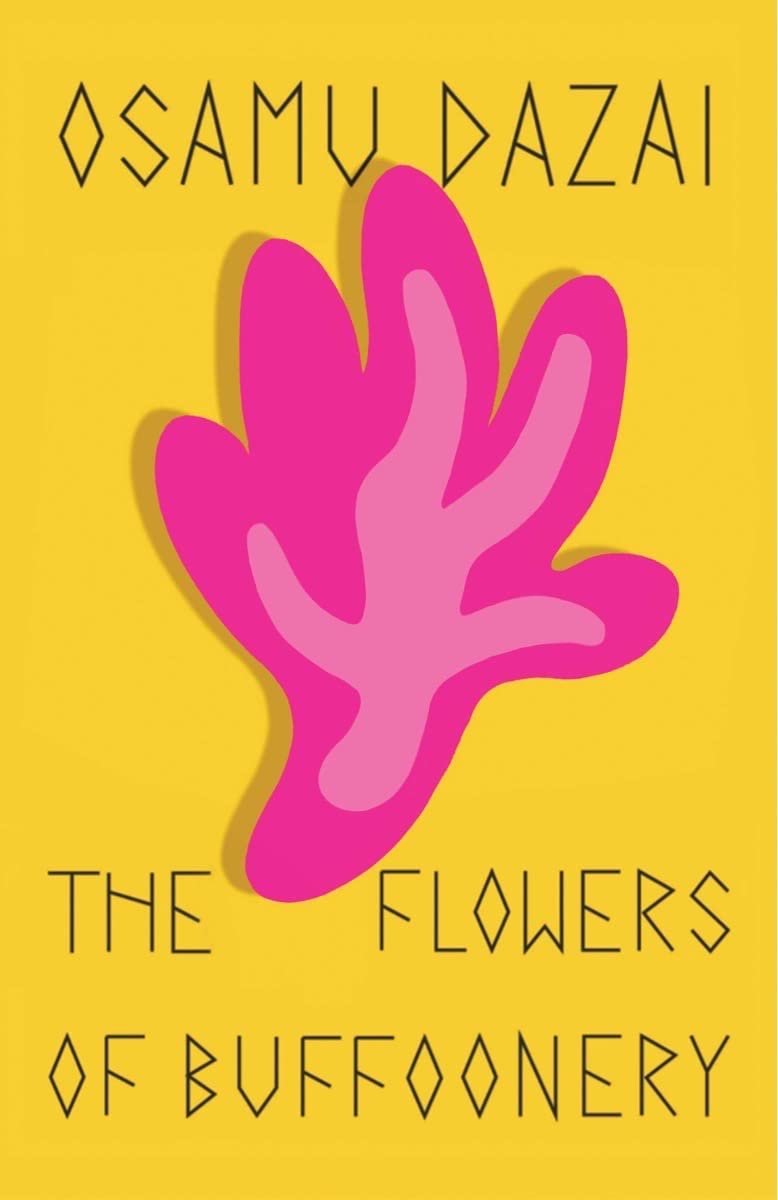
About The Flowers of Buffoonery Book by Osamu Dazai: Dark Humour Behind a Smiling Mask
The Flowers of Buffoonery Book by Osamu Dazai is a short, strange, and deeply human novella about a young man who uses jokes to hide pain. It follows Yozo Oba, the unforgettable central figure from No Longer Human, at an earlier point in his life. Readers meet him inside a seaside sanatorium after a failed suicide attempt in which the young woman beside him died.
Friends and family come to see Yozo. Nurses, police, and other people move through the room. The place should feel heavy, yet Yozo and his visitors keep making jokes, playing cards, smoking, teasing one another, and fighting for attention. Their clowning creates moments of real comedy, but the sadness underneath never fully leaves.
When a dark book feels too heavy
Some readers want to explore Osamu Dazai but feel unsure about beginning with the full darkness of No Longer Human. Others already know Yozo and want to understand how Dazai first shaped this troubled character. The Flowers of Buffoonery offers a useful doorway for both kinds of readers.
The novella is brief, focused, and often funny. Its setting is small, and much of the action happens through talk, gestures, visits, and the thoughts hidden behind jokes. This makes the story easier to enter than a long novel, while its emotional questions still have real weight.
Four uneasy days by the sea
The main action covers a short stay in a seaside sanatorium in prewar Japan. Yozo is there to recover and to remain under watch after the failed suicide attempt. He cannot simply leave the past outside the door. Questions about what happened, what he intended, and what will happen next remain close.
Visitors break the silence. They bring noise, friendship, family pressure, and old habits into the room. Card games and quick jokes make the group seem almost carefree. Yet every person knows that something terrible has happened. Their fun has an edge because it grows beside death and official investigation.
Meet the younger Yozo Oba
Yozo is clever, sensitive, frightened, and skilled at making himself look foolish. He watches other people closely because he does not feel safe being fully known. When a moment becomes serious, he may perform, joke, or turn himself into the clown of the room.
This behaviour can look charming. His friends may laugh, and readers may laugh too. But the comedy also shows how hard he works to control what others see. If everyone is watching the joke, perhaps they will not notice the fear behind it. If he mocks himself first, perhaps another person cannot hurt him as easily.
Yozo is not presented as a simple victim or hero. He can be selfish, tiring, tender, sharp, and weak. That mix makes him feel alive. Readers may care about him while also feeling angry with his choices. Dazai allows both responses, which is one reason Yozo remains such a memorable figure in Japanese literature.
Laughter that cannot hide everything
The title points toward the performance at the heart of the book. Buffoonery means silly or clownish behaviour. Flowers suggest something bright, soft, or briefly beautiful. Together, the words capture jokes growing in a place filled with guilt and sorrow.
The humour is not added only to entertain. It shows how the characters protect themselves. A joke can stop a hard question. A card game can fill an empty hour. Teasing can create closeness without asking anyone to say what they truly feel. These small acts help the group survive an uncomfortable visit.
Friendship among confused young people
The visitors do more than move the story forward. They show different ways of responding to fear. Some try to cheer Yozo. Some compete for attention. Some avoid direct emotional talk. Their behaviour may look careless, but affection can be felt beneath the noise.
These are young people who do not have perfect words for grief, guilt, or depression. They use the tools they know: jokes, cigarettes, cards, arguments, and shared time. Their company cannot solve Yozo’s deepest problems, yet it keeps him connected to the ordinary world for a little longer.
A narrator who steps onto the page
The story is not told like a smooth window into Yozo’s life. The narrator sometimes draws attention to the act of writing. He comments, interrupts, questions his choices, and reminds readers that this is a shaped story. These breaks can feel playful, awkward, or sharply honest.
This style fits a book about performance. Yozo performs for the people around him, while the narrator also performs for the reader. Both seem aware that words can reveal truth and hide it at the same time. The result is a story that watches itself being made.
The path toward No Longer Human
New Directions describes The Flowers of Buffoonery as a prequel to No Longer Human because both books centre on Yozo Oba, and this novella shows him at a younger age. However, Dazai wrote this work first, in 1935. No Longer Human appeared thirteen years later, in 1948.
The connection lets readers see how a major character grew across Dazai’s career. The younger Yozo already uses clowning to handle fear and distance. His shame, self-hatred, and trouble connecting with others are present, but this early story gives him more friendship, play, and comic energy.
No Longer Human later returns to related parts of Yozo’s life in a darker and broader form. The two books do not match like numbered adventure novels, and some details differ. It is best to see The Flowers of Buffoonery as an early companion and literary prequel rather than a required first volume.
Which book should you read first?
There is no required order. New readers can begin with The Flowers of Buffoonery because it is short and introduces the younger Yozo. Starting here shows his comic mask and emotional fear before the darker No Longer Human.
Readers who know No Longer Human can treat this novella as a look back. Familiar habits appear in a playful stage of Dazai’s writing, and Yozo seems open to friendship. Either route works because this book has its mood and ending. Reading it first creates a path forward; reading it later adds meaning to a character you already know well.
What makes the novella stand out
The story is compact, but it holds several tones at once. It can be comic, sad, self-aware, awkward, and gentle within a few pages. The small setting keeps attention on words and behaviour. A joke, silence, glance, or interruption may reveal more than a dramatic action.
Sam Bett’s translation brought the novella into English for the first time in the New Directions edition published in 2023. The book runs to ninety-six pages in that edition, making it a quick read that still invites thought and rereading.
Its greatest feature is the contrast between what people show and what they feel. Readers watch Yozo build a funny public face while his private fear remains visible. That contrast connects the novella to Dazai’s larger work while giving this book its own lighter, more playful identity.
What readers can take away
The first benefit is a fuller view of Osamu Dazai. Readers who know only his darkest work can discover his humour, playfulness, and interest in friendship. The book shows that he could make pain feel sharp without keeping every page equally bleak.
The second benefit is a deeper understanding of Yozo. His clowning is not just a strange habit. It is a way to manage fear, win approval, and avoid honest exposure. Seeing this pattern early can add meaning to No Longer Human.
The third benefit is room for discussion. The novella asks whether jokes can become a form of care, escape, dishonesty, or all three. It also raises questions about guilt, survival, emotional masks, and how young friends respond when they do not know the right thing to say.
Good moments to open this book
Choose it for a quiet evening, a short trip, or a weekend when you want to finish a complete literary work without starting a long novel. Its brief length makes it manageable, but the emotional layers can stay in the mind after the final page.
It works well for a book club discussing Japanese literature, dark comedy, unreliable narration, or mental health in fiction. A group can compare what Yozo says, what he performs, and what other people may understand. Students and writers can also study how Dazai changes tone quickly without losing the main mood.
The book can be a thoughtful gift for someone who loves No Longer Human, classic Japanese fiction, short literary books, or stories about outsiders. It may also suit a reader who wants to try Dazai but prefers a smaller and more humorous starting point.
Who is this book best for?
The Flowers of Buffoonery will appeal to readers who enjoy psychological fiction, dark humour, self-aware narrators, flawed characters, and stories where small conversations carry great weight. Fans of Osamu Dazai can see an important early form of his most famous character.
The novella contains suicide, death, depression, guilt, smoking, and self-hatred. Its jokes do not make these subjects harmless. Readers who find such themes difficult should choose the right time to read or check a fuller content guide first.
This is not a fast thriller with many twists. Its tension comes from mood, memory, conversation, and the gap between a smiling face and private pain. Readers who enjoy quiet but emotionally sharp fiction are most likely to value it.
Made for reading and rereading
Bookish Wonderland offers a reader-friendly copy for comfortable reading and regular use. Premium eye-soothing cream paper gives the pages a soft look, while crystal-clear print keeps the text sharp and easy to follow. High-quality stitched and glue binding supports longer book life. A durable finish makes the copy suitable for a personal shelf, class, reading group, or thoughtful gift.
Simple ordering from Bookish Wonderland
When comparing the Book price in Bangladesh for The Flowers of Buffoonery Book by Osamu Dazai, consider the reading comfort and physical quality along with cost. This short literary work can become a lasting companion to No Longer Human on your shelf.
Cash on Delivery is available nationwide, with delivery inside and outside Dhaka. Fast or urgent delivery is available in Dhaka when the book is needed quickly. Contact Bookish Wonderland through Facebook or Instagram to confirm the current price, stock, delivery time, or customization needs.
Look behind the smile
The Flowers of Buffoonery begins in the shadow of death but refuses to stay in one emotional place. Its characters joke, argue, play, and reach toward one another while a painful truth sits quietly in the room. The result is brief, funny, uncomfortable, and unexpectedly tender.
Read it to meet the younger Yozo. Keep reading to see why his clowning matters. Then place it beside No Longer Human and notice how one character changed across thirteen years of Dazai’s work. This small book can open a much larger conversation about loneliness, friendship, performance, and the fear of being truly seen.
Order The Flowers of Buffoonery Book by Osamu Dazai from Bookish Wonderland today. Bring home a darkly comic Japanese classic that reveals how the loudest laugh can sometimes hide the deepest pain.
If you require any customization or have any questions, please inbox us via FB or Insta.
| Primary Specification | |
| Author | Osamu Dazai |
| Translator | Sam Bett |
| Genre | Literary Fiction, Novella, Psychological Fiction, Dark Comedy |
| ISBN-13/ISSN | 978-0811234542 |
| ISBN-10 | 0811234541 |
| Publisher | New Directions |
| Publishing Date | March 7, 2023 |
| Language | English |
| Reading Age | 16+ |
| Physical Specification & Quality | |
| Paper Quality | Premium eye-soothing cream paper |
| Print Quality | Crystal-clear print |
| Pages | 96 pages |
| Country | Japan |
| Logistics Information | |
| Weight | 128 gm |
| Length | 8.5 inches |
| Width | 5.6 inches |
| Height | 0.3 inch |