

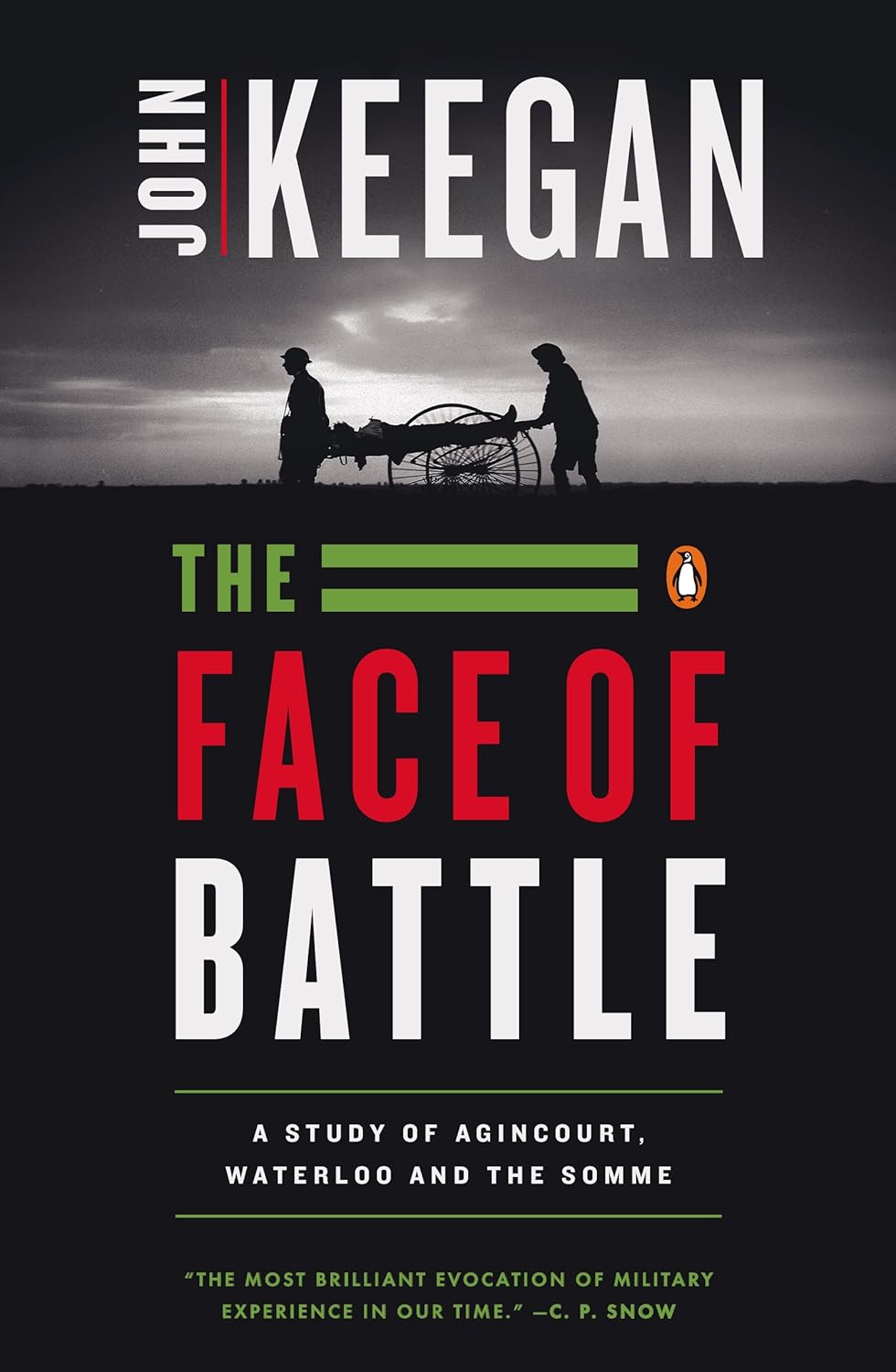
About The Face of Battle Book by John Keegan – See War Through the Eyes of the Soldiers Who Fought It
The Face of Battle Book by John Keegan changes the way military history is told. Instead of looking only at kings, generals, maps, and battle plans, Keegan asks a more human question: what was battle actually like for the people standing inside it?
The book studies three famous battles from three very different periods: Agincourt in 1415, Waterloo in 1815, and the Somme in 1916. Through these battles, Keegan looks at fear, noise, weapons, wounds, discipline, courage, confusion, and survival. He tries to understand what ordinary soldiers saw, heard, felt, and faced when fighting began.
This approach made the book important in modern military history. It is not simply about who won or lost. It is about what combat did to real people.
War history that feels close to the ground
Many military history books explain what commanders planned. That is useful, but it can make war feel like a game played on a map. The Face of Battle does something different.
Keegan moves close to the soldiers. He looks at how men stood in formation, how they reacted to weapons, how long they could keep fighting, and what happened when fear became too strong. He also asks how soldiers understood orders when smoke, noise, distance, and chaos made communication difficult.
This makes the book useful for readers who want more than dates and troop movements. It gives a sense of what battle may have felt like from inside the line.
You still learn about tactics and weapons, but those details are connected to human experience. A longbow matters because of what it did to men on the field. A musket matters because of its range, smoke, sound, and effect on troops. Artillery matters because people had to stand under it.
Three battles, three very different worlds
Keegan chooses Agincourt, Waterloo, and the Somme because they show how battle changed across five centuries.
Agincourt brings readers into the age of knights, longbows, mud, close fighting, and armies moving on foot. Keegan looks at the famous English victory while asking what the battlefield may have looked and felt like to those taking part.
Waterloo moves the story into the age of muskets, cavalry, cannon, and disciplined formations. The battle was fought in 1815 and helped end Napoleon's rule. Keegan studies how soldiers behaved under fire and how the structure of battle shaped their choices.
The Somme brings the reader into industrial war. Machine guns, heavy artillery, trenches, and mass armies created a kind of danger very different from Agincourt or Waterloo.
By placing these battles beside one another, Keegan shows both change and continuity. Weapons change. Armies change. Fear, confusion, and the need to survive remain.
Why this book changed military history
The Face of Battle became famous because Keegan challenged the traditional way battles were often written.
Older battle histories could sound neat. One army moved here. Another attacked there. A commander gave an order. A line broke. Victory followed.
Real combat is rarely that clean.
Keegan asks what happened between those simple lines. Could soldiers actually see what was happening? Could they hear commands? How did they react when friends were wounded? Why did some units stand while others ran? How much could one person understand while surrounded by smoke, mud, noise, blood, and fear?
These questions make the book feel different from a simple campaign history.
Readers begin to see that a battle is not one experience. A general far from the front, an officer leading a unit, and a soldier in the front line may all experience the same event in very different ways.
Agincourt beyond the legend
The Battle of Agincourt is often remembered as a famous English victory. Keegan looks beyond the legend and asks how the fighting actually worked.
He examines the role of archers, armored men, terrain, movement, and close combat. Mud, crowding, physical exhaustion, and limited space become important parts of the story.
This helps readers understand that medieval battle was not simply heroic men meeting in a clean contest. It could be confusing, exhausting, and brutal.
Keegan's method makes the battlefield easier to imagine. The reader is encouraged to think about weight, distance, movement, fear, and the limits of the human body.
For anyone interested in medieval warfare, this section offers a strong example of how military history can become more human without losing serious analysis.
Waterloo from the soldier's view
Waterloo is one of the most famous battles in European history, but Keegan again looks past the grand story.
He studies infantry, cavalry, artillery, formations, discipline, and the pressure soldiers faced while waiting under fire. He asks how troops could remain in place when danger was visible and immediate.
This section helps explain why training and unit discipline mattered so much. Soldiers did not fight as isolated individuals. They depended on formation, orders, trust, habit, and the people standing beside them.
Keegan also shows how weapons shaped behavior. Muskets, cannon, and cavalry attacks created different kinds of fear and required different responses.
Readers interested in Napoleon, Wellington, and the Napoleonic Wars will find familiar history here, but the focus stays on the experience of combat rather than only command decisions.
The Somme and the horror of industrial war
The Somme section brings the book into the First World War and a battlefield changed by machines.
Artillery could strike from far away. Machine guns could kill quickly. Trenches could protect soldiers but also trap them inside mud, fear, waiting, and repeated danger.
Keegan studies what these conditions meant for the men who had to leave cover and move across open ground.
The scale is larger than in the earlier battles, but the human question remains the same. How does a person keep moving when the danger is so clear? What does training do? What does loyalty do? What happens when plans made behind the lines meet the reality of the battlefield?
This section can be difficult to read because the subject is grim, but it gives the book much of its lasting power.
Not just strategy, but human behavior
The Face of Battle is useful because it connects military history with psychology and human behavior.
Keegan studies courage without treating soldiers as fearless. He looks at fear as a normal part of combat. He also considers discipline, group pressure, leadership, training, exhaustion, and the instinct to survive.
This makes the book useful even for readers who are not deeply interested in military strategy.
At its heart, the book asks how human beings behave under extreme pressure.
Why do people stay? Why do they run? Why do they obey? How do they continue when they are tired, frightened, wounded, or surrounded by death?
Those questions make the book about people as much as warfare.
Who should read The Face of Battle?
This book is a strong choice for readers who enjoy military history, European history, the Napoleonic Wars, the First World War, medieval warfare, military strategy, and serious nonfiction.
It can also help university students, history teachers, researchers, military studies readers, and anyone who wants to understand how historians can study battle from a human point of view.
The writing is detailed, so it may not suit readers looking for a very short or simple war summary. It works best for readers who enjoy careful explanation and want to understand why a battle felt different to those who actually fought in it.
You do not need to be a military expert before starting. Keegan explains his ideas clearly enough for general history readers, though some sections reward slow reading.
A useful book for study and discussion
Students can use The Face of Battle to think about how history is written.
The book does not only provide information about three battles. It also questions the sources historians use and the limits of traditional battle stories.
That makes it useful for essays about military history, historical method, combat experience, leadership, technology, or the changing nature of warfare.
Book clubs and history groups can also discuss the differences between the three battles. Which changes came from weapons? Which came from military organization? Which human reactions stayed similar across time?
The book gives readers a way to compare warfare without treating soldiers as numbers on a page.
A premium reading copy from Bookish Wonderland
Bookish Wonderland offers a premium printed copy made for readers who want a comfortable and durable history book.
The copy uses premium eye-soothing cream paper, giving the pages a softer look during longer study sessions. Crystal-clear print keeps names, dates, battle details, and longer explanations sharp and easy to follow. High-quality stitched and glue binding gives the book better support for repeated opening, note-taking, study, and long-term shelf storage.
Nationwide delivery is available across Bangladesh. Cash on Delivery is available throughout the country, with delivery both inside and outside Dhaka. Customers in Dhaka may also ask about fast or urgent delivery when available.
The Face of Battle Book by John Keegan price in Bangladesh
If you are searching for The Face of Battle Book by John Keegan price in Bangladesh, Bookish Wonderland gives you a simple way to order a premium printed copy from home.
Readers in Dhaka and other parts of the country can order without visiting several bookstores. Cash on Delivery keeps the payment process simple, while nationwide delivery makes this important military history title easier to access.
For a book that may be used for study, reference, or repeated reading, physical quality matters. Clear print, comfortable paper, and strong binding can make the book easier to use for years.
Best Sellers Rank of This Book
-
#55,057 in Books
-
#3 in Napoleonic War History (Books)
-
#49 in Military Strategy History (Books)
-
#261 in European History (Books)
Why this book still matters
The Face of Battle remains important because it asks a question that never becomes old: what is war like for the person who must actually fight it?
Technology changes. Weapons become stronger. Armies become larger or smaller. Yet human beings still face fear, uncertainty, pain, loyalty, and the need to act under pressure.
Keegan's method helps readers look past heroic language and simple maps. He brings attention back to bodies, senses, choices, and limits.
That approach can change how you read other war histories. After this book, a line such as “the infantry advanced” may no longer feel simple. You may begin to ask what those soldiers could see, what they heard, how tired they were, and why they kept moving.
That is the lasting strength of the book.
Bring a military history classic to your shelf
Order The Face of Battle Book by John Keegan from Bookish Wonderland if you want a military history book that looks beyond generals and gives serious attention to the people inside battle.
Read it for Agincourt, Waterloo, and the Somme. Keep reading for Keegan's questions about fear, discipline, weapons, courage, survival, and the changing experience of combat.
For readers comparing Book price in Bangladesh, this title offers lasting value for study, personal reading, and military history collections.
Bookish Wonderland makes ordering simple with nationwide delivery and Cash on Delivery. Add your premium copy to the shelf and discover why The Face of Battle changed the way many readers and historians think about warfare today.
If you require any customization or have any questions, please inbox us via FB or Insta.
| Primary Specification | |
| Author | John Keegan |
| Narrator | Simon Vance |
| Genre | Military History, European History, Warfare Studies, Military Strategy |
| ISBN-13/ISSN | 978-0140048971 |
| ISBN-10 | 0140048979 |
| Publisher | Penguin Books |
| Publishing Date | January 27, 1983 |
| Edition | Later Printing (28th) |
| Language | English |
| Reading Age | 16+ years |
| Format | Printed book |
| Physical Specification & Quality | |
| Paper Quality | Premium eye-soothing cream paper |
| Binding Quality | High quality stitched and glue binding (for longevity) |
| Print Quality | Crystal-clear print |
| Pages | 376 pages |
| Country | UK |
| Logistics Information | |
| Weight | 383g |
| Length | 8.5 inch |
| Width | 5.6 inch |
| Height | 0.67 inch |