

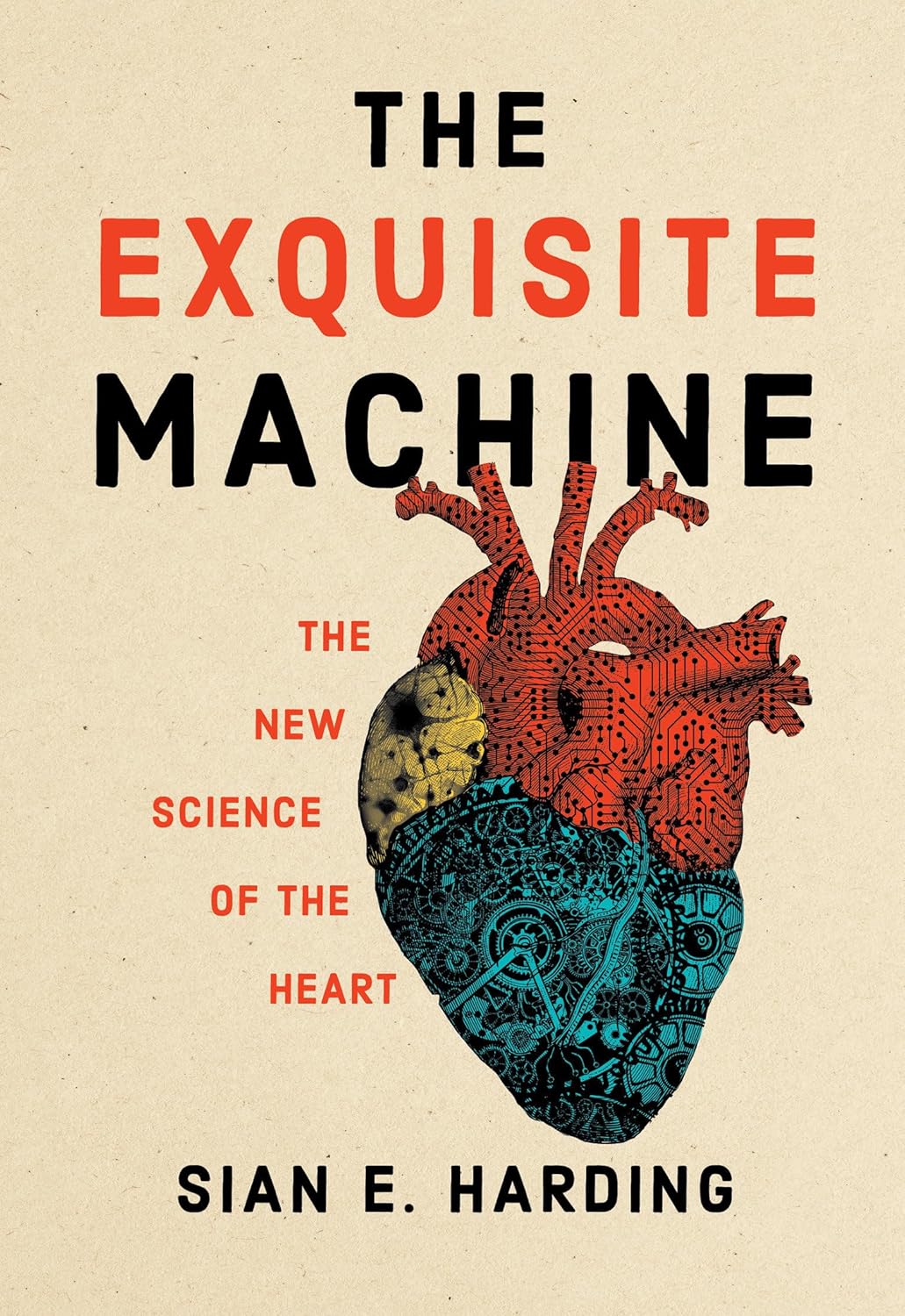
About The Exquisite Machine by Sian E. Harding: Discover the New Science of the Human Heart
Your heart works every second of every day. It keeps beating while you sleep, work, walk, laugh, worry, and dream. Yet most people know very little about this amazing organ. The Exquisite Machine by Sian E. Harding changes that by taking readers inside the human heart and explaining its secrets in a clear, exciting, and deeply human way.
This is not only a book about illness. It is a celebration of the heart and everything it does to keep us alive. Harding shows why the heart is more complex than any pump people have been able to build. She also explains what happens when it becomes damaged, why repairing it is so hard, and how new science may transform heart care in the future.
The book brings together biology, medicine, engineering, genetics, technology, and real patient experiences. It looks at heart attacks, unusual heart rhythms, stress-related heart failure, inherited conditions, and the close link between emotions and the heart. Readers also discover how scientists are using stem cells, gene editing, artificial intelligence, and advanced imaging to study this remarkable organ.
If medical science often feels too difficult, this book offers a helpful solution. Harding uses stories, examples, and simple comparisons to make complex ideas easier to follow. You do not need to be a doctor or science student to enjoy it. You only need curiosity about your body and the organ that keeps your life moving.
The Organ You Use Every Moment but Rarely Understand
People often think of the heart as a simple pump. It takes blood in and pushes blood out. That basic idea is correct, but it leaves out a world of wonder. The heart must produce the right force, keep a steady rhythm, respond to changing needs, and continue working without rest.
When you run, your muscles need more oxygen, so your heart works faster. When you sleep, your body needs less, so the heart adjusts. Fear, excitement, sadness, heat, exercise, illness, medicine, and age can all change how it works. The heart must answer these changes quickly while keeping blood moving through the body.
The Exquisite Machine helps readers understand how this happens. It explores the heart as a living system made of specialised cells, electrical signals, muscle, valves, blood vessels, and chemical messages. Each part has a job, but all the parts must work together.
Harding invites readers to see this organ with fresh eyes. Instead of treating it as a machine hidden inside the chest, she presents it as one of nature’s greatest works. Its design is strong, careful, flexible, and beautiful. The more we learn about it, the more surprising it becomes.
Why Heart Science Can Feel So Difficult
Medical books often use long words without giving readers enough help. This can make an important subject feel cold or confusing. A reader may want to understand heart disease but stop because the language is too technical. Others may find health books frightening because they focus only on danger.
Sian E. Harding takes a warmer and more inviting path. She brings decades of knowledge to the page but does not write only for experts. She explains the science through useful examples, discoveries, patient experiences, and questions that connect the heart to everyday life.
The result is a book that teaches without feeling like a school textbook. It can help readers understand why the heart sometimes fails, what doctors and scientists can currently do, and where important limits remain. It also explains why every promising discovery does not become a treatment at once.
This honest view is one of the book’s strengths. Harding shares the hope created by modern research while respecting how hard medical progress can be. Readers receive wonder, facts, and real scientific thinking instead of easy promises.
Can a Person Truly Die from a Broken Heart?
The link between feelings and the heart is one of the most memorable parts of the book. For a long time, people have used phrases such as “heartache” and “broken heart” to describe emotional pain. Modern medicine has shown that this link is not only poetic.
A sudden shock, deep grief, fear, or severe stress can cause powerful changes inside the body. In some people, these changes may lead to a condition commonly called broken heart syndrome. Its signs can look like a heart attack, even when the usual kind of blocked artery is not responsible.
Harding explains how stress hormones can affect heart muscle and why the condition does not affect everyone in the same way. This subject shows that the heart and emotions are closely connected through real systems in the body.
The discussion also helps readers move beyond the old idea that emotion belongs only to the brain. The brain, nerves, hormones, blood vessels, and heart are always sharing information. Our feelings can change the body, and signals from the body can also shape how we feel.
This part of The Exquisite Machine by Sian E. Harding is useful for readers interested in psychology as well as medicine. It joins physical and emotional life in a way that feels personal, clear, and meaningful.
What Happens When the Heart Is Hurt?
The heart is strong, but it has limits. When part of the heart loses its blood supply during a heart attack, heart muscle cells can die. Unlike some other parts of the body, adult heart muscle has only a limited ability to replace badly damaged tissue.
That creates a major problem for medicine. Doctors can open blocked arteries, support blood flow, control symptoms, and reduce further harm. However, rebuilding healthy heart muscle is much harder. Scientists have spent years trying to understand why the heart repairs itself poorly and how that problem might be solved.
Harding explains the forces that shaped the heart through evolution. The same design that makes it efficient may also make repair difficult. New cells must not simply exist; they must join the heart correctly, contract at the right time, and respond to its electrical system. A poorly connected cell could create new risks instead of healing damage.
This clear explanation helps readers understand why headlines about miracle treatments should be viewed carefully. A discovery in a laboratory is important, but it may take years of testing before it can safely help patients.
A Clear Look at the Future of Heart Medicine
The book introduces several tools that are changing cardiac research. Advanced imaging lets scientists see the heart and its cells in greater detail. Gene studies help them find changes linked to inherited disease. Artificial intelligence can examine large amounts of information and discover patterns that people may miss.
Stem cells may offer ways to grow or study heart cells. Gene editing could help researchers understand certain genetic conditions and may support new treatments. Better laboratory models allow scientists to test ideas without starting directly in the human body.
Harding makes these technologies exciting while keeping the discussion grounded. She shows what they can do, what researchers hope they may do, and what problems remain. This balance is valuable because medical news often makes early research sound like a finished cure.
Readers can see that progress is built through many careful steps. Scientists ask a question, test an idea, study the results, check for danger, and repeat the work. Successful treatment also requires cooperation between researchers, doctors, engineers, patients, and public health experts.
The book therefore offers more than a list of inventions. It shows science as an active process filled with effort, doubt, learning, failure, and hope.
Real Lives Behind the Medical Terms
Heart disease is not just a collection of numbers. It changes the lives of patients, families, friends, and caregivers. The Exquisite Machine includes human experiences that show what medical events can feel like outside a laboratory.
Readers encounter the fear and confusion linked to heart attacks, dangerous rhythms, and sudden heart failure. These experiences give weight to the scientific sections. They remind us why heart research matters and why better understanding can save or improve lives.
The patient stories also make difficult ideas easier to remember. A medical term becomes clearer when readers can connect it with a real event. This approach keeps the book from becoming a dry list of body parts and diseases.
Harding treats these experiences with care. She does not use fear simply to create drama. Instead, she helps readers understand the problem, the body’s response, and the work being done to develop better answers.
This human side makes the book suitable for anyone who has watched a loved one face heart disease. It may also help general readers understand what patients and doctors must consider when treatment choices are not simple.
Who Will Enjoy This Book?
This book is an excellent choice for readers who enjoy popular science, medicine, biology, health, or technology. It is also useful for people who want to understand their bodies without reading a full medical textbook.
Students may use it to explore cardiac science and modern research. Teachers can recommend it as an approachable introduction to the heart. Healthcare workers may enjoy the wider history and research stories, while general readers can discover how everyday feelings and habits connect with heart function.
It can also make a thoughtful gift for a medical student, doctor, nurse, biology learner, science lover, or curious adult. Readers who enjoyed books about the brain, genetics, the immune system, or human anatomy may find this subject equally rewarding.
The book does discuss disease and serious medical events, but it is not written as a personal diagnosis or treatment guide. Anyone worried about symptoms or heart health should speak with a qualified medical professional. This book is best used for learning and understanding.
What Makes the Reading Experience Special?
The greatest benefit of this book is perspective. After reading it, a heartbeat may no longer feel like an ordinary background sound. Readers can begin to understand the careful activity behind every beat and the many systems that make it possible.
The book also builds better science awareness. It shows why medical problems rarely have one easy answer and why research needs time. This can help readers judge exciting health headlines with more care.
Another benefit is the connection between different fields. Biology explains cells and tissues. Physics helps explain pressure and flow. Engineering offers models and devices. Genetics helps reveal inherited risk. Computing and artificial intelligence find patterns in large sets of information. The heart brings all these fields together.
Most importantly, Harding makes readers feel wonder. She shows that science is not only about facts to remember. It is also a way to look closely at life and ask how something so complex continues to work.
A Premium Edition Made for Comfortable Reading
Bookish Wonderland offers this title in a reader-friendly printed format created for regular use and long-term collection.
The pages use premium eye-soothing cream paper. The soft cream shade reduces the harsh glare often caused by bright white pages, helping readers stay comfortable during longer reading sessions.
Crystal-clear printing keeps the letters sharp, clean, and easy to follow. This is especially helpful in a science book where readers may need to slow down, study an idea, or return to an earlier section.
The book uses high-quality stitched and glue binding for longevity. This strong binding helps hold the pages securely through repeated reading while allowing the book to remain a dependable part of your personal library.
Together, these features provide a comfortable and durable reading experience without taking attention away from the author’s ideas.
A Book for Quiet Learning and Meaningful Discussion
The Exquisite Machine works well in many reading situations. You can read it slowly at home, take notes for a science class, use it to begin a discussion, or give it to someone who loves learning about the human body.
It is a good weekend read for curious adults who want something informative but engaging. It can support students who are considering medicine, biology, biomedical engineering, or health science. Book clubs can use it to discuss the relationship between the body and emotion, the limits of medical technology, and the future of healthcare.
Families affected by heart disease may also find the general science helpful, although the book should never replace advice from a doctor. Its purpose is to open the subject, explain important ideas, and inspire informed questions.
Why Buy from Bookish Wonderland?
Bookish Wonderland brings readers a large collection of premium and durable English books. Each edition is prepared for people who care about easy reading, clean printing, and lasting physical quality.
Customers can order from anywhere in Bangladesh. Nationwide delivery is available both inside and outside Dhaka, and Cash on Delivery makes buying easier for readers who prefer to pay when their order arrives.
Readers in Dhaka can also ask about fast or urgent delivery when they need a book quickly. This can be helpful when buying for a class, a birthday, a special gift, or an upcoming reading plan.
If you are searching for The Exquisite Machine by Sian E. Harding price in Bangladesh, Bookish Wonderland offers a convenient way to order this fascinating science title and receive it at your chosen address.
Bring the Hidden Story of Your Heart to Your Bookshelf
Every person carries this remarkable machine, yet few understand how much work happens inside it. The Exquisite Machine by Sian E. Harding gives you the chance to explore that hidden world through clear science, human stories, and a hopeful look at future medicine.
It can change how you think about every heartbeat. It can help you understand why heart disease is difficult to treat, why emotions can affect the body, and why new discoveries matter. Most of all, it can make you appreciate the quiet organ that has worked for you from the beginning of your life.
Order your copy from Bookish Wonderland today and enjoy a premium printed edition with eye-soothing cream paper, crystal-clear text, and strong stitched and glue binding. Cash on Delivery and nationwide delivery are available, with fast or urgent delivery options in Dhaka.
If you require any customization or have any questions, please inbox us via FB or Insta.
| Primary Specification | |
| Author | Sian E. Harding |
| Narrator | Polly Lee |
| Genre | Popular Science, Medicine, Cardiology, Cardiovascular Health, Human Biology |
| ISBN-13/ISSN | 978-0262548410 |
| ISBN-10 | 0262548410 |
| Publisher | The MIT Press |
| Publishing Date | February 6, 2024 |
| Language | English |
| Reading Age | 18+ years |
| Format | Printed book |
| Physical Specification & Quality | |
| Paper Quality | Premium eye-soothing cream paper |
| Binding Quality | High quality stitched and glue binding (for longevity) |
| Print Quality | Crystal-clear print |
| Pages | 232 pages |
| Country | United States |
| Logistics Information | |
| Weight | 253 gm |
| Length | 8.5 inches |
| Width | 5.6 inches |
| Height | 0.63 inch |