

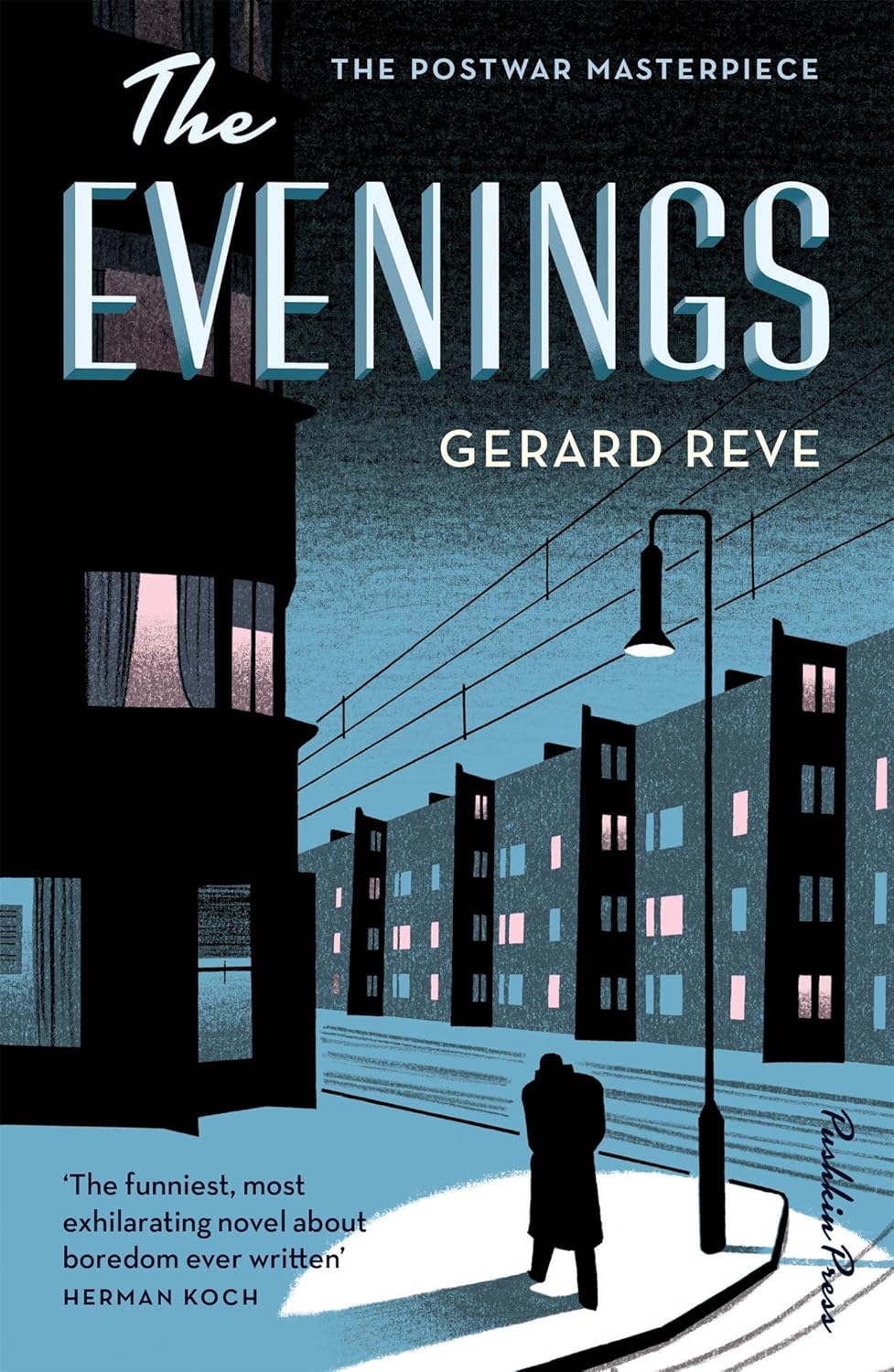
About The Evenings by Gerard Reve: Ten Darkly Funny Nights in Postwar Amsterdam
What happens when each day feels empty, every family talk becomes annoying, and bedtime seems like the only clear goal? The Evenings by Gerard Reve turns that quiet problem into a strange, funny, and deeply human novel. It follows Frits van Egters, a twenty-three-year-old office worker, through the final ten days of 1946. The war has ended, but peace has not filled his life with purpose. He works, returns to his parents' home, watches the clock, visits friends, walks through cold Amsterdam streets, and tries to reach the end of another evening.
This may sound simple because it is simple. There is no treasure to find, murder to solve, or grand love affair to complete. The power comes from watching Frits closely. His sharp thoughts, cruel jokes, bad dreams, awkward talks, and small moments of care reveal a young man who does not know what to do with himself. Gerard Reve makes boredom feel tense and ordinary life feel mysterious.
The novel was first published in Dutch as De avonden in 1947. The English version is translated by Sam Garrett, whose clear language carries the book's dry humour and uneasy mood into English. Long treated as a major Dutch classic, this is a book for readers who want to discover how much meaning can hide inside meals, walks, silence, family habits, and time slowly passing.
Ten Days at the End of a Difficult Year
Frits lives with his mother and father in Amsterdam. By day, he holds a dull office job. By evening, he looks for ways to fill the hours. He listens to the radio, eats plain meals, drinks, smokes, reads, visits people, tells stories, and moves through the dark winter city. He checks the time again and again, as if the clock is both his enemy and his guide.
Each chapter covers one day, beginning on 22 December and moving toward New Year's Eve. This simple shape gives the novel a steady rhythm. Readers know the year must end, but the question is how Frits will reach that ending. His evenings may look alike from outside, yet every visit and conversation reveals another part of his restless mind.
Frits is troubled by dreams of death and damage. He notices illness, age, bald heads, weak bodies, and small physical flaws. He asks rude questions and tells dark stories that can make his friends uncomfortable. Sometimes he sounds playful. Sometimes he sounds cruel. Beneath the jokes is a fear that life is moving forward while he remains stuck.
Meet a Main Character Who Is Hard to Forget
Frits is not designed to be a sweet hero. He can be selfish, strange, rude, and tiring. He teases his friends about losing their hair. He studies his parents with cold irritation. He often says the wrong thing on purpose, then watches what happens. Yet he is not empty. His private thoughts show fear, loneliness, shame, and a hidden wish to care.
His parents are also more than targets for his anger. Their small habits bother him, from the food they serve to the sounds they make. However, the house is still his shelter. As the ten days pass, the family scenes grow from simple annoyance into something more tender and sad. The final evening gives new meaning to many earlier moments without turning Frits into a different person overnight.
When You Are Tired of Predictable Plots
Some readers want every chapter to bring a shock, fight, secret, or romance. Other readers become tired of books that rush from one large event to the next. The Evenings offers a different kind of pull. It asks you to notice the words people repeat, the thoughts they hide, and the strange ways they survive a boring day.
If fast stories have started to feel alike, this novel can refresh your attention. The problem is small but universal: how do you live when nothing seems important? Reve does not hand Frits an easy dream or sudden mission. Instead, he shows that being seen, remembering, joking, and paying attention may keep a life from disappearing completely.
The slow pace is part of the design. Repeated meals, visits, jokes, and clock checks create the same pressure Frits feels. You are not only told that he is bored; you enter the shape of his boredom. Yet the writing keeps changing the emotional colour. A plain talk can become funny, cruel, frightening, or unexpectedly gentle within a few lines.
Dark Humour in the Most Ordinary Places
The Evenings is bleak, but it is not without fun. Much of its comedy comes from timing. Frits asks odd questions with a serious face. He returns to the same subjects until his friends know what is coming. Family conversations become funny because everyone talks past everyone else. A poor meal or a small lie can carry the weight of a national disaster.
This humour is dry and often uncomfortable. The book makes jokes about illness, injury, death, ageing, and the body. Frits can be unkind, and modern readers may find some remarks offensive. The point is not that every joke is good. The jokes show how he tests other people, fights silence, and protects himself from fear.
A Postwar Story Without Battle Scenes
The book takes place soon after the Second World War, but it does not tell a usual war story. There are no battle scenes or long history lessons. Instead, the war remains around the edges. Food is plain, goods are hard to find, and people carry tired habits into peace. Life has continued, but the mood of fear and loss has not simply vanished.
This quiet background makes Frits's boredom more meaningful. A huge event has ended, yet he has no clear place in the new world. His aimless days show a generation trying to live after danger without knowing what normal life should feel like. The book captures this feeling through rooms, streets, dreams, and small talk rather than direct speeches.
Why This Dutch Classic Still Feels Modern
Although the story is set in 1946, Frits's worries can feel close to life today. He has a job that gives him little pride. He lives with his parents as an adult. He struggles to use his free time. He makes dark jokes, watches the clock, avoids serious plans, and wonders whether his life matters. These feelings are easy to recognise across time and place.
The publisher describes The Evenings as a modern masterpiece, and the Society of Dutch Literature ranked it as the Netherlands' best twentieth-century novel. Its lasting place comes from its ability to make the smallest parts of life feel worth watching. The book argues, quietly, that an ordinary day does not become meaningless simply because no great event happens.
Is The Evenings Right for You?
Choose this novel if you enjoy literary fiction, Dutch classics, translated books, dark comedy, postwar settings, and deep character studies. It is a good match for readers who liked the lonely mood of The Stranger, the social unease of The Catcher in the Rye, or stories where daily routine matters more than action.
It can also work well for book clubs and literature students. Readers can discuss why Frits watches time, why he thinks so often about death and baldness, how the war shapes the background, and whether his final words show hope. Different readers may see him as cruel, frightened, funny, loving, or all four at once.
This is not the best choice for someone who needs a quick plot, constant action, a clear romance, or an easy hero. The repeated routine is intentional, and the book asks for patience. Adult readers should also expect smoking, drinking, disturbing dreams, cruel humour, talk of death and bodily harm, and language or attitudes shaped by its time.
English That Keeps the Dutch Mood
Sam Garrett's translation gives English readers a direct and readable path into Reve's work. The sentences often feel plain, which helps the odd jokes and dark thoughts arrive without warning. The dialogue sounds natural while keeping the stiff, uncomfortable feeling of many conversations. This balance matters because too much decoration would weaken the book's dry voice.
The translation also lets readers outside the Netherlands enter an important part of Dutch literature. You do not need to know Dutch history before starting. The main details are easy to follow: a young man, his parents, his friends, a cold city, and ten nights before a new year. The deeper setting becomes clear through what people eat, say, avoid, and remember.
A Premium Copy for Slow, Comfortable Reading
Bookish Wonderland offers a reader-friendly printed copy made for regular reading and shelf use. Premium eye-soothing cream paper gives each page a warm colour that feels comfortable during long sessions. Crystal-clear print keeps the text sharp, while high-quality stitched and glue binding helps the pages remain secure through careful reading and future returns.
When checking the book price in Bangladesh for The Evenings by Gerard Reve, consider both the story and the reading quality. This edition combines a respected translated classic with comfortable paper, clean text, strong binding, and support from a local bookstore.
What This Book Adds to Your Shelf
- A complete standalone story with no sequel needed.
- A major Dutch novel available in clear English translation.
- Ten carefully shaped days in the life of one unforgettable young man.
- Dry humour mixed with sadness, fear, family tension, and quiet hope.
- A close view of ordinary life in postwar Amsterdam.
- Rich discussion topics for book clubs, students, and serious readers.
- A durable printed copy prepared for comfortable reading and rereading.
The main benefit is a new way of seeing daily life. After following Frits, a clock, meal, family habit, or empty evening may feel different. Reve shows that boredom is not nothing. It can hold fear, comedy, memory, anger, and the first small movement toward care.
Read It Across Ten Evenings
One rewarding way to enjoy the novel is to follow its own shape. Read one chapter each evening for ten nights. This lets you feel the passing time without rushing and gives each dream, visit, and family scene room to settle. You can also read it near the end of December, when the winter setting and approach of New Year's Eve feel especially close.
Give it to a reader who enjoys uncommon classics, slow books, sharp character writing, or stories translated from other languages. It also makes a thoughtful choice for someone interested in Amsterdam, European history, or the emotional life that continues after war.
Spend Ten Unforgettable Evenings with Frits
The Evenings by Gerard Reve can make an empty room, a cold walk, or a family meal feel full of hidden life. It is funny without being light, sad without losing hope, and ordinary in a way that becomes unforgettable. Order this Dutch classic from Bookish Wonderland and discover why Frits van Egters still speaks to readers many decades after his final evening, even today.
Cash on Delivery is available throughout Bangladesh. Bookish Wonderland delivers inside and outside Dhaka, with fast or urgent delivery in Dhaka when available. For the current price, delivery time, or help with your order, message Bookish Wonderland through Facebook or Instagram. Place it on your shelf, open the first winter evening, and let the final ten days of 1946 slowly reveal their strange beauty.
If you require any customization or have any questions, please inbox us via FB or Insta.
| Primary Specification | |
| Author | Gerard Reve |
| Translator | Sam Garrett |
| Narrator | Daniel Collard |
| Editor | Tetragon |
| Genre | Literary Fiction, Postwar Fiction, Existential Fiction, Dark Comedy, Coming-of-Age Fiction |
| ISBN-13/ISSN | 978-1805330264 |
| ISBN-10 | 1805330268 |
| Publisher | Pushkin Press Classics |
| Publishing Date | October 1, 2024 |
| Edition | 1st |
| Language | English |
| Reading Age | 16+ |
| Format | Printed Book |
| Physical Specification & Quality | |
| Paper Quality | Premium eye-soothing cream paper |
| Binding Quality | High quality stitched and glue binding (for longevity) |
| Print Quality | Crystal-clear print |
| Pages | 320 pages |
| Country | Netherlands |
| Logistics Information | |
| Weight | 342 gm |
| Length | 8.5 inches |
| Width | 5.6 inches |
| Height | 0.95 inch |