

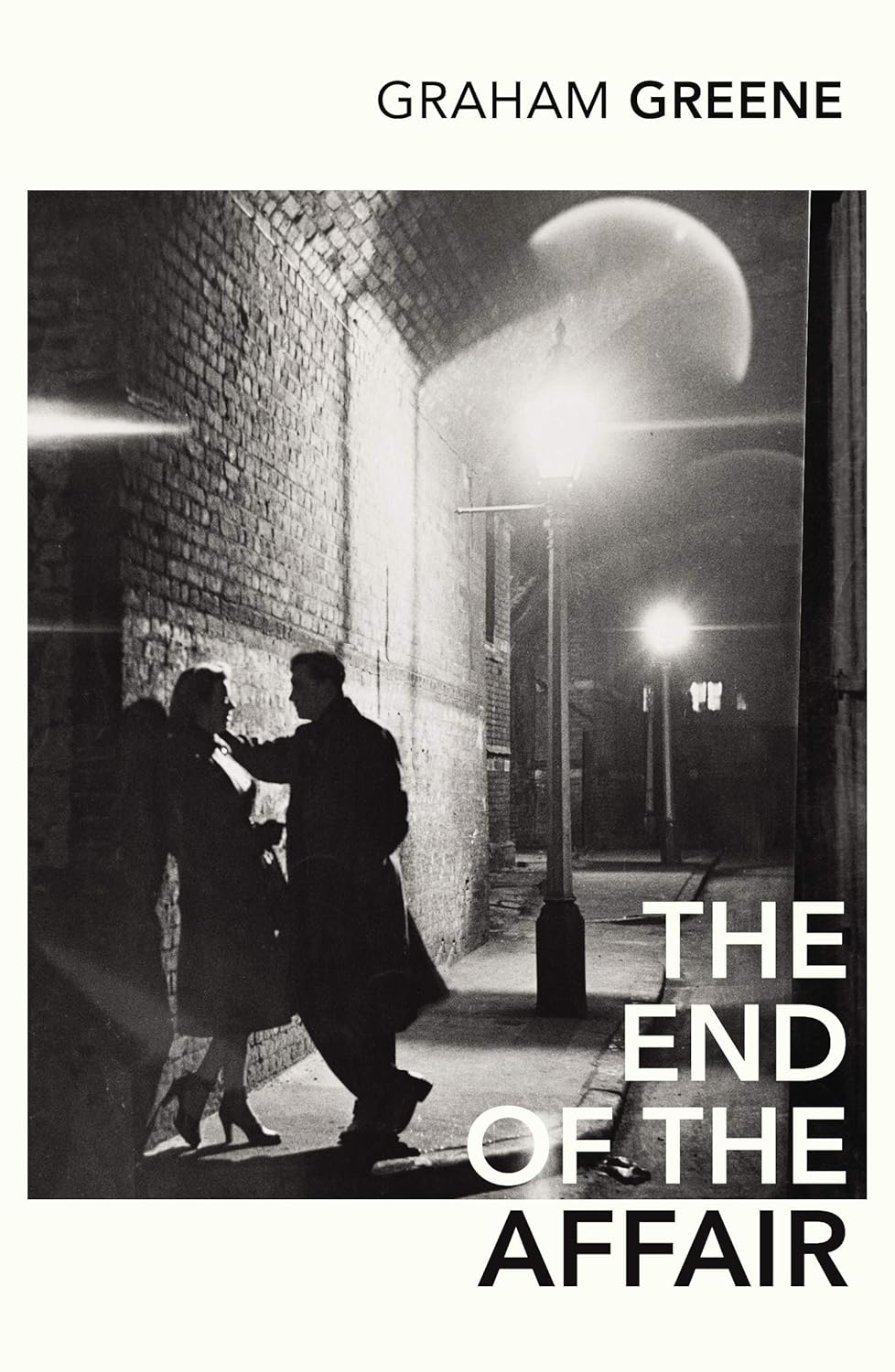
About The End of the Affair by Graham Greene: A Powerful Story of Love, Jealousy, and Faith
A love affair ends without a clear reason. The man left behind cannot accept the silence. He wants an answer, even if the truth hurts more than the loss. The End of the Affair by Graham Greene begins with this painful need and turns it into a moving story about love, hate, jealousy, marriage, memory, and belief.
Set in London during and after the Second World War, the novel follows writer Maurice Bendrix. Years earlier, he began a secret relationship with Sarah Miles, the wife of civil servant Henry Miles. Maurice and Sarah shared a strong passion, but Sarah suddenly ended their affair. She gave Maurice no explanation that could calm his anger. Two years later, a chance meeting with Henry brings every old feeling back.
When Love Ends but Obsession Does Not
Many love stories focus on how two people meet. Graham Greene begins with what remains after a relationship has broken. Maurice cannot stop thinking about Sarah. He tells himself that he hates her, but his anger shows how deeply he still cares. Every memory becomes evidence he studies again and again.
The problem is not only that he lost Sarah. He does not know why she left. Without an answer, he imagines new lovers, hidden lies, and private betrayals. His mind turns love into a kind of investigation. When Henry shares his own worries about Sarah, Maurice sees a chance to learn what she has been doing.
Maurice Bendrix Is Honest but Not Always Fair
Maurice is both the narrator and the person most trapped by the story. Everything reaches the reader through his memory, pain, and jealousy. He can describe love with great tenderness, then ruin the moment with suspicion. He may understand another person's weakness while refusing to face his own.
This makes him a fascinating guide. Readers do not have to like every choice he makes. They can notice when he judges too quickly, when pride controls him, and when fear hides beneath anger. His voice lets the reader feel how jealousy changes what a person sees.
Sarah Is More Than the Woman He Remembers
At first, Sarah appears mainly through Maurice's eyes. He remembers her beauty, warmth, fear, and secrecy. Because he wants her completely, he often treats her inner life as a puzzle that should belong to him. The reader gradually sees that Sarah's choices come from thoughts and struggles Maurice does not fully understand.
This change is one of the novel's greatest strengths. Sarah grows from an object of jealousy into a person with her own moral and spiritual journey. Her private words bring a different voice into the story. They do not erase Maurice's pain, but they show that love can hold fear, duty, hope, and sacrifice at the same time.
Henry, Sarah's husband, also becomes more than a simple obstacle. Maurice first looks down on him as dull and weak. Yet Henry's loneliness and kindness make the relationship more complex. The three characters are tied together by love, pity, resentment, friendship, and need. Nobody fits neatly into the role of hero, villain, winner, or fool.
London at War Makes Every Feeling Stronger
The affair grows during the London Blitz, when bombs can fall without warning and ordinary life can end in one moment. Darkness, damaged homes, wet streets, sirens, and sudden danger give the love story a tense background. Maurice and Sarah seek private happiness while the city around them faces fear and destruction.
War changes the way time feels. A meeting may be the last one. A promise may be made under terrible pressure. Safety can disappear in seconds. Greene uses this uncertainty to make love feel urgent but also fragile. The outside danger enters the private relationship and helps shape the question at the centre of the book.
Postwar London is quieter, but it is not free from damage. Maurice walks through rain, memory, and old anger. The war may be ending, yet his personal battle continues. The city becomes a mirror of his inner life: wounded, tired, and searching for a way to continue.
A Private Detective Opens an Emotional Mystery
When jealousy takes control, Maurice hires a private detective to follow Sarah. This choice gives the novel the shape of a mystery. Reports, meetings, clues, and private writing lead him toward information he believes he wants. The detective work also adds moments of dry humour and human warmth to an otherwise painful story.
Mr. Parkis, the investigator, is not a cold or perfect professional. His careful manners, mistakes, and concern for his young son make him memorable. He brings another kind of love into the novel: simple care between a parent and child. That relationship quietly stands beside the difficult love shared by Maurice, Sarah, and Henry.
The investigation creates a clear problem and a clear path toward an answer. However, the answer does not solve everything. Facts can explain an action without ending grief. Maurice learns that knowing the truth may open a deeper struggle rather than close an old wound.
From Romantic Jealousy to a Fight with Faith
The End of the Affair is often called a story of love, hate, and faith because these feelings become tightly joined. Maurice begins as a man who doubts religious belief. He understands desire, anger, and loss, but he has little patience for God. As Sarah's hidden reasons come into view, he is forced to take faith seriously.
The novel does not present belief as calm or easy. Faith appears through doubt, fear, promises, resistance, and anger. Sarah struggles with what she believes she owes, while Maurice struggles against the idea that any power could stand between them. His anger becomes a strange form of attention: he fights something he says cannot exist.
Readers who are religious may see a story about grace and sacrifice. Readers who are not religious can still connect with its questions. What happens when love asks for more than pleasure? Can a promise made in fear remain binding? Is sacrifice an act of freedom or a form of loss? Greene leaves room for thought rather than turning the book into a simple lesson.
Why the Story Feels So Personal
The first-person voice places readers directly inside Maurice's mind. He does not tell events in a straight line. He moves between the present and the past as memories return. This structure feels natural because pain rarely follows a clean order. One sight, word, or meeting can bring an old moment back without warning.
Greene's language is clear and controlled. He does not need long descriptions to create emotion. A rainy street, a quiet room, a familiar house, or a short letter can carry great weight. The plain style makes the feelings sharper because the words never seem to beg for a reaction.
The book is fairly short in many editions, yet it contains a full emotional world. Every main character has private needs. Small events connect to larger ideas. The novel can be read quickly, but its questions often stay in the mind long after the final page.
What Makes This Classic Worth Reading?
-
A love story told from the painful side of jealousy and loss.
-
A mystery built around why Sarah ended the relationship.
-
A flawed narrator whose honesty does not always make him reliable.
-
A rich picture of wartime and postwar London.
-
Deep questions about love, marriage, guilt, faith, and sacrifice.
-
Clear writing that carries strong emotion without feeling heavy.
-
A complete standalone novel with no earlier volume required.
The story works for readers who want romance with real moral weight. It does not present love as pure, easy, or always kind. Maurice's passion contains selfishness. Sarah's care contains fear. Henry's marriage contains both distance and need. These mixed feelings make the characters believable.
Who Will Connect with This Novel?
The End of the Affair is a strong choice for readers of literary fiction, classic romance, psychological drama, wartime stories, and novels about faith. It may appeal to fans of Evelyn Waugh, Iris Murdoch, Kazuo Ishiguro, or other writers who explore private emotion through careful prose.
Book clubs can discuss whether Maurice understands Sarah, whether jealousy can exist without love, and how the war changes each decision. Students can explore the unreliable narrator, broken timeline, religious symbols, setting, and the relationship between memory and truth.
The novel may not suit someone looking for a light or cheerful romance. It includes adultery, grief, jealousy, war, death, illness, and religious conflict. Its sadness has purpose, but the emotional pressure can be strong. Readers who enjoy complicated people and difficult questions are most likely to value it.
The Novel and Its Film Versions
The End of the Affair has been adapted for film more than once, including versions released in 1955 and 1999. The later film was directed by Neil Jordan and brought the central relationship to a new generation of viewers. As with most adaptations, the screen versions make choices about order, emphasis, and character.
Reading the novel offers direct access to Maurice's restless voice and the slow change in his understanding. His thoughts about writing, jealousy, and God have more room on the page. Film viewers can therefore discover emotional details and moral questions that may feel different in the original book.
A Printed Copy Made for Repeat Reading
Bookish Wonderland offers a comfortable printed copy for readers who want to spend time with every line. Premium eye-soothing cream paper helps reduce strain during longer reading sessions. Crystal-clear printing keeps Greene's clean prose easy to follow. High-quality stitched and glue binding holds the pages firmly for regular reading, study, travel, or book-club use.
This is a novel many readers return to after learning the full truth. Early words and actions can gain a new meaning on a second reading. A durable copy also works well for notes, quotations, class preparation, or a permanent collection of English classics.
Simple Ways to Enjoy and Study It
Read it slowly over several evenings and note where Maurice's feelings change. Keep track of what he knows, what he assumes, and what another character later reveals. This makes the emotional mystery even more rewarding.
For a book-club meeting, divide the discussion into love, jealousy, marriage, war, faith, and storytelling. Film lovers can read the novel before or after an adaptation and compare how each version handles Maurice's voice. It can also make a thoughtful gift for someone who enjoys short classics with lasting emotional depth.
Order The End of the Affair from Bookish Wonderland
Readers comparing the book price in Bangladesh for The End of the Affair by Graham Greene can order easily from Bookish Wonderland. Delivery is available inside Dhaka and across the country. Cash on Delivery is available nationwide, while fast or urgent delivery may be requested in Dhaka when the book is needed sooner.
Choose this novel if you want a love story that reaches beyond romance. It asks why people hurt those they need, whether truth can calm jealousy, and how faith may enter a life through resistance. Greene turns one broken affair into a searching study of the human heart.
Add The End of the Affair to your shelf today. If you need customization or want to confirm the available edition, please inbox Bookish Wonderland through Facebook or Instagram before placing your order.
If you require any customization or have any questions, please inbox us via FB or Insta.
| Primary Specification | |
| Narrator | Colin Firth |
| Genre | Literary Fiction, Psychological Fiction, Romance, Religious/Catholic Fiction |
| ISBN-13/ISSN | 978-0142437988 |
| ISBN-10 | 0142437980 |
| Publisher | Penguin Classics |
| Publishing Date | August 31, 2004 |
| Language | English |
| Reading Age | 16+ |
| Format | Printed Book |
| Physical Specification & Quality | |
| Paper Quality | Premium eye-soothing cream paper |
| Binding Quality | High quality stitched and glue binding (for longevity) |
| Print Quality | Crystal-clear print |
| Pages | 192 pages |
| Country | UK |
| Logistics Information | |
| Weight | 218 gm |
| Length | 8.5 inches |
| Width | 5.6 inches |
| Height | 0.55 inch |