

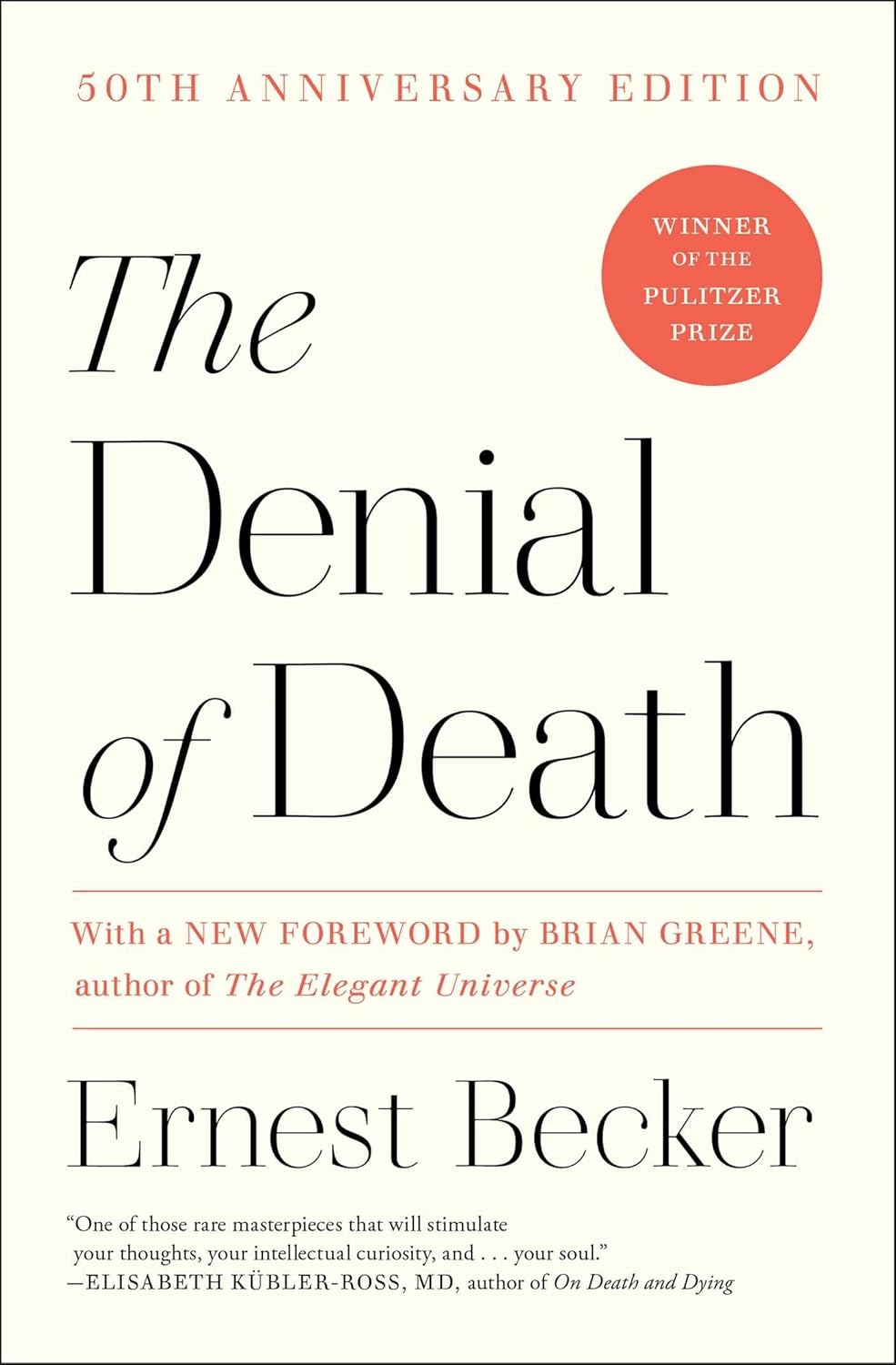
About The Denial of Death by Ernest Becker – A Pulitzer Prize-Winning Study of Mortality, Meaning and Human Behavior
The Denial of Death by Ernest Becker is a major work of psychology, philosophy, anthropology, and cultural criticism that asks a difficult question: how much of human behavior is shaped by the knowledge that life will end? First published in 1973, the book argues that people are deeply aware of their own mortality, yet they cannot live every moment thinking about death. To manage that fear, individuals and cultures create systems of meaning that help life feel important, ordered, and lasting.
Becker brings together ideas from psychology, religion, philosophy, anthropology, and the work of earlier thinkers, especially Otto Rank. He suggests that people often build what he calls forms of heroism, meaning projects, beliefs, roles, and achievements that allow them to feel connected to something larger than their physical lives. The book won the 1974 Pulitzer Prize for General Nonfiction after Becker’s death, and it remains widely discussed because it offers a broad explanation of why people seek meaning, status, identity, belonging, and symbolic forms of permanence.
Why the fear of death matters in everyday life
Most people do not spend the whole day consciously thinking about death. Becker’s argument is more subtle. He believes that awareness of mortality stays in the background and influences many choices without always being obvious. People may seek success, love, respect, achievement, religion, family, political identity, creative work, or social status partly because these things help life feel meaningful and significant.
For Becker, this does not mean every ambition is fake or selfish. Human beings need meaning in order to live. The problem appears when people become so attached to one system of meaning that they cannot tolerate people who believe in something different. A person may feel safe when their own values seem permanent, but threatened when another person questions them.
This idea gives the book a wider social importance. Becker connects individual anxiety with culture, conflict, pride, loyalty, and the need to belong. Readers can therefore use the book not only to think about death but also to think about identity and the ways people defend the ideas that make life feel secure.
The idea of heroism explained simply
One of the central ideas in The Denial of Death is that human beings want to feel that their lives matter. Becker uses the idea of heroism to describe the ways people try to become valuable inside the world they know. Heroism does not have to mean saving someone from danger. It can mean being a respected parent, successful worker, admired artist, religious believer, political leader, athlete, scholar, or member of a community.
These roles can give people a sense of purpose and help them feel that they are part of something that will continue beyond their individual lives. A person may create work, raise children, serve a belief, build a business, write a book, or support a cause because these activities connect the self with a larger story.
Becker treats this need seriously because he sees it as a basic part of human psychology. People do not only want to survive physically; they also want to feel meaningful. This tension between the physical body and the symbolic self is one of the book’s main themes.
Why culture is so important in Becker’s argument
Becker sees culture as more than language, food, customs, or art. He argues that culture gives people shared ideas about what is valuable, what a good life looks like, what deserves respect, and what may continue after death. These shared systems help people manage the fear that individual life is temporary.
Religion can offer beliefs about spiritual continuation. Family can offer a sense that part of us continues through future generations. Nations, institutions, professions, and creative work can also provide symbolic forms of continuity. Even everyday ideas about success can become part of a larger system that tells people their lives have value.
The book becomes especially interesting when Becker explains what happens when different meaning systems clash. If a person depends strongly on one worldview for psychological security, another worldview can feel threatening even when no physical danger exists. Becker uses this idea to explore conflict and the darker side of human behavior.
Psychology, philosophy and anthropology come together
The Denial of Death is difficult to place inside only one subject because Becker moves across several fields. He discusses psychoanalysis, existential thought, religion, human development, cultural systems, mental health, and the search for meaning. This wide approach is one reason the book can attract readers from different backgrounds.
Psychology readers may focus on anxiety, repression, personality, and self-esteem. Philosophy readers may be interested in mortality, freedom, meaning, and the limits of human existence. Anthropology readers can examine Becker’s ideas about culture and shared belief systems. Readers interested in religion may notice how seriously he treats spiritual questions, even while approaching them through an interdisciplinary framework.
It is not a simple self-help guide. Readers get more from it when they take their time, pause after difficult sections, and treat the book as an argument to think about rather than a list of quick lessons.
Otto Rank and the search for a deeper psychology
Otto Rank is one of the strongest influences on Becker’s thinking. Rank was an early psychoanalytic thinker who moved beyond some of Freud’s ideas and gave greater importance to creativity, fear, separation, individuality, and the human need for meaning. Becker uses Rank’s work to build his own explanation of how people respond to mortality.
Rather than reducing human behavior to one simple drive, Becker tries to show the tension between the body and the symbolic mind. Human beings know they are physical creatures, but they can imagine eternity, build ideals, create art, form religions, and think about futures far beyond their own lives. That combination gives people remarkable creative power, but it also creates anxiety because the mind can understand that the body will eventually die.
This conflict sits near the center of the book and helps explain why Becker connects creativity, heroism, culture, anxiety, and death so closely.
Is The Denial of Death a depressing book?
The subject is serious, but the book is not simply an argument that life is hopeless. Becker is interested in how awareness of death can help explain both destructive and creative human behavior. He examines fear and anxiety, but he also takes meaning, courage, love, creativity, and spiritual life seriously.
Readers may find some sections uncomfortable because the book asks them to look at motivations they normally do not examine. It can challenge ideas about success, ambition, relationships, religion, and identity. However, many readers value the book precisely because it gives language to questions that are difficult to discuss directly.
The book works best for someone who is willing to sit with uncertainty rather than expecting a simple answer to the meaning of life. Becker does not provide a short formula for happiness. He offers a framework for thinking about why human beings need meaning so strongly and what can happen when that need becomes rigid or fearful.
How the book influenced later psychological research
Becker’s work later became an important influence on terror management theory, a field of social psychology that studies how awareness of mortality can affect attitudes and behavior. Researchers working in this area have tested ideas related to self-esteem, cultural worldviews, group identity, prejudice, and responses to reminders of death.
Modern research does not mean every part of Becker’s book has been proven exactly as he wrote it. The Denial of Death is a broad theoretical work, and many of its claims are philosophical or interpretive. Still, its influence is important because it inspired researchers to examine questions about mortality in experimental ways.
For students of psychology, this makes the book valuable as both a historical text and a starting point for later research. It shows how a large theoretical idea can move from philosophy and cultural analysis into questions that psychologists continue to test and debate.
Who should read The Denial of Death?
The book is best suited to adult readers and mature students interested in psychology, philosophy, existential thought, anthropology, sociology, religion, human behavior, and cultural studies. It may also appeal to readers who enjoy books about meaning, identity, self-esteem, fear, mortality, and the reasons people build strong beliefs around themselves.
It is especially useful for readers who want something deeper than motivational advice. Becker does not tell readers to think positively or follow a simple routine. He asks why people need systems of meaning in the first place and how those systems shape both personal life and society.
Because the writing can be dense, beginners may need to read slowly. Keeping notes, looking up unfamiliar thinkers, and reading one chapter at a time can make the book more manageable. Readers who enjoy serious nonfiction are likely to find the effort rewarding.
Premium reading quality from Bookish Wonderland
Bookish Wonderland offers this edition for readers who want a comfortable physical copy for study, reflection, or long-term collection. The book uses premium eye-soothing cream paper, giving the pages a softer appearance during longer reading sessions. Crystal-clear printing keeps the text sharp and easy to follow, while high-quality stitched and glue binding helps the pages remain secure through regular use.
These features are useful for a book that many readers may underline, annotate, or revisit after finishing. The focus is on practical reading comfort, strong construction, and a copy that can stay useful on the shelf for years.
What books are in the The Denial of Death series by Ernest Becker?:
The Denial of Death is a standalone nonfiction book and is not part of a numbered series. Ernest Becker wrote other works on related subjects, but they are separate books rather than numbered sequels to this title.
- The Denial of Death by Ernest Becker (Standalone Book)
Best Sellers Rank of This Book
- Best seller rank: Not provided in the prompt.
The Denial of Death by Ernest Becker Book price in Bangladesh
Readers searching for The Denial of Death by Ernest Becker Book price in Bangladesh can order the title from Bookish Wonderland with convenient delivery options. Cash on Delivery is available across Bangladesh, allowing customers to place an order and pay when the parcel arrives.
Delivery is available inside and outside Dhaka, while customers in Dhaka can also ask about fast or urgent delivery when they need the book sooner. The title is suitable for students, teachers, psychology readers, philosophy readers, researchers, and anyone building a personal collection of serious nonfiction.
Bookish Wonderland also carries a large collection of premium English books across psychology, philosophy, literature, business, science, history, and many other subjects, making it easier to order several titles from one store.
Why this book is worth reading slowly
The Denial of Death is the kind of book that can change depending on when you read it. A student may focus on Becker’s theories of anxiety and culture, while an older reader may connect more strongly with his discussions of mortality, meaning, family, work, and legacy. Because the book deals with basic human concerns, different chapters can feel more relevant at different stages of life.
Readers do not need to agree with every claim to benefit from the book. Part of its value comes from the questions it creates. Why do people need recognition? Why do they defend beliefs so strongly? Why can disagreement feel personal? Why do achievement, love, religion, family, and creative work carry such emotional weight? Becker gives readers a framework for thinking about these questions without pretending that human behavior can be explained by one simple rule.
For readers interested in psychology and philosophy that continues to generate discussion, The Denial of Death by Ernest Becker is a strong addition to a serious reading list for readers. Order your copy from Bookish Wonderland and enjoy nationwide delivery, Cash on Delivery, premium cream paper, crystal-clear printing, and durable stitched and glue binding.
If you require any customization or have any questions, please inbox us via FB or Insta.
| Primary Specification | |
| Author | Ernest Becker |
| Narrator | Raymond Todd |
| Editor | Lexy East |
| Genre | Psychology, Philosophy, Cultural Anthropology, Existential Psychology |
| ISBN-13/ISSN | 978-0684832401 |
| ISBN-10 | 0684832402 |
| Publisher | Free Press |
| Publishing Date | May 8, 1997 |
| Edition | First Edition |
| Language | English |
| Reading Age | 16+ |
| Format | Printed Book |
| Physical Specification & Quality | |
| Paper Quality | Premium eye-soothing cream paper |
| Binding Quality | High quality stitched and glue binding (for longevity) |
| Print Quality | Crystal-clear print |
| Pages | 336 pages |
| Country | USA |
| Logistics Information | |
| Weight | 359 gm |
| Length | 8.5 inches |
| Width | 5.6 inches |
| Height | 0.88 inch |