

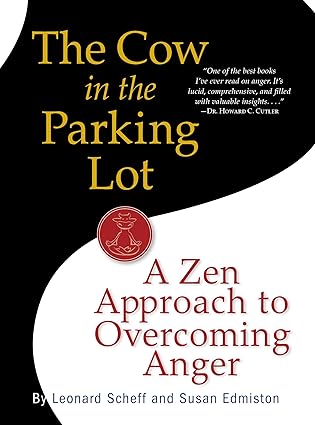
About The Cow in the Parking Lot by Leonard Scheff and Susan Edmiston: A Calm, Practical Guide to Understanding Anger and Changing Your Response
What if the thing making you furious did not change, but your way of seeing it did? The Cow in the Parking Lot by Leonard Scheff and Susan Edmiston begins with a simple picture. Imagine waiting for a parking space and another driver takes it. You may feel angry because you think the person was rude and unfair. Now imagine that a cow walks into the same space and blocks it. The problem is still there, but your reaction may be completely different. That small example introduces the main idea of this practical self-help book: anger is strongly connected to the meaning we give to events and to the demands we carry inside us. Drawing on Buddhist ideas and Leonard Scheff's experience teaching anger-management workshops, the book gives readers a clear way to examine triggers, unmet expectations, and everyday conflicts. It is written for ordinary people, not only for those who practice Buddhism, and it uses simple exercises to help readers notice what happens before anger takes control. Readers can therefore use the book as a practical companion when ordinary frustrations begin to feel larger, more personal, or harder to release again.
Why Small Problems Can Create Big Anger
A delayed bus, a rude comment, a slow line, or a driver who cuts in front of you can feel much bigger than the event itself. The book asks readers to look at the hidden demand underneath the reaction. Maybe you believe people should always treat you with respect. Maybe you expect a partner to understand what you need without being told. Maybe you think a plan must go exactly the way you imagined. When reality does not match that demand, anger can appear very quickly. Scheff and Edmiston do not say that unfair behavior is acceptable or that every problem should be ignored. Instead, they invite readers to separate the event from the story they are telling themselves about the event. That gap can create room for a calmer choice.
The Famous Cow in the Parking Lot Idea
The title comes from a simple thought experiment that makes the book easy to remember. If another driver steals the parking space you wanted, you may feel personally offended. You might think, "How dare that person do this to me?" But if a cow somehow wandered into the space, you would probably feel surprised rather than insulted. The blocked space is still unavailable, yet the emotion changes because the meaning changes. The cow did not disrespect you, challenge you, or decide that your needs did not matter. This example shows how quickly the mind can add intention to an event. The authors use this idea to help readers examine whether every annoying situation really needs to become a personal battle.
Anger Often Begins With an Unmet Demand
One of the book's main ideas is that anger can grow from a demand that has not been met. The authors discuss different kinds of demands, from important and reasonable needs to wishes that are minor, unrealistic, or impossible. Wanting love and care from a partner may be important. Wanting a perfect seat in a restaurant is much less important. Expecting a stranger to respect you exactly the way you want may be unrealistic. Expecting another person to fix every problem in your life may be impossible. The point is not to stop wanting things. The point is to notice when a preference quietly becomes a rule that the world must follow. When you can name the demand beneath your anger, you may be able to decide whether it deserves action, a conversation, a boundary, or simply a change in perspective.
Learn to Notice Your Personal Buttons
Everyone has situations that seem to push a special button. One person becomes angry when they feel ignored. Another reacts strongly to being late. Someone else cannot stand being corrected in front of other people. The book encourages readers to identify these sensitive areas instead of waiting until an argument is already out of control. Think about the last few times you became very angry. Were the events really different, or did they touch the same fear, expectation, or pride? Recognizing a pattern can make your next reaction less automatic. You may still feel irritation, but you can understand why it appeared.
Understand Who Really Pays for Your Anger
Anger can feel powerful for a moment. It may create the sense that you are defending yourself or showing another person that they were wrong. But anger also has costs. It can damage conversations, make small problems larger, and leave you thinking about the same event long after it is over. The book asks readers to consider who pays when anger becomes a habit. Sometimes the person you are angry with moves on quickly while you continue replaying the situation in your mind. Other times the cost is paid by family members, coworkers, or friends who were not responsible for the original problem.
Calm Does Not Mean Becoming Weak
Some people worry that giving up anger means becoming passive or letting others treat them badly. The book's approach is more useful when you separate anger from action. You can set a boundary without shouting. You can say no without insulting someone. You can leave an unfair situation without carrying the argument in your mind all day. A calm response can still be firm. In fact, staying clearheaded may help you explain what you need more directly. The authors' Buddhist influence encourages readers to reduce unnecessary suffering, but that does not require pretending that harmful behavior is harmless. The practical challenge is learning how to respond without allowing anger to control the whole situation.
What Can You Learn From the Exercises?
The Cow in the Parking Lot is not only a book to read from beginning to end. It includes an interactive approach that encourages readers to observe their own reactions and work through examples. The exercises ask you to notice anger, identify the demand behind it, examine the cost, and consider another way of seeing the event. This can make the book useful for readers who prefer doing something with an idea rather than simply highlighting a sentence. You might keep a small notebook and write down what happened, what you wanted to happen, what you assumed about the other person, and what you could choose next time.
What You Will Find Inside This Book
- A simple explanation of anger through the idea of unmet demands.
- The memorable cow-in-the-parking-lot example for changing perspective.
- Ways to identify personal triggers and emotional sore spots.
- Exercises that encourage honest observation of your own reactions.
- Ideas for responding to other people's anger without adding more conflict.
- A Buddhist-influenced path toward compassion, calm, and greater choice.
The book is practical, but it is also reflective. It asks readers to think about pride, expectations, happiness, and the stories they create around everyday events.
Who Is This Book Best For?
This title may appeal to adults who become frustrated quickly, replay arguments for hours, struggle with road rage, or want to understand why certain people can make them angry so easily. It can also suit readers interested in mindfulness, Buddhist ideas, emotional self-control, or practical self-help. You do not need to be Buddhist to understand the main lessons, because the authors explain the principles in simple language and connect them to ordinary situations. The book can be useful for personal reflection, but it is not a replacement for professional help when anger involves violence, threats, abuse, or serious mental health concerns. In those situations, qualified support and a safety plan matter more than any self-help book. For everyday frustration, however, the exercises can give readers a structured way to think about their reactions.
Meet the Authors Behind the Approach
Leonard Scheff was a trial lawyer who also studied Buddhism and developed a workshop focused on transforming anger. His own experience with anger became part of the reason he began exploring a different way to respond. Susan Edmiston brought a strong writing and editing background to the book, helping turn the ideas into an accessible guide for general readers. Their partnership combines personal experience, Buddhist thought, and practical examples. The book was published in 2010 by Workman Publishing and is generally categorized as self-help and anger management. It is a standalone title, so you do not need to read another book before starting it.
A Premium Copy for Slow, Thoughtful Reading
Bookish Wonderland offers The Cow in the Parking Lot with premium eye-soothing cream paper, crystal-clear printing, and high-quality stitched and glue binding. The soft-looking pages can make longer reading sessions more comfortable, while clear text helps you follow the examples and exercises without struggling with weak print. The binding is selected for regular use, which is useful for a self-help book you may want to reopen when a familiar problem returns. These details describe the copy offered by Bookish Wonderland and should not be treated as specifications for every edition sold elsewhere. If you want to confirm the cover, format, page size, or available customization options, contact the store before ordering.
Check the Current Price Before You Order
Looking for the Book price in Bangladesh for The Cow in the Parking Lot by Leonard Scheff and Susan Edmiston? Check the Bookish Wonderland product listing for the current price and available copy before placing your order. The live listing is the best place to see the amount that applies at the time of purchase instead of relying on an old or guessed price. This book can be a useful addition to a personal-development shelf, especially for readers who prefer simple examples and practical exercises. It may also make a thoughtful gift for someone who has already shown interest in mindfulness or anger management. Avoid giving it as a judgment about another person's character. Self-help books are most useful when the reader actually wants to explore the subject. If you need help choosing the available edition or want customization, message the store before checkout.
Get the Book Delivered Anywhere in Bangladesh
You do not need to live near a large English bookstore to order this title. Bookish Wonderland offers nationwide delivery across Bangladesh, including addresses inside and outside Dhaka. Cash on Delivery is available across the country for readers who prefer to pay when the book arrives. If you are in Dhaka and need your order sooner, ask about the fast or urgent delivery option for your area. Bookish Wonderland also carries a large collection of premium English books, making it easier to add another self-help, psychology, or personal-growth title to the same order. If you have questions about delivery, the available edition, or customization, send a message through Facebook or Instagram before completing your purchase. The aim is to make finding and ordering the right English book simple, even when you are shopping from outside the capital.
Turn the Next Annoying Moment Into a Different Choice
The Cow in the Parking Lot by Leonard Scheff and Susan Edmiston offers a simple idea that can stay in your mind long after you close the book: the event in front of you is only one part of your reaction. The meaning you add, the demand you carry, and the story you tell yourself can change how much anger grows. That does not mean every problem disappears or every person behaves fairly. It means you may have more choice than you think about what happens next. If you want a practical, readable guide that combines Buddhist ideas with everyday examples, this title is worth considering. Add it to your Bookish Wonderland order, check the current product listing for price and availability, and message us through Facebook or Instagram if you need help choosing your copy. The next time someone takes the parking space, you may remember the cow—and notice that a different response is possible.
If you require any customization or have any questions, please inbox us via FB or Insta.
| Primary Specification | |
| Author | Leonard Scheff, Susan Edmiston |
| Narrator | Bill Mendieta |
| Genre | Self-Help, Anger Management, Buddhist Philosophy, Personal Development |
| ISBN-13/ISSN | 978-0761158158 |
| ISBN-10 | 0761158154 |
| Publisher | Workman Publishing Company |
| Publishing Date | June 24, 2010 |
| Edition | First Edition |
| Language | English |
| Reading Age | 18+ |
| Format | Printed Book |
| Physical Specification & Quality | |
| Paper Quality | Premium eye-soothing cream paper |
| Binding Quality | High quality stitched and glue binding (for longevity) |
| Print Quality | Crystal-clear print |
| Pages | 197 pages |
| Country | USA |
| Logistics Information | |
| Weight | 217 gm |
| Length | 8.5 inches |
| Width | 5.6 inches |
| Height | 0.7 inch |