

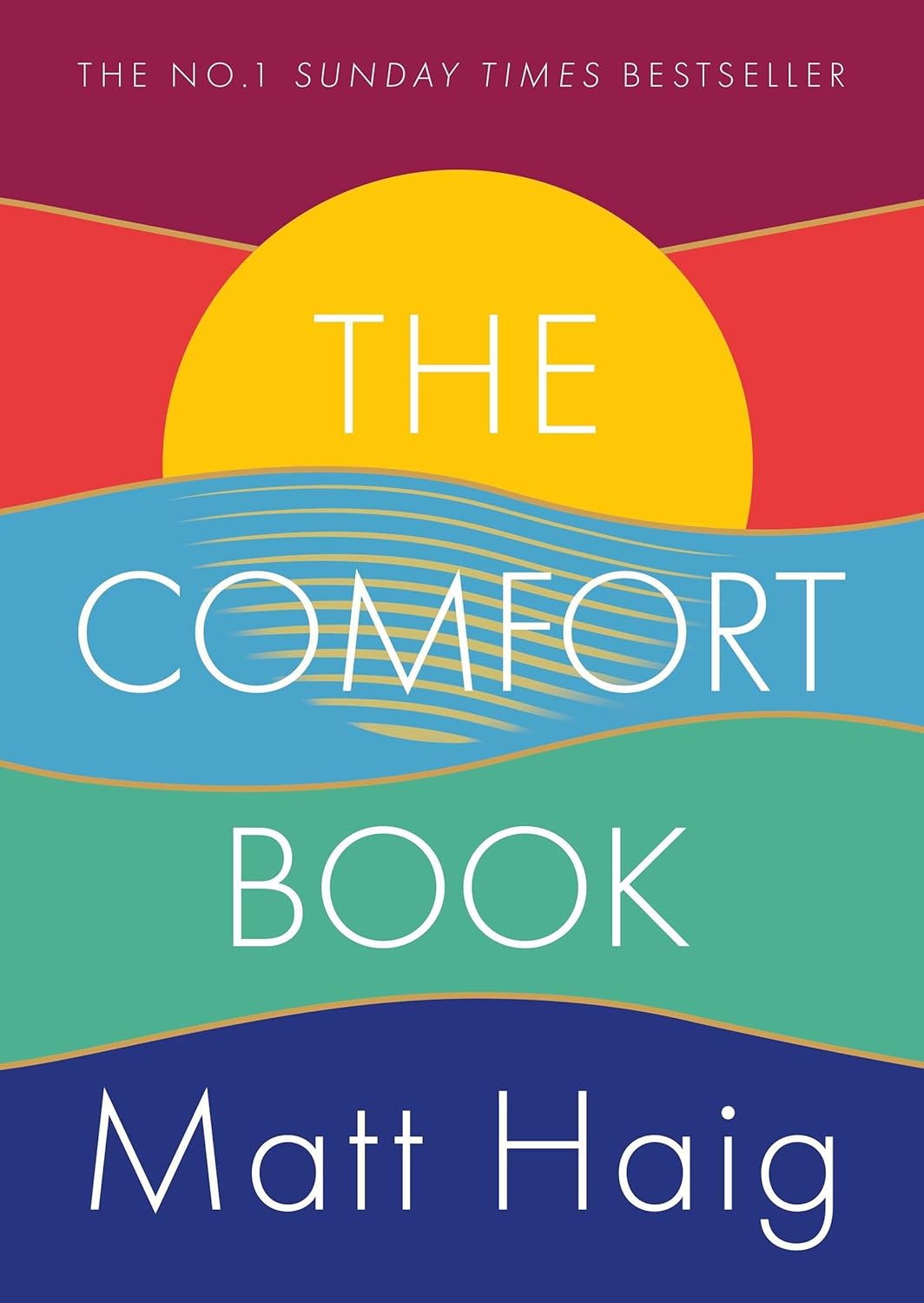
About The Comfort Book by Matt Haig — Gentle Reflections on Hope, Hard Days, and the Beauty of Being Alive
The Comfort Book by Matt Haig is a collection of short thoughts, notes, stories, lists, and reflections made for moments when life feels heavy. Instead of asking you to read one long argument from start to finish, Haig gives small pieces of comfort that can be opened almost anywhere. Some pages offer a simple idea. Others share a memory, a quote, a list, or a lesson drawn from history, science, philosophy, books, and everyday life.
Haig began writing many of these thoughts as reminders to his future self. They were words he wanted nearby when a difficult day made hope harder to see. Over time, those private reminders became a book for other people too. The result is gentle rather than demanding. It does not tell readers that life is easy. It accepts that pain, fear, stress, regret, loneliness, and uncertainty are real, while still making room for small reasons to continue.
A book for days when your mind feels too full
Some self-help books ask readers to follow a strict plan, finish long chapters, or remember many steps. That can be hard when you are already tired, worried, or emotionally drained. The Comfort Book takes a different approach. Its short sections mean you can read one page, one thought, or one list and stop there if that is all you have energy for.
This makes the book easy to return to. You do not need to remember a complicated plot or read every page in order. You can keep it beside your bed, on your desk, in your bag, or near a favorite chair and open it when you want a small shift in perspective.
The problem may still be there after you close the book, but a few calm words can sometimes make the next hour feel more manageable.
Small pieces instead of one big lesson
The structure is one of the book's main strengths. Haig moves between personal reflection, short observations, lists, quotations, cultural references, and stories about people from different places and times. That variety keeps the reading light and flexible.
There is no single rule that claims to solve every problem. Instead, the book gathers many ways of looking at life. One idea may help you think about time. Another may remind you that a feeling can change. Another may encourage you to notice ordinary beauty, rest, friendship, music, food, nature, books, or the simple fact that you are still here.
Because the sections are brief, the book also works well for readers who usually struggle to finish self-help or reflective nonfiction. You can move slowly without feeling behind.
Hope without pretending everything is perfect
The Comfort Book is uplifting, but it does not depend on saying that every day is wonderful. Its message is more realistic: hard times can exist, and hope can exist at the same time.
Haig writes from personal experience with difficult periods and uses that experience to offer reassurance. He often returns to the idea that feelings change, life keeps moving, and the darkest moment does not always tell the truth about the future.
That can be comforting because it does not ask the reader to force happiness. The book leaves space for sadness and fear while reminding you that these states are not the whole of life.
For readers who dislike loud motivational language, this quieter style may feel easier to accept. The encouragement often arrives as a small observation rather than a command.
Philosophy, science, history, and ordinary life together
Haig does not build the book from personal memories alone. He draws ideas from philosophy, writers, historical figures, science, culture, and people who survived difficult experiences. The result feels like a notebook filled with things worth remembering.
You may find a thought inspired by an old philosopher near a modern observation about daily life. A short personal memory may sit beside a fact, a list, or a line about art and books. This mix gives readers many entry points.
You do not need to be a student of philosophy or psychology to understand it. Haig keeps the language direct and the ideas easy to follow. The deeper value comes from thinking about a simple sentence after you finish reading it.
What makes The Comfort Book easy to return to
-
Short sections that can be read in a few minutes.
-
A mix of notes, lists, stories, memories, maxims, and reflections.
-
Ideas drawn from history, science, philosophy, books, and personal experience.
-
A focus on hope, resilience, perspective, meaning, and everyday comfort.
-
A flexible structure that does not require reading every page in order.
-
Simple language that suits readers who do not want a technical self-help guide.
-
A standalone nonfiction book that needs no earlier Matt Haig title.
-
A useful format for rereading favorite pages during stressful or uncertain days.
Who may enjoy this book most
The Comfort Book may suit readers who want encouragement without a heavy workbook or a strict program. It can appeal to people who enjoy reflective nonfiction, memoir, self-help, philosophy, inspirational writing, and short essays.
It is also a good fit for busy readers. You can read a few pages during breakfast, before sleep, on a commute, or between tasks. Because the pieces are short, the book does not demand a large block of quiet time.
Fans of Matt Haig's other writing may also enjoy seeing ideas that connect with his wider interest in hope, regret, time, mental health, and what makes life worth living. The author has described the book as a kind of companion to The Midnight Library, but you do not need to read that novel first.
A different kind of self-help experience
Many readers search for self-help because they want a clear answer. The Comfort Book offers something softer. It is less like a manual telling you what to do and more like a collection of reminders you can test against your own life.
That difference matters. A strict method can be useful, but it can also feel like another job. Haig's format allows readers to take what helps and leave what does not.
One page may feel deeply meaningful while another may not connect with you at all. That is normal for a collection built from many small ideas. The value comes from finding the pieces that speak to your present moment and returning to them when needed.
Good for gifting and thoughtful personal reading
The Comfort Book can work well as a gift because the reader does not need to follow a long story or already know Matt Haig's work. It can be given to someone starting a new chapter, going through a stressful time, moving away, studying, working hard, or simply needing a thoughtful book.
It can also be a useful personal purchase when you want something to keep rather than finish quickly and forget. You may mark pages, add small notes, or return to certain passages months later.
Because the book is made of short sections, different parts may matter at different times. A page that seems simple today may feel more useful after a difficult week. That changing relationship can make the book feel personal over time.
A New York Times bestselling book with wide reader appeal
Penguin Random House lists The Comfort Book as a New York Times bestseller, while Canongate describes it as an instant number one Sunday Times bestseller. Goodreads also shows tens of thousands of reader ratings and lists it among nonfiction, self-help, psychology, philosophy, memoir, and mental health reading.
Its wide appeal makes sense because the book does not depend on one narrow topic. It touches on many parts of ordinary human life: fear, hope, rest, meaning, self-acceptance, change, loneliness, connection, and the strange fact that difficult days and beautiful moments can exist close together.
Readers can approach it as self-help, reflective nonfiction, a book of consolations, or simply a collection of thoughts worth keeping nearby.
How to use the book in daily life
You do not need a special plan to use The Comfort Book. Start at the beginning if you like order, or open to any page when you want a thought. Keep a pencil nearby if you enjoy marking lines that feel useful. You can also copy a favorite idea into a journal, phone note, or planner and return to it later.
Some readers may prefer to read one short section each morning. Others may use the book at night when the day feels noisy. It can also sit on a desk as a small break between work or study sessions.
The goal is not to finish quickly. The book works best when you allow useful ideas to stay with you. Reading less, thinking more, and returning later can make its short format feel richer and more personal.
A comfortable physical copy from Bookish Wonderland
Bookish Wonderland offers The Comfort Book for readers who want a pleasant physical copy for slow reading, gifting, or keeping beside them for repeated use. The copy uses premium eye-soothing cream paper, which gives the pages a softer look during longer reading sessions.
Crystal-clear printing keeps short passages, lists, quotations, and small reflections easy to read. High-quality stitched and glue binding supports repeated opening, which is useful for a book designed to be revisited rather than read only once.
Book customization is available for supported requests. Customers can contact Bookish Wonderland before ordering to ask about current options.
The Comfort Book by Matt Haig price in Bangladesh
Readers searching for The Comfort Book by Matt Haig price in Bangladesh often want a copy that feels comfortable enough to keep and return to. Bookish Wonderland provides nationwide delivery both inside and outside Dhaka, making the title available to readers across the country.
Cash on Delivery is available across Bangladesh. Customers in Dhaka can also ask about fast or urgent delivery when available.
The Book price in Bangladesh may change depending on the current listing, print option, stock, and offer. Check the latest Bookish Wonderland product listing before ordering to see the current price and delivery choices.
Keep a little comfort within reach
The Comfort Book is not built around one dramatic promise. Its strength comes from many small reminders gathered in one place. You can open it when you feel tired, lost, restless, lonely, hopeful, curious, or simply ready to think differently for a few minutes.
Some pages may make you stop. Some may make you smile. Others may become lines you want to remember. The book's loose structure gives you permission to use it in your own way instead of turning reading into another task.
For someone who wants gentle encouragement, short reflective writing, and a calmer way to look at difficult days, The Comfort Book can become the kind of title that stays close after the first reading.
Order The Comfort Book by Matt Haig from Bookish Wonderland and add a thoughtful, uplifting nonfiction title to your shelf. With comfortable cream paper, clear printing, durable binding, nationwide delivery, and Cash on Delivery, it is ready to be read slowly, revisited often, shared as a gift, or kept nearby whenever you want a few quiet words of hope.
If you require any customization or have any questions, please inbox us via FB or Insta.
| Primary Specification | |
| Author | Matt Haig |
| Genre | Self-Help, Personal Growth, Mental Health, Inspirational Nonfiction |
| ISBN-13/ISSN | 978-1786898326 |
| ISBN-10 | 1786898322 |
| Publisher | Canongate Books |
| Publishing Date | March 17, 2022 |
| Edition | Main |
| Language | English |
| Reading Age | 18+ years |
| Format | Printed book |
| Physical Specification & Quality | |
| Paper Quality | Premium eye-soothing cream paper |
| Binding Quality | High quality stitched and glue binding (for longevity) |
| Print Quality | Crystal-clear print |
| Pages | 272 pages |
| Country | UK |
| Logistics Information | |
| Weight | 272 pages |
| Length | 8.5 inches |
| Width | 5.6 inches |
| Height | 0.59 inches |