Skip to product information
1 of 1

Bookish Wonderland

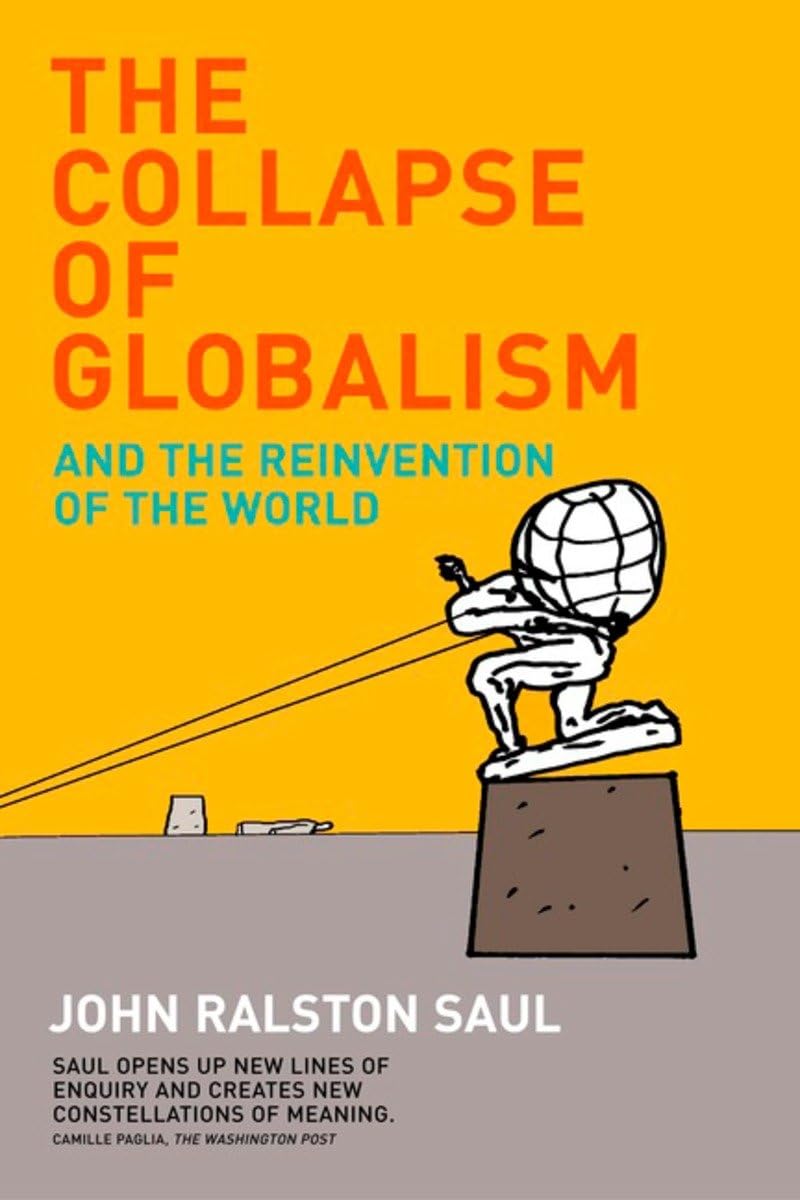
The Collapse of Globalism and the Reinvention of the World by John Ralston Saul

The Collapse of Globalism and the Reinvention of the World by John Ralston Saul

Regular price Tk 284.00 BDT
Regular price Sale price Tk 284.00 BDT
Sale Sold out
Book cover type
Quantity

The Collapse of Globalism and the Reinvention of the World is John Ralston Saul’s critique of the belief that unfettered global markets would make nation states irrelevant. Saul traces globalism from its rise in the 1970s through deregulation, expanding trade, and optimism surrounding a borderless economic order. He argues that many promised outcomes, including greater equality, reduced poverty, stronger democracy, and declining nationalism, failed to appear as expected. Instead, states, citizens, and regional identities reasserted themselves while problems such as debt, inequality, terrorism, racism, and political instability persisted. Saul also acknowledges globalization’s achievements, including growth in international trade and the rising influence of countries such as China and India. Rather than calling for isolation, he argues for renewed democratic responsibility, stronger public institutions, and a more flexible form of international cooperation. The book presents globalism as an ideology whose decline opens space for political and civic reinvention around the world.

Read More

View full details

About The Collapse of Globalism and the Reinvention of the World by John Ralston Saul — A Clear Look at Markets, Nations and Power

What happens when an idea that shaped the world for decades starts to lose its power? The Collapse of Globalism and the Reinvention of the World by John Ralston Saul asks that question in a bold way. Saul looks at the belief that open global markets would slowly make national governments less important. He argues that the real world did not follow that simple plan.

This is not a book that says trade or international links are bad. It asks a harder question: should economics guide every major choice in society? Saul studies how governments, markets, companies, citizens, culture, and national interests often pull in different directions. His main point is that people and states still have choices, even when experts say one economic path is “inevitable.”

Why this book still matters

Words like globalization, free trade, national interest, growth, and global markets appear in the news all the time. They can feel large and confusing. One day there is a trade fight. Another day a country protects a local industry. Then a government changes its economic plan or nationalist politics grows stronger.

He looks at the rise of globalism and the promise that growing trade and market power would bring wider prosperity, weaken borders, and reduce the role of nation-states. He then asks why many political, social, and economic problems stayed with us.

You do not have to agree with Saul. The value of the book is that it gives you a clear argument to test. You can compare his ideas with the world around you and decide where he is convincing and where you disagree.

The main idea in simple words

Saul separates globalization, the real process of countries becoming more connected, from what he calls “globalism,” an ideology that put very strong faith in markets and economic thinking.

He argues that globalism promised a world where trade would grow, governments would have less control, markets would become more powerful, and economic links would help spread prosperity and democracy. In his view, those promises were too simple.

The book looks at debt, political conflict, corporate power, public responsibility, and the return of nationalism. It also argues that national governments never became as unimportant as some globalist thinkers expected.

One of Saul’s strongest ideas is that societies are not only economies. People also care about culture, fairness, safety, identity, public life, and democratic choice. A country cannot always be understood only through growth numbers, trade figures, or business results.

When one economic answer is not enough

A common problem in public debate is that complex issues are reduced to one answer: more trade, more growth, more competition, or more market freedom.

Saul challenges that habit.

He argues that systems can become weak when leaders treat economic ideas as fixed truths instead of tools. If people believe there is only one correct economic path, public debate becomes smaller. Citizens may be told that difficult choices are unavoidable even when other choices exist.

The book brings politics, history, culture, and citizenship back into the discussion. It asks important questions: Who makes the rules? Who gains from them? What role should government play? What happens when business power grows too large? What should national interest mean in an international world?

Revisited after the 2008 financial crisis

Saul first laid out this argument in the 2005 edition. Later versions expanded the discussion after the global financial crisis that began in 2008.

That matters because Saul did not treat the financial crash as the only problem. He argued that the deeper issue was an older way of thinking about growth, wealth, trade, and the role of governments.

This gives the book an interesting place in modern political and economic writing. Readers can see an argument made before the crisis and then see how Saul revisited it after the world economy was shaken.

What makes the reading useful

You move across economic ideas, public policy, political power, global trade, nationalism, company influence, and the role of citizens. Instead of treating these topics as separate, Saul shows how they affect one another.

That can help students, business readers, policy readers, and curious general readers see familiar headlines in a new way. Whenever a government protects a local industry, changes trade rules, challenges a global institution, or puts national goals before market rules, Saul’s questions become useful again.

A premium copy made for long reading

The pages use premium eye-soothing cream paper, giving the page a softer look during long reading sessions. Crystal-clear printing helps make the text easy to follow. High-quality stitched and glue binding helps the book stay secure through regular reading and shelf use.

These details are useful for a serious nonfiction book because you may want to return to important chapters, underline ideas, compare arguments, or keep the book for later study. A strong physical copy makes it easier to use the book as part of a long-term personal or academic library.

What you can gain from reading it

You can learn how one major set of economic ideas became powerful, why Saul believes that system weakened, and why national governments remained important. You can also see why economic growth alone may not answer questions about democracy, culture, public life, or social stability.

For students, it can add useful context to economics, international relations, political science, business, history, and public policy. For business readers, it can encourage a wider view of markets and government. For general readers, it can make difficult global debates easier to question.

Most importantly, it asks you not to accept the word “inevitable” too quickly. Systems are made by people, and people can change them.

Who should read this book?

The Collapse of Globalism and the Reinvention of the World by John Ralston Saul is a strong choice for adult readers, university students, teachers, researchers, business readers, and anyone interested in world affairs.

It may especially suit readers who enjoy globalization, political economy, capitalism, public policy, nationalism, democracy, international trade, or the future of the nation-state. It is also useful if you follow world news and want more background behind the headlines.

Looking for The Collapse of Globalism and the Reinvention of the World Book price in Bangladesh?

If you are comparing The Collapse of Globalism and the Reinvention of the World by John Ralston Saul price in Bangladesh, Bookish Wonderland gives you an easy way to order a quality printed copy.

Cash on Delivery is available across Bangladesh, with delivery both inside and outside Dhaka. Readers in Dhaka can also ask about fast or urgent delivery when available.

You can order the book for study, personal reading, a university course, a research shelf, or as a gift for someone interested in politics and economics.

Why readers choose Bookish Wonderland

Buying a serious nonfiction book should be simple. You want clear printing, comfortable paper, strong binding, and reliable delivery.

Bookish Wonderland focuses on those practical needs. Our English book collection is made for readers who want books they can read, mark, keep, and return to.

Nationwide delivery and Cash on Delivery make ordering easier across the country today. If you have a question about the book, delivery, urgent service in Dhaka, or customization, you can contact Bookish Wonderland through Facebook or Instagram.


If you require any customization or have any questions, please inbox us via FB or Insta.

Primary Specification
AuthorJohn Ralston Saul
GenrePolitical Science, Globalization, Political Economy, International Economics
ISBN-13/ISSN978-1786494481
ISBN-10 1786494485
Publisher Atlantic Books
Publishing Date ‎ 4 January 2018
LanguageEnglish
Reading Age16+
Format Printed Book
Physical Specification & Quality
Paper QualityPremium eye-soothing cream paper
Binding Quality High quality stitched and glue binding (for longevity)
Print QualityCrystal-clear print
Pages‎ 368 pages
CountryCanada
Logistics Information
Weight376 gm
Length8.5 inch
Width5.6 inch
Height2.5 inch
What is The Collapse of Globalism and the Reinvention of the World by John Ralston Saul about?

The Collapse of Globalism and the Reinvention of the World by John Ralston Saul is a nonfiction book about globalization, economics, politics, trade, and the power of nation-states. Saul argues that the idea of a world controlled mainly by global markets did not develop as its supporters expected. He looks at corporate power, public policy, debt, nationalism, democracy, and economic change. The book is useful for readers who want to understand why countries continue to protect national interests even in a highly connected world.

How many books are in The Collapse of Globalism series by John Ralston Saul, and what are they?

The Collapse of Globalism and the Reinvention of the World is a standalone nonfiction book by John Ralston Saul. It does not belong to a numbered book series. Different editions of the book have been published, including editions updated after major economic events, but these are versions of the same work rather than Book 1, Book 2, or later sequels. Because there is no designated series, no unrelated John Ralston Saul books should be added as series titles.

Is The Collapse of Globalism still relevant today even though it was first published in 2005?

Yes. Many readers continue to discuss the book because it deals with issues that remain important: free trade, nationalism, corporate influence, economic inequality, government power, and public frustration with globalization. Saul also revisited his argument after the 2008 financial crisis in an expanded edition. Readers may agree or disagree with his conclusions, but the book provides useful historical context for understanding present debates about global markets, national industries, trade barriers, economic independence, and the changing relationship between governments and international business.

Is John Ralston Saul against globalization in this book?

The book is better understood as a criticism of what Saul calls “globalism” rather than a simple rejection of international trade or cooperation. He challenges the belief that global markets should automatically guide political and social decisions or that nation-states will become unimportant. Saul argues that economics is only one part of society and that democracy, culture, citizenship, public responsibility, and national choice also matter. This makes the book useful for readers who want a critical view of globalization rather than a simple pro-globalization or anti-globalization argument.

Is The Collapse of Globalism difficult to read for someone who is not an economics student?

You do not need an economics degree to read it. The book discusses serious subjects such as global markets, free trade, neoliberal economic thinking, debt, corporations, public policy, and nationalism, so some sections require attention. However, Saul writes for a broad audience rather than only academic economists. It is particularly suitable for university students and adult readers who follow politics, economics, international relations, business, history, or world affairs and want to understand the larger ideas behind economic news.

What can students learn from The Collapse of Globalism and the Reinvention of the World?

Students can use the book to examine how economic ideas influence politics and society. It explores the rise of globalism, deregulation, international trade, corporate influence, national governments, citizenship, debt, and the return of nationalism. It can support wider reading in economics, political science, international relations, business, public policy, sociology, and modern history. The book is especially useful for developing critical thinking because Saul presents a strong argument that readers can compare with other economists, historians, political thinkers, and real-world events.

Is The Collapse of Globalism a premium edition at Bookish Wonderland?
Bookish Wonderland offers this title as a reader-friendly premium printed book made for comfortable regular reading. The focus is on clean presentation and a physical copy that feels suitable for a personal, study, or university bookshelf. The text is printed clearly, and the book uses quality materials selected for readers who may spend long periods studying nonfiction. It is a practical choice for anyone looking for The Collapse of Globalism and the Reinvention of the World by John Ralston Saul in Bangladesh.
What kind of paper is used in the Bookish Wonderland copy?
The book uses premium eye-soothing cream paper. The softer cream tone is comfortable to look at during long reading sessions and reduces the harsh appearance that very bright white pages can have under strong light. This is especially helpful for a thought-heavy nonfiction book where readers may spend longer on each chapter, make notes, or return to important ideas. The paper is also chosen to provide a smooth reading experience while giving the printed text a clean and easy-to-follow appearance.
How durable is the binding of this book?

Bookish Wonderland uses high-quality stitched and glue binding to improve the book’s longevity. Stitching helps keep groups of pages firmly attached, while glue adds further support to the spine. This combination is useful for books that may be opened many times for study, research, highlighting, or reference. With normal care and proper storage away from moisture and extreme heat, the book is designed to remain a useful part of your shelf for repeated reading rather than feeling like a short-term disposable copy.

Is the print clear enough for long study sessions?

Yes. The book features crystal-clear printing with sharp, easy-to-read text. Clear letter shapes and good contrast are particularly important in nonfiction because readers often move slowly through detailed arguments and may reread paragraphs or take notes. Combined with cream-colored pages, the clean print helps create a more comfortable reading experience. This makes the Bookish Wonderland copy suitable for university study, research, personal learning, or readers who simply prefer a neat and readable printed book instead of reading hundreds of pages from a screen.

Why should I buy The Collapse of Globalism from Bookish Wonderland?

Bookish Wonderland combines a large English book collection with practical services for readers across Bangladesh. You receive a book made with comfortable cream paper, strong stitched-and-glue binding, and clear printing, while ordering remains simple for customers both inside and outside Dhaka. It is a useful option for students, researchers, professionals, and general readers who want a durable printed copy without having to depend only on imported retail options. Customers in Dhaka can also ask about fast or urgent delivery when available.

Can I order The Collapse of Globalism with Cash on Delivery anywhere in Bangladesh?

Yes. Cash on Delivery is available nationwide through Bookish Wonderland, including orders delivered inside Dhaka and to other districts across Bangladesh. This means you can order The Collapse of Globalism and the Reinvention of the World by John Ralston Saul and pay according to the available Cash on Delivery service instead of needing an online card payment. Regular nationwide delivery is available, while customers in Dhaka can ask about fast or urgent delivery options when they need the book sooner.