

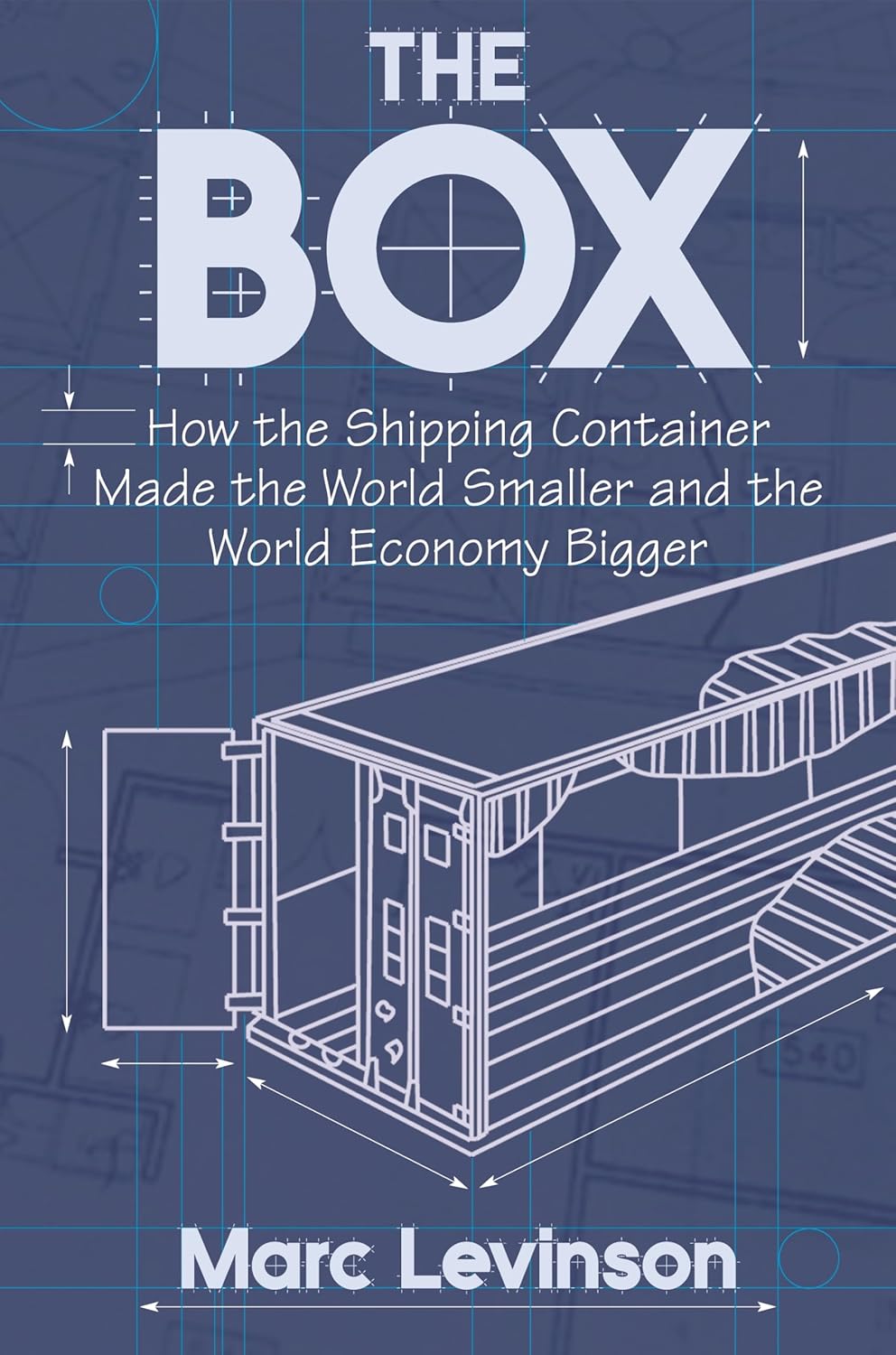
About The Box: How the Shipping Container Made the World Smaller and the World Economy Bigger by Marc Levinson – Discover Modern Trade’s Hidden Story
Look around your home. Your phone, shirt, cup, chair, book, or kitchen tool may have crossed an ocean before reaching you. Moving these goods now feels normal, but it was once slow, costly, messy, and full of risk. The Box: How the Shipping Container Made the World Smaller and the World Economy Bigger by Marc Levinson tells how one plain metal box helped change that world. It is not only a story about ships. It is a story about people, money, work, cities, rules, and bold ideas. Levinson shows how a simple tool can remake daily life when business, technology, and smart planning come together.
This is the kind of nonfiction book that makes an ordinary object feel exciting. After reading it, you may never see a container ship, port, truck, train, warehouse, or order in the same way again.
Why Was Global Trade So Hard Before Containers?
Before the shipping container became common, workers moved cargo piece by piece. Bags, boxes, barrels, machines, and many other goods had to be lifted from a truck, placed in a warehouse, carried onto a ship, and handled again after arrival. Every step took time. Every extra touch added cost. Goods could be lost, broken, delayed, or stolen. Ships waited in port while large teams loaded and unloaded them. Busy docks were full of hard work, but the system was slow and wasteful.
This was the big problem: the world wanted to move more goods, yet the old method could not do it quickly or cheaply. Better ships alone were not enough. Businesses needed one system that could join road, rail, port, and sea.
The Simple Answer That Was Not Simple to Build
The answer was a strong box made in standard sizes. Goods could be packed once, sealed, moved by truck or train, lifted onto a ship, and sent onward without being opened at every stop. The idea sounds easy today. At the time, making it work was hard.
Companies needed new ships, cranes, trailers, rail cars, yards, and port plans. They also needed shared rules so one box could fit many kinds of transport. Business owners, port leaders, workers, unions, and governments did not all agree. Some feared high costs. Others feared losing jobs or power. The book explains how these fights, risks, and choices shaped the system. It shows that a great idea matters only when people can turn it into a working network.
Meet the Man Who Pushed the Change Forward
Marc Levinson gives an important place to Malcolm McLean, a trucking business leader who saw that cargo could move faster if the same sealed box traveled across different forms of transport. McLean did not simply invent a box and win at once. He took large financial risks, faced rules and rivals, changed his plans, and kept pushing when many people doubted the idea.
His story gives the book a strong human center. Readers see ambition, mistakes, courage, competition, and timing. The change did not belong to one person alone, and the book also explains the work of engineers, officials, shipping firms, port managers, and labor groups. Still, McLean helps readers understand how one determined person can see a costly problem and build a new path around it.
How the Box Made the World Feel Smaller
The container cut the time and labor needed to move many goods. It helped lower shipping costs and made long supply chains more useful for business. A company could make parts in one place, build a product in another place, and sell it far away. Ports could handle far more cargo with new machines and better plans. Ships could spend less time waiting and more time moving.
This did not make distance vanish. Storms, fuel, traffic, rules, strikes, and delays still mattered. Yet the box made faraway markets easier to reach. It joined factories, farms, shops, and homes in a wider trade system. The title becomes clear: the metal box helped make the world economy bigger while making distant places feel closer.
More Than a Happy Story About Progress
Levinson does not say that every result was good for everyone. Container shipping brought speed and lower costs, but it also changed jobs and communities. Old docks needed fewer workers. Some port areas lost business. New ports grew where there was more land for cranes, roads, and wide storage yards. Factories could move closer to cheaper labor or better transport links. The gains were large, but they were not shared in the same way by all people.
This honest view makes the book more useful. Readers can see both creation and loss. A new tool can open markets while closing old paths. It can create fresh work while ending other work. That balanced lesson helps students, business owners, and curious readers think more clearly about change today.
Clear Writing for a Big Subject
The subject covers business history, transport, economics, politics, and labor. That may sound difficult, but Levinson builds the story in a clear order. He uses real people, business choices, and key events to make the ideas easier to understand. The reader can follow how one problem leads to another and how each new choice changes the system.
You do not need to work in shipping or study economics before opening this book. A young adult can learn from it, while an expert can value its detail. The language is serious without feeling cold. The story moves through conflict, risk, delay, and change, so it often reads with the pull of a business drama. It teaches without sounding like a school lesson.
What You Can Learn From This Book
The Box offers useful lessons that reach far beyond ports and ships:
- Why a standard design can help many industries work together
- How lower handling costs can change where goods are made and sold
- Why a strong network is more valuable than one clever object
- How laws, unions, companies, and public money can shape new technology
- Why large changes often take longer than people expect
- How progress can bring both winners and losers
- Why transport is a key part of business success
- How hidden systems support simple acts such as buying a shirt or ordering a tool
These ideas can help readers understand logistics, supply chains, innovation, trade, and the modern world with greater confidence.
A Smart Choice for Many Kinds of Readers
This book is a strong choice for business students, economics students, history readers, traders, importers, exporters, online sellers, factory workers, transport workers, and new business owners. It can also help people who study supply chain work, port planning, public policy, engineering, or world trade.
General readers will enjoy it too. You only need curiosity about how the world works. If you like stories about ideas that changed common life, this book belongs on your reading list. It is also a thoughtful gift for a student, teacher, manager, entrepreneur, or anyone who often asks why goods move, why prices change, or how small inventions become large systems.
Useful for Study, Work, and Better Decisions
Students can use the book to build background knowledge for essays, reports, class talks, and case studies. Teachers can use its story to explain innovation, trade, transport, labor, and business growth. Entrepreneurs can study how McLean found waste in an old process and searched for a better system. Managers can see why a new idea may need new tools, shared rules, trained people, and patient investment.
Readers in import, export, retail, and online business can gain a clearer view of the journey behind their goods. Policy readers can think about ports, roads, jobs, and public choices. Even if you never work near a ship, the book can improve how you see systems, costs, and change.
A Premium Copy Made for Comfortable Reading
Bookish Wonderland gives readers a printed copy designed for regular use. The premium eye-soothing cream paper offers a soft page color that feels comfortable during long reading times. Crystal-clear print keeps the words sharp and easy to see. High-quality stitched and glue binding supports the pages and helps the book stay strong through repeated reading, study, note taking, and shelf storage.
These features work together for a better reading experience. The paper helps reduce the harsh look of bright white pages. The clean print supports steady focus. The durable binding gives the book the care a lasting nonfiction title deserves. You can read it slowly, return to important parts, and keep it ready for future work or study without treating it like a one-time item.
The 2016 Second Edition Adds More Value
This listing is for the second edition published in 2016. It includes a new chapter by Marc Levinson, giving readers a later view of the container story and its wider effects. That makes this edition useful for readers who want both the main history and added thought from the author after the first edition.
The core tale remains powerful because the system it explains still stands behind modern trade. Online buying, global factory links, large warehouses, and fast shop restocking all depend in part on the transport world that containers helped build. The added material makes the book feel fuller while keeping the focus on the people, choices, and changes that made the box so important.
Find the Right Copy in Bangladesh
For readers comparing options, The Box by Marc Levinson book price in Bangladesh is easier to judge when quality, comfort, and lasting use are considered together. Bookish Wonderland offers a large collection of premium and durable English books for readers who want a dependable printed copy, not just a title to place on a shelf.
Nationwide delivery makes ordering simple from any district. Delivery is available inside and outside Dhaka, and customers in Dhaka can ask about fast or urgent delivery when time matters. Cash on Delivery is available across the country, so you can place an order with greater ease. If you need help before buying, you can contact Bookish Wonderland through Facebook or Instagram.
Bring the Hidden World of Trade to Your Shelf
The Box is a rare book that takes something plain and reveals a huge story inside it. It shows how patient work, bold risk, shared standards, large machines, and human conflict joined to reshape the movement of goods. It helps readers understand the past, but it also makes today’s world easier to read.
Order your copy from Bookish Wonderland and explore the story behind the ships, trucks, ports, factories, and packages that connect modern life. Choose a premium reading copy with comfortable cream paper, clear print, and durable binding. Whether you are studying, building a business, working with goods, or simply curious, this book can give you knowledge that stays useful long after you finish the final page. Get your copy today and discover why one simple box became one of the strongest forces in world trade.
If you require any customization or have any questions, please inbox us via FB or Insta.
| Primary Specification | |
| Author | Marc Levinson |
| Genre | Non-fiction, Economic History, Business and Economics, Transportation, Globalization, Maritime History |
| ISBN-13/ISSN | 978-0691170817 |
| ISBN-10 | 0691170819 |
| Publisher | Princeton University Press |
| Publishing Date | April 5, 2016 |
| Edition | Second |
| Language | English |
| Reading Age | 14+ years |
| Format | Printed book |
| Physical Specification & Quality | |
| Paper Quality | Premium eye-soothing cream paper |
| Binding Quality | High quality stitched and glue binding (for longevity) |
| Print Quality | Crystal-clear print |
| Pages | 540 pages |
| Country | USA |
| Logistics Information | |
| Weight | 601 gm |
| Length | 8.5 inches |
| Width | 5.6 inches |
| Height | 1.5 inch |