

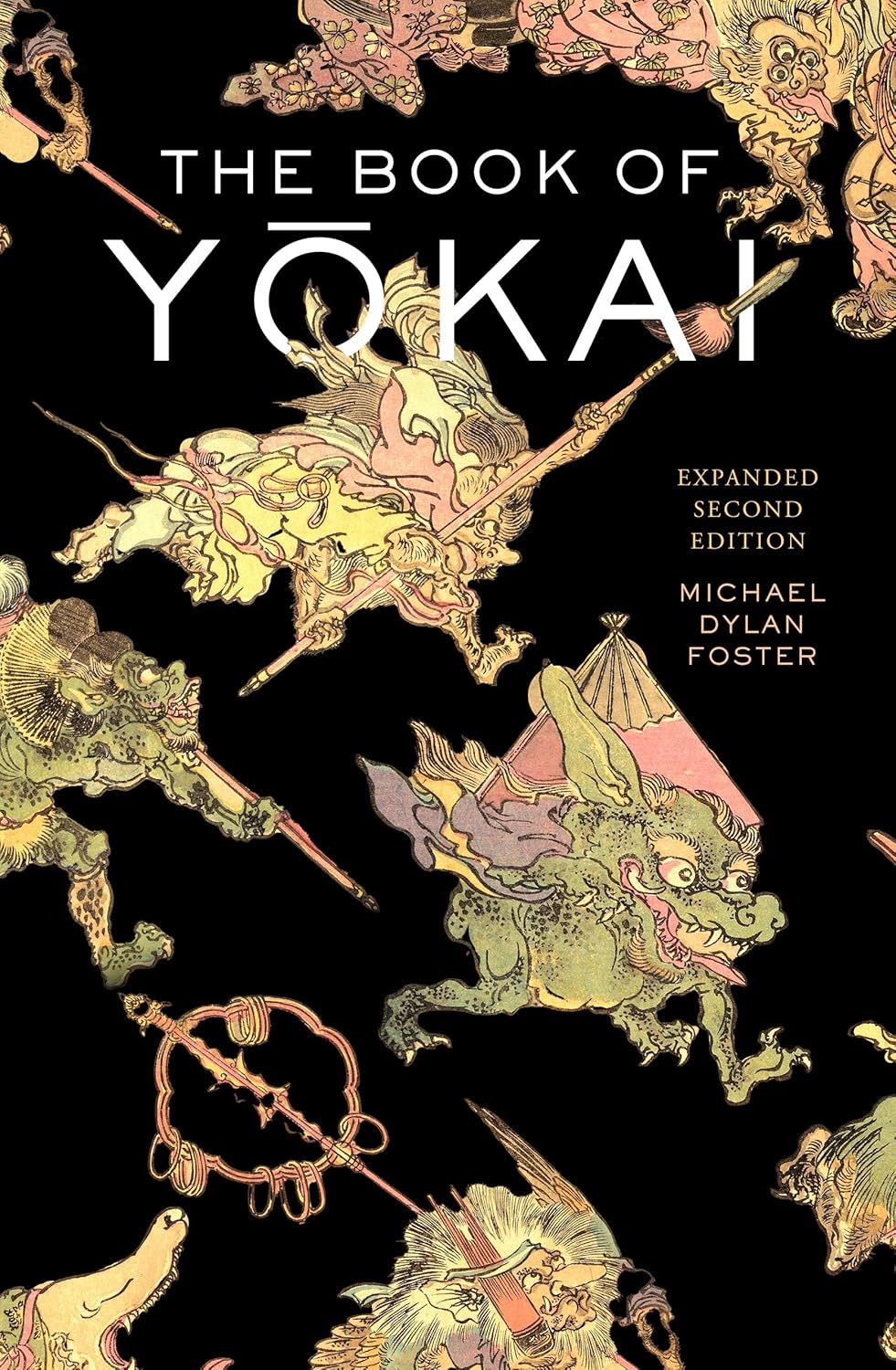
About The Book of Yokai by Michael Dylan Foster – A Clear Guide to Japan’s Strange, Funny and Mysterious Creatures
The Book of Yokai by Michael Dylan Foster opens the door to one of the most fascinating parts of Japanese folklore. Yokai are strange beings, spirits, monsters, animals, objects, and mysterious forces that appear in old stories, local legends, art, religion, manga, anime, films, games, and everyday popular culture. Some are scary. Some are funny. Some are helpful. Some cause trouble. Many are difficult to place in only one group.
Michael Dylan Foster does more than give readers a list of creatures. He explains where yokai stories come from, how they changed through history, why people kept telling them, and how artists and writers gave them new forms. The book also introduces famous figures such as kappa, tengu, kitsune, oni, and many lesser-known beings. With illustrations by Shinonome Kijin, it becomes both a serious guide to folklore and an enjoyable book to browse.
For readers who love Japanese culture but want more than surface-level facts, this book gives history, stories, images, and clear explanations in one place.
Meet the Creatures Behind Japanese Folklore
The word yokai can cover many kinds of strange beings and events. There is no single English word that matches it perfectly. Depending on the story, a yokai might look like a monster, ghost, spirit, animal, transformed object, or mysterious event.
That wide meaning is part of what makes the subject so interesting. A kappa lives around water and is often shown as a small creature with a dish-like part on its head. Tengu are linked with mountains and have changed greatly in appearance over time. Kitsune are foxes connected with shape-shifting, trickery, intelligence, and spiritual power. Oni are often shown as powerful ogre-like beings.
Then there are much stranger examples. Some yokai may live inside houses, appear on roads, hide in rivers, or emerge from ordinary objects. A creature can be frightening in one story and funny in another.
Foster helps readers understand these beings as part of living folklore rather than treating them only as fantasy characters.
More Than a Monster Encyclopedia
A simple encyclopedia can tell you a creature’s name, appearance, and powers. The Book of Yokai goes further by asking why people create stories about strange beings in the first place.
Foster studies how yokai help people explain things they do not understand. A strange sound in a mountain, an unusual event near water, a frightening night journey, or a feeling that a familiar place has become strange can all become part of folklore.
The book also shows that yokai are not frozen in the past. Artists, storytellers, scholars, publishers, television creators, manga artists, and game designers have continued to change them. A being from an old village story may later appear in a printed picture, a comic, an animated show, or a video game.
This makes the book useful for understanding culture as well as creatures. It explains how stories move from person to person and how each generation can reshape them.
A Journey Through Yokai History
Yokai have long histories, and Foster explains how their forms have changed across different periods of Japanese culture.
Old myths, legends, folktales, religious ideas, strange-event records, printed books, visual art, academic study, and modern entertainment all play a part. As ways of printing and sharing images changed, more people could see and recognize particular creatures. Artists helped give some yokai the shapes that later became famous.
The book also introduces important people who collected, studied, drew, or popularized yokai. This helps readers understand that folklore does not survive by accident. Someone tells the story. Someone writes it down. Someone draws it. Someone studies it. Someone changes it for a new audience.
That chain continues today.
This historical view makes the book much richer than a simple list. Readers can see how fear, humor, curiosity, religion, science, art, and entertainment have all shaped the world of yokai.
Creatures From Water, Mountains, Homes and Cities
One of the enjoyable parts of the book is seeing how closely yokai are connected with place.
Some belong to wild mountains and forests. Others are linked with rivers, ponds, seas, farms, villages, roads, houses, or cities. This gives the creatures a strong connection to everyday life and local environments.
A water spirit makes sense in a culture where rivers and ponds can be both useful and dangerous. A mountain creature can give a strange shape to the fear and uncertainty of remote places. A household yokai can turn an ordinary room or object into something mysterious.
Foster organizes many creatures in ways that help readers notice these patterns. Instead of seeing each being alone, you begin to understand a wider folklore world.
For readers who like maps, travel, local legends, or cultural history, this approach can make the book especially enjoyable because the stories feel tied to real landscapes and human experience.
Clear Enough for Beginners, Rich Enough for Serious Readers
Folklore can become complicated very quickly. Different regions may tell different versions of the same story. Names can change. Creatures can mix with religious ideas, old beliefs, new entertainment, and local history.
Foster is an academic specialist in Japanese folklore, but the book is written in a way that welcomes general readers. He explains ideas rather than assuming that everyone already knows Japanese history or folklore studies.
That balance is one of the book’s strongest features.
A beginner can open it because the creatures look interesting. A student can use it to learn about folklore, culture, visual history, and popular media. A serious reader can follow Foster’s discussions of how categories are created and why the idea of yokai itself has changed.
This makes the book suitable for both casual reading and study.
The Illustrations Make the Creatures Easier to Remember
Yokai are highly visual. Their strange bodies, faces, clothes, animal features, objects, and movements often matter as much as their names.
Illustrations by Shinonome Kijin help give readers a visual way into the subject. The pictures add personality and make many creatures easier to remember after reading about them.
The expanded second edition, published by University of California Press in 2024, also includes many additional images and a new yokai gallery that traces how these beings have been pictured across time.
This visual side makes the book useful for artists and designers as well as readers. Someone creating fantasy art, comics, games, or character designs can study how folklore creatures develop recognizable features while still changing between periods and artists.
The images also make the book easier to browse. You do not have to read from beginning to end every time. You can return to a creature or section whenever curiosity brings you back.
A Strong Choice for Anime, Manga and Game Fans
If you enjoy Japanese popular culture, you have probably seen ideas connected with yokai even when the word itself was not explained.
Many fantasy stories use supernatural foxes, oni, mountain beings, living objects, spirits, or creatures connected with specific places. Learning the folklore behind these ideas can make watching or reading modern stories more rewarding.
The Book of Yokai does not tell you that every modern character is a direct copy of an old legend. Instead, it teaches you to see the long conversation between folklore and popular culture.
That makes it a useful reference for fans who want to move beyond quick internet lists. You can learn why certain creatures appear so often and how creators keep changing them.
Useful for Writers, Artists and World Builders
Writers and artists often need strong ideas for creatures, settings, symbols, and supernatural rules. Folklore is one of the richest places to look.
This book gives creators many starting points. A single yokai story may suggest a character, setting, fear, joke, visual idea, or plot. More importantly, Foster shows that folklore changes when people retell it.
That can help creators understand how to use inspiration with more care. Instead of taking only a creature’s appearance, they can learn something about its history, location, and cultural meaning.
For fantasy writers, illustrators, manga fans, game designers, and students of visual culture, the book can become a reference that stays useful long after the first reading.
Who Should Read The Book of Yokai?
The Book of Yokai is a strong choice for readers interested in Japanese folklore, mythology, supernatural creatures, ghosts, cultural history, anime, manga, film, games, art, religion, and storytelling.
It can also suit students studying Japan or folklore because it combines clear explanations with academic knowledge. Teachers may find it useful as background reading when discussing myth, legend, belief, popular culture, or the way stories change over time.
Collectors of mythology books may enjoy it beside works about Greek, Norse, Celtic, Chinese, or other world traditions. The Japanese material feels distinctive, while the larger questions about fear, imagination, place, and storytelling are easy to recognize across cultures.
A Premium Reading Copy From Bookish Wonderland
Bookish Wonderland offers this title for readers who want a comfortable physical copy for study, browsing, gifting, or keeping as a reference.
The edition uses premium eye-soothing cream paper, giving the pages a softer background for longer reading sessions. Crystal-clear printing helps keep names, explanations, and details sharp and easy to follow. High-quality stitched and glue binding supports better strength and longevity, helping the pages remain secure through regular reading and repeated use.
These features are useful for a book that readers may return to many times. You may read one section today, look up a creature next month, or use the book again while watching a film, reading manga, studying Japanese culture, or planning creative work.
Easy Ordering Across Bangladesh
Readers searching for The Book of Yokai by Michael Dylan Foster price in BD can order through Bookish Wonderland with nationwide delivery. Customers in Dhaka and other districts can place an order without needing to visit a physical shop.
Cash on Delivery is available across Bangladesh. Readers in Dhaka can also ask about fast or urgent delivery when the book is needed sooner for a class, gift, research project, art project, or personal collection.
When comparing Book price in Bangladesh, it is useful to think about the full reading experience. Comfortable paper, readable print, strong binding, and dependable delivery can add value to a reference book that may stay on your shelf for years.
Bring Japan’s Strange Folklore World to Your Shelf
The Book of Yokai is more than a collection of monsters. It is a guide to the way people use stories to make sense of fear, nature, strange events, social life, and the unknown.
Michael Dylan Foster gives readers the history behind the creatures while keeping the subject lively and approachable. Shinonome Kijin’s illustrations add another layer of character and make the book enjoyable to explore visually.
Order The Book of Yokai by Michael Dylan Foster from Bookish Wonderland if you want a book that can work as a cultural guide, folklore reference, creative source, and enjoyable journey through Japanese supernatural traditions. With nationwide delivery, Cash on Delivery, premium cream paper, crystal-clear printing, durable binding, and fast delivery options in Dhaka, adding this fascinating guide to your collection is simple today.
If you require any customization or have any questions, please inbox us via FB or Insta.
| Primary Specification | |
| Author | Michael Dylan Foster |
| Narrator | Tim Campbell |
| Genre | Japanese Folklore, Mythology, Cultural Studies, Social Science, History |
| ISBN-13/ISSN | 978-0520403888 |
| ISBN-10 | 0520403886 |
| Publisher | University of California Press |
| Publishing Date | October 22, 2024 |
| Edition | Second |
| Language | English |
| Reading Age | 18+ |
| Format | Printed Book |
| Physical Specification & Quality | |
| Paper Quality | Premium eye-soothing cream paper |
| Binding Quality | High quality stitched and glue binding (for longevity) |
| Print Quality | Crystal-clear print |
| Pages | 480 pages |
| Country | USA |
| Logistics Information | |
| Weight | 505 gm |
| Length | 8.5 inches |
| Width | 5.6 inches |
| Height | 1.3 inch |