

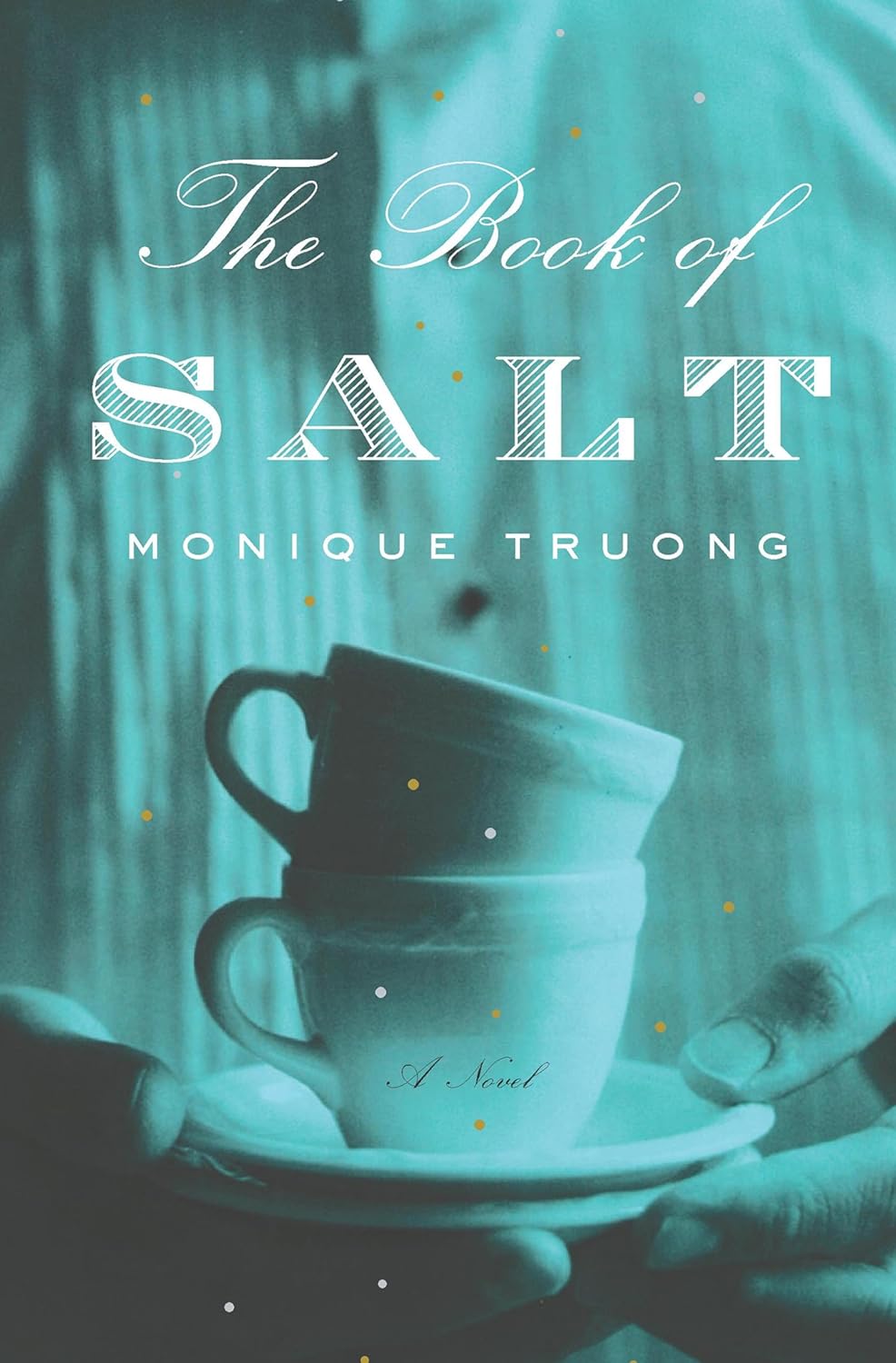
About The Book of Salt Novel by Monique Truong: A Rich Story of Food, Exile, Love, and Finding Your Own Voice
The Book of Salt Novel by Monique Truong opens in Paris in 1934. Bình, a Vietnamese cook, stands at a train station with his employers, the famous writers Gertrude Stein and Alice B. Toklas. They are leaving for America. He must choose what comes next. Will he travel with them, stay in France, or return to Vietnam? This choice opens a deep story about home, work, love, memory, and the wish to belong.
For five years, Bình has lived and cooked at 27 rue de Fleurus. He knows the tastes, habits, secrets, and small acts of the two women he calls “the Steins.” Yet the novel does not place the famous pair at its true centre. It gives the story to the worker who stands in their kitchen, hears their words, serves their meals, and is often treated as if he is part of the room.
As Bình thinks about his future, his mind moves through the past. Readers travel with him to French-ruled Vietnam, life at sea, and the bright but deeply lonely streets of Paris. Food fills the pages with colour and smell, but every dish carries a question: who gets to eat, who must serve, and whose life will history remember?
When famous history leaves some people unseen
Many novels about old Paris follow great artists, rich guests, and well-known names. The servants remain near the edge. Their work makes comfort possible, but their thoughts are rarely heard. Readers who want a fresh view of history may find the usual picture too narrow.
Monique Truong turns that picture around. Stein and Toklas are still present, but Bình watches them. A fine meal becomes beauty, skill, labour, and need at the same time.
This change in view gives space to a queer Vietnamese man living far from home. He is not only someone’s cook. He is funny, sharp, hurt, loving, watchful, and hard to fully know. The book lets a person often left out of history become the person who tells it.
What is The Book of Salt about?
The story begins at a point of choice. Gertrude Stein and Alice B. Toklas are about to leave Paris for a trip to America. Bình has worked in their home for five years, and their journey could end the life he has built. With no clear place waiting for him, he looks back at how he reached this moment.
His memories return to Vietnam under French rule. They show deep family pain, strict ideas about duty, and the harm that can come when love does not fit what others accept. Bình later works on a ship, crosses the sea, and reaches France. Paris promises freedom, yet it also marks him as foreign.
In the Stein home, he creates meals for two women known for their books and social world. Outside the kitchen, he searches for warmth, desire, and a place where he can be seen. His memories do not arrive in a neat line. They rise through taste, smell, words, people, and need, slowly forming the life behind his final choice.
Food becomes a language of its own
Cooking is one of the novel’s greatest pleasures. Ingredients, smells, textures, and meals bring each scene close. Bình understands how food can comfort, impress, tempt, and reveal. He knows that a cook speaks before a guest takes the first bite.
Food also shows power. Someone chooses the menu, someone pays, someone eats, and someone works behind the door. A meal may look easy when it reaches the table, yet it carries planning, heat, tired feet, memory, and skill.
For Bình, cooking links places that seem far apart. A taste can bring Vietnam into a Paris kitchen. A scent can open an old hurt. A dish can become a gift when direct words feel unsafe. Readers who love food writing will find rich detail, while readers who follow the deeper story will see that every flavour holds meaning.
Salt carries many kinds of memory
The title is small, but its meaning keeps growing. Salt belongs in a kitchen, yet it is also found in tears, sweat, and the sea. Each form touches Bình’s life. It can season pleasure, mark hard work, carry grief, or recall the water that took him away from home.
Salt can preserve food, just as memory tries to preserve the past. But too much salt can change a taste, and memory can also change with time. The image helps join the book’s main ideas without turning them into a lesson.
As you read, the title begins to feel like a key. It opens thoughts about price, need, love, labour, and loss. A common grain becomes a way to hold a whole life. This quiet symbol gives the novel strong rereading value because its meaning grows after later memories come to light.
Home is a place and a hard question
Bình was born in Vietnam, works in France, and may be offered another journey. None of these places gives him an easy answer to the word home. Vietnam holds family, language, food, shame, and pain. Paris gives some freedom, but it also keeps reminding him that he is an outsider.
His choice is therefore larger than a train ticket. Going back may not restore what he lost. Staying may mean more lonely work. Leaving for America may open a future, but it may also keep him tied to employers who do not see all of him.
The novel understands that home can be mixed. A person may miss a place that hurt them. They may build care in a city that rejects them. This honest view will speak to readers interested in migration, exile, and the search for belonging.
Love offers warmth but not easy safety
The Book of Salt includes queer desire, secret bonds, and the risk of trusting another person. Bình longs to be known, yet being open can bring danger. Love may offer a short home, but it can also expose an old fear.
The novel treats desire as part of his full human life. It is tied to touch, food, words, loneliness, and hope. His relationships do not solve every wound. Instead, they show how strongly a person can reach for care after being pushed away.
This emotional thread adds warmth to the historical story. Readers are not only asking where Bình will go. They are asking whether he can find a life where work does not erase him and love does not require him to disappear.
Why this award-winning debut still matters
Monique Truong published The Book of Salt as her first novel. Her official book page lists it as New York Times Notable Fiction and includes it among top and favourite book selections from several newspapers and journals. That praise fits a story that brings a fresh eye to a well-known cultural world.
The novel matters because it asks whose view becomes history. Famous hosts and artists often leave papers, books, and pictures. Workers, migrants, and queer people may leave fewer records, even when they made those celebrated lives possible. Fiction can imagine the feeling inside that silence.
Truong does this without turning Bình into a plain symbol. He remains playful, flawed, sensual, angry, and private. His complex voice gives the novel lasting power for readers interested in Asian diaspora writing, queer literature, food, colonial history, and modernist Paris.
What makes this novel worth reading
A Vietnamese cook guides the story from his own point of view, while 1930s Paris offers beauty, art, work, and social pressure. Gertrude Stein and Alice B. Toklas appear through the details of daily home life, and rich food writing gives the book taste, scent, colour, and emotional depth. Memories of French-ruled Vietnam reveal Bình’s earlier life, while queer love adds tenderness, risk, desire, and hope. The image of salt connects labour, tears, sea journeys, and flavour, and the layered voice invites thought, discussion, and later rereading. As a complete standalone story, the novel needs no earlier book. Together, these elements create more than a historical tale; they offer a close look at a man trying to own his story in places where others keep naming him first.
Who will enjoy this book?
Choose this novel if you enjoy literary historical fiction, queer stories, food writing, migrant voices, or books about people missing from common history. It also suits readers interested in Gertrude Stein, Alice B. Toklas, the Lost Generation, French colonial rule, or life in Paris between the world wars.
The book can work well for a university course, book club, reading challenge, or quiet weekend. Discussion groups can talk about who controls a story, how food holds memory, and whether Bình’s choices offer freedom. Students can explore class, race, sexuality, language, labour, exile, and power through one connected life.
It also makes a thoughtful gift for a reader who likes rich prose and character-led fiction. This is best for mature readers because it includes family harm, prejudice, homophobia, sexual themes, unequal power, and emotional pain.
A comfortable copy for an absorbing read
Bookish Wonderland offers a reader-friendly edition made for steady reading and future returns, featuring premium eye-soothing cream paper for a soft page appearance, crystal-clear printing for easy reading, high-quality stitched and glue binding for lasting durability, and a durable finish that helps protect the copy in a bag or on a shelf. This edition is suitable for personal reading, a home library, a class, a book club, or a meaningful gift, with thoughtful details designed to keep your attention on Bình’s voice and the rich world around him.
Easy ordering from Bookish Wonderland
When comparing the Book price in Bangladesh for The Book of Salt Novel by Monique Truong, consider paper comfort, print clarity, binding strength, and delivery help along with cost. A layered novel deserves a copy that stays pleasant when you return to an earlier memory or mark a line for discussion.
Cash on Delivery is available nationwide, with service inside and outside Dhaka. Fast or urgent delivery is available in Dhaka when you need the book soon. Contact Bookish Wonderland through Facebook or Instagram for the current price, stock, edition, delivery time, or customization support.
Taste the story hidden behind the famous names
At a Paris station, Bình faces three possible roads. Behind him are five years in a famous home, a sea journey, a hard family past, secret love, and countless meals made for other people. Ahead is a choice only he can make.
Open this novel and enter Paris through the kitchen door. Smell the food, hear the mixed languages, watch the grand guests, and stay close to the cook who sees more than anyone knows. Let every grain of salt lead toward another memory of work, tears, desire, or home.
Order The Book of Salt Novel by Monique Truong from Bookish Wonderland today. Bring home a bold, tender, and richly imagined story that gives the overlooked man in the room the power to speak.
If you require any customization or have any questions, please inbox us via FB or Insta.
| Primary Specification | |
| Author | Monique Truong |
| Narrator | J. Paul Boehmer |
| Editor | Melissa Lotfy |
| Genre | Historical Fiction, Literary Fiction, LGBTQ+ Fiction |
| ISBN-13/ISSN | 978-0618446889 |
| ISBN-10 | 0618446885 |
| Publisher | Mariner Books |
| Publishing Date | June 15, 2004 |
| Language | English |
| Reading Age | 18+ |
| Format | Printed Book |
| Physical Specification & Quality | |
| Paper Quality | Premium eye-soothing cream paper |
| Binding Quality | High quality stitched and glue binding (for longevity) |
| Print Quality | Crystal-clear print |
| Pages | 272 pages |
| Country | USA |
| Logistics Information | |
| Weight | 293 gm |
| Length | 8.5 inches |
| Width | 5.6 inches |
| Height | 0.64 inch |