

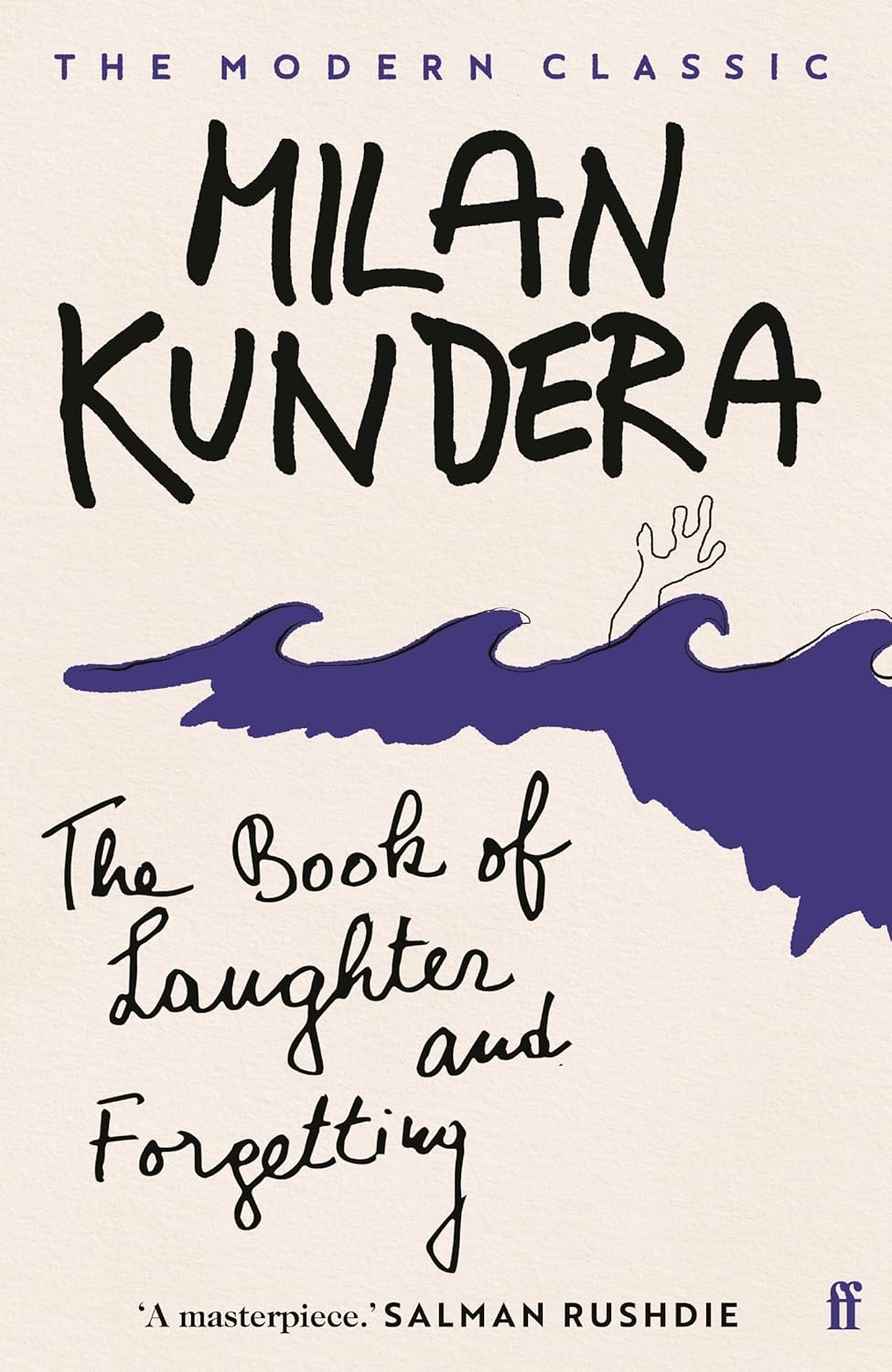
About The Book of Laughter and Forgetting Novel by Milan Kundera: Seven Linked Stories About Memory, Love, Power, and Loss
The Book of Laughter and Forgetting Novel by Milan Kundera is a bold work about what happens when people, nations, and rulers try to change the past. It moves through the lives of several people instead of following one straight plot. Their stories are joined by memory, laughter, love, fear, exile, and the wish to hold on to something that is fading.
The book opens with a striking act of public forgetting. A man disappears from a famous political photo after he falls from power. The picture remains, but the truth inside it has been changed. From there, Kundera looks at many smaller forms of loss. A person may hide old letters, forget a face, lose a home, or watch a private memory slip away.
This is also a very human book. Its people desire love, touch, safety, and a place in the world. They make foolish choices and laugh at serious moments. Some are watched by the state, while others are trapped by their own shame or need. The result is funny, sad, strange, and thoughtful at the same time.
When a normal plot feels too simple
Some readers want a novel that asks large questions, but many idea-led books can feel cold or hard. Other novels tell a smooth story but leave little to think about after the last page. Kundera offers another path. He uses short linked stories, personal memories, history, music, dreams, and direct thought to keep both the mind and the heart awake.
The form may feel unusual at first. One set of people can leave, and another can take its place. The narrator may stop a scene to explore a word or an idea. Yet the same themes keep returning, like notes in a song. Each return adds a new meaning. Laughter can free one person and shut another person out. Forgetting can heal a wound, but it can also help power erase a life.
What is The Book of Laughter and Forgetting about?
The novel is made of seven connected parts. Mirek wants to take back old love letters because they no longer fit the story he tells about himself. His private wish to edit his past sits beside a state that edits public history. Both acts ask who owns memory and whether an unwanted truth can ever be fully removed.
Tamina becomes the emotional heart of the book. She lives away from her homeland after the death of her husband. Her notebooks and letters were left behind in Prague, and she longs to recover them. They hold details that may help her keep her husband present in her mind. As help fails and time passes, her fear of forgetting becomes painfully close.
Other characters bring politics, desire, music, death, and jokes into view.
Tamina gives the book its deepest heart
Tamina works in a café in a country that does not feel like home. Customers talk to her, but few truly understand what she has lost. Her husband is dead, and the papers that record their shared years are far away. Without those pages, she fears that his face and their life together will grow less clear.
Her need is simple to understand. Many people keep a photo, message, gift, or old note because it carries more than paper can show. It can hold a voice, a room, a touch, or a day that cannot return. Tamina’s search turns this common feeling into the centre of the novel.
Memory can be changed by power
The political world in the novel comes from the shadow of Communist Czechoslovakia. Names can be removed, records can be changed, and people can be pushed out of public life. A cleaned photo may look complete to a later viewer, even though someone has been cut from it.
Kundera links this public control to private habits. Mirek also wants to remove proof of an old love. He is not a government, yet he shares the wish to make the past look better. This link is one of the book’s sharpest ideas. The need to rewrite memory can begin in a state office or inside one person’s pride.
The novel asks readers to notice what is missing. Who was removed? Who chose the official story? What happens when no letter, image, or living voice remains to correct it? These questions make the book powerful for readers who care about freedom, truth, censorship, and history.
Laughter can welcome or exclude
The title joins forgetting with laughter, but laughter does not mean only joy. People laugh when they feel free, when something is absurd, or when they share a secret. They may also laugh to mock someone, follow a crowd, or avoid pain.
Kundera shows laughter as a force with two faces. One kind opens the world and breaks a hard rule. Another pulls people into a circle and leaves an outsider standing alone. A happy dance can become an image of group power. The same sound can therefore carry delight, cruelty, escape, or control.
Seven parts move like music
Kundera grew up close to music, and the novel often feels composed rather than simply told. Themes appear, fade, and return in a changed form. The two sections called “Lost Letters” speak to each other. The two sections called “The Angels” also create a mirror. Tamina’s story returns after other voices have entered.
This design rewards careful reading. A detail in one part can change how another part feels. A political act may echo inside a love story. A joke may turn serious many pages later. Readers do not need to solve a puzzle, but they may enjoy noticing these links.
Real life, dreams, and ideas share one page
The book mixes several forms. It can feel like a novel, a set of linked tales, an essay, a memory, a political reflection, and a strange dream. Historical people appear beside invented characters. The narrator may speak about his own life, his father, or the act of writing.
This freedom lets Kundera move quickly from a small room to a large question. A love letter can lead to a thought about history. A piece of music can open a thought about time. A comic scene can suddenly reveal fear. Some moments leave everyday reality and move toward fable or fantasy.
Readers who want one clear hero and a simple ending should know this before ordering. The pleasure comes from the links, changes, and questions. It is a book to enter with curiosity, not a race to discover one final answer.
Why this novel still feels important
The book first brought Kundera major international success in the late 1970s. Its political setting belongs to a clear time and place, but its central fear is not old. Photos can still be changed. Public stories can still leave people out. Personal memories can still fade when the objects tied to them are lost.
The novel also asks what exile does to a person. Leaving a country may provide safety, yet it can break daily contact with language, streets, family, and private records. Tamina’s pain shows that home is made from small details as much as borders. When those details become hard to reach, identity can feel less firm.
For modern readers, the book can open useful talks about propaganda, digital records, grief, migration, privacy, and the stories people build about themselves. It never feels like a plain school lecture because each idea grows from desire, embarrassment, humour, or loss.
What you may gain from reading it
This novel can make you more alert to the way stories are shaped. You may look at an old photo and wonder who stands outside its frame. You may think about which messages, names, and voices help you remember your own life. You may also see why control over the past can become control over the present.
The book offers emotional value as well as ideas. Tamina’s grief can speak to anyone who has feared losing the sound or face of a loved one. Mirek’s actions reveal how pride can make a person dishonest with himself. The changing meaning of laughter shows why belonging can feel warm to one person and cruel to another.
Who will enjoy this book?
Choose this novel if you enjoy literary fiction, political fiction, linked stories, philosophical writing, dark humour, or books about memory and exile. It may appeal to readers of European history and to anyone curious about how private life changes under public pressure.
It works well for a quiet weekend, a university course, a reading challenge, or a thoughtful book-club meeting. A group can discuss whether forgetting is ever useful, how laughter creates power, and why Tamina’s papers matter so much. Students can explore memory, censorship, identity, form, gender, exile, and the line between fact and fiction.
The book is best for mature readers. It includes political arrest, death, grief, sexual scenes, nudity, harsh views, and disturbing moments. Its language may be clear, but its ideas and adult content need patience. It is a strong choice for readers who are ready to be challenged as well as entertained.
A comfortable copy for slow, thoughtful reading
Bookish Wonderland offers a reader-friendly copy designed for steady reading and later returns. Premium eye-soothing cream paper gives the pages a soft look. Crystal-clear printing keeps each line easy to follow. High-quality stitched and glue binding supports long use, while a durable finish helps protect the book in a bag or on a shelf.
This copy suits personal reading, a home library, a class, a book club, or a meaningful gift. The novel invites readers to pause, turn back, and connect a later thought with an earlier scene, so a clear and comfortable copy can make the experience more enjoyable.
Easy ordering from Bookish Wonderland
When comparing the Book price in Bangladesh for The Book of Laughter and Forgetting Novel by Milan Kundera, look at paper comfort, print clarity, binding strength, and delivery help as well as cost. A layered novel is easier to enjoy when you can return to an earlier page without strain.
Cash on Delivery is available nationwide, with service inside and outside Dhaka. Fast or urgent delivery is available in Dhaka when you need the book soon. Contact Bookish Wonderland through Facebook or Instagram for the current price, stock, edition, delivery time, or customization support.
Hold on to the memories others may erase
This novel begins with a person missing from a picture and grows into a wide look at the things that make a life real. A letter, a laugh, a notebook, a song, or a face can carry a truth that power and time may try to remove.
Follow Mirek as he tries to edit his past. Stay with Tamina as she reaches for the papers that hold her lost love. Move through stories that are playful, painful, sensual, political, and strange. Each part offers a new door into the same urgent question: what remains of us when memory disappears?
Order The Book of Laughter and Forgetting by Milan Kundera from Bookish Wonderland today. Bring home a daring modern classic that can make you laugh, feel, question, and look more closely at every story called true.
If you require any customization or have any questions, please inbox us via FB or Insta.
| Primary Specification | |
| Author | Milan Kundera |
| Translator | Aaron Asher |
| Narrator | Richmond Hoxie |
| Editor | Caitlin Daniels |
| Genre | Literary Fiction, Philosophical Fiction, Political Fiction, Magical Realism |
| ISBN-13/ISSN | 978-0060932145 |
| ISBN-10 | 80060932145 |
| Publisher | Harper Perennial Modern Classics |
| Publishing Date | April 7, 1999 |
| Language | English |
| Reading Age | 18+ |
| Format | Printed Book |
| Physical Specification & Quality | |
| Paper Quality | Premium eye-soothing cream paper |
| Binding Quality | High quality stitched and glue binding (for longevity) |
| Print Quality | Crystal-clear print |
| Pages | 320 pages |
| Country | France |
| Logistics Information | |
| Weight | 355 gm |
| Length | 8.5 inches |
| Width | 5.6 inches |
| Height | 0.72 inch |