

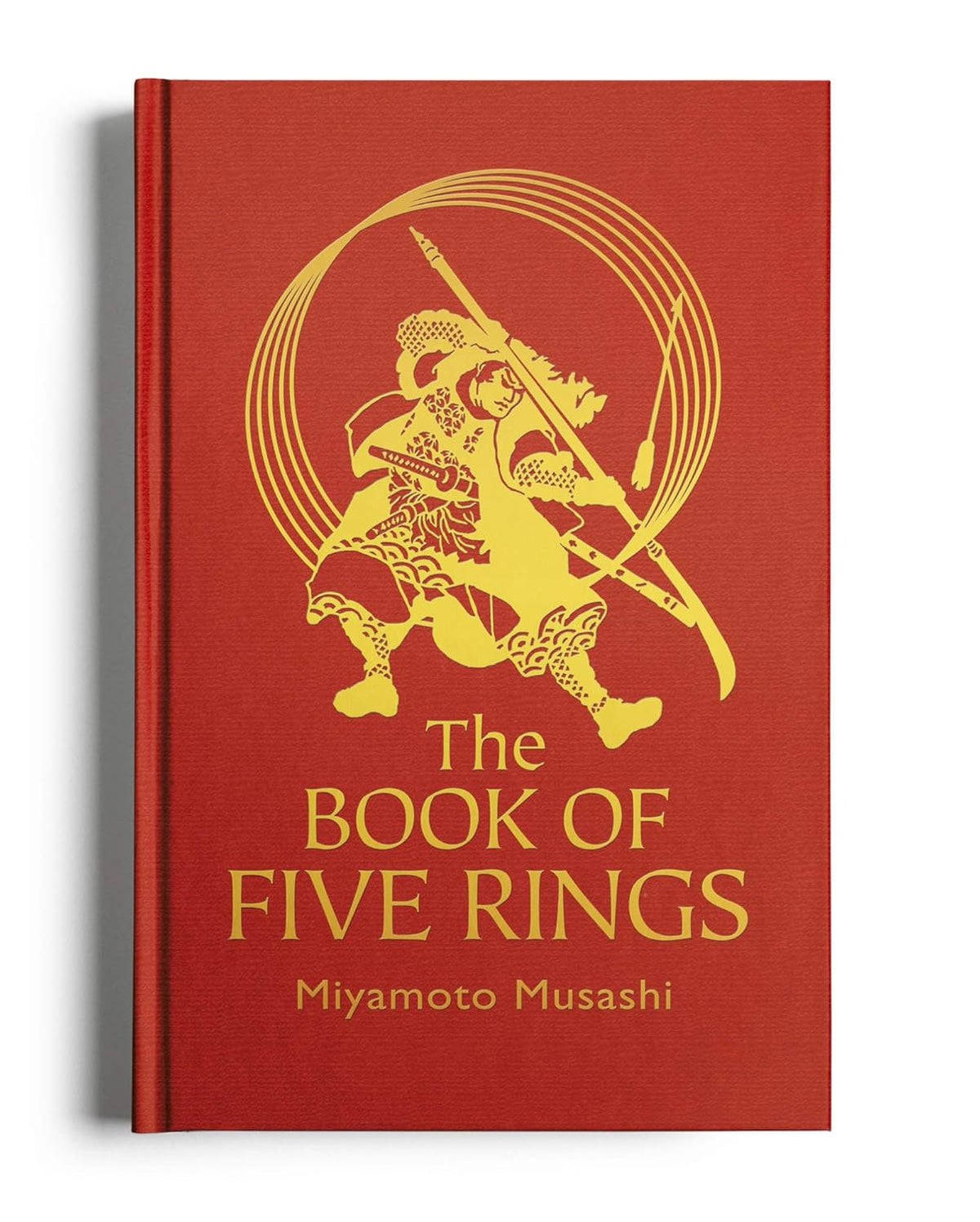
About The Book of Five Rings Book by Miyamoto Musashi – A Timeless Guide to Strategy, Discipline, Timing, and Clear Thinking
The Book of Five Rings Book by Miyamoto Musashi is one of the most famous works on strategy to come from Japan. Musashi was a seventeenth-century swordsman and teacher who spent much of his life studying conflict, timing, movement, awareness, and self-control. Near the end of his life, he put his ideas into a short work that became known as The Book of Five Rings.
This is not a modern business book, a motivational speech, or a simple sword-fighting manual. It is a compact guide to how Musashi thought about strategy. He explains how to build strong basics, stay calm under pressure, understand an opponent, use timing well, avoid useless habits, and keep learning until good decisions become natural.
Why Readers Still Choose This Book Centuries Later
Many books about success tell readers to work hard, stay confident, and never give up. Those ideas can be useful, but they can also feel too general. Musashi takes a different path. He asks the reader to look closely at how things actually work.
For him, strategy begins with seeing clearly. You need to understand your position, your tools, your habits, your timing, and the person or problem in front of you. You should not depend on one trick. You should not become trapped by one style. You should train your mind to notice what changes and respond without panic.
The Ground Scroll Builds the Foundation
The first major section is usually called the Ground, Earth, or Ground Book, depending on the translation. Musashi uses it to explain the broad shape of his approach to strategy.
A strong house needs a strong base. Musashi treats strategy in the same way. Before someone worries about advanced moves, they need to understand the basic path. He compares this to the work of a carpenter, where tools, planning, measurement, and careful work all matter.
The lesson is simple to understand: do not rush toward advanced skill before learning the foundation.
This idea works far beyond martial arts. A student needs basic knowledge before difficult study. A business owner needs to understand customers and costs before making big plans. A sport player needs control and practice before trying risky moves. Musashi keeps reminding readers that real skill grows from basics repeated with care.
The Water Scroll Teaches Flexibility
Water changes shape depending on the container around it. Musashi uses that image to explain how the mind should respond to changing conditions.
A rigid person may know one method very well but fail when the situation changes. A flexible person can keep the main goal while adjusting the way they act. This does not mean changing direction without reason. It means staying balanced enough to use the right response at the right moment.
The Water Scroll also discusses posture, attention, rhythm, and technique in the context of Musashi's martial practice. Modern readers do not need to copy its combat details to understand the wider principle: your method should serve the situation, not become a prison.
For study, work, leadership, or personal goals, that can mean being ready to change a plan when new facts appear. Good strategy is not stubbornness. It is clear purpose with flexible action.
The Fire Scroll Looks at Conflict and Pressure
Fire suggests energy, movement, danger, and fast change. In the Fire Scroll, Musashi turns toward the conditions of direct conflict.
He thinks about position, initiative, rhythm, pressure, and the need to understand what is happening before reacting blindly. One of the useful ideas here is that people and groups can lose balance when their rhythm is broken. A calm strategist notices these changes instead of becoming lost inside them.
For a modern reader, this section can be understood as a study of pressure. Difficult moments often make people rush. They talk too quickly, make emotional choices, or follow the first idea that appears. Musashi's wider approach points in the opposite direction. Preparation should make clear action easier when the situation becomes tense.
This can help readers think about exams, debates, negotiations, sports, work problems, or any moment where pressure can reduce good judgment.
The Wind Scroll Warns Against Blindly Following Other Schools
The Wind Scroll looks at other approaches to strategy. Musashi studies competing schools because he believes you cannot fully understand your own method if you never examine other methods.
This is an important lesson for anyone who becomes too attached to one system. A method may work well in one situation and poorly in another. Tradition can be useful, but repeating a tradition without understanding it can become a weakness.
Musashi criticizes habits he believes are made for appearance rather than real effectiveness. The larger idea is easy to apply today: do not choose a method only because it is popular, old, impressive, or used by someone famous.
Compare. Test. Observe. Understand the reason behind the method.
A reader can use this idea when choosing study techniques, business plans, fitness routines, creative methods, or ways to solve everyday problems. Learn from others, but do not stop thinking for yourself.
The Void Scroll Brings the Ideas Together
The final section is called Void, Emptiness, or sometimes the Book of the Void. It is the shortest and most philosophical part of the work.
The idea can sound difficult, but the basic direction is simple. After long practice, clear understanding should become less forced. A skilled person does not need to stop and think through every tiny step. Training, observation, and experience begin to work together naturally.
Musashi does not present the Void as laziness or an excuse to stop learning. It comes after serious practice. You learn the forms, understand the reasons, notice the limits, and continue until your response becomes more direct.
This gives the book a satisfying shape. It begins with foundations and ends with a state where knowledge is no longer just a set of rules in the head. It becomes part of how a person sees and acts.
Strategy Here Means More Than Winning a Fight
The historical setting of The Book of Five Rings is martial. Musashi wrote for students of strategy and swordsmanship, and many examples come from combat. Still, publishers and readers have long noted that the book's ideas are applied beyond martial arts.
Its wider value comes from questions such as: What is the real goal? What information matters? When should you act? When should you wait? Are you using the right tool? Are you repeating a habit simply because it feels familiar? Can you see the whole situation instead of one small part?
These are strategy questions in many areas of life.
A Short Classic That Rewards Slow Reading
The Book of Five Rings is not a long modern textbook, but it can take time to absorb. Many lines are compact. Some ideas make more sense after you return to them.
That makes this a good book for slow reading. You can read one section, stop, think, and compare the idea with something in your own life. You may also notice that different English translations use slightly different words for important terms.
Because the original text comes from seventeenth-century Japan, some examples and assumptions belong to Musashi's time. A thoughtful reader should keep that historical context in mind. The goal is not to treat every sentence as a rule for modern life. The better approach is to understand the principle, test whether it fits the present situation, and keep what remains useful.
Who Will Enjoy The Book of Five Rings Most?
This book is a strong choice for readers interested in strategy, Japanese history, samurai culture, martial arts, discipline, leadership, philosophy, and personal development.
It can also suit readers who enjoyed The Art of War and want another classic Asian text about conflict and strategic thinking. The two books are different in background and style, but both encourage readers to think beyond simple force.
Students and young adults may find the book useful as an introduction to older ideas about training and mastery. Professionals may enjoy its focus on timing, preparation, and flexible thinking. Martial artists can read it in its original strategic context. History readers can use it as a doorway into Musashi's world and the traditions that later grew around his name.
A Comfortable Edition for Reading and Rereading
Bookish Wonderland prepares this edition for readers who want a clean and durable physical copy. It uses premium eye-soothing cream paper, crystal-clear printing, and high-quality stitched and glue binding designed for better longevity.
The softer page tone can make long reading sessions more comfortable, while sharp print helps short, idea-heavy passages stay easy to follow. Strong binding is useful because this is the kind of book many readers return to, mark, discuss, or keep beside other philosophy and strategy titles.
Looking for The Book of Five Rings Book by Miyamoto Musashi Price in Bangladesh?
If you are comparing the Book price in Bangladesh for The Book of Five Rings Book by Miyamoto Musashi, consider the value of the physical edition as well as the selling price.
This is a classic many readers revisit rather than read only once. A comfortable page, clear print, and durable binding can make repeated reading easier and help the copy remain useful on your shelf.
Bookish Wonderland aims to balance reading comfort, durability, and value. Check the current product listing for the latest selling price because prices may change with stock, printing, edition, and supply conditions.
Easy Ordering Across Bangladesh
Bookish Wonderland offers nationwide delivery, including addresses inside and outside Dhaka. Cash on Delivery is available across Bangladesh, so readers can order without needing to pay online first.
Fast or urgent delivery may also be available in Dhaka when you need the book sooner for study, gifting, work, or personal reading.
If you need customization or have a question about your order, you can contact Bookish Wonderland through its available Facebook or Instagram support channels.
Build a Sharper Way of Thinking
The Book of Five Rings Book by Miyamoto Musashi has lasted because its central lesson is larger than swordsmanship. Musashi asks readers to train carefully, understand the basics, watch timing, avoid empty habits, study other methods, and keep the mind flexible.
The book does not promise easy success. It presents mastery as something built through practice, observation, and repeated correction.
That message still feels useful. Modern life is full of fast advice, short trends, and methods that promise instant results. Musashi's approach is slower. Learn the foundation. Know your tools. See the situation clearly. Do not become trapped by one style. Practice until good judgment becomes stronger.
If you want a classic strategy book that can be read as history, philosophy, martial thought, and a guide to disciplined decision-making, this title deserves a place on your shelf.
Order The Book of Five Rings by Miyamoto Musashi from Bookish Wonderland and explore a work that has challenged generations of readers to think more carefully about strategy, discipline, timing, and mastery.
If you require any customization or have any questions, please inbox us via FB or Insta.
| Primary Specification | |
| Author | Miyamoto Musashi |
| Translator | Victor Harris |
| Genre | Strategy, Philosophy, Martial Arts, Military History |
| ISBN-13/ISSN | 978-1398829367 |
| ISBN-10 | 1398829366 |
| Publisher | Sirius |
| Publishing Date | September 5, 2023 |
| Language | English |
| Reading Age | 16+ |
| Format | Printed Book |
| Physical Specification & Quality | |
| Paper Quality | Premium eye-soothing cream paper |
| Binding Quality | High quality stitched and glue binding (for longevity) |
| Print Quality | Crystal-clear print |
| Pages | 160 pages |
| Country | Japan |
| Logistics Information | |
| Weight | 185 gm |
| Length | 8.5 inches |
| Width | 5.6 inches |
| Height | 0.8 inch |