

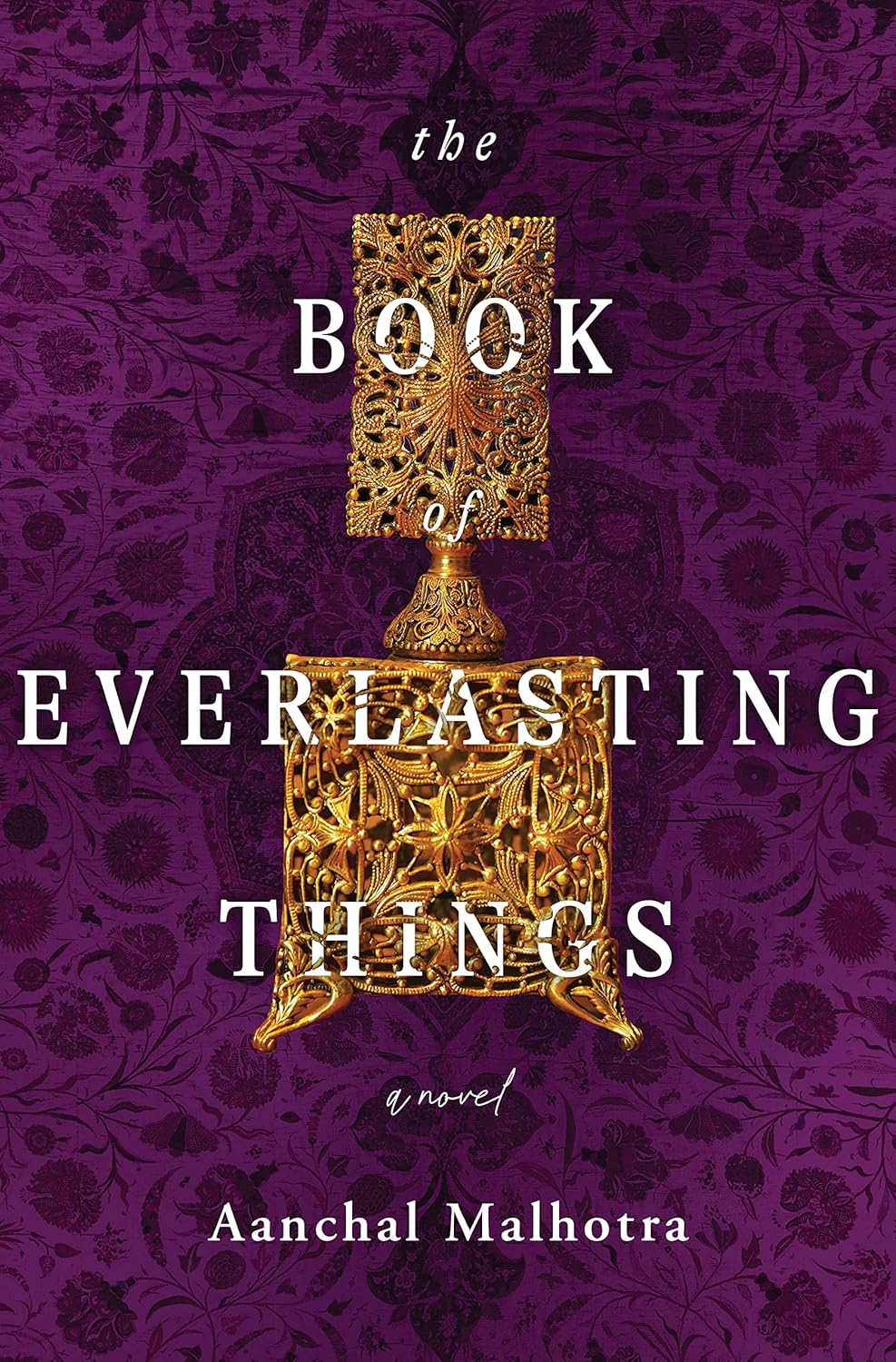
About The Book of Everlasting Things by Aanchal Malhotra – A Sweeping Love Story of Partition, Memory, Perfume, and Calligraphy
The Book of Everlasting Things by Aanchal Malhotra is a historical love story set against one of the biggest changes in South Asian history. The novel begins in Lahore in 1938, where Samir Vij, a Hindu boy learning the art of perfume making, meets Firdaus Khan, a Muslim girl learning calligraphy. Their first meeting is simple, but the bond between them grows slowly through shared curiosity, art, memory, and the hope of building a life together.
As the years pass, the political world around them becomes more dangerous. The movement for Indian independence grows, and the Partition of 1947 changes Lahore, families, borders, and identities. Samir becomes Indian. Firdaus becomes Pakistani. A relationship that once seemed possible suddenly becomes dangerous and nearly impossible.
The novel follows what happens when love survives inside memory even after history forces two people apart. It is a story about loss, craft, family, place, and the things people carry when home itself is changed.
When Love and History Collide
Some romance novels keep the outside world far away. This book does the opposite. Samir and Firdaus fall in love while the world around them is changing, and history becomes part of every choice they make.
That makes the romance feel larger than a private relationship. The couple must deal with family expectations, religious difference, political violence, migration, and the fear that the city they know may no longer belong to both of them.
For readers who want a love story with real historical weight, this gives the novel strong emotional power. The tension does not come from a simple misunderstanding. It comes from forces that neither Samir nor Firdaus can control.
Their love becomes a way to understand Partition not only as a political event, but as something that entered homes, families, friendships, streets, memories, and private dreams.
Lahore Feels Like a Living Part of the Story
Lahore is not just a background in The Book of Everlasting Things. The city shapes the people who live inside the novel.
Samir grows up in the Walled City, where his family works with ittar, or traditional perfume. Firdaus grows up connected to the art of calligraphy. Their worlds are built from smell, ink, paper, language, family practice, and old streets.
Before Partition, their lives show a Lahore where different religious communities live close to one another. The city has markets, homes, workshops, rivers, stories, and inherited crafts. This makes the later division more painful because readers first see what is being lost.
Aanchal Malhotra is known for her work as an oral historian of Partition, and that background can be felt in the attention to memory, objects, craft, and place. The result is a novel that wants readers to feel history through ordinary life rather than only through dates and political speeches.
Perfume and Calligraphy Give the Romance Its Own Language
One of the most memorable parts of the novel is the way craft becomes part of love.
Samir learns perfumery. He pays attention to flowers, oils, ingredients, balance, and the way scent can stay connected to a moment long after the moment has passed. Smell becomes tied to memory, desire, and loss.
Firdaus learns calligraphy. Her art depends on line, shape, patience, movement, and the beauty of written language. Words are not only something to read. They are something to make carefully.
These two crafts give Samir and Firdaus different ways of seeing the world. One works through scent. The other works through form and script.
That makes their relationship feel richer. Their love is not built only through conversation. It grows through what they notice, what they make, what they remember, and what they hope to preserve.
Why Memory Matters So Much
The title The Book of Everlasting Things points toward one of the novel's biggest ideas: what can truly last?
Homes can be lost. Borders can change. Families can be separated. Objects can disappear. People can be forced to leave places they believed would always be theirs.
Yet memory can survive.
The novel keeps returning to the question of what people carry forward after a great loss. Sometimes it is a smell. Sometimes it is a word, a family habit, an object, a recipe, a craft, a story, or the memory of another person.
This gives the book a strong emotional link between love and history. Samir and Firdaus are not only remembering each other. They are also connected to a world that Partition changed forever.
Readers who enjoy novels about memory, inherited trauma, family history, and the meaning of home may find this part especially powerful.
Partition Is Shown Through Human Lives
The Partition of British India in 1947 created India and Pakistan and caused one of the largest migrations in modern history. It also brought terrible communal violence and enormous loss.
In this novel, those events are experienced through people rather than explained like a textbook.
Samir and Firdaus suddenly find themselves on opposite sides of a new border because of their religious identities. Their city, relationships, and futures are changed by decisions made on a much larger political level.
This approach makes history feel personal. Instead of seeing Partition only as a map divided by a line, readers see what that line can do to love, family, work, memory, and belonging.
The novel also continues beyond the immediate moment of 1947. It looks at how the effects of Partition can move through later years and generations. That wider view helps show that historical trauma does not end simply because a political event is over.
A Slow, Rich Story Rather Than a Fast Romance
Readers should know that this is a large, detailed literary novel.
The Book of Everlasting Things is not built like a quick romance with short chapters and nonstop twists. It takes time with places, smells, artistic practice, family life, and historical change.
That slower pace is part of the experience. It allows the reader to understand Samir and Firdaus before the world around them changes. It also gives more weight to the details that later become memories.
If you enjoy books that let you sink into a place and stay with characters for many years, this may be a strong match. If you only want fast action, it may feel slower than expected.
The best way to read it is to allow the story time. The descriptions are there to build a world that feels full before history begins breaking it apart.
Who Will Enjoy This Novel Most?
This book is a good choice for readers who enjoy historical fiction, literary romance, South Asian history, family sagas, stories about Partition, and novels about memory.
It may especially appeal to readers who liked sweeping love stories where private relationships are shaped by war, politics, migration, or national change.
Readers interested in Lahore, traditional perfumery, Urdu calligraphy, Indian and Pakistani history, or the cultural world before Partition may also find much to explore.
Book clubs can use the novel to discuss love across religious lines, family duty, borders, displacement, inherited memory, and whether a person can ever fully leave the past behind.
It can also make a thoughtful gift for a reader who prefers emotional, detailed novels rather than light romance.
The novel works well for readers who want history to feel human. Instead of treating Partition only as a national event, it shows how political change reaches kitchens, shops, friendships, marriages, careers, and memories. That personal scale can help readers understand why stories about 1947 remain important today. It also gives the romance more meaning, because Samir and Firdaus are not simply separated by distance. They are separated by new ideas of nation, religion, belonging, and identity that reshape the world around them.
A Premium Reading Copy From Bookish Wonderland
Bookish Wonderland prepares this edition for readers who want a comfortable physical copy for a long novel. It uses premium eye-soothing cream paper, crystal-clear printing, and high-quality stitched and glue binding for better durability.
The softer paper tone can make longer reading sessions more comfortable. Clear print helps detailed passages remain easy to follow. Strong binding is useful for a 480-page novel that may be read slowly, revisited, discussed, or kept on a personal shelf for years.
The clean finish also makes the book suitable for gifting. Book customization may be available when requested, depending on the order and option.
What books are in the The Book of Everlasting Things series by Aanchal Malhotra?:
The Book of Everlasting Things is published as a standalone novel, not as part of an official numbered series. There is no confirmed Book 1, Book 2, or later reading order for this title.
- The Book of Everlasting Things by Aanchal Malhotra (Standalone novel)
You can begin with this book and receive the complete story without reading another Aanchal Malhotra title first.
Best Sellers Rank of This Book
No Best Sellers Rank was supplied in the product information for this listing. Retailer rankings can change by marketplace, format, edition, category, and date, so an unverified number should not be added.
- Best Sellers Rank: Not provided in the supplied product data
The book has, however, been recognized by major review and media outlets, including being selected as an NPR Best Book of the Year. That recognition is different from a live retailer bestseller rank.
Looking for The Book of Everlasting Things by Aanchal Malhotra Price in Bangladesh?
If you are comparing the Book price in Bangladesh for The Book of Everlasting Things by Aanchal Malhotra, look at both the current price and the physical reading quality.
This is a long historical novel, so paper comfort, clear print, and strong binding can make a real difference. A copy that is pleasant to hold and easy to read is more useful if you plan to spend several evenings with the story or keep it in your collection.
Bookish Wonderland aims to balance reading comfort, durability, and value. Check the current product listing for the latest selling price because book prices can change with stock, printing, edition, and supply conditions.
Easy Ordering Across Bangladesh
Bookish Wonderland offers nationwide delivery, including delivery inside and outside Dhaka. Cash on Delivery is available across Bangladesh, so readers can order without paying online first.
Fast or urgent delivery may also be available in Dhaka when you need the book sooner.
This can be useful if you are ordering for yourself, choosing a gift, preparing for a book-club discussion, or building a South Asian historical-fiction collection.
If you need customization or have a question about the order, you can contact Bookish Wonderland through its available Facebook or Instagram support channels.
A Love Story About What History Cannot Fully Erase
The Book of Everlasting Things by Aanchal Malhotra asks what remains when people lose a city, a future, or a person they once believed would always be part of their life.
Samir and Firdaus begin as two young people learning old crafts in Lahore. Their love grows inside a shared city before religion and politics are turned into new borders. Partition then forces them apart, but separation does not erase everything that came before.
That is where the novel finds its deepest power.
Perfume keeps memory alive through scent. Calligraphy preserves language through form. Families carry stories across time. People leave homes, but pieces of those homes remain inside them.
The romance therefore becomes more than a question of whether two people can stay together. It becomes a story about how love changes after loss, how memory survives distance, and how history continues inside private lives.
If you want a sweeping historical novel filled with romance, Lahore, Partition, perfume, calligraphy, family memory, and the long shadow of separation, this is a strong book to add to your shelf.
Order The Book of Everlasting Things by Aanchal Malhotra from Bookish Wonderland and enter a world where fragrance, ink, memory, and love continue long after borders have changed.
If you require any customization or have any questions, please inbox us via FB or Insta.
| Primary Specification | |
| Author | Aanchal Malhotra |
| Narrator | Deepti Gupta |
| Editor | Michelle McMillian |
| Genre | Historical Fiction, Literary Fiction, Romance Fiction |
| ISBN-13/ISSN | 978-1250802033 |
| ISBN-10 | 1250802032 |
| Publisher | Flatiron Books |
| Publishing Date | November 7, 2023 |
| Language | English |
| Reading Age | 18+ |
| Format | Printed Book |
| Physical Specification & Quality | |
| Paper Quality | Premium eye-soothing cream paper |
| Binding Quality | High quality stitched and glue binding (for longevity) |
| Print Quality | Crystal-clear print |
| Pages | 480 pages |
| Country | India |
| Logistics Information | |
| Weight | 505 gm |
| Length | 8.5 inches |
| Width | 5.6 inches |
| Height | 1.2 inch |