

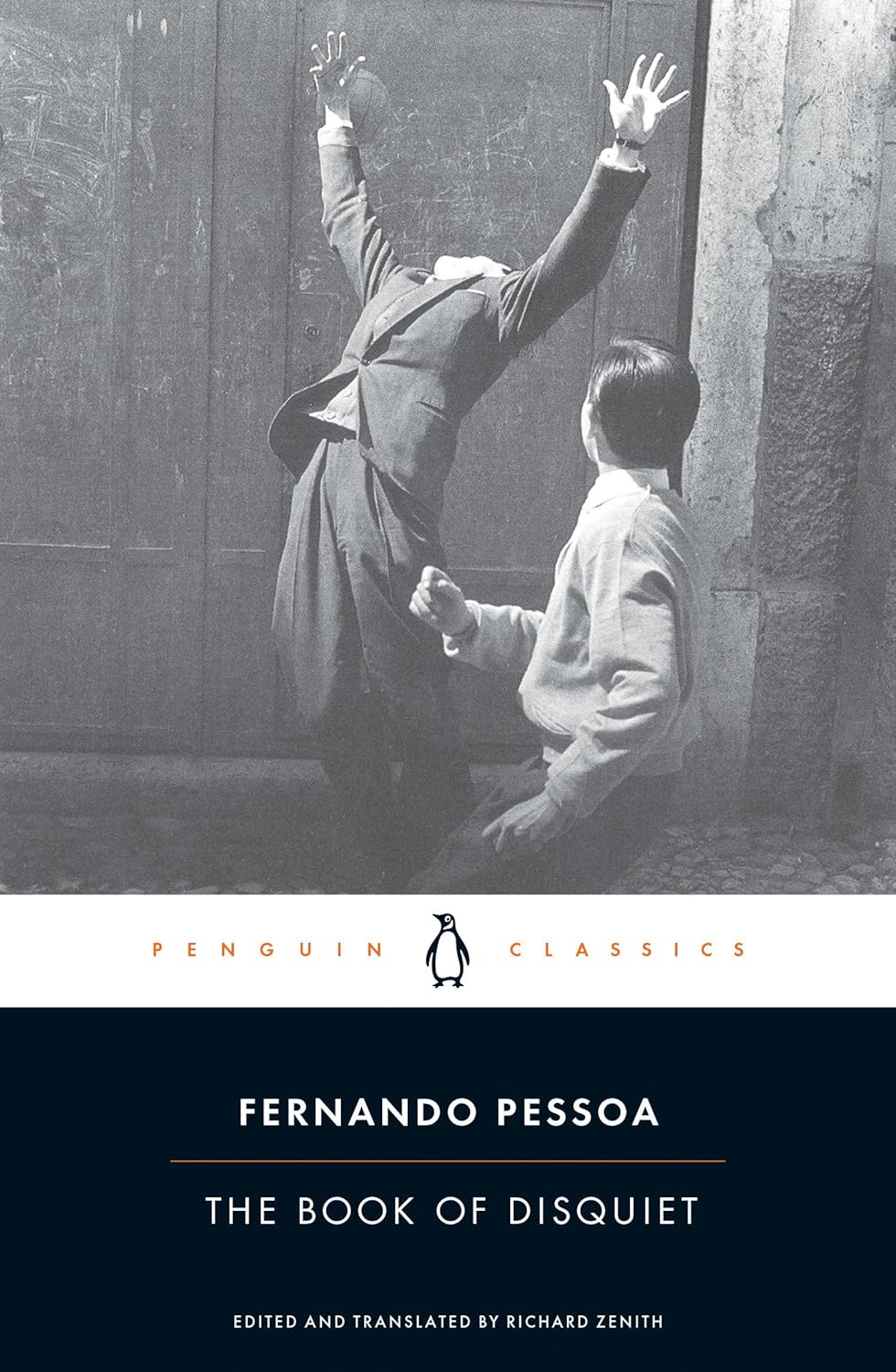
About The Book of Disquiet by Fernando Pessoa – A Haunting Classic About Thought, Loneliness, Dreams, and Everyday Life
The Book of Disquiet by Fernando Pessoa is one of those rare books that does not need a fast plot to pull you in. It is built from thoughts, memories, dreams, small scenes, and private questions. Most of the work is linked to Bernardo Soares, an assistant bookkeeper in Lisbon who watches ordinary life while his mind travels much farther.
Soares goes to work, walks through city streets, notices weather, rooms, people, and light, and then turns those simple things into deep reflections. He thinks about loneliness, identity, boredom, imagination, work, dreams, sadness, beauty, and the strange feeling of being alive.
Pessoa did not finish the work as one normal novel. He left many fragments behind when he died in 1935. Editors later gathered and arranged them, and the book was first published in Portuguese in 1982. Because of that history, different editions can place pieces in different orders. That unfinished form is not a problem to hide. It is part of what makes the book unusual.
A Book for Readers Who Think Too Much
Some people can finish the day and simply rest. Other people keep thinking.
They replay conversations. They wonder what their life means. They imagine other lives they could have lived. They look at a street, a window, a cloud, or an empty room and suddenly feel something they cannot easily explain.
The Book of Disquiet speaks strongly to that second kind of reader.
Bernardo Soares has an ordinary job, but his inner life is huge. He can feel tired of routine while also finding beauty in a small moment. He can want another life and still know that changing everything may not solve what he feels inside.
This makes the book easy to connect with even though it comes from another time. You do not need to live in early twentieth-century Lisbon to understand the feeling of being surrounded by people but still alone inside your own mind.
Bernardo Soares Turns Ordinary Life Into Literature
Bernardo Soares is not a hero in the usual sense. He does not travel across kingdoms, solve a murder, or fight a great enemy.
He works as an assistant bookkeeper. His days include an office, a boss, other workers, streets, meals, rooms, and quiet habits. Yet his mind changes the meaning of these simple things.
A normal workday can make him think about freedom. A view of Lisbon can lead him into memory. A small feeling can become a question about the self. Boredom can become almost beautiful because it reveals how strange ordinary life can feel when you examine it closely.
Pessoa used different literary identities in his writing. Soares is one of the most important voices connected with this book. Through him, Pessoa creates a speaker who feels both close and distant: personal enough to feel real, but also shaped as a literary self.
You Do Not Have to Read It Like a Normal Novel
One of the biggest mistakes a new reader can make is expecting The Book of Disquiet to behave like a standard story.
There is no simple beginning, middle, and end. There is no single plot pushing you toward one final answer. The work is fragmentary. Some passages are short. Others are longer. A thought may appear, disappear, and return later in another form.
That means you can read it slowly.
You may read five pages and stop. You may find one paragraph that stays in your mind all day. You may return to a page weeks later and understand it differently.
This reading style can be a benefit for people who want a book to live with rather than race through. It works well beside a bed, on a quiet desk, or during a calm evening when you want language and thought more than action.
Lisbon Becomes Part of the Inner World
Lisbon is more than a place behind the book. The city becomes part of Soares's way of thinking.
He notices streets, shops, offices, skies, weather, people, and the movement of daily life. The city is real, but it also becomes dreamlike because everything passes through his inner voice.
This gives the book a strong sense of place without turning it into a travel guide. Lisbon becomes a city seen through mood.
On one page, the outside world may feel dull. On another, a simple street can look beautiful. That change shows how much our inner state affects what we see.
Readers who enjoy books where a city feels almost like another character may especially like this part. The Lisbon of The Book of Disquiet is not built through action. It is built through attention.
Loneliness Is Here, but So Is Beauty
The Book of Disquiet is often called melancholy, and that is fair. Soares spends much of his time alone with difficult thoughts.
He feels distance from other people. He questions ambition. He doubts whether normal ideas of success can satisfy him. Work can feel empty. Social life can feel tiring. Dreams can seem more attractive than action.
But the book is not only dark.
Again and again, Soares finds beauty in small things. Light, weather, a street, a passing feeling, or a quiet moment can become enough to stop him. His sadness and his sensitivity are closely connected. The same mind that feels the weight of life can also notice details other people miss.
That balance keeps the work from becoming a simple book about sadness. It is also about seeing.
Dreams Can Feel More Real Than Action
Soares often prefers imagination to action.
In his mind, he can travel, become other people, build different lives, and escape the limits of his daily routine. Dreams offer freedom because they do not have the same cost as real choices.
This creates one of the book's central tensions. Is imagining a life enough? Does action make life more real, or can inner experience be just as important?
Pessoa does not turn this into a simple lesson telling readers to become more productive. Instead, the work stays inside the problem.
That can feel refreshing in a world full of advice about goals, speed, achievement, and constant improvement. The Book of Disquiet gives space to uncertainty. It allows a person to be confused, unfinished, and full of mixed feelings.
Why the Fragmented Form Fits the Subject
The unusual structure is closely connected to what the book is trying to do.
A human mind does not think in perfect chapters. Thoughts arrive in pieces. A memory appears because of a smell or a street. A feeling interrupts another feeling. One day you believe something strongly, and another day you see it differently.
The fragments make room for that movement.
Because Pessoa never prepared one final version for publication, editors have had to decide how the surviving pieces should be selected and arranged. This is why one English edition may not match another page for page.
For buyers, this matters. Richard Zenith and Margaret Jull Costa editions can differ in translation, ordering, notes, and length, so the reading experience can change with the edition.
A Modernist Classic That Feels Personal
The Book of Disquiet is often placed beside major works of literary modernism because it breaks normal rules about voice, form, and authorship.
That sounds academic, but the reading experience can be very personal.
Soares does not speak like a textbook. He speaks from inside uncertainty. He admits weakness, boredom, pride, fear, desire, and contradiction. He can sound wise in one moment and lost in the next.
That makes the voice human.
Readers do not have to agree with every thought. In fact, part of the pleasure is seeing where your own mind meets his and where it does not.
Who Will Enjoy The Book of Disquiet Most?
This book is a strong choice for readers who enjoy literary fiction, philosophical writing, diaries, prose poetry, modernist literature, reflective books, and stories about inner life.
It may especially appeal to people who like slow reading and beautiful sentences. Writers and artists may enjoy Pessoa's thoughts about imagination and identity. Students can explore modernist form, while reflective readers may connect with questions about work, purpose, loneliness, and dreams.
It can also work well for people who enjoy keeping a book nearby and opening it at random.
A Comfortable Edition for Slow, Thoughtful Reading
Bookish Wonderland prepares this edition for readers who want a comfortable physical copy for long and repeated reading. It uses premium eye-soothing cream paper, crystal-clear printing, and high-quality stitched and glue binding designed for better longevity.
The softer page tone can help during long reading sessions, while sharp printing keeps the text easy to follow. A strong binding is useful for a book many readers may underline, revisit, or keep for years.
The clean finish also makes it suitable for a personal classics shelf or as a thoughtful gift for someone who enjoys deep literature.
Looking for The Book of Disquiet by Fernando Pessoa Price in Bangladesh?
If you are comparing the Book price in Bangladesh for The Book of Disquiet by Fernando Pessoa, look at the exact edition as well as the selling price.
This title has several English translations and edited versions. Page count, ordering, notes, and translation can differ. Checking the edition helps you know exactly what you are buying.
Bookish Wonderland aims to offer a comfortable, durable reading copy. Check the current listing for the latest price because prices can change with stock, edition, and supply.
Easy Ordering Across Bangladesh
Bookish Wonderland offers nationwide delivery, including addresses inside and outside Dhaka. Cash on Delivery is available across Bangladesh, so readers can order without paying online first.
Fast or urgent delivery may also be available in Dhaka when you need the book sooner.
You can order it for personal reading, study, gifting, or a growing classics collection. If you need customization or have a question about the exact edition, contact Bookish Wonderland through its available Facebook or Instagram support channels before ordering.
Keep a Book That Changes When You Change
The Book of Disquiet by Fernando Pessoa does not give you a neat answer about how to live. That is one reason readers keep returning to it.
Bernardo Soares looks at work, dreams, loneliness, identity, beauty, boredom, and desire without pretending that life can be solved in a few easy rules. His thoughts move, change, and sometimes disagree with one another.
That can make the book feel deeply alive today.
A passage that seems distant today may feel personal years later. A thought you love now may look different after your life changes. Because the work is built from fragments, you can return without starting from page one.
If you want a classic that rewards quiet attention, this book deserves shelf space. Read it as a strange novel, diary, prose poetry, philosophy, or a mind watching itself.
Order The Book of Disquiet by Fernando Pessoa from Bookish Wonderland and enter a Lisbon made from streets, dreams, office hours, solitude, and thoughts that refuse to stay quiet.
If you require any customization or have any questions, please inbox us via FB or Insta.
| Primary Specification | |
| Author | Fernando Pessoa |
| Translator | Richard Zenith |
| Narrator | Adam Sims |
| Editor | Richard Zenith |
| Genre | Literary Fiction, Modernist Literature, Philosophical Fiction, Prose Poetry |
| ISBN-13/ISSN | 978-0141183046 |
| ISBN-10 | 0141183047 |
| Publisher | Penguin Classics |
| Publishing Date | December 31, 2002 |
| Language | English |
| Reading Age | 18+ |
| Format | Printed Book |
| Physical Specification & Quality | |
| Paper Quality | Premium eye-soothing cream paper |
| Binding Quality | High quality stitched and glue binding (for longevity) |
| Print Quality | Crystal-clear print |
| Pages | 544 pages |
| Country | Portugal |
| Logistics Information | |
| Weight | 564 gm |
| Length | 8.5 inches |
| Width | 5.6 inches |
| Height | 0.96 inch |