

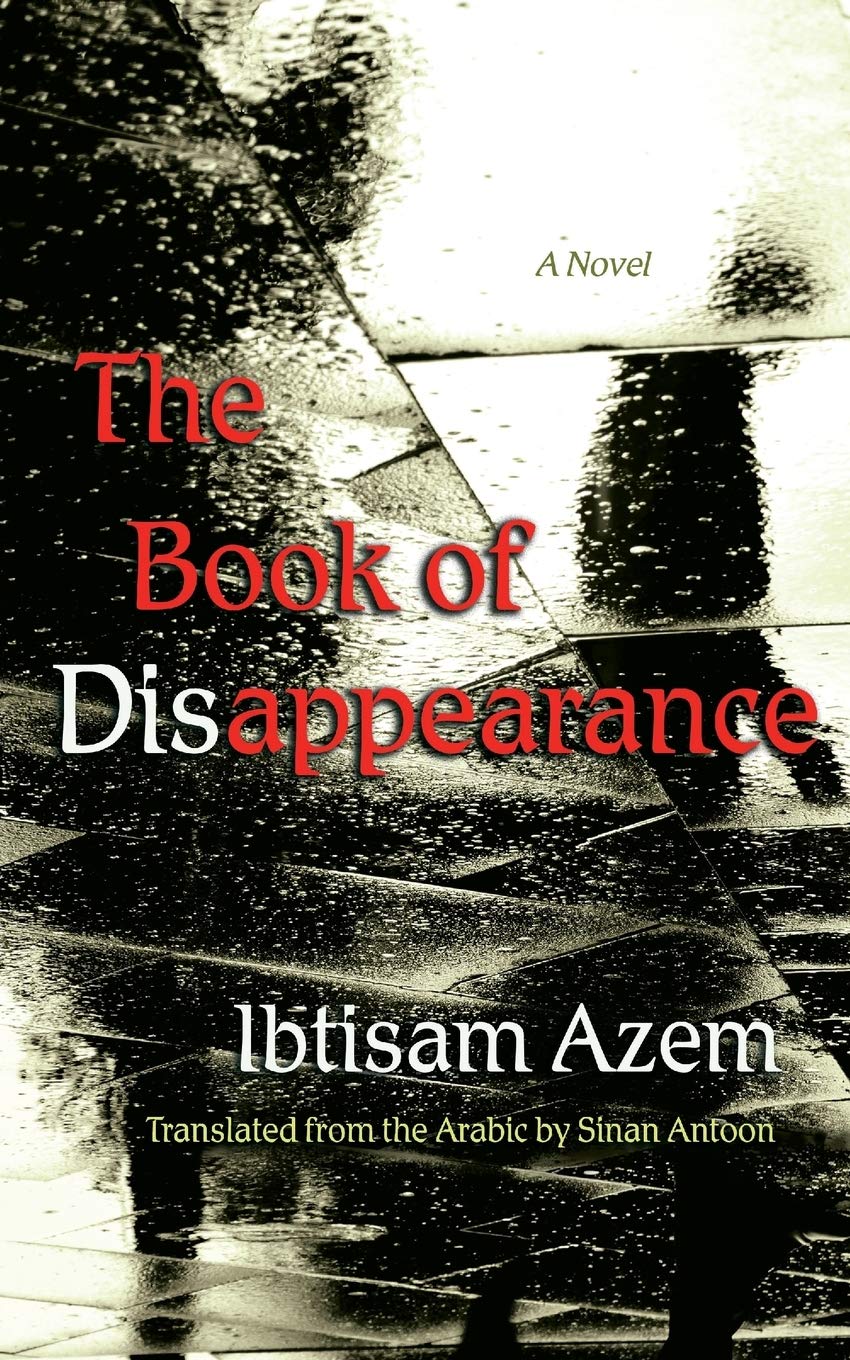
About The Book of Disappearance Novel by Ibtisam Azem – A Haunting Story of Absence, Memory, Jaffa, and the Meaning of Home
The Book of Disappearance Novel by Ibtisam Azem begins with an impossible event. One morning, every Palestinian living in Israel has vanished. Homes are empty. Workplaces are missing people. Streets feel different. No one knows where the missing people went, why they disappeared, or whether they will return.
From that bold idea, Azem builds a quiet but powerful literary novel about memory, identity, belonging, and the way one group can be present in a place while another story tries to make that presence invisible. The book moves mainly between Alaa, a young Palestinian man from Jaffa, and Ariel, his Jewish Israeli neighbor and friend. After the disappearance, Ariel finds Alaa's notebook and begins reading his words.
Through Alaa's diary, readers meet his late grandmother and hear her memories of Jaffa before and after the 1948 Nakba. Through Ariel, readers see a society trying to understand what the sudden absence means. The result is not a simple mystery about where people went. It is a novel about what becomes visible when millions of ordinary lives are suddenly missing.
A Mystery Where the Missing People Are Still Everywhere
The central question sounds like the start of a thriller: where did everyone go? Yet The Book of Disappearance is more interested in what the disappearance reveals than in giving readers a neat supernatural explanation.
Palestinians are physically absent from the present world of the novel, but their lives remain everywhere. They remain in homes, streets, workplaces, memories, names, stories, and objects. Their absence creates a strange kind of presence.
That idea gives the novel much of its force. It asks readers to notice how a society depends on people whose stories may not always receive equal attention. Once those people vanish, daily life changes immediately. Work stops in places. Relationships are broken. Familiar spaces feel unfamiliar.
The mystery therefore works on two levels. Readers wonder about the impossible event, but they are also invited to think about history, memory, and who gets to tell the story of a place.
Alaa's Notebook Keeps Memory Alive
Alaa is one of the key voices in the novel, even though he has disappeared with the other Palestinians.
Before the disappearance, he wrote in a notebook addressed to his dead grandmother. In those pages, he remembers her, her stories, and the way she spoke about Jaffa. Her memories connect personal family history with a much larger history of displacement.
This structure is important because it prevents the missing Palestinians from becoming only an idea. Alaa has a voice. He has memories, family bonds, doubts, anger, affection, and a complicated relationship with the city around him.
His grandmother's memories also show how history can live inside a family. A major political event may happen decades earlier, but its effects can continue through stories, habits, places, and the emotions passed from one generation to another.
Readers who enjoy novels about inherited memory may find these sections especially moving.
Ariel Gives the Story Another Point of View
Ariel is Alaa's neighbor and friend, a journalist who is described by the publisher as a liberal Zionist. He is critical of the military occupation of the West Bank and Gaza, yet he still believes in Israel's national project.
After the disappearance, he begins searching for clues and reading Alaa's notebook.
This creates a direct meeting between two kinds of memory. Ariel thinks he knows the country around him, but Alaa's words make him confront another history and another way of seeing the same places.
The novel does not make their perspectives identical. That difference is the point. Two people can live near each other, speak to each other, and still carry different understandings of the land, the past, and the present.
For readers, this structure creates tension without requiring a fast action plot. The tension comes from what each voice knows, what each voice misses, and what becomes harder to ignore once the other voice is heard.
Jaffa and Tel Aviv Become Part of the Argument
Place matters deeply in The Book of Disappearance.
Jaffa is not simply a setting where characters happen to live. It is connected to Alaa's family history, his grandmother's memories, and the question of what it means to belong somewhere when the story of that place has been changed by war, displacement, and new national borders.
Tel Aviv also matters because the novel places ordinary modern life beside older memories of Jaffa. Streets, neighborhoods, homes, and buildings become part of the story's larger question: how much history can a city hold at the same time?
A person can walk through a place and see one story. Another person can walk through the same place and see another.
Azem uses this tension to make geography emotional. A street is not only a street. It can also be a memory, a loss, a claim, a family story, or proof that something existed before the present moment.
The Novel Turns Absence Into a Way of Seeing
The title becomes more powerful as the story develops.
Disappearance usually means that something is gone. In this novel, disappearance makes hidden structures easier to see. When Palestinians vanish, Israeli society is forced to notice where Palestinian labor, relationships, neighborhoods, language, and daily presence had been woven into normal life.
This is one reason the premise feels so sharp. The missing people do not become unimportant. Their absence exposes how important they were.
The idea can also be understood more widely. In any society, people can become socially invisible even while they are physically present. Their work may be used without their stories being heard. Their history may be simplified. Their presence may be treated as ordinary until it is gone.
Azem turns that problem into speculative fiction, allowing a strange impossible event to reveal something real about memory and power.
A Short Novel With Big Ideas
The Syracuse University Press edition is listed at 256 pages, making this a relatively compact literary novel. Its length can be useful for readers who want a serious book without committing to a very long historical epic.
Do not mistake the shorter length for a simple story.
The Book of Disappearance carries questions about identity, memory, nationalism, displacement, language, friendship, and historical responsibility. It also uses speculative fiction in a clever way, beginning with an impossible event and letting that event expose real social and political tensions.
This makes the novel a strong choice for readers who like books that can be finished fairly quickly but discussed for much longer.
Longlisted for the 2025 International Booker Prize
The English translation by Sinan Antoon was longlisted for the 2025 International Booker Prize.
That recognition brought renewed international attention to a novel first published in Arabic in 2014 and translated into English in 2019. The International Booker Prize recognizes fiction translated into English, so the longlisting also highlights Antoon's work in carrying Azem's language and ideas into English.
Awards and prize lists do not decide whether every reader will love a book, but they can help show why a work has received serious literary attention.
For readers exploring contemporary Arabic literature or translated fiction, this recognition makes The Book of Disappearance an especially notable title.
Who Will Enjoy The Book of Disappearance Most?
This novel is a strong choice for readers who enjoy literary fiction, speculative fiction, translated literature, political novels, Palestinian literature, memory studies, and stories that use one impossible idea to examine real history.
Readers interested in the history of Jaffa, the 1948 Nakba, displacement, Israeli-Palestinian relations, and questions of national memory may find much to think about.
It can also work well for university students, book clubs, teachers, and readers who enjoy discussing different points of view. The alternating perspectives create natural questions about reliability, friendship, privilege, memory, and what one person can understand about another person's history.
Readers should know that the book deals with displacement, political conflict, loss, and painful historical memory. It is thoughtful rather than light entertainment.
A Premium Copy for Focused Reading
Bookish Wonderland prepares this edition for readers who want a comfortable physical copy for thoughtful reading. It uses premium eye-soothing cream paper, crystal-clear printing, and high-quality stitched and glue binding designed for better longevity.
The softer page tone can make longer reading sessions more comfortable, while sharp print helps the text remain clean and easy to follow. Strong binding is useful for a literary book readers may underline, revisit, discuss, or keep for future study.
The clean finish also makes the book suitable for a personal world-literature collection or as a gift for a reader who enjoys serious contemporary fiction.
Looking for The Book of Disappearance Novel by Ibtisam Azem Price in Bangladesh?
If you are comparing the Book price in Bangladesh for The Book of Disappearance Novel by Ibtisam Azem, consider the translation, reading quality, and physical durability as well as the selling price.
This is the kind of novel many readers may revisit for study, discussion, or close reading. A comfortable page, clear print, and strong binding can make that experience better over time.
Bookish Wonderland aims to balance reading comfort, durability, and value. Check the current product listing for the latest selling price because book prices can change with stock, edition, printing, and supply conditions.
Easy Ordering Across Bangladesh
Bookish Wonderland offers nationwide delivery, including addresses inside and outside Dhaka. Cash on Delivery is available across Bangladesh, making it easy to order without paying online first.
Fast or urgent delivery may also be available in Dhaka when you need the book sooner for study, gifting, a reading group, or personal reading.
If you need customization or have a question about the edition, contact Bookish Wonderland through its available Facebook or Instagram support channels before ordering.
Read the Story That Asks What Absence Reveals
The Book of Disappearance Novel by Ibtisam Azem starts by removing an entire people from the visible world of the story. Then it shows how impossible it is to remove their memory, history, relationships, and connection to place.
Alaa's notebook keeps his voice present. His grandmother's memories bring an older Jaffa into the present. Ariel's reading forces another perspective to meet those memories. Around them, the sudden disappearance changes everyday life and exposes questions that had been easier to avoid before.
That is what makes the book memorable. Its speculative idea is simple enough to explain in one sentence, but the questions behind it are much larger.
What does it mean to belong to a place? Who gets remembered? Can one person truly understand another person's history? What happens when a society suddenly sees the people it once treated as ordinary background?
If you want a compact literary novel with an unforgettable premise, layered viewpoints, and serious questions about Palestine, Israel, Jaffa, memory, and home, this book deserves a place on your reading list.
Order The Book of Disappearance by Ibtisam Azem from Bookish Wonderland and enter a story where absence becomes impossible to ignore.
If you require any customization or have any questions, please inbox us via FB or Insta.
| Primary Specification | |
| Author | Ibtisam Azem |
| Translator | Sinan Antoon |
| Genre | Literary Fiction, Speculative Fiction, Magical Realism, Political Fiction |
| ISBN-13/ISSN | 978-0815611110 |
| ISBN-10 | 0815611110 |
| Publisher | Syracuse University Press |
| Publishing Date | July 12, 2019 |
| Language | English |
| Format | Printed Book |
| Physical Specification & Quality | |
| Paper Quality | Premium eye-soothing cream paper |
| Binding Quality | High quality stitched and glue binding (for longevity) |
| Print Quality | Crystal-clear print |
| Pages | 242 pages |
| Country | Palestine |
| Logistics Information | |
| Weight | 263 gm |
| Length | 8.5 inches |
| Width | 5.6 inches |
| Height | 0.57 inch |