

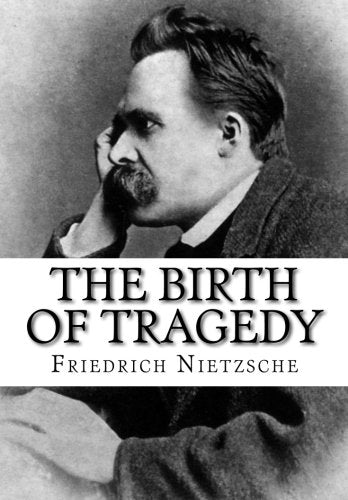
About The Birth of Tragedy Book by Friedrich Nietzsche – Greek Tragedy, Art and the Power of Human Experience
The Birth of Tragedy Book by Friedrich Nietzsche is not a normal book about old Greek plays. It is a bold work about art, pain, beauty, music, and the way people face a difficult world. First published in 1872, it was Nietzsche’s first book and remains one of his best-known early works.
Nietzsche looks at ancient Greek tragedy and asks why a culture famous for beauty and reason also created stories filled with suffering, fate, and loss. His answer leads to two famous ideas: the Apollonian and the Dionysian. These forces help him explain why great art can be calm and ordered at one moment, then wild and emotional at another.
For readers interested in philosophy, literature, drama, art, or Greek culture, this book offers a very different way to think about why humans create art.
Two Forces That Shape Great Art
The most famous idea in The Birth of Tragedy is the contrast between the Apollonian and the Dionysian.
The Apollonian is linked with Apollo. It stands for shape, order, beauty, clear form, dreams, and self-control. It is the side of art that gives the world structure.
The Dionysian is linked with Dionysus. It stands for music, strong emotion, energy, loss of limits, and a feeling of becoming part of something larger than yourself.
Nietzsche argues that ancient Greek tragedy became great when these forces worked together. Order alone was not enough. Wild emotion alone was not enough. The strongest tragic art came from the tension between both.
Why Greek Tragedy Matters
A reader may wonder why a philosopher would care so much about plays written in ancient Greece.
Nietzsche believed tragedy showed something important about human life. Life includes pain, uncertainty, and death. Yet the Greeks did not simply turn away from these things. They made art from them.
For Nietzsche, tragedy could show suffering honestly without making life feel worthless. Art could help people face painful truths while still finding value in life.
That is why this book becomes more than a study of theatre. It asks how people live with suffering and how art can give difficult experience shape and meaning.
A Different View of Ancient Greece
Many people imagine ancient Greece as a world of perfect statues, calm minds, reason, balance, and beauty. Nietzsche challenged that simple picture.
He argued that Greek culture also had a darker and more emotional side. Behind beautiful forms were fear, chaos, desire, celebration, suffering, and powerful religious experience.
The Birth of Tragedy tries to show how these opposite sides could exist together. Nietzsche believed this tension helped Greek culture create great tragic art.
Why Nietzsche Thought Tragedy Declined
Nietzsche does not only explain how tragedy grew. He also tries to explain why it declined.
He gives special attention to Euripides and Socrates. In his view, Greek culture began to trust reason, explanation, and conscious understanding too much. He believed this weakened the older balance between reason and deep instinct.
Socrates becomes important because Nietzsche connects him with the belief that life can be understood through reason. Nietzsche worries that this can push mystery, instinct, music, and tragic experience into the background.
A Young Nietzsche Looking at Art and Life
The Birth of Tragedy was Nietzsche’s first book, so it also shows him before many of his later ideas had fully developed.
In 1886, he returned to the work and added “An Attempt at Self-Criticism.” Looking back fourteen years later, he openly criticized parts of his earlier approach while still treating the questions behind the book as important.
Why Readers Still Study This Book
The Birth of Tragedy reaches far beyond ancient theatre.
Its contrast between order and ecstasy can be used to think about music, painting, fiction, theatre, film, and other forms of art. The book also asks lasting questions: Why do people enjoy tragic stories? Why can sad art feel beautiful? Can suffering have artistic meaning? Why do cultures need both order and freedom?
Those questions help explain why the book remains important in philosophy, literary criticism, aesthetics, and studies of European culture.
Is The Birth of Tragedy a Good First Nietzsche Book?
It can be a rewarding starting point, but it is not his easiest book.
Readers who expect simple self-help may find it challenging because Nietzsche discusses Greek drama, mythology, music, philosophy, and nineteenth-century ideas. At this stage of his career, he was also strongly influenced by Arthur Schopenhauer and Richard Wagner.
The best way to read it is slowly. Read a small section, stop, and think about the main idea. You do not need to understand every line on the first reading.
If you enjoy books that make you question familiar ideas rather than giving quick answers, this can be a strong introduction to Nietzsche.
Who Should Read The Birth of Tragedy?
This book is a good choice for philosophy readers, literature students, theatre lovers, writers, artists, and readers interested in Greek mythology or ancient culture.
It can also suit someone who has already read Beyond Good and Evil, Thus Spoke Zarathustra, or On the Genealogy of Morality and wants to explore Nietzsche’s earlier thinking.
For students, it can support study of aesthetics, tragedy, classics, literary theory, and nineteenth-century philosophy. For general readers, it offers a chance to think about why art matters when life is painful or uncertain.
This is not a fast novel. It is a book to read with attention, discuss, underline, and return to later.
A Premium Copy for Slow, Thoughtful Reading
Philosophy often needs careful reading, so physical quality matters.
Bookish Wonderland offers this title with premium eye-soothing cream paper for comfortable reading. Crystal-clear printing helps keep dense passages easy to follow, while high-quality stitched and glue binding gives the book extra strength for repeated use.
These qualities are useful for a book that readers may mark, study, revisit, or keep as part of a philosophy collection.
You get a copy designed not only to be read once, but to stay useful on your shelf for years.
Easy Ordering Across Bangladesh
If you are comparing the Book price in Bangladesh for The Birth of Tragedy by Friedrich Nietzsche, it is worth considering both the content and the physical quality of the copy.
Bookish Wonderland provides nationwide delivery, including inside and outside Dhaka. Cash on Delivery is available across Bangladesh, so you can order without needing advance online payment.
Readers in Dhaka can also ask about fast or urgent delivery when they need the book sooner.
Whether you are buying it for university study, personal learning, a philosophy collection, or as a thoughtful gift, the ordering process is simple.
Why This Book Deserves a Place on Your Shelf
The Birth of Tragedy matters because it captures Nietzsche at the beginning of his career, already asking questions that would shape later discussions of art and culture.
It asks why art matters, why humans are drawn to tragedy, how beauty can exist beside suffering, and what happens when reason becomes stronger than instinct.
You may agree with Nietzsche or disagree with him. Either way, the book gives you ideas worth thinking about.
More than 150 years after its first publication, readers still return to it because the problem at its heart has not disappeared: how can art help human beings face a world that contains both beauty and pain?
If you require any customization or have any questions, please inbox us via FB or Insta.
| Primary Specification | |
| Author | Friedrich Nietzsche |
| Translator | Shaun Whiteside |
| Narrator | AI Voice Charles Owen |
| Editor | Michael Tanner |
| Genre | Philosophy, Aesthetics, Literary Criticism, Classics |
| ISBN-13/ISSN | 978-0140433395 |
| ISBN-10 | 0140433392 |
| Publisher | Penguin Classics |
| Publishing Date | January 1, 1994 |
| Language | English |
| Reading Age | 16+ |
| Format | Printed Book |
| Physical Specification & Quality | |
| Paper Quality | Premium eye-soothing cream paper |
| Binding Quality | High quality stitched and glue binding (for longevity) |
| Print Quality | Crystal-clear print |
| Pages | 160 pages |
| Country | Germany |
| Logistics Information | |
| Weight | 168 gm |
| Length | 8.5 inch |
| Width | 5.6 inch |
| Height | 0.39 inch |