

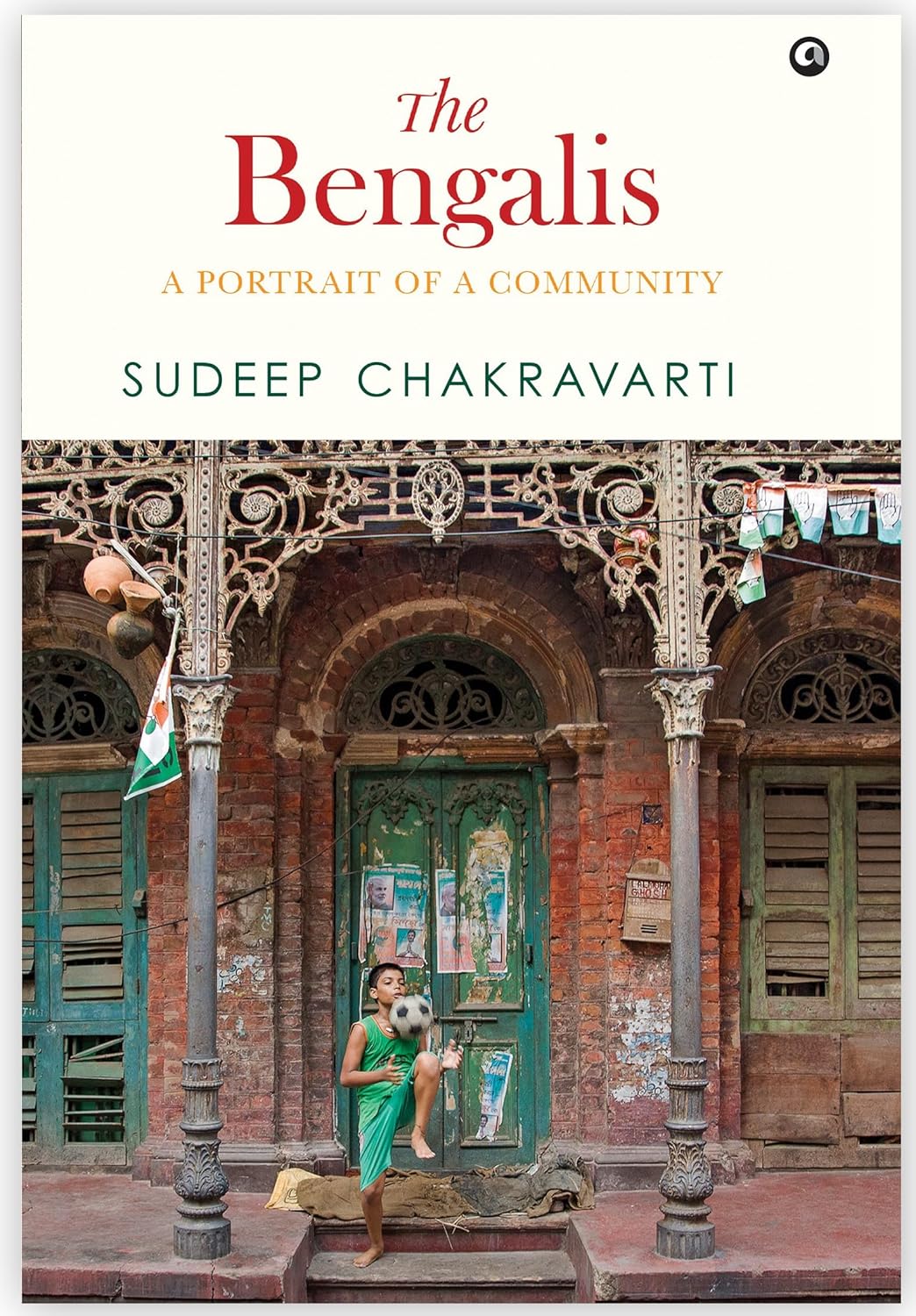
About The Bengalis by Sudeep Chakravarti – A Rich Journey Through Bengali History, Culture, Identity and Everyday Life
The Bengalis by Sudeep Chakravarti is a wide, personal look at one of South Asia’s most discussed communities. This is not a dry history book filled only with dates and names. Chakravarti mixes history, politics, family memory, travel, food, language, conflict, humour, and social life to ask a simple but difficult question: what does it mean to be Bengali?
The book looks beyond one country. It moves through the larger Bengali world, including West Bengal, Bangladesh, Tripura, Assam, and Bengali communities living elsewhere. Chakravarti uses the idea of a wider “Banglasphere” to connect people who may live in different places but share language, memory, customs, arguments, food, literature, and cultural habits.
More Than a History of Bengal
Many books about Bengal can feel too academic for everyday readers. They may explain rulers, wars, political parties, and major events but leave out how ordinary people think, speak, eat, argue, remember, and see themselves.
The Bengalis takes a different path. Chakravarti brings history close to daily life. He writes about large events, but he also connects them with family stories, personal memories, social habits, and cultural behaviour. This helps the reader see how history still lives inside modern Bengali identity.
The book touches on the Bengal Renaissance, Partition, political movements, religious division, migration, the Naxalbari movement, language, class, food, literature, football, adda, and other subjects. Instead of treating these topics as separate lessons, Chakravarti shows how they mix together.
A Personal Portrait of a Huge Community
Chakravarti does not pretend that one book can fully explain every Bengali. He uses a personal voice and often tells the story through his own experiences, family background, travels, observations, and memories.
This gives the book a conversational feeling. At times, it can feel as if an informed Bengali writer is sitting across from you and telling story after story about where the community came from, what shaped it, what it celebrates, and what problems it still carries.
The tone is not always proud or nostalgic. Chakravarti can be sharp and critical. He looks at pride, prejudice, religious division, class difference, political violence, and the habit of judging other groups. He also shows affection for Bengali language, storytelling, food, humour, ideas, and cultural life.
Why the “Banglasphere” Matters
One of the most interesting ideas in The Bengalis is the “Banglasphere.” Chakravarti uses it to think about Bengali-speaking people as a larger cultural world rather than limiting the story to the borders of one state or nation.
This matters because Bengali identity is spread across different political borders. West Bengal is part of India. Bangladesh is an independent country. Bengali-speaking communities also live in Tripura, Assam, other parts of India, and across the world.
These communities do not all have the same experience. Religion, politics, migration, class, and local history have shaped them in different ways. Yet language and culture still create connections.
The book helps readers understand both sides of this picture: the things that bring Bengalis together and the divisions that have often pushed them apart.
History Told Through Human Lives
The Bengalis covers serious parts of Bengal’s past, including Partition, famine, communal tension, political violence, displacement, and the long effects of religious division.
These subjects can be difficult to understand when they are presented only as numbers or political events. Chakravarti often brings them closer by linking them to people, memories, and family experiences.
A famine is not only a date. Partition is not only a border. Migration is not only movement on a map. These events change homes, relationships, trust, identity, and the stories families carry for generations.
Readers who already know some Bengali history may find new ways to think about familiar events. Readers who are new to the subject can gain an accessible overview without starting with a heavy academic text.
Culture, Food, Language and Everyday Bengali Life
The book is not only about politics and pain. It also explores the small things that make a culture feel alive.
Food, conversation, storytelling, humour, literature, football, social habits, and adda appear as part of the Bengali world. These details show that identity is not built only by major historical events. It is also built at dining tables, in family arguments, in songs, in books, in jokes, and in long conversations.
This is one reason the book can appeal to Bengali readers who want to see familiar habits from a fresh angle. It can also help non-Bengali readers understand why language and culture hold such a strong place in Bengali life.
The result is a book that moves between serious history and everyday observation without feeling like a school lesson.
Who Will Enjoy This Book Most?
The Bengalis may suit you if you enjoy nonfiction that connects history with people.
It is especially useful for readers interested in Bengal, Bangladesh, West Bengal, Bengali identity, South Asian history, Partition, politics, cultural studies, migration, language, and social change. It can also work well for students, researchers, book club readers, and curious readers who want a broad introduction before moving into more specialised books.
This is not a short fact guide. It is a long, layered book with many stories, ideas, and side paths. Some readers may find its wide scope demanding, but that is also part of its value. Bengali identity is not simple, and the book does not reduce it to one easy answer.
A good cultural history should help you notice connections that were easy to miss before. The Bengalis does this by placing culture, politics, religion, food, language, memory, and conflict in the same frame.
You may finish the book with a clearer idea of why Bengali identity can be both strongly united and deeply divided, why language carries so much emotional weight, and why Partition and political movements still matter.
A Premium Reading Copy from Bookish Wonderland
A long nonfiction book becomes easier to enjoy when the physical copy is comfortable to read. Bookish Wonderland offers this title with premium eye-soothing cream paper, crystal-clear printing, and high-quality stitched plus glue binding.
The cream paper gives the pages a softer look during long reading sessions. Clear text helps with chapters that contain many names, events, places, and ideas. The strong binding is designed for regular use and better longevity, which is helpful for a book you may return to for reference.
If you are checking The Bengalis by Sudeep Chakravarti Book price in Bangladesh, Bookish Wonderland gives you a convenient way to order a reader-friendly copy for your personal shelf, study collection, or gift list.
Why Order It from Bookish Wonderland?
Bookish Wonderland focuses on English books that are comfortable to read and made for regular use. Customers get premium cream paper, sharp printing, and durable stitched plus glue binding in one reading copy.
Nationwide delivery is available across Bangladesh, including addresses inside and outside Dhaka. Cash on Delivery is also available across the country. Readers in Dhaka can ask about fast or urgent delivery when they need the book sooner.
For readers building a history, culture, politics, or South Asia collection, The Bengalis is a strong addition because it offers a broad portrait in one volume.
A Book That Helps You See Bengalis Differently
The Bengalis does not give one simple answer to who Bengalis are. That is the point.
Sudeep Chakravarti shows a community shaped by language, pride, creativity, argument, migration, faith, politics, food, humour, violence, memory, and change. He celebrates some parts, questions others, and keeps returning to the tension between unity and division.
For a reader who wants more than a surface-level picture of Bengali life, this makes the book rewarding. It can help you understand why Bengal’s history still matters and why Bengali identity remains so rich, emotional, debated, and alive.
If you require any customization or have any questions, please inbox us via FB or Insta.
| Primary Specification | |
| Author | Sudeep Chakravarti |
| Narrator | Anindya Chakravorty |
| Genre | Narrative Nonfiction, Cultural History, Anthropology, Sociology, South Asian Studies |
| ISBN-13/ISSN | 978-9386021045 |
| ISBN-10 | 9386021048 |
| Publisher | ALEPH BOOK COMPANY PRIVATE LIMITED |
| Publishing Date | October 30, 2017 |
| Language | Language: |
| Reading Age | 16+ |
| Format | Printed Book |
| Physical Specification & Quality | |
| Paper Quality | Premium eye-soothing cream paper |
| Binding Quality | High quality stitched and glue binding (for longevity) |
| Print Quality | Crystal-clear print |
| Pages | 200 pages |
| Country | India |
| Logistics Information | |
| Weight | 208 gm |
| Length | 8.5 inch |
| Width | 5.6 inch |
| Height | 5.5 inch |