

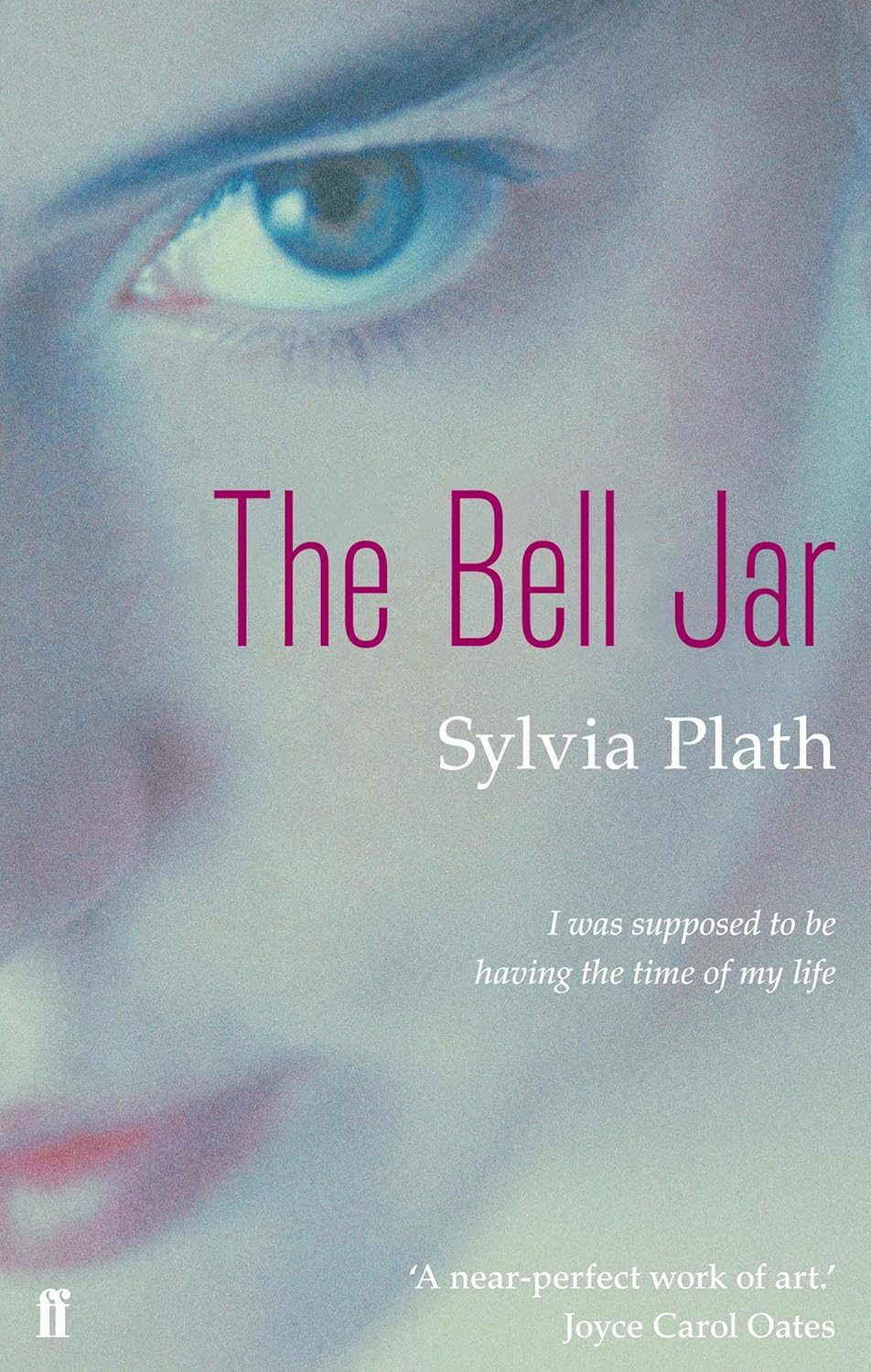
About The Bell Jar by Sylvia Plath – A Powerful Classic About Identity, Pressure, and the Mind
The Bell Jar by Sylvia Plath follows Esther Greenwood, a talented young woman who seems to have good things ahead of her. She wins a place at a fashion magazine in New York during the summer of 1953. From the outside, this looks exciting. She is surrounded by new people, parties, work, clothes, and chances that many young women would want. But Esther does not feel happy in the way people expect her to feel.
Instead, she begins to feel lost. She is unsure about work, love, marriage, family, and the kind of life she wants. Her thoughts grow darker, and daily life becomes harder. The story then follows her mental health crisis, her treatment, and her slow effort to understand herself again.
This is not a light story, but it is sharp and deeply human. Plath writes about fear, ambition, loneliness, social pressure, and mental illness in a way that still feels very close to modern readers.
When success on paper does not feel like success inside
Many people know the strange feeling of having choices but still feeling stuck. You may have a good education, a job chance, praise from other people, or a clear path in front of you. Yet none of it feels right. That is one of the strongest ideas in The Bell Jar.
Esther is expected to be grateful and excited. She is young, bright, and successful. But she cannot fit easily into the life other people imagine for her. She sees different futures in front of her, but choosing one feels like losing all the others. At the same time, the rules around women in the 1950s make her choices feel even smaller.
For readers who enjoy books about real emotions, the novel gives words to confusion, fear, and the feeling of being cut off from the world. It lets you enter Esther’s mind as her mental health gets worse.
Why this novel still feels important today
The Bell Jar was first published in 1963 under the name Victoria Lucas and later became closely linked with Sylvia Plath’s own life. It is Plath’s only novel and is partly autobiographical. Even though the story reflects the social world of the 1950s, many of its questions still feel current.
The novel asks what happens when society gives you a role that does not fit and when other people can see your success but not your pain.
These questions help the novel stay relevant across generations. Esther can be funny, angry, observant, confused, harsh, vulnerable, and intelligent. Her voice gives the book much of its power. Readers do not only watch her from the outside. They are pulled into the way she sees people, work, relationships, and herself.
A close look at mental health without a simple answer
One reason The Bell Jar remains widely read is the way it shows a mental health crisis from very close range. Esther’s depression does not arrive as one dramatic event. It grows through sleeplessness, fear, isolation, and a growing sense that normal life is becoming impossible.
The novel also shows treatment methods of its time, including frightening experiences. Because of this, the book can be emotionally heavy. It includes depression, suicidal thoughts, a suicide attempt, psychiatric treatment, death, and difficult relationships. Readers who are sensitive to these subjects may want to read it carefully.
At the same time, the novel is not only dark. Plath uses dry humor, sharp observations, and small details that make Esther’s world feel alive. That mix of sadness and wit keeps the book from feeling like a simple medical story. It is about a whole person, not only an illness.
What makes Sylvia Plath’s writing easy to remember
Plath was a poet as well as a novelist, and that can be felt in the way she writes. She often turns an emotion into a strong image that is easy to picture. The title itself is one of the clearest examples. Esther feels as if she is trapped under a bell jar, cut off from fresh air and normal life.
The language can be beautiful without becoming hard to follow. Scenes can move from funny to uncomfortable quickly, while small details show how Esther feels without explaining everything directly.
This makes the novel a good choice for readers who like literary fiction but still want a strong voice and a clear emotional journey. The book gives you ideas to think about without losing the human story at its center.
What you may take from the story
Different readers may connect with different parts of The Bell Jar. Some may understand Esther’s pressure to choose a future. Some may focus on the limits placed on women. Others may be interested in the history of mental health treatment or in Plath’s style and life.
The novel also questions the idea of a “perfect” life. Esther is surrounded by images of success, romance, marriage, work, and social approval, yet she cannot simply accept them. The story asks whether a life that looks good to others can still feel wrong to the person living it.
Because of these layers, The Bell Jar works well for personal reading, book clubs, literature classes, and discussions about identity and mental health.
A premium reading copy made for regular use
At Bookish Wonderland, this edition is prepared for readers who want a comfortable physical book for regular reading. It uses premium eye-soothing cream paper, which is easier on the eyes during longer reading sessions. The crystal-clear print helps the text stay sharp and easy to read.
The binding uses high-quality stitching with glue for better strength and longer use. This is helpful if you plan to read the book more than once, carry it in a bag, lend it to a friend, or keep it in your personal collection.
The aim is simple: give readers a clean, durable, comfortable copy for regular reading.
Who should read The Bell Jar
The Bell Jar is a strong choice for readers who enjoy literary fiction, modern classics, coming-of-age stories, psychological fiction, and books about women’s lives. It may especially interest readers who like stories about inner life, social pressure, and identity.
It can also be useful for students who want to study twentieth-century literature, women’s writing, symbolism, mental health in fiction, or the social expectations of the 1950s.
Because of its mature themes, this is better suited to older teens and adults. It is not a cheerful comfort read. It is a serious novel that asks the reader to stay close to a person going through a painful mental health crisis.
An easy way to order in Bangladesh
If you are checking the Book price in Bangladesh for The Bell Jar by Sylvia Plath, Bookish Wonderland offers a reader-friendly edition with quality paper, clear printing, and durable binding. Nationwide delivery is available, including delivery inside and outside Dhaka, and Cash on Delivery is available across Bangladesh.
For readers in Dhaka who need a book quickly, a fast or urgent delivery option may also be available. This makes it easier to order for personal reading, study, gifting, or a book-club discussion.
The Bell Jar is the kind of classic that can stay meaningful after the final page. Esther’s questions about identity, success, freedom, and the pressure to live a certain kind of life can remain in your mind long after you close the book.
If you require any customization or have any questions, please inbox us via FB or Insta.
| Primary Specification | |
| Author | Sylvia Plath |
| Narrator | Maggie Gyllenhaa |
| Genre | Literary Fiction, Psychological Fiction, Coming-of-Age, Semi-autobiographical Fiction / Roman à clef |
| ISBN-13/ISSN | 978-0060837020 |
| ISBN-10 | 0060837020 |
| Publisher | Harper Perennial Modern Classics |
| Publishing Date | August 2, 2005 |
| Language | English |
| Reading Age | 16+ |
| Format | Printed Book |
| Physical Specification & Quality | |
| Paper Quality | Premium eye-soothing cream paper |
| Binding Quality | High quality stitched and glue binding (for longevity) |
| Print Quality | Crystal-clear print |
| Pages | 288 pages |
| Country | United States |
| Logistics Information | |
| Weight | 297 gm |
| Length | 8.5 inch |
| Width | 5.6 inch |
| Height | 0.72 inch |