

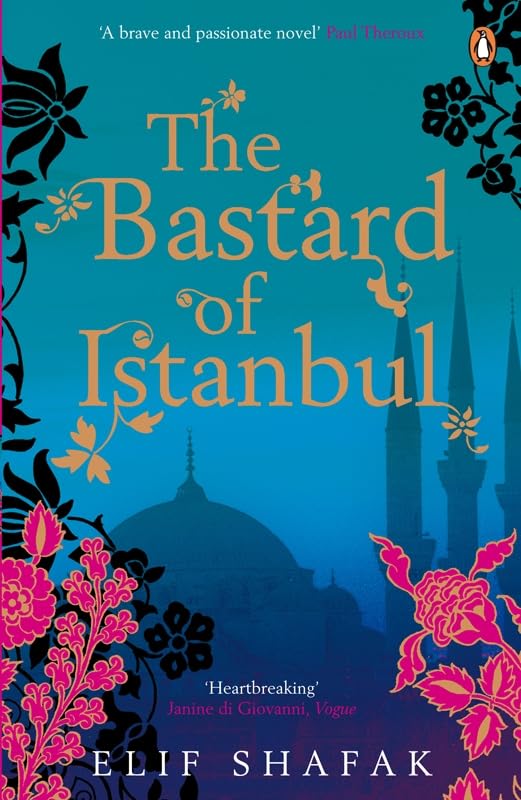
About The Bastard of Istanbul Novel by Elif Shafak – A Powerful Story of Family, Memory, Identity, and Istanbul
The Bastard of Istanbul Novel by Elif Shafak brings together two young women whose lives seem very different at first. Asya Kazanci is nineteen and lives in Istanbul with a large family of women. She is curious, angry, independent, and unsure how she fits into her own family. Armanoush is an Armenian American young woman who feels that part of her identity is missing. She travels to Istanbul because she wants to understand her family history and the place connected to it. When the two women meet, their questions about family begin to connect. Old memories, hidden truths, and painful history slowly come closer to the surface. The novel looks at what happens when people try to forget the past, and what can happen when a younger generation decides to ask questions instead. Penguin describes the book as a story about two families and a secret connection tied to a violent event in their homeland.
A family story that opens into something much bigger
This novel starts with people, homes, food, arguments, habits, and family relationships. That makes its bigger ideas easier to enter. Asya lives in a busy household filled with strong women, each with her own personality, beliefs, worries, and way of seeing the world. Armanoush comes from a different family background, but she also carries questions that were shaped long before she was born. Their meeting creates a bridge between two histories. The story then moves through family secrets, cultural memory, belonging, silence, and the way old pain can stay alive through generations. You do not need to be a history expert before reading it. Elif Shafak uses the lives of her characters to make difficult subjects personal. Instead of reading only about events from far away, you see how history can enter a kitchen, a family conversation, a friendship, and a person’s idea of who they are.
For readers who want more than a simple plot
Sometimes a reader finishes a novel and enjoys the story, but soon forgets most of it. This book is made for readers who like fiction that leaves questions behind. The Bastard of Istanbul asks what people owe to the past, how families deal with shame and pain, and whether silence really protects anyone. It also asks how identity is formed when a person belongs to more than one place, culture, or family story. These ideas are serious, but the book is not written like a textbook. Shafak fills the novel with lively characters, humor, food, daily life, disagreements, and small human moments. That balance gives the story warmth while still allowing it to discuss difficult history. Readers who enjoy family sagas, literary fiction, cultural stories, and novels about memory may find plenty to think about long after the final chapter.
Istanbul feels like part of the story
The city of Istanbul is more than a background in this novel. It helps shape the mood, the characters, and the questions at the center of the book. The city carries different cultures, beliefs, languages, memories, and ways of life, and Shafak uses that mix to support the story. Asya knows Istanbul as home, while Armanoush arrives looking for a connection to a past she has mostly known through family memory. Because they see the same place in different ways, the reader gets more than one view of the city. Streets, homes, cafés, food, family rooms, and conversations all help build a strong sense of place. The result is a novel that can appeal to readers who enjoy books where the setting matters deeply. Istanbul is not simply where the characters live. It becomes part of how they understand family, history, and themselves.
The Kazanci women make the novel memorable
One of the strongest parts of the book is the Kazanci household. Asya grows up around several women from different generations, and each one adds a different voice to the story. Their beliefs and personalities often clash, but together they create a family that feels busy, imperfect, funny, difficult, and alive. This large female household gives the novel energy and helps Shafak explore different ways people respond to tradition, religion, change, family duty, and personal freedom. The women can love one another and still disagree deeply. They can protect family secrets while also hurting each other through silence. Their relationships give the book much of its emotional weight. Readers who enjoy novels built around complex families may especially like this part of the story. The family does not feel neat or ideal. It feels layered, which makes the hidden truths more powerful when they begin to appear.
Asya and Armanoush give the story two important views
Asya and Armanoush are both young women trying to understand where they belong, but they begin from different places. Asya lives inside the family and culture that shaped her, yet she often feels distant from them. Armanoush lives far from Turkey but feels pulled toward the history connected to her Armenian family. Their different experiences allow the novel to place two kinds of uncertainty beside each other. One character is surrounded by a past she does not fully know. The other feels separated from a past she wants to understand. When they meet, the story becomes more than a simple friendship. Their conversations and choices show how people can carry history differently, even when that history touches the same places and families. This gives readers a useful way to think about identity without reducing either character to a single label or viewpoint.
Food, conversation, and everyday life soften a difficult subject
The novel deals with painful history and family trauma, but it also gives a lot of space to food and daily life. Meals, recipes, smells, and conversations around food help create a warm and human side to the story. These details matter because family memory is often carried through ordinary things. A dish can remind someone of home. A recipe can travel across borders. A meal can bring people together even when they disagree about almost everything else. Shafak uses these simple parts of life to connect the personal and historical parts of the novel. This makes the book easier to enter than a cold or purely political story. Readers can follow the people first and then see how larger questions grow around them. For anyone who likes fiction where food, family, culture, and memory are closely linked, this is one of the book’s most enjoyable features.
A useful read for book clubs and thoughtful discussion
The Bastard of Istanbul works very well for readers who enjoy discussing a book after finishing it. There are many natural questions to explore. Why do families hide certain truths? Can people inherit pain from events they did not personally experience? Is forgetting a form of protection, or can it create new harm? How does a person decide which parts of family history belong to them? The novel also gives readers different characters who may not agree on the same event, belief, or memory. That makes it useful for book clubs because there is room for more than one response. Penguin Random House even provides a reading guide with discussion questions for the novel, which shows how well the book suits group reading and classroom conversation. Readers can enjoy the plot first, then return to its ideas and characters in a deeper discussion.
A comfortable physical copy for regular reading
At Bookish Wonderland, this edition is prepared for readers who care about a comfortable physical book. The pages use premium eye-soothing cream paper, which is softer on the eyes than very bright white paper during longer reading sessions. The text is printed with crystal-clear quality so letters remain sharp and easy to follow. High-quality stitched and glue binding helps the pages stay secure through regular use and supports better book longevity. These features are especially useful for a 300-plus-page literary novel that you may read over several days or return to for discussion. Instead of focusing only on how the book looks on a shelf, the aim is to make the full reading experience smooth and practical. You can read at home, carry it for daily reading, or keep it in your collection for later rereading.
Who will enjoy The Bastard of Istanbul most?
This novel is a good match for adult and mature readers who enjoy family stories with deeper cultural and historical themes. It can appeal to people interested in Turkey, Armenia, diaspora identity, women-centered households, intergenerational relationships, and stories about memory. It also works for readers who like character-driven fiction where people are complicated and no family is shown as completely simple or perfect. If you only want a light romance or a very fast thriller, this may not be the best match. If you like novels that mix personal lives with history and encourage you to think about what families remember or refuse to discuss, it is much more likely to suit you. The book contains mature themes and painful historical material, so readers should expect serious subjects alongside humor, food, friendship, and family life.
Helpful details before you order
The widely available Penguin paperback edition is 368 pages, and Penguin Random House lists the US paperback edition at 368 pages as well. Editions can have different covers, ISBNs, publication dates, and physical sizes, so those details should always be checked against the exact copy being sold. The novel itself is a standalone work by Elif Shafak rather than one part of a continuing story. This means there is no required reading order and no earlier novel you need to buy first. If you are comparing The Bastard of Istanbul by Elif Shafak Book price in Bangladesh, check the current Bookish Wonderland product price because local pricing can change with stock, edition, and printing costs. The key advantage is that you can order a reader-friendly physical copy without needing to build a whole series around it.
Why order from Bookish Wonderland?
Bookish Wonderland makes it simple to order English books across the country. Nationwide delivery is available inside and outside Dhaka, and Cash on Delivery is available across Bangladesh. Customers in Dhaka can also ask about fast or urgent delivery when they need a book sooner. The store carries a large collection of English titles and focuses on copies made for comfortable reading and regular use. Book customization is also available for readers who have special requirements. If you have a question about the edition, delivery, or customization, you can contact Bookish Wonderland before placing the order. That gives you a clear way to confirm what you need and choose the copy that suits your reading plan.
Bring this unforgettable family story to your shelf
The Bastard of Istanbul Novel by Elif Shafak gives readers a family story shaped by memory, identity, culture, and history. If you enjoy literary fiction with memorable characters and a strong sense of place, this book is worth adding to your list. Order from Bookish Wonderland for premium cream paper, clear print, durable binding, nationwide delivery, and Cash on Delivery.
If you require any customization or have any questions, please inbox us via FB or Insta.
| Primary Specification | |
| Author | Elif Shafak |
| Narrator | Laural Merlington |
| Editor | Daniel Lagin |
| Genre | Literary Fiction, Contemporary Fiction, International Fiction |
| ISBN-13/ISSN | 978-0143112716 |
| ISBN-10 | 0143112716 |
| Publisher | Penguin Books |
| Publishing Date | January 29, 2008 |
| Edition | Reprint |
| Language | English |
| Reading Age | 14+ years |
| Format | Printed book |
| Physical Specification & Quality | |
| Paper Quality | Premium eye-soothing cream paper |
| Binding Quality | High quality stitched and glue binding (for longevity) |
| Print Quality | Crystal-clear print |
| Pages | 360 pages |
| Country | Turkey |
| Logistics Information | |
| Weight | 367g |
| Length | 8.5 inches |
| Width | 5.6 inches |
| Height | 0.83 inches |