

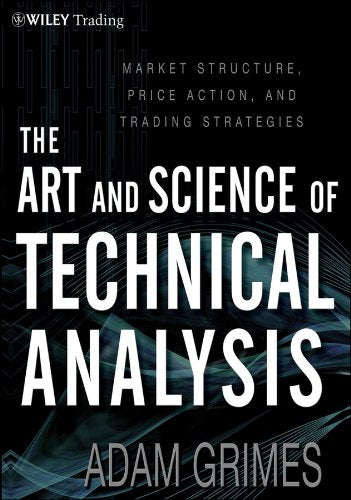
About The Art and Science of Technical Analysis by Adam Grimes: Understand Price Action, Market Structure, and Trading Risk
A chart can look simple until real money is involved. Prices rise, fall, stop, and move again. One trader sees a chance to buy. Another sees a reason to sell. Which view is supported by the evidence? The Art and Science of Technical Analysis by Adam Grimes helps readers think through that question instead of following a bright line on a screen. This detailed trading book connects chart reading with research, risk, and the choices people make under pressure. It is written for readers who want to understand how a trading idea is built, examined, and managed, not for anyone looking for a promise of quick profits.
Read the Market Without Guessing at Every Move
You may have seen a chart that looked perfect after a price had already moved. A line touched a level, a pattern appeared, and a person online claimed the next move had been obvious. Yet the same chart may have looked far less clear in real time. The difference matters. Markets contain noise, and a pattern that looks convincing in the past might offer little help tomorrow. Grimes asks readers to look beyond neat pictures and think about the conditions in which a pattern might actually matter.
When More Indicators Only Make Things Harder
A crowded trading screen can feel like a busy road with signs pointing in every direction. One tool says buy. Another says wait. A third gives a warning. Adding yet another line does not always solve the problem. It can make a decision slower and more confusing, especially if you do not know why each signal should help. Beginners may then switch between methods whenever a trade goes wrong, without learning what caused the result.
This book offers a more careful way to study a setup. First, ask what is happening in the market. Next, ask what the pattern is meant to show. Then consider how you would test that idea and what would prove you wrong. A good plan needs more than an entry point; it also needs a reason for leaving a trade and a clear view of possible loss. These are questions to explore as you read, rather than orders to enter any particular market.
See the Difference Between a Trend and a Trading Range
One of the main parts of the book is market structure. That simply means the way price moves and forms patterns over time. Sometimes prices move mostly in one direction. That is a trend. At other times, they move back and forth within an area. That is a trading range. The book discusses both and explores what may happen when a market changes from one state to another. Understanding the difference is important because the same tactic may not make sense in every setting.
Grimes looks closely at pullbacks, the smaller moves that travel against a larger trend. A pullback can look like the end of a trend, even when that larger move later continues. He also examines breakouts, when price moves beyond an area it had stayed within, and failed breakouts, when that move does not hold. The point is not that you can identify every turn. The point is to learn which questions matter before acting on a chart that seems exciting.
Learn Why a Trading Edge Needs Evidence
An edge is an idea that may offer an advantage over many attempts. It is not the same as knowing the result of the next trade. Imagine a game where one choice has worked more often in careful tests. A single round can still go badly. Trading can be even harder because markets change, trading has costs, and past examples may have been chosen after the fact. This book encourages readers to treat patterns as ideas that need examination rather than as rules that must always work.
Grimes brings statistical thinking into the discussion and questions the value of some popular chart methods, including certain uses of Fibonacci analysis. That does not mean every conclusion in the book is settled science. It means the author wants readers to ask for better support before trusting a setup. You can take that attitude into your own study: record what you expected, note what happened, and be willing to revise an idea when the results do not match your hopes.
Explore Clear Examples Instead of Empty Promises
The chapters move from basic questions to market structure, practical trading templates, trade management, and the trader's own habits. Along the way, the book looks at support and resistance, moving averages, the MACD indicator, and the use of more than one time frame. It also includes trade examples that connect the ideas to chart situations. These topics make the book a study resource rather than a short collection of tips you are expected to copy without thought.
Give Risk a Place in Every Decision
New traders often focus on where a trade could make money. But it is just as important to ask what happens if the idea fails. The book devotes chapters to trade management and risk management, including initial stops and position sizing. An initial stop is a planned point at which a trader may exit a losing position, though real execution can differ from the intended price. Position sizing means deciding how large a trade should be. Both concepts shift attention from an exciting forecast to what a mistake might cost.
Grimes also looks at setting targets and managing an open trade. These subjects do not remove market risk. Unexpected moves, costs, and poor execution can still cause losses. Borrowed money can make losses much larger. This book is educational material, not a personal trading plan, and no chapter can guarantee returns. Readers should understand the risks, rules, and costs of any market before deciding whether trading fits their own circumstances.
Understand the Person Behind the Trading Screen
A chart is not the only thing a trader must study. Fear can make someone close a position too early. Hope can make a person ignore a warning. A run of good results can create too much confidence, while a painful loss can lead to a rushed attempt to win money back. The book explores these mental pressures, including cognitive biases, emotion, and the problem of learning from random results. It asks readers to consider how their own behavior affects the way they apply a method.
Build a Reading Habit That Makes the Lessons Stick
This is a book to work through, not just display on a shelf. Read a chapter and write down the main idea in your own words. When you reach a chart example, cover the explanation for a moment and describe what you see. Ask where a trend starts, what could make a breakout fail, and what information is missing. Then read the author's account and compare it with your notes. That small exercise can turn passive reading into active study.
The later material on record keeping and reviewing results gives you another useful habit. A journal can show whether you followed your plan or changed it halfway through. It can also keep a few striking wins from hiding a larger set of poor results. If you are learning only, you can practise these questions with historical charts or a simulated account without putting money at risk. Even then, remember that simulated outcomes may differ from live trading because of costs, speed, and emotion.
Who Will Get the Most From This Book?
The Art and Science of Technical Analysis is particularly relevant to readers who already know a little about trading and want a deeper framework. A student of finance might use it to examine how chart ideas relate to market behavior. A trader who has tried many indicators might use it to question what each tool adds. A patient beginner can also learn from it, but should expect new words, detailed examples, and concepts that need rereading. It is not a children's introduction to money.
The subject can interest stock, futures, and currency market readers because Grimes draws on experience across several kinds of trading. Still, this book does not provide a current rulebook for any exchange or a set of live buy and sell alerts. Market regulations, available products, and individual risks differ. Treat the lessons as a framework for study, and seek appropriate professional guidance for decisions that depend on your personal finances.
What Makes This a Useful Reference?
Some books are easy to finish but hard to return to. This one is organized around questions that may remain useful through repeated study: Is the market trending or moving sideways? What makes this setup different from noise? How much could go wrong? Did the result come from a sound process or simple luck? As your understanding changes, an earlier chapter may give you something new to think about. You can move between sections instead of trying to memorize every page in order.
The book includes a trading primer, a closer look at moving averages and MACD, sample trade data, a glossary, and an index. These additions support readers who want to check a term or review a method later. The published Wiley hardcover is listed at 480 pages, though the specifications of Bookish Wonderland's offered copy should be confirmed with the store. The main value of the text is its connected approach to charts, research, trading plans, and personal behavior.
A Comfortable Printed Copy from Bookish Wonderland
A detailed finance book is easier to study when the printed page feels inviting. Bookish Wonderland offers this title with premium eye-soothing cream paper, crystal-clear text, and high-quality stitched and glue binding. The gentle paper tone suits long reading sessions, while clear printing helps you follow small words and dense explanations. Strong binding is designed for regular use when you return to a chapter or check a note. These are the store's stated edition features, not specifications for every edition sold elsewhere.
A physical copy lets you move at your own pace without keeping another window open beside a trading chart. Mark a difficult term, place a bookmark near a useful example, or write your own questions in a separate notebook. When an idea needs more thought, you can close the book and return later. This makes it a practical choice for a personal finance library, a study desk, or a gift for someone who enjoys learning about markets.
Order Your Copy Across Bangladesh
Looking for The Art and Science of Technical Analysis by Adam Grimes and comparing options before you buy? To check the Book price in Bangladesh, see the product listing at Bookish Wonderland; no confirmed price was provided here. The store delivers inside and outside Dhaka and offers cash on delivery nationwide. Customers in Dhaka can also ask about fast or urgent delivery. Contact the team before ordering if you want to confirm stock, delivery charges, expected arrival, or a customization request.
Take the Next Step in Learning How Markets Work
A good trading book should leave you with better questions, not blind confidence. Grimes invites readers to look at price action closely, examine the evidence for patterns, plan for losses, and notice their own habits. It is the kind of material you may read once for the broad picture and then return to for a single idea. Understanding takes time, but careful study can be worth that effort whether you trade, teach, or simply want to understand charts more clearly.
Add The Art and Science of Technical Analysis by Adam Grimes to your reading shelf at Bookish Wonderland. Order online for delivery across Bangladesh, choose cash on delivery if that suits you, and message the store if you need help. Begin with curiosity, keep a notebook nearby, and remember that learning about risk is as important as learning to read a chart. Take time with every chapter.
If you require any customization or have any questions, please inbox us via FB or Insta.
| Primary Specification | |
| Author | Adam Grimes |
| Narrator | Joel Richards |
| Genre | Business & Economics, Finance, Investing, Technical Analysis |
| ISBN-13/ISSN | 978-1118115121 |
| ISBN-10 | 1118115120 |
| Publisher | Wiley |
| Publishing Date | July 3, 2012 |
| Edition | 1st |
| Language | English |
| Reading Age | 22+ years |
| Format | Printed book |
| Physical Specification & Quality | |
| Paper Quality | Premium eye-soothing cream paper |
| Binding Quality | High quality stitched and glue binding (for longevity) |
| Print Quality | Crystal-clear print |
| Pages | 480 pages |
| Country | USA |
| Logistics Information | |
| Weight | 487g |
| Length | 8.5 inches |
| Width | 5.6 inches |
| Height | 1.7 inches |