

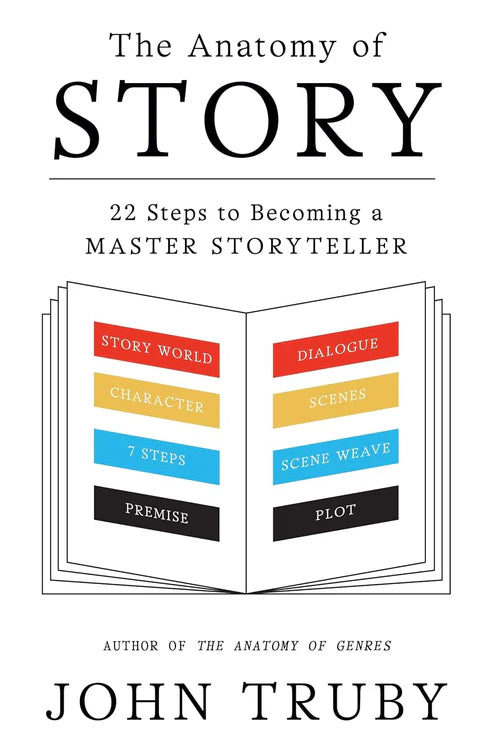
About The Anatomy of Story by John Truby – Learn 22 Steps to Write Powerful Stories, Novels and Screenplays
Have you ever had a great story idea but struggled to turn it into a complete book or screenplay? Maybe you know how your story begins, but you cannot decide what should happen next. Your characters feel flat, the middle becomes boring, or the ending does not feel right.
The Anatomy of Story by John Truby: 22 Steps to Becoming a Master Storyteller helps you understand how to build a story from its first idea to its final scene.
This practical writing guide teaches you how to create believable characters, build meaningful conflict, develop a strong plot and write scenes that keep readers interested. Instead of asking you to follow a fixed formula, John Truby shows you how the different parts of your story can grow naturally from one central idea.
The book introduces 22 story structure steps and offers practical exercises to help writers develop their work. It is designed for people writing novels, screenplays, short stories and other forms of storytelling.
Whether you are writing your first story or trying to improve an unfinished manuscript, this book gives you a detailed way to think about what makes a story work.
Available at Bookish Wonderland, this writing guide is a useful addition to the bookshelf of anyone who wants to turn creative ideas into well-developed stories.
A Clear Way to Turn Your Story Idea into a Complete Book
Many people dream of writing a novel or making a film. They imagine interesting people, exciting events and a world that feels real. But when they sit down to write, they often discover that having an idea is only the beginning.
A good idea needs a clear direction. Your main character must want something. There must be a problem standing in the way. Every important event should lead to another event, and the ending needs to grow naturally from everything that came before it.
John Truby explains how these parts work together.
His method helps you look at your story as one connected piece rather than a collection of separate scenes. You learn how to plan the foundation before spending months writing pages that may need to be changed later.
The goal is not to make every story look the same. It is to help you discover what makes your own idea interesting and develop it into a story that readers will want to finish.
Stop Getting Stuck in the Middle of Your Story
Starting a story can feel exciting. You have a new idea, you know your main character, and you may already have a powerful opening scene.
But what happens after that?
Many writers find themselves with several interesting scenes but no clear way to connect them. They add new characters, unexpected events or extra problems, hoping the story will become more exciting.
Sometimes, this makes everything more confusing.
The Anatomy of Story provides a different approach. It helps you understand your main character's goal and use that goal to shape the events that follow.
You learn to ask useful questions before adding a scene. Why does this event happen? What does the character want? What changes because of this moment? How does it lead to the next part?
These questions can help you find problems in an unfinished draft and make better choices when planning a new one.
Instead of filling pages with random events, you can work toward a story in which every important moment has a purpose.
Learn the 22 Steps Behind Strong Storytelling
The main teaching of this book is John Truby's 22-step approach to story structure.
These steps offer a detailed way to develop the important parts of a story. They build on seven major structural steps and show how characters, conflict, plot and personal change can work together.
Truby does not simply tell you to write a beginning, middle and end. He asks you to look more closely at the deeper design of your story.
You learn how your main character's weaknesses affect their choices, why they pursue a particular goal, and how the people around them create new challenges.
The method also helps you plan important discoveries, confrontations and turning points.
These elements give you more to work with than a basic plot outline. You can study how one choice creates a new problem and how that problem pushes the story toward its ending.
The 22 steps are part of a larger writing process, not a promise that following a checklist will automatically produce a successful book.
For writers who enjoy planning, this approach offers plenty of material to explore before beginning a full draft.
Create Characters Readers Can Understand and Remember
Think about a character from a book or film that stayed in your mind long after the story ended.
You probably remember more than their name or appearance. You remember what they wanted, the choices they made and the difficult situations they faced.
The Anatomy of Story teaches you to build characters with this level of care.
You learn to develop a main character with a clear goal, personal weaknesses and a reason to change. You also explore how supporting characters and opponents can bring out different sides of that person.
This matters because interesting characters do not exist alone. Their relationships create arguments, difficult choices, friendship, betrayal and conflict.
For example, imagine writing about a young artist who wants to become famous but refuses to accept help. That personal weakness could affect friendships, create problems and shape important decisions throughout the story.
The book helps you connect these details instead of treating personality and plot as separate tasks.
The result can be a more convincing character whose actions make sense within the world you have created.
Build a Plot That Keeps People Reading
A strong plot needs more than surprising events.
Readers want to understand what is happening, why it matters and what might happen next.
If a character faces a problem but nothing changes afterward, the scene may not move the story forward. If important events happen without clear reasons, the ending may feel forced.
Truby explains how to build a plot around your characters and the choices they make.
You learn to connect actions and consequences. One decision leads to a new challenge. That challenge forces another decision, and the story continues to grow.
This approach can help you create tension without depending on unexpected twists every few pages.
It can also make planning easier. When you know what your character wants and what stands in the way, you have a clearer reason for choosing the next event.
Whether you are writing a mystery, romance, fantasy novel or family drama, understanding this connection can help you create a story with stronger movement.
Discover Why Your Story's Main Idea Matters
Every story begins with an idea.
It might be about two friends who become enemies, a family hiding a secret, or a young person leaving home for the first time.
But how do you turn that idea into a complete story?
The book teaches you to begin with a premise: a short statement that captures the heart of your story.
This gives you something to return to when you feel lost.
You can use it to decide which characters belong in the story, what kind of conflict makes sense and which events are important.
For example, a story about a person who must choose between personal success and family responsibility needs more than an exciting location. It needs situations that make that choice difficult.
A clear premise helps you recognize those situations.
It also gives you a starting point for exploring the deeper meaning of your work.
Make Your Story World Feel Alive
The setting of a story is not just a place where events happen.
A busy city, a small village, a distant planet or a quiet family home can shape how characters live and what choices they make.
In The Anatomy of Story, John Truby explores how the story world can grow from the main character and support their development.
You learn to think about how a place creates opportunities, limits freedom and adds meaning to important moments.
Imagine a character who feels trapped. A crowded home or a city with strict rules could make that feeling stronger.
Now imagine someone who dreams of freedom. A wide ocean or an open road could help express that desire.
Thinking about these connections can make your setting feel more important to the story rather than simply providing background scenery.
Give Your Story a Meaning Without Preaching
Some stories stay with us because they make us think about life.
They explore love, honesty, power, fear, kindness or the cost of getting what we want.
But a story can become tiring when characters spend too much time explaining its message.
John Truby introduces the idea of moral argument, which explores how a story expresses values through characters, their actions and their consequences.
You can use this approach to develop a theme that grows naturally from the conflict.
For instance, a character who values money above friendship may face choices that reveal the cost of that belief.
The writer does not need to stop the story and explain the lesson.
The character's decisions, mistakes and changes can communicate the idea.
This makes the theme part of the experience rather than a separate message added at the end.
Write Scenes That Actually Move the Story Forward
Have you ever written a scene that sounded good but did not seem to fit anywhere?
It may contain funny dialogue, beautiful descriptions or an interesting conversation. Yet removing it would not change the main story.
This book helps you think about what each scene needs to accomplish.
Truby introduces scene construction and scene weave, which involves planning scenes and connecting the different parts of your narrative.
You can use these ideas to examine whether a scene develops a relationship, creates a problem, reveals important information or changes the direction of the plot.
This is especially useful when editing a long manuscript.
Rather than keeping every scene because you spent time writing it, you can make decisions based on its role.
You may find that two scenes can be combined or that a missing moment would make an important change easier to understand.
The aim is to create a reading experience that feels connected from beginning to end.
Make Conversations Sound More Meaningful
Dialogue is an important part of novels and screenplays.
It can reveal personality, create tension and help readers understand relationships.
But conversations become boring when characters only explain information that the writer wants the audience to know.
The Anatomy of Story includes a discussion of what Truby calls symphonic dialogue. He explores how conversations can work on several levels rather than simply delivering plot information.
You can apply this idea by thinking about what characters say, what they want and what they may be hiding.
A simple conversation about dinner might also reveal anger, fear or a damaged friendship.
Understanding these layers can help you write dialogue that feels more purposeful.
This is particularly useful for screenwriters, where spoken words and visible actions carry much of the storytelling.
Learn from Famous Books and Films
Learning writing techniques becomes easier when you can see how they work in stories you already know.
John Truby uses examples from famous works, including The Godfather, The Great Gatsby, Jaws, Chinatown and A Christmas Carol, to explain important storytelling ideas.
These examples help you understand how experienced storytellers develop characters, build conflict and connect important events.
You can also use this approach with your own favorite books and films. After reading a chapter, choose a story you enjoy and look for the techniques you have just learned.
Then return to your own writing and try applying the same principles.
This makes the book useful for both writing practice and studying stories.
What Will You Learn from This Book?
The Anatomy of Story offers a complete approach to planning and developing fiction.
Its important topics include:
-
Story premise: Turn your main idea into a clear starting point.
-
Seven key story structure steps: Build the foundation of your narrative.
-
Character development: Create people with believable goals and weaknesses.
-
Moral argument: Explore the deeper meaning of your story.
-
Story world: Design settings that support your characters.
-
Symbol web: Use meaningful details to connect story elements.
-
Plot development: Build connected events and important turning points.
-
Scene weave: Plan how individual scenes work together.
-
Dialogue: Write conversations that serve more than one purpose.
The book also includes chapter exercises that let you put its lessons into practice.
You do not have to finish every exercise at once. Work through the lessons at a pace that suits your writing project.
Who Should Read The Anatomy of Story?
This book is designed for people who want to understand storytelling and improve their writing skills.
It can be particularly useful for:
-
Beginner writers developing their first complete story.
-
Novelists working on characters, structure and plot.
-
Screenwriters planning films or television scripts.
-
Short story writers who want to make every scene count.
-
Creative writing students learning narrative techniques.
-
Content creators developing stories for different media.
-
Experienced writers reviewing unfinished manuscripts.
It is also suitable for readers who enjoy studying how books and films are created.
You do not need to be a published author to begin reading it. However, this is a detailed instructional book, so you should be prepared to spend time studying and practicing.
Turn Reading into Real Writing Practice
One useful way to read this book is to keep your current writing project beside you.
Start by writing down your main story idea. As you work through the chapters, add notes about your characters, their goals and the problems they will face.
Try completing the exercises with your own story rather than treating them as questions to memorize.
You can also return to earlier chapters when something is not working.
If a character feels weak, revisit character development. If your story loses direction, review the premise and plot sections.
Think of the book as a reference you can return to during planning, drafting and editing.
A Premium Writing Guide for Your Bookshelf
A writing guide is often a book you read more than once. You may want to highlight important ideas, add notes and return to particular chapters whenever you begin a new project.
At Bookish Wonderland, this premium edition is designed to make regular reading comfortable and convenient.
Our book quality features include:
-
Premium eye-soothing cream paper for a comfortable reading experience.
-
Crystal-clear printing that keeps the text sharp and easy to read.
-
High-quality stitched and glue binding designed for durability.
-
A reader-friendly physical format suitable for regular study and reference.
This makes the book a practical choice for writers who prefer working with a printed guide rather than reading everything on a screen.
Keep it near your notebook or writing desk so you can easily return to important lessons.
Book price in Bangladesh: Check the Current Listing
If you are planning to buy The Anatomy of Story by John Truby, check the current price displayed on the Bookish Wonderland product page.
You can explore our English book collection and order your preferred titles together.
Bookish Wonderland offers nationwide delivery, including locations inside and outside Dhaka. Cash on Delivery is available across Bangladesh, and customers in Dhaka can ask about the fast or urgent delivery option.
You can also contact us through Facebook or Instagram if you need help with your order or want to discuss book customization.
Start Building the Story You Have Always Wanted to Write
Your story idea deserves more than an unfinished document sitting on your computer.
With The Anatomy of Story by John Truby, you can learn how to develop that idea, understand your characters and create a plot with purpose.
Whether you want to finish your first novel, improve a screenplay or simply become a more thoughtful writer, this book gives you practical techniques to study and apply.
Explore the 22 steps, complete the exercises and start turning your ideas into a story you can be proud of.
Order The Anatomy of Story by John Truby from Bookish Wonderland today.
If you require any customization or have any questions, please inbox us via FB or Insta.
| Primary Specification | |
| Author | John Truby |
| Narrator | Nick Mondelli; Trevor Wilson |
| Genre | Nonfiction, Creative Writing, Storytelling, Literary Criticism |
| ISBN-13/ISSN | 978-0374539221 |
| ISBN-10 | 0374539227 |
| Publisher | Picador Paper |
| Publishing Date | November 29, 2022 |
| Language | English |
| Reading Age | 18+ years |
| Format | Printed book |
| Physical Specification & Quality | |
| Paper Quality | Premium eye-soothing cream paper |
| Binding Quality | High quality stitched and glue binding (for longevity) |
| Print Quality | Crystal-clear print |
| Pages | 720 pages |
| Country | USA |
| Logistics Information | |
| Weight | 727g |
| Length | 8.5 inches |
| Width | 5.6 inches |
| Height | 1.4 inches |