

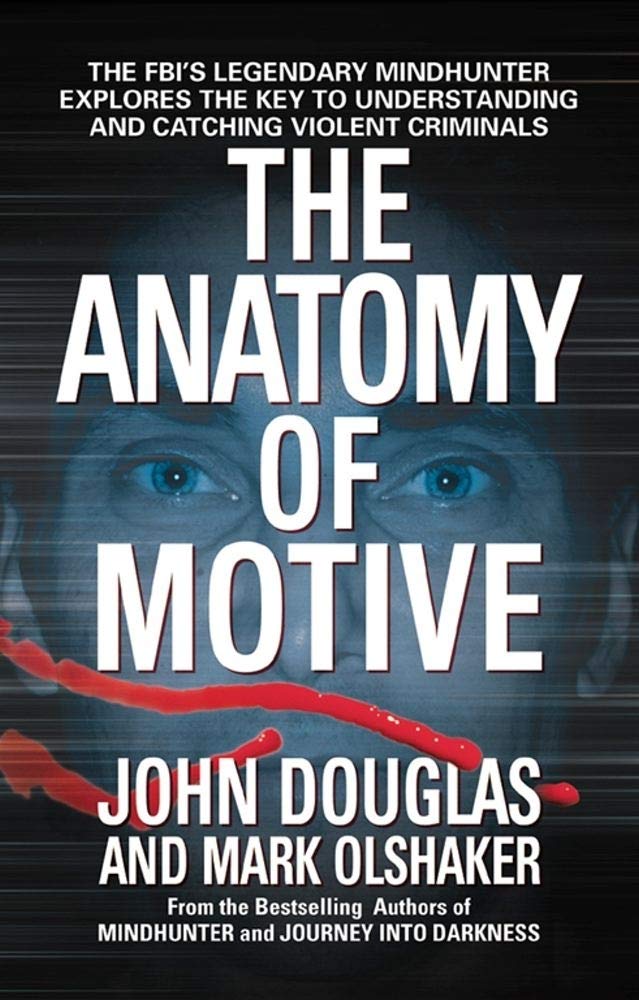
About The Anatomy of Motive by John E. Douglas and Mark Olshaker – Discover the Criminal Mind and the Hidden Reasons Behind Violent Crimes
What makes someone commit a terrible crime? Why do some people become serial killers, while others suddenly turn violent? And how do FBI investigators try to understand the reasons behind these acts?
The Anatomy of Motive by John E. Douglas and Mark Olshaker takes you into the world of criminal investigation, where understanding why a crime happened can be just as important as finding out how it happened.
Written by the authors of Mindhunter, this true crime book explores real criminal cases through the experience of former FBI profiler John E. Douglas. It examines serial killers, bombers, arsonists, assassins, and people who commit sudden acts of violence.
Instead of simply telling you what happened, the book explores the question that lies at the heart of every investigation: Why?
If you enjoy real crime stories, criminal psychology, FBI investigations, and the mystery of human behavior, this book gives you a detailed look at how investigators examine violent offenders and their possible motives.
The Mystery Behind Every Violent Crime
Most crime stories focus on one question: Who committed the crime?
But John Douglas asks another important question. What made the person do it?
Some offenders plan their actions for months. Others act after a long period of anger or frustration. Some commit repeated crimes, while others are responsible for a single terrible event.
Understanding these differences is a major part of criminal investigation.
In The Anatomy of Motive, Douglas uses real cases to explain how investigators study an offender's actions, choices, history, and possible reasons for committing a crime.
The book looks beyond the crime itself and explores the behavior that led up to it.
You will discover why understanding motive matters when investigators try to make sense of violent actions. You will also see how difficult it can be to explain human behavior, even when many details of a case are already known.
Understand Criminal Profiling Through Real Cases
You may have watched crime shows where an FBI profiler studies a crime scene and quickly describes the person responsible.
Real investigations are more complicated.
Criminal profiling involves examining available information about a crime and using behavior to develop ideas about an unknown offender.
John Douglas draws on his years of FBI experience to explain his approach to this work.
Instead of giving readers a simple definition, he connects profiling with real investigations and discusses how criminal behavior can provide possible clues.
The book explores how offenders may differ in planning, motivation, and the ways they carry out their crimes.
However, profiling involves interpretation. It cannot identify a criminal with certainty or replace physical evidence and a proper investigation.
Reading this book can help you understand Douglas's approach while encouraging you to think carefully about the conclusions investigators draw.
Explore the Minds of Different Types of Criminals
Not all violent crimes happen for the same reason.
A person who starts dangerous fires may have different motivations from someone who carries out a bombing. A serial killer's behavior may also differ from that of a person who suddenly attacks people in a public place.
Douglas examines several types of offenders to explore these differences.
The book discusses arsonists, hijackers, bombers, poisoners, assassins, serial killers, and mass murderers. It also considers people who unexpectedly commit serious acts of violence.
Through these examples, the authors explore what certain offenders may have in common and what makes their actions different.
This variety makes the book interesting for readers who want to understand more than one type of crime.
Real Criminal Cases That Challenge Your Thinking
The Anatomy of Motive uses well-known criminal cases to explain the authors' ideas about motivation and behavior.
Among the people discussed are Lee Harvey Oswald, Theodore Kaczynski, and Timothy McVeigh.
Rather than presenting their crimes as simple mysteries, Douglas examines details of their behavior and offers interpretations of the motives behind their actions.
These cases allow readers to see how different events, personal histories, and actions can become part of an investigation.
They also raise difficult questions. Can investigators understand what someone was thinking? How much can past behavior tell us? Why might two offenders who commit different crimes share certain characteristics?
The book offers Douglas's perspective on these questions, giving readers material to consider rather than simple answers to memorize.
Discover How Dangerous Behavior Can Develop
Some violent acts appear to happen without warning. However, investigators may later discover earlier behavior that helps them understand an offender's history.
Douglas explores how certain patterns can develop and change over time.
He examines the possible connections between past actions and later violence, including cases where criminal behavior becomes more serious.
This part of the book explores how investigators attempt to understand the development of violent offenders.
It is important to remember that unusual behavior, childhood difficulties, or personal problems do not prove that someone will become violent. No simple set of warning signs can reliably identify a future killer.
The book is more useful as an account of how Douglas interprets particular cases than as a tool for predicting what an individual person will do.
From the Authors Who Brought You Mindhunter
If you enjoyed Mindhunter, this book gives you another chance to explore the investigative experiences and ideas of its authors.
John E. Douglas is a former FBI special agent who helped develop the use of behavioral profiling in criminal investigations.
During his career, he investigated violent crimes and studied the behavior of serious offenders.
Mark Olshaker is an author, journalist, and documentary filmmaker who has worked with Douglas on several true crime books.
Their collaboration brings together Douglas's investigative experience and Olshaker's nonfiction storytelling.
The Anatomy of Motive focuses particularly on the reasons behind criminal actions, making it a useful companion for readers who want to explore another part of Douglas's work.
Why This Book Is Worth Adding to Your Reading List
If ordinary crime stories leave you wondering about the person behind the crime, The Anatomy of Motive offers a different reading experience.
Instead of following a fictional detective toward a dramatic ending, you explore real cases and the questions investigators face.
The book gives you several reasons to keep reading:
-
Real investigations: Explore cases connected with the work and research of an experienced FBI profiler.
-
Criminal psychology: Learn about different interpretations of violent behavior and motivation.
-
Different crime types: Examine cases involving several categories of dangerous offenders.
-
Investigative thinking: Discover how behavioral information can influence an investigation.
-
Detailed case studies: Consider the evidence, circumstances, and explanations surrounding real crimes.
The book can also help you examine popular crime shows more critically. It provides context for understanding what profiling involves and why real investigations cannot be solved through a single clever guess.
Who Should Read The Anatomy of Motive?
This book is suitable for adult readers who enjoy true crime and want to understand criminal investigations in greater detail.
It may interest psychology students, criminology students, crime writers, and readers who are curious about FBI profiling.
Fans of Mindhunter may particularly enjoy learning more about Douglas's work and his approach to understanding criminal motivation.
Writers developing realistic crime fiction can also use the book as background reading when researching investigative methods and offender behavior.
Because it discusses murder, mass violence, and disturbing criminal cases, it is intended for mature readers who are comfortable with serious subject matter.
It is not a beginner's textbook or a complete guide to forensic science. Instead, it combines true crime storytelling with the authors' explanations of criminal behavior.
A Premium Edition Made for Comfortable Reading
At Bookish Wonderland, we believe a detailed true crime book deserves a comfortable reading experience. This premium edition offers:
-
Premium eye-soothing cream paper that feels comfortable during long reading sessions.
-
Crystal-clear printing with sharp, easy-to-read text.
-
High-quality stitched and glue binding designed to keep the pages secure and improve longevity.
These features make the book suitable for regular reading, study, and long-term storage in your personal library.
Book price in Bangladesh and Easy Delivery Options
Check the current price of The Anatomy of Motive on Bookish Wonderland before ordering.
We offer nationwide delivery inside and outside Dhaka, with Cash on Delivery available across Bangladesh. Customers in Dhaka can also ask about our fast or urgent delivery service.
For customization requests or additional product information, contact us through Facebook or Instagram.
Crime Book Home Today
Discover the real cases, difficult questions, and investigative ideas behind The Anatomy of Motive by John E. Douglas and Mark Olshaker.
Order your premium copy from Bookish Wonderland today and explore the complex world of criminal motivation.
If you require any customization or have any questions, please inbox us via FB or Insta.
| Primary Specification | |
| Author | John E. Douglas, Mark Olshaker |
| Genre | True Crime, Criminal Psychology, Criminology |
| ISBN-13/ISSN | 978-0671023935 |
| ISBN-10 | 0671023934 |
| Publisher | Pocket Books |
| Publishing Date | July 1, 2000 |
| Language | English |
| Reading Age | 18+ years |
| Format | Printed book |
| Physical Specification & Quality | |
| Paper Quality | Premium eye-soothing cream paper |
| Binding Quality | High quality stitched and glue binding (for longevity) |
| Print Quality | Crystal-clear print |
| Pages | 432 pages |
| Country | USA |
| Logistics Information | |
| Weight | 439g |
| Length | 8.5 inches |
| Width | 5.6 inches |
| Height | 1 inches |