

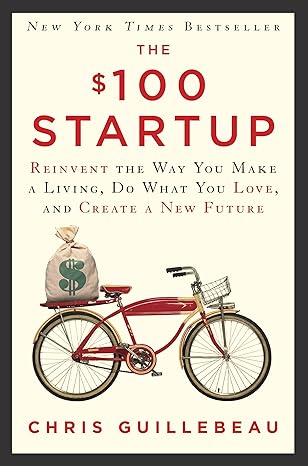
About The $100 Startup by Chris Guillebeau: Turn a Small Idea into Real Income
What if you could build a small business without a large office, a big team, or a huge amount of money? The $100 Startup by Chris Guillebeau shows how ordinary people turned simple skills and useful ideas into real sources of income. This is a clear and inspiring guide for anyone who wants more freedom, meaningful work, and better control over the future.
Chris Guillebeau studied 1,500 entrepreneurs who built businesses that earned at least $50,000 from small starting investments. He then selected 50 powerful case studies to explain what worked, what failed, and what new business owners can learn from them. Many of the people featured in the book began with $100 or less. They did not wait for perfect plans. They found something useful, offered it to the right people, and improved it through action.
This book does not promise easy money. Instead, it offers practical lessons about finding a profitable idea, understanding customers, setting a price, making a simple plan, launching a product, and earning the first sale. It can help you stop waiting for the “right time” and begin using what you already know.
Stop Thinking That Every Business Needs Big Money
Many people dream of starting a business but never begin. They may believe they need a large amount of cash, a university degree in business, a costly office, many workers, or support from an investor. These fears can make a good idea feel impossible.
The $100 Startup offers another path. It explains how a small business can start with one person, one useful skill, one clear offer, and a simple way to reach customers. The book calls this kind of small operation a microbusiness. A microbusiness is not weak or unimportant. It is simply built to stay focused, useful, and easy to manage.
The main lesson is simple: begin with value. Find a real problem that people want to solve. Then offer a product or service that makes their lives easier, faster, safer, happier, or better. When people understand the value, they are more likely to pay for it.
This way of thinking can help new entrepreneurs avoid wasting money on things that do not bring customers. Instead of spending months making a perfect logo or a long business plan, readers learn to test the idea, speak to customers, and make the first offer.
A Practical Guide Built from Real Business Stories
The book becomes enjoyable because it does not depend only on theory. Chris Guillebeau shares stories of people who created working businesses in many different ways. Their paths, skills, and goals were different, but they often followed similar basic rules.
They used knowledge they already had. They found people who needed that knowledge. They created a clear offer and started selling it. Some made products, while others offered services, teaching, advice, events, or useful information. These examples show that there is no single perfect type of business.
The stories also make the lessons easier to understand. You can see how an idea moves from thought to action. You learn how people chose what to sell, how they found buyers, what they charged, and how they handled early mistakes.
The author collected exact details about the businesses, including starting costs and early steps. This makes the book useful for readers who want examples instead of empty motivation. The aim is not to copy one person’s business. The aim is to understand the pattern and build something that fits your own life.
Find the Point Where Skill Meets Demand
You may have a skill that feels normal to you because you use it every day. Other people may find the same skill hard, confusing, or time-consuming. The book encourages readers to look closely at what they already know and ask how that knowledge could help someone else.
Being interested in something is not enough by itself. A business must connect your skill with a need that customers care about. The strongest ideas often appear where three things meet: something you can do, something you enjoy, and something people will pay to receive.
For example, someone who enjoys taking photographs may offer simple product photography to small online shops. A person who understands social media may help local businesses plan their posts. Someone who can explain a school subject clearly may create tutoring lessons or learning notes.
The exact idea will be different for every reader. The useful lesson is to look beyond job titles. You may have more than one skill, and a skill learned in one area can often solve a problem in another area.
Learn What Customers Truly Want
A business cannot grow only because its owner loves the idea. Customers must also understand why the offer is useful. The $100 Startup teaches readers to focus on benefits rather than a long list of technical features.
A feature tells people what a product has. A benefit tells people how the product improves their lives. Customers normally care more about the second answer. They want to save time, reduce stress, earn money, learn faster, feel confident, enjoy something, or remove a difficult task.
The book encourages clear communication. If a customer cannot quickly understand what you sell, who it helps, and why it matters, the offer may need to become simpler. Clear language can make a small business look more trustworthy and easier to choose.
This lesson is useful for online sellers, tutors, freelancers, designers, consultants, content creators, and service providers. It can also help existing business owners improve a product that is not selling well. A better offer often begins with a better understanding of the customer.
Make a Simple Plan You Can Use
Many business books discuss long and complex plans. This book supports a shorter and more active approach. A plan should guide your next move, not become another reason to delay starting.
Readers are encouraged to answer basic questions. What will you sell? Who needs it? Why will they buy it? How will they learn about it? How much will it cost? How will they pay? Answering these questions creates a simple map for the business.
The book also explains why action produces knowledge. You may not know everything before launch, and that is normal. A small test can teach you more than weeks of guessing. A real customer response shows whether the message, product, or price needs to change.
This does not mean acting without care. It means planning enough to make a smart first move and then learning from the result. This approach can feel less frightening because you do not need to solve every future problem on the first day.
Turn an Idea into a Clear Offer
A useful idea becomes a business only when customers can buy it. The book helps readers move from a broad thought to a clear offer.
A clear offer explains the result, price, buying process, and reason to act. It should remove confusion. If you provide a service, customers should know what work is included. If you sell a product, they should understand what it does and how it helps.
The author also discusses the importance of making the buying process easy. A good idea may still fail if people do not know how to place an order or make payment. Small details matter because every confusing step gives a possible buyer a reason to leave.
These lessons are especially helpful for beginners building pages on Facebook, Instagram, personal websites, marketplaces, or freelance platforms. You can use them to review an existing offer or prepare a new launch from the beginning.
Take Action Before Everything Feels Perfect
Waiting for perfection is one of the biggest barriers for new entrepreneurs. A person may keep changing the name, design, page, or plan without showing the offer to a real customer.
The $100 Startup encourages fast but thoughtful action. Launching does not mean that the product can never change. It means placing a useful version in front of people and learning what happens.
The book explains practical launch ideas and shows how business owners created interest before opening their offers. Readers can learn about preparing customers, explaining value, choosing the right time, and giving people a clear reason to buy.
A launch does not always need a large event or costly advertising. A direct message to the right audience, a useful email, a simple post, or a personal recommendation may create the first sale. The main goal is to connect a valuable offer with people who already need it.
Understand Money without Feeling Lost
A business needs to earn money to survive, but many beginners avoid talking about prices and profit. This book treats money as a practical part of helping customers and keeping the business alive.
Readers learn to think about income, costs, prices, and cash flow in a direct way. Revenue means the money a business receives. Profit is what remains after the costs are paid. Knowing the difference can stop a busy business from becoming an unprofitable one.
The book also asks readers to price an offer according to its value. Very low prices do not always attract good customers. They may make the offer look weak or leave too little money to provide good service. A fair price should make sense for the buyer and allow the seller to continue the work.
You do not need to be an accountant to understand these lessons. The ideas are explained through simple stories, figures, and business decisions.
Build Freedom, Not Just Another Job
Starting a business is not only about earning more. Many readers want control over when, where, and how they work. They may want more time with family, the freedom to travel, or the chance to choose meaningful projects.
The businesses in this book are often designed around the owner’s desired life. This idea is important because a business can make money but still create stress, long hours, and little freedom. Growth is useful only when it supports the life you want.
The book encourages readers to think about enough. How much income do you truly need? How large does the company need to become? Do you want workers, offices, and many products, or would a focused one-person business suit you better?
There is no single correct answer. The goal is to build with purpose. This makes the book valuable for people who want a small independent income as well as those who hope to grow a larger company later.
Who Will Gain the Most from This Book?
The $100 Startup by Chris Guillebeau is ideal for students, freelancers, side-hustle builders, online sellers, creators, consultants, and first-time entrepreneurs. It is also useful for workers who want to create an extra source of income before leaving a regular job.
A student can use the book to discover how a skill may become a small service. A freelancer can learn how to package work as a clearer offer. A shop owner can use the lessons to improve value, promotion, and customer communication. A content creator may find ways to turn knowledge or an audience into a helpful paid product.
The book can also benefit people who already own a business but feel stuck. Its questions may reveal that an offer is too confusing, a price is too low, or too much time is being spent on work that customers do not value.
You do not need previous business training. The writing is clear, the chapters are practical, and the examples make difficult ideas easier to follow.
Useful for Business Ideas in Bangladesh
Many lessons from the book can be adapted to the growing online business world in Bangladesh. A small idea can begin through social media, a basic website, an online marketplace, or direct contact with local customers.
Readers may apply the principles to tutoring, digital marketing, graphic design, clothing, handmade items, food services, website development, photography, writing, consulting, or many other fields. The book does not provide one fixed business idea for every country. It teaches a way to find opportunities based on your skills and the needs around you.
Local payment systems, customer habits, delivery costs, and market conditions must always be considered. However, the central ideas remain useful: solve a clear problem, begin at a manageable size, communicate value, test demand, and improve after receiving real feedback.
If you are comparing The $100 Startup by Chris Guillebeau price in Bangladesh, also consider the lasting value of its practical lessons. One useful idea from the book may help you avoid a costly mistake or create a better offer.
What You Will Learn from The $100 Startup
This book can help you:
- Discover useful business ideas hidden inside your present skills.
- Find the link between what you enjoy and what customers need.
- Test an idea before spending a large amount of money.
- Create a short and practical business plan.
- Explain benefits in words customers can understand.
- Turn a general idea into a product or service people can buy.
- Choose a fair price and think clearly about profit.
- Prepare a simple launch and reach early customers.
- Learn from action instead of waiting for perfect conditions.
- Build a business that supports freedom and meaningful work.
- Avoid common mistakes made by new entrepreneurs.
- Use small resources in a smarter and more focused way.
Each lesson is supported by stories and examples. This balance makes the book inspiring without losing its practical value.
A Premium Reading Experience from Bookish Wonderland
A useful business guide should be comfortable to read, highlight, review, and keep for future use. At Bookish Wonderland, this edition is prepared for readers who value a strong physical book and a smooth reading experience.
- Premium eye-soothing cream paper helps reduce harsh page glare and supports comfortable reading.
- Crystal-clear print keeps every sentence, example, and business lesson sharp and easy to follow.
- High-quality stitched and glue binding gives the book added strength for regular use and long-term shelf life.
- The printed format makes it easy to mark lessons, add notes, and return to useful sections.
- Durable production makes this a practical choice for personal reading, study, or gifting.
The quality features are brought together in one section so you can see exactly what makes this edition suitable for repeated reading. You may return to the book whenever you plan a product, review an offer, or prepare a new launch.
Read It, Mark It, and Use It
This is not a book that needs to remain untouched on a shelf. Keep a notebook beside you while reading. Write down your skills, possible customers, common problems, and simple offers you could test.
You can read one chapter at a time and apply one lesson before moving forward. If you already have a business, compare your current offer with the ideas in the book. Ask whether customers understand the benefit, whether buying is easy, and whether the price supports a healthy profit.
The book can also be used for group learning. Friends, students, or small business partners can read it together and discuss how each idea fits the local market. Teachers and business mentors may use its case studies to start practical conversations about entrepreneurship.
The greatest value comes from action. Reading can give you clarity, but testing a useful idea can give you real knowledge.
A Smart Gift for an Ambitious Reader
The $100 Startup can be a thoughtful gift for someone who wants to start earning independently, build a side business, leave an unfulfilling work path, or use a skill in a more meaningful way.
It may be especially encouraging for a student, new graduate, freelancer, creator, or family member who has many ideas but does not know where to begin. The book offers hope, but it also gives the reader practical questions and steps.
Unlike a gift that is used once, this guide can remain useful through different stages of a business journey. The reader may first use it to choose an idea, return to it before launching, and read it again when reviewing prices or customer value.
Begin with What You Have Today
You may not have a perfect plan, a large budget, or years of business experience. You may only have one skill, one idea, and the wish to create a better future. That can still be enough to take the first small step.
The $100 Startup by Chris Guillebeau helps readers see entrepreneurship as something practical and possible. It shows how ordinary people used limited resources, served real customers, and built income around useful work. The book’s strongest message is not that every idea will succeed. It is that careful action can replace fear, and real feedback can replace endless guessing.
Order your copy from Bookish Wonderland and begin exploring what your knowledge can become. Enjoy premium cream paper, crystal-clear printing, strong stitched and glue binding, Cash on Delivery across Bangladesh, nationwide delivery, and fast or urgent delivery options in Dhaka.
Check The $100 Startup by Chris Guillebeau book price in Bangladesh, place your order, and start turning a useful idea into a clear plan today.
If you require any customization or have any questions, please inbox us via FB or Insta.
| Primary Specification | |
| Author | Chris Guillebeau |
| Narrator | Chris Guillebeau, Thomas Vincent Kelly |
| Genre | Business, Entrepreneurship, Small Business, Personal Finance, Career Development, Self-Help |
| ISBN-10 | 1447286316 |
| Publisher | Pan Macmillan |
| Publishing Date | January 1, 2015 |
| Language | English |
| Reading Age | 16+ |
| Format | Printed book |
| Physical Specification & Quality | |
| Paper Quality | Premium eye-soothing cream paper |
| Binding Quality | High quality stitched and glue binding (for longevity) |
| Print Quality | Crystal-clear print |
| Pages | 304 pages |
| Country | United States |
| Logistics Information | |
| Weight | 319 gm |
| Length | 8.5 inches |
| Width | 5.6 inches |
| Height | 0.75 inch |