

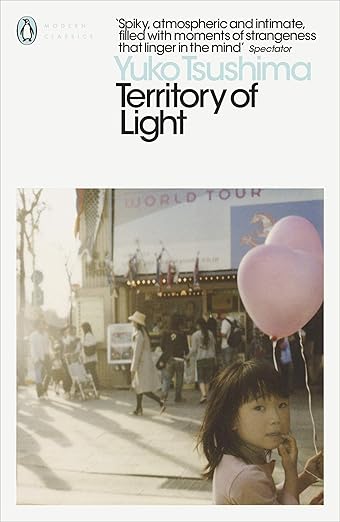
About Territory Of Light by Yuko Tsushima – A Quiet Japanese Classic About Motherhood, Separation, Loneliness, and Starting Again
Territory Of Light by Yuko Tsushima is a short but powerful novel about a young mother trying to build a new life with her two-year-old daughter in Tokyo. Her marriage is breaking apart, her husband is leaving, and she must learn how to care for her child while also facing her own anger, fear, loneliness, and desire for freedom.
She moves into an unusual apartment on the top floor of an old office building. The rooms are filled with light. Windows open the space to the sky, the city, and the changing seasons. At first, the brightness seems to promise a fresh beginning. But light in this novel is never only warm or safe. It can also feel harsh, exposing, strange, and overwhelming.
Across twelve chapters, the story follows one year in the mother's life. Small events slowly build a clear picture of single motherhood, emotional strain, love, exhaustion, and change. The result is intimate, honest, and deeply human.
When a New Beginning Does Not Feel Easy
Leaving a difficult marriage can sound like the start of freedom, but freedom does not always arrive in a clean or simple way.
The unnamed narrator has her own apartment and more control over her daily life, yet she is also alone with a very young child. She loves her daughter, but motherhood does not erase frustration. Some days feel warm and close. Other days feel tiring, confusing, or even frightening. Tsushima allows these mixed feelings to exist without turning the mother into either a perfect parent or a terrible one.
Territory of Light also makes room for anger, boredom, guilt, need, and the wish to still be a person outside the role of mother.
The Apartment Becomes a Place of Hope and Pressure
The apartment is one of the most memorable parts of the novel.
It sits high above the street and has windows on many sides. Sunlight fills the rooms. There is access to the rooftop, and the city stretches around the mother and daughter.
At first, this feels like possibility. The narrator has left the old home connected with her failing marriage. The new place belongs to a different stage of life.
But the same space can change depending on her mood. Light can make the apartment feel open, yet it can also make everything visible. Noise from outside, weather, darkness, heat, and sudden events shift the feeling of the rooms.
Tsushima uses the apartment almost like another character. It reflects the narrator's changing state without needing to explain every emotion directly.
A Mother Who Is Allowed to Be Imperfect
The narrator is not written as an ideal mother who always knows what to do.
She becomes impatient. She gets tired. She makes mistakes. At other moments, she feels deep tenderness and fierce responsibility.
The novel does not hide that. It also shows how hard parenting can become when one parent is carrying most of the daily responsibility while also dealing with separation.
The mother is trying to protect her daughter while she herself feels unstable.
That tension gives ordinary scenes real weight. A meal, a walk, bedtime, a nursery problem, or a moment of crying can reveal how stretched the narrator feels.
Separation Shapes Every Part of the Year
The husband is often absent, but his absence affects almost everything.
The narrator must deal with the practical and emotional effects of their separation. Their relationship does not simply end because they live apart. There are still arguments, expectations, memories, and questions about their daughter.
This is important because the book understands that separation can be a long process rather than one clear event.
The narrator wants independence, but she also has to face what independence costs. She may be free from one kind of pressure while gaining another kind. Tsushima does not force this process into a simple lesson about becoming empowered.
That makes the novel more believable.
Twelve Chapters Follow a Full Year of Change
Territory of Light was originally published in twelve parts, and that structure remains central to the novel.
Each chapter follows a stage in the narrator's first year of separation. The seasons change. Her daughter grows. Daily routines shift.
This monthly rhythm gives the book a quiet forward movement.
Time itself becomes part of the story. The reader watches the narrator survive one month, then another, then another.
That can make the ending feel earned. It happens because life keeps moving.
For readers who enjoy character-driven fiction, this structure gives small moments the space to matter.
Light Is Beautiful, but It Is Not Always Gentle
The title tells readers to pay attention to light.
Sunlight, streetlights, fireworks, reflections, floodwater, windows, and changing brightness appear throughout the book. Sometimes light feels hopeful. Sometimes it feels strange or too intense.
This repeated image gives the novel its special atmosphere.
Light can suggest freedom because the narrator's new apartment is open and bright.
The effect is simple but powerful. Tsushima takes something everyone knows and lets it carry different emotions.
You do not need to study symbolism to enjoy this. The images work naturally. You can simply notice how the same kind of light feels different depending on what is happening in the mother's life.
Tokyo Feels Ordinary and Dreamlike at the Same Time
The novel is set in Tokyo, but it does not present the city as a travel guide.
We experience Tokyo through the narrator's daily movement. There are streets, parks, work, childcare, apartments, shops, trains, and ordinary routines. Yet her emotional state can make these familiar places feel strange.
This gives the city a dreamlike edge.
A normal place can suddenly feel beautiful, lonely, threatening, or unreal. The outside world keeps moving even when the narrator feels stuck.
That contrast makes the story vivid. The city does not stop for one person's private crisis. People continue working, walking, shopping, and living around her.
For readers interested in Japanese literature, this offers a close view of urban life through one woman's experience rather than through a large historical story.
The Book Is Quiet, but It Is Not Empty
Readers who prefer fast thrillers should know that Territory of Light is a quiet novel.
Its power comes from observation, mood, memory, and emotional change. The story pays attention to small moments rather than constant action.
That does not mean nothing happens.
A marriage breaks down. A woman builds a new home. A child reacts to change. Work and childcare create pressure. Relationships shift. The narrator experiences fear, desire, exhaustion, anger, and moments of real beauty.
The drama is simply close to everyday life.
This makes the book a strong match for readers who like literary fiction that trusts small details. You may finish a chapter without a cliffhanger, yet still carry one image or feeling with you.
Why Modern Readers Still Connect With It
Although the novel first appeared in Japan in the late 1970s, many of its concerns feel current.
Single parents still face pressure. Women are still judged for how they balance motherhood, work, relationships, and personal freedom. Separation can still bring financial, emotional, and practical problems at the same time.
The book also speaks to anyone who has moved into a new home after a major change and expected to feel better immediately.
Sometimes the new room is bright, but the old pain comes with you.
That simple truth gives Territory of Light lasting emotional power.
The narrator changes, but not in a straight line. She can grow stronger and still have bad days. She can love her child and still need space. She can want freedom and still feel lonely.
Who Will Enjoy Territory Of Light Most?
This novel is a strong choice for readers who enjoy Japanese literature, literary fiction, translated fiction, quiet books, motherhood stories, domestic fiction, and character studies.
It may especially appeal to readers who like books about women rebuilding life after separation, stories about single parenting, and novels where atmosphere matters as much as plot.
Fans of reflective writing may enjoy the way Tsushima turns ordinary events into moments of emotional depth.
Because the book is relatively short, it can also work well for readers who want to explore Japanese classics without beginning with a very long novel.
Book clubs can discuss motherhood, freedom, social expectations, marriage, loneliness, childcare, and the meaning of home.
A Premium Copy Made for Slow Reading
Bookish Wonderland prepares this edition for readers who want a comfortable physical copy for calm, focused reading. It uses premium eye-soothing cream paper, crystal-clear printing, and high-quality stitched and glue binding designed for better longevity.
The softer page tone can make longer reading sessions more comfortable, while sharp print keeps the translated prose clear and easy to follow. Strong binding is useful for a book you may reread, lend, underline, or keep in a Japanese literature collection.
The clean finish also makes it suitable for gifting to readers who enjoy thoughtful literary fiction.
Looking for Territory Of Light by Yuko Tsushima Price in Bangladesh?
If you are comparing the Book price in Bangladesh for Territory Of Light by Yuko Tsushima, consider the exact edition as well as the current selling price.
Different editions can have different page counts, formats, covers, and sizes. Penguin's 2019 paperback is shorter in format than its later Little Clothbound Classics edition, while the U.S. Picador paperback has its own specifications.
Bookish Wonderland aims to offer a comfortable balance of reading quality, durability, and value. Check the current product listing for the latest selling price because prices can change with stock, edition, printing, and supply conditions.
Easy Ordering Across Bangladesh
Bookish Wonderland offers nationwide delivery, including addresses inside and outside Dhaka. Cash on Delivery is available across Bangladesh, so readers can order without paying online first.
Fast or urgent delivery may also be available in Dhaka when you need the book sooner.
You can order it for personal reading, study, gifting, or a growing Japanese literature collection. If you need customization or have a question about the exact edition, contact Bookish Wonderland through its available Facebook or Instagram support channels.
Step Into a Bright Apartment Where a New Life Slowly Begins
Territory Of Light by Yuko Tsushima does not promise that leaving a painful situation makes everything easy. Instead, it shows what happens after the decision, when a person still has to wake up, care for a child, work, make meals, face memories, and find a way through each day.
That honesty makes the novel special.
The unnamed mother is imperfect, tired, loving, angry, lonely, hopeful, and alive. Her daughter can bring joy and pressure in the same hour. Their bright apartment can feel like freedom in one scene and a trap in another.
Across one year, small changes begin to matter.
If you want a short Japanese novel with beautiful imagery, emotional honesty, and a clear-eyed look at motherhood and independence, this book deserves a place on your shelf.
Order Territory of Light by Yuko Tsushima from Bookish Wonderland and enter a quiet, luminous story where every window, season, and ordinary day becomes part of learning how to begin again.
If you require any customization or have any questions, please inbox us via FB or Insta.
| Primary Specification | |
| Author | Yuko Tsushima |
| Translator | Geraldine Harcourt |
| Narrator | Rina Takasaki |
| Genre | Literary Fiction, Psychological Fiction, Domestic Fiction |
| ISBN-13/ISSN | 978-1250251053 |
| ISBN-10 | 1250251052 |
| Publisher | Picador |
| Publishing Date | March 31, 2020 |
| Language | English |
| Reading Age | 18+ |
| Format | Printed Book |
| Physical Specification & Quality | |
| Paper Quality | Premium eye-soothing cream paper |
| Binding Quality | High quality stitched and glue bindaing (for longevity) |
| Print Quality | Crystal-clear print |
| Pages | 192 pages |
| Country | Japan |
| Logistics Information | |
| Weight | 214 gm |
| Length | 8.5 inches |
| Width | 5.6 inches |
| Height | 0.55 inch |