

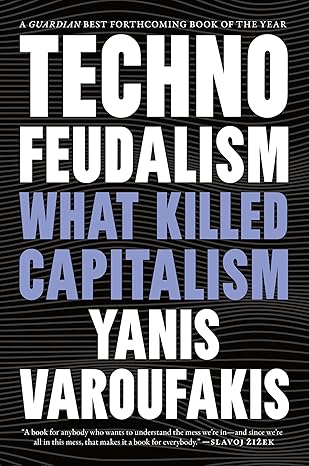
About Technofeudalism by Yanis Varoufakis: Who Holds Power in Our Online World?
You open your phone to watch a video, find a product, or check a message. It feels like a small part of your day. But who owns the space where all this happens? Who sets the rules? And who gains when you spend more time there?
Technofeudalism by Yanis Varoufakis invites you to look behind the screen. In this nonfiction book, the economist argues that big tech has helped create a new system of power. He calls this system technofeudalism. His claim is bold: capitalism has given way to something different, built around control of digital spaces.
At Bookish Wonderland, this book is for readers who want to ask bigger questions about everyday life. If news about tech, wealth, and online business leaves you curious, start here. Open the book with one question in mind: how much do we understand about the online world we use each day?
What Is Technofeudalism About?
The full title is Technofeudalism: What Killed Capitalism. Varoufakis explores how large tech firms gain power through the online systems they own. He argues that access to these systems can matter more than owning a factory or making a product.
His key terms include cloud capital and cloud rent. Put simply, cloud capital means the powerful digital tools and systems that help their owners shape behaviour. Cloud rent is the income owners collect when others need access to their digital spaces.
These are parts of the author's argument, not facts that every economist accepts. The book gives you a clear position to examine. You can follow his reasoning, question his examples, and decide how far his view helps explain the world around you.
Give Your Questions Somewhere to Go
Have you ever wondered why an online shop can feel busy yet leave its owner with little control? Or why building an audience can take years, while reaching that audience may still depend on someone else's rules?
Such questions can be hard to explore through short posts. A headline offers a quick claim. A comment thread adds strong views. You may finish with more noise and less understanding.
A book gives you space to slow down. Read one idea, pause, and think of an example from your own life. Then move to the next step. You do not need to solve every problem at once.
This is the appeal of choosing a full argument over another quick opinion. You can see how the pieces fit, where you agree, and where you want better answers. Your questions become the starting point for learning.
A Big Idea Told Through a Personal Voice
Varoufakis addresses much of the book to his father. This gives its large economic questions a personal frame. He begins with memories and ideas about technology before moving through changes in capitalism and into his account of technofeudalism.
The book also draws on Greek myths and popular culture. These references offer ways into a subject that can otherwise seem distant or dry. Its focus reaches beyond business to freedom, democracy, and the relationship between people and technology.
Expect an author with a strong point of view. Read with curiosity, and leave room to disagree. You may find the most rewarding pages are the ones that make you stop and ask why you believe something.
Understand the Idea of a Digital Landlord
Imagine a large hall filled with small shops. Each shop owner does the work of choosing goods, serving buyers, and making sales. Yet the hall belongs to someone else. That owner can charge for access and decide the conditions for staying.
This simple picture can help you approach the book's comparison with feudalism. Varoufakis sees powerful platform owners as a new kind of landlord. Businesses and users depend on spaces they do not own, while those who control access gain an advantage.
The comparison is about economic power. It does not mean that life today is exactly like life in the past. Keep that distinction in mind as you read. It helps turn an unusual title into a question you can test: what does owning the meeting place allow someone to do?
Look at Your Online Habits with Fresh Eyes
Think about the last time you opened an app without a clear reason. What kept you there? Was it a new message, a suggested clip, or the hope of finding something better if you scrolled again?
You can use this book as a reason to notice those moments. Keep a small note of what catches your attention during a normal day. Then ask which choices felt planned and which happened without much thought.
This reading exercise is not about feeling bad for using your phone. It is about paying attention to your own experience. A familiar habit can become more interesting when you look at it closely.
Bring that curiosity to the page. Instead of asking only whether you like an app, try asking what makes it useful, what makes it hard to leave, and what you give in return.
A Thoughtful Read for Business Owners and Creators
If you run a shop, share videos, write online, or sell a service, consider reading with your work in mind. Keep a separate list of questions about the places where people find you.
Who controls your access to customers? How easy would it be to move your work elsewhere? Which parts of your business belong to you, and which rely on another company's service?
These are useful prompts for reflection. The book is an argument about the wider economy, so approach it as a way to think rather than a promise of higher sales. Any business decision still needs your own numbers and careful judgment.
For a team discussion, choose one question and let each person bring an example. You may discover that people doing different jobs notice very different forms of dependence in the same business.
Make Room for Better Study and Discussion
Students can use a reading notebook to keep the argument clear. Try three short columns on a page: what the author says, what supports it, and what you want to question. Explain each point in your own words.
If a term feels hard, avoid copying a long sentence and moving on. Write a small example instead. Could you explain the idea to a friend without looking at the page? If not, return to it slowly.
For a book club, let people disagree without rushing to choose a winner. One reader may find the title convincing. Another may think the same changes still belong within capitalism. Ask both readers to explain their reasons.
This approach makes discussion more useful. You practise following an argument, finding its limits, and listening to a different view. Those skills can serve you well far beyond this book.
For Readers Who Want More Than a Quick Answer
You may enjoy this book if your favourite reading leaves you with something to talk about. Choose it when you want to spend time with an idea rather than finish a page and forget it.
It can suit a quiet evening, a weekend reading session, or a regular study hour. There is no need to rush through unfamiliar terms. A few pages followed by a thoughtful pause can be enough.
You also do not have to agree with the author before you begin. Curiosity is a better starting point than loyalty to a view. Let the book make its case, then consider what you think.
For a friend who often asks questions about money, work, or technology, it may also be a meaningful gift. Choose it for their interests and love of discussion, especially if they enjoy challenging nonfiction.
A Premium Reading Copy from Bookish Wonderland
A book you plan to revisit should feel pleasant to read and easy to keep close. Bookish Wonderland's offered copy brings together the following features:
- Crystal-clear print: Sharp, clean text helps you follow each line while reading and returning to key passages.
- Premium eye-soothing cream paper: A soft page colour gives the printed text a warm background for your reading sessions.
- High quality stitched and glue binding: A construction chosen for longevity and to help keep pages secure through repeated use.
- Printed English format: A physical copy you can place on your desk, carry to a discussion, or keep on your shelf.
These details describe the copy offered by Bookish Wonderland. The premium wording refers to its physical quality, rather than a separate revised version of the author's text.
Care still matters. Keep your book away from water and damp spaces. Use a bookmark, turn pages gently, and avoid forcing the spine flat. Small habits help protect a book you want to return to over time.
Build a Reading Habit Around One Good Question
Before you start, write down one thing you hope to understand. Keep the question small enough to remember. For example, you might ask what makes an online platform powerful or why a seller depends on it.
After a reading session, write two or three lines about what changed in your thinking. Did you find an answer? Did a new question replace the old one? Both can be signs of useful reading.
You can also mark one passage to discuss with someone else. Explain why it caught your attention before asking for their view. This turns a private reading moment into a real conversation.
Over time, your notes become a record of your own thoughts. When you return to the book later, you can see what still feels strong and what you now understand differently. That is one reason to keep a personal copy.
Check the Book Price in Bangladesh
Looking for the Technofeudalism by Yanis Varoufakis book price in Bangladesh? Check the price shown on this product page before placing your order. For help with the listed amount or any product question, contact Bookish Wonderland.
Think about how you plan to use the copy as well. Will you read it once, discuss it with friends, or return to it while studying? Your reading needs can help you decide whether it belongs on your shelf.
A thoughtful purchase starts with clear details. Review the available product information and ask about anything you need to know. Choosing your next book should feel simple, with enough information to order with confidence.
Delivery That Fits Your Location
Bookish Wonderland offers nationwide delivery across Bangladesh, including addresses inside and outside Dhaka. Cash on Delivery is available, giving you the option to pay when your order arrives.
Need the book sooner in Dhaka? A fast or urgent delivery option is available. Contact the store to check whether your address and preferred timing can be covered before relying on a particular arrival date.
When ordering, provide a clear address and a phone number where you can be reached. If the book is a gift or needed for a planned discussion, share that timing when you ask about delivery.
Bring a Bigger Question to Your Next Read
Some books offer a short escape. Others give you an idea that stays with you as you return to daily life. Choose Technofeudalism if you want to spend time thinking about the systems behind your screen.
Let your next reading session begin with real curiosity.
Bring your questions, your doubts, and your own experience. Read at your pace. Talk about the parts that surprise you, and return to the pages that deserve another look.
Order Technofeudalism by Yanis Varoufakis from Bookish Wonderland today. If you require any customization or have any questions, please inbox us via FB or Insta.
If you require any customization or have any questions, please inbox us via FB or Insta.
| Primary Specification | |
| Author | Yanis Varoufakis |
| Editor | Beste M. Doğan |
| Genre | Economics, Political Economy, Politics, Technology and Society |
| ISBN-13/ISSN | 978-1685891244 |
| ISBN-10 | 1685891241 |
| Publisher | Melville House |
| Publishing Date | February 13, 2024 |
| Language | English |
| Reading Age | 16+ years |
| Format | Printed book |
| Physical Specification & Quality | |
| Paper Quality | Premium eye-soothing cream paper |
| Binding Quality | High quality stitched and glue binding (for longevity) |
| Print Quality | Crystal-clear print |
| Pages | 304 pages |
| Country | USA |
| Logistics Information | |
| Weight | 319 gm |
| Length | 8.5 inches |
| Width | 5.6 inches |
| Height | 0.21 inch |