

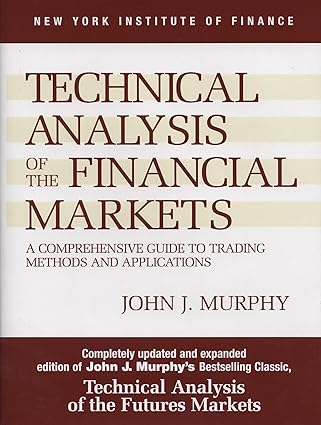
About Technical Analysis of the Financial Markets by John J. Murphy: Learn to Read Charts and Understand Market Moves
A price chart can feel like a page written in a new language. Lines rise, bars fall, and numbers keep moving. You want to know what it means, but each new term brings another question. Technical Analysis of the Financial Markets by John J. Murphy gives you a place to begin. It is a detailed guide to studying market prices, reading charts, and learning the tools used in technical analysis.
At Bookish Wonderland, this book is for readers who want to spend time learning how markets are studied. You may be a student, a curious beginner, or someone who already follows shares. If you want a book to read with a notebook beside you, this title offers plenty to explore. Open it with a question, take your time, and build your understanding one topic at a time.
Make Sense of What You See on a Chart
Watching a price move is easy. Explaining what you see takes more thought. A rising line may catch your eye, but you may still wonder where the move began or how it fits into the bigger picture. Learning the language of charts gives you more useful questions to ask.
Murphy's guide covers chart reading and indicators, with material on stocks and futures. It also looks at candlestick charts, links between markets, and stock rotation. These subjects give the book a broad scope. Readers can explore several parts of technical analysis within one reference, with a special focus on futures markets.
For your own study, begin with a simple goal: understand one idea well enough to explain it in your own words. That small change makes reading more active. Instead of turning pages and hoping everything sticks, you give each study session a clear purpose.
Give Your Learning a Clear Starting Point
It is easy to collect bits of market knowledge without knowing how they fit together. You may hear a new word in a video, see a chart in a post, and save a tip for later. Soon, your notes are full, but your questions remain.
A substantial reference book gives you a central place to study. You can return to a section, compare explanations, and keep your own notes in order. There is no need to finish it in one weekend. You can choose a steady reading pace that suits your work, classes, or family life.
Think of your first read as a chance to get familiar with the subject. On later visits, focus on the parts that still feel unclear. A book becomes more useful when you allow yourself to read slowly, ask questions, and come back with fresh eyes.
What You Can Explore Inside
The contents move from basic chart ideas to more involved methods. Topics include trends, price patterns, volume, moving averages, oscillators, candlesticks, and point and figure charts. Later subjects include Elliott Wave Theory, cycles, money management, trading tactics, and stock market indicators.
There is also a glossary for checking terms. This matters when a subject brings many unfamiliar words. You can pause, look up a term, and return to your reading with a clearer idea of what it means.
You do not need to treat every topic as equally urgent. Begin with the basic sections, then work towards the harder material. Keep a short list of subjects you want to revisit. That list can guide your next session and make a large book feel easier to approach.
Learn With a Notebook Beside You
Here is a simple way to make your reading more useful. After a short section, close the book and write down the main idea. Use plain words. If you cannot explain it yet, return to the page and read it again.
Next, write one question. It might be about a term, a drawing, or a point you do not fully understand. Give yourself room to leave questions open. Learning a large subject often means finding better questions before you find clear answers.
You can also draw a rough example in your notebook. It does not need to look neat. The aim is to think about what you have read. Over time, your notes become a record of your learning, showing which ideas feel clear and which deserve another look.
A Thoughtful Choice for New Readers
If you are new to market books, the title may sound serious. The subject does require attention, and some sections will take longer than others. Still, you can approach it in small steps. Start with the early ideas and give yourself time to learn the words.
You do not have to understand every page on the first try. Mark a difficult passage, move at a sensible pace, and return when the earlier ideas feel more familiar. Reading with patience can be far more satisfying than rushing to reach the final page.
This book may suit you if you enjoy asking how things work. Bring curiosity, a pencil, and the willingness to practise explaining new ideas. Those simple habits can turn a challenging subject into a rewarding personal learning project.
Useful for Students and Returning Learners
For a business or finance student, a market reference can add another area of study to the reading shelf. You might use a session to learn terms, prepare questions for a class discussion, or explore a topic that has caught your interest.
If you have studied charts before, your goal may be different. You may want to revisit basic ideas or organise notes that have become scattered. Reading again with a clear question can give familiar material a fresh purpose.
A study partner can make the process more engaging. Each person can read a section, explain the main point, and compare questions. Keep the focus on understanding the text. Being able to discuss an idea clearly is a useful way to see how well you have understood it.
Meet the Author Behind the Book
John J. Murphy worked as a technical analyst for CNBC and directed Merrill Lynch's Technical Analysis Futures Division. His professional background gives readers useful context for his work as a market author.
Technical Analysis of the Financial Markets is a nonfiction finance reference. Its purpose is to explain an area of market study. You can read it for knowledge, keep it for later reference, or use it as part of a broader reading plan.
When choosing a book like this, consider how you like to learn. If you enjoy sitting with a detailed explanation and returning to it over time, a printed reference may fit your habits well.
Make Room for Careful Thinking
Market learning can feel rushed when every screen asks for your attention. A book gives you the chance to pause. You can spend ten minutes on a single idea without needing to react to a fresh post or alert.
Try setting aside a quiet reading period with your phone out of reach. Read a few pages, make a note, and decide what you want to understand next. The session can be short and still have a clear purpose.
This is an educational book, and reading it does not promise trading profits. Its value lies in the chance to study, question, and understand the methods being discussed. Keep that goal in view as you read. Knowledge takes time, and careful learning deserves that time.
Made for Readers Who Return to Their Books
A reference book is often opened many times. You may return to a page after a week, revisit a section after a month, or keep it within reach during study. Bookish Wonderland offers the following quality features for this printed copy:
- Crystal-clear print: Sharp text for clear reading and close study.
- Premium eye-soothing cream paper: A soft page tone for readers who prefer cream paper.
- High quality stitched and glue binding: Built to support repeated reading and help the pages stay together over time.
These features support a book you can keep using. Good care matters too. Store your copy in a dry place, keep drinks away from the pages, and use a bookmark. Avoid forcing the spine flat when reading at a desk.
Fit Reading Into Your Week
You do not need a long holiday to begin. Choose a small reading target that you can keep. A few pages after dinner or a quiet session on Friday can give the book a regular place in your week.
At the end of each session, leave yourself a short note about where to begin next time. This saves you from spending the next session trying to remember what you were doing. It also makes it easier to notice your progress.
After several sessions, look back through your notes. Which terms now feel familiar? Which questions have changed? These small signs of progress can make the effort feel worthwhile and help you choose your next reading goal.
For a simple weekly review, divide a notebook page into three parts: words learned, ideas understood, and questions left. Add a date each time you update it. This gives your reading a visible record without making the process hard. When you reopen the book, you will have a useful starting point and a reminder of what you want to work on during your next quiet session.
A Gift With a Clear Purpose
Looking for a gift for someone who enjoys finance, business, or learning about markets? This title can be a thoughtful choice when their interests match the subject. It gives them something to read slowly, mark with bookmarks, and return to as their questions grow.
It may suit a friend beginning a finance course, a family member building a business bookshelf, or a reader who enjoys detailed nonfiction. Consider whether they like learning from printed books before choosing it.
You could add a notebook and write a simple message inside the gift card. A useful book and space for personal notes make a practical pairing for someone who likes to study at their own pace.
Check the Book Price in Bangladesh
Looking for the Book price in Bangladesh for Technical Analysis of the Financial Markets by John J. Murphy? Check the price shown on this product page before placing your order. If you need help with the current price or available copy, contact Bookish Wonderland.
When choosing your book, think about how you plan to use it. A title you return to during months of study serves a different purpose from a quick read. Choose it because the subject interests you and the reading style suits your goals.
There is no need to guess about order details. Ask your questions before checkout so you can choose with a clear idea of what you are buying.
Order From Bookish Wonderland
Bookish Wonderland offers nationwide delivery across Bangladesh, with cash on delivery available. We deliver inside and outside Dhaka. If you need your book sooner, ask about the fast or urgent delivery option in Dhaka and confirm availability for your address.
Buying for a class, a gift, or a personal reading plan? Share your timing needs when you contact us. Confirm the delivery charge and expected arrival time before completing your order, especially when you have a particular date in mind.
Bring your curiosity to the first page. Choose Technical Analysis of the Financial Markets by John J. Murphy, set aside a little reading time, and start building a clearer understanding of market charts. Order your copy from Bookish Wonderland today. For questions or customization requests, inbox us on Facebook or Instagram.
If you require any customization or have any questions, please inbox us via FB or Insta.
| Primary Specification | |
| Author | John J. Murphy |
| Narrator | Jamie Renell |
| Genre | Business, Finance, Investing, Technical Analysis, Trading |
| ISBN-13/ISSN | 978-0735200661 |
| ISBN-10 | 0735200661 |
| Publisher | New York Institute of Finance |
| Publishing Date | January 4, 1999 |
| Edition | SUB UPD EX |
| Language | English |
| Reading Age | 16+ years |
| Format | Printed book |
| Physical Specification & Quality | |
| Paper Quality | Premium eye-soothing cream paper |
| Binding Quality | High quality stitched and glue binding (for longevity) |
| Print Quality | Crystal-clear print |
| Pages | 576 pages |
| Country | USA |
| Logistics Information | |
| Weight | 597 gm |
| Length | 8.5 inches |
| Width | 5.6 inches |
| Height | 1.75 inch |