Skip to product information
1 of 1

Bookish Wonderland

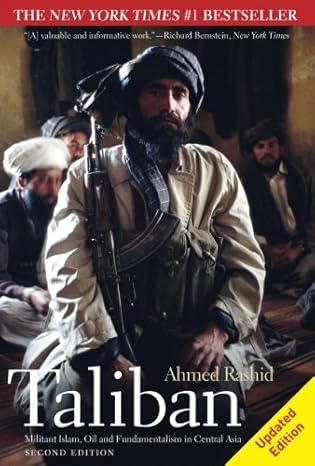
Taliban by Ahmed Rashid

Taliban by Ahmed Rashid

Regular price Tk 349.00 BDT
Regular price Sale price Tk 349.00 BDT
Sale Sold out
Book cover type
Quantity

Taliban by Ahmed Rashid is a detailed nonfiction account of the rise, ideology, leadership, and regional influence of Afghanistan’s Taliban movement. Drawing on years of reporting across Afghanistan, Pakistan, and Central Asia, Rashid explains how the group emerged from the chaos of the Afghan civil war and captured much of the country during the 1990s. He examines the Taliban’s interpretation of Islam, its treatment of women, ethnic tensions, links with militant networks, and relationships with Pakistan, Saudi Arabia, the United States, and neighboring states. The book also explores the strategic importance of Central Asian oil and gas pipelines and the international competition surrounding them. Updated editions consider the Taliban’s resurgence, its relationship with Al-Qaeda, the long U.S.-led war, and the movement’s return to power in 2021. Rashid combines political history, firsthand reporting, and regional analysis to explain why the Taliban became a major force in Afghanistan and global politics today.

Read More

View full details

About Taliban by Ahmed Rashid – A Clear Guide to Afghanistan, Power, Politics, and the Rise of the Taliban

Why did the Taliban rise so quickly? How did Afghanistan become the center of a struggle involving religion, war, trade routes, neighboring states, oil, and global powers? Taliban by Ahmed Rashid gives readers a detailed answer in language built from years of reporting, interviews, travel, and observation. It is a nonfiction account of a movement that changed Afghanistan and later became one of the most discussed political forces in the world.

Ahmed Rashid is a Pakistani journalist known for reporting on Afghanistan, Pakistan, and Central Asia. In this book, he explains where the Taliban came from, how the movement gained support, how it fought for control, and why outside countries became deeply involved.

Understand the Story Behind the Headlines

News reports often tell us what happened today, but they may not explain what happened before it. That can make Afghanistan feel confusing. Names, groups, borders, wars, and foreign interests can appear all at once. Taliban by Ahmed Rashid helps solve that problem by giving the reader background and connections.

Rashid follows the rise of the Taliban during the 1990s and places it inside Afghanistan’s long period of conflict. He discusses the damage left by war, the collapse of state power, rival armed groups, and the conditions that allowed a new movement to grow. He also looks at the Taliban’s ideas, leadership, military advance, and rules during its first period of control.

The result is a book that helps readers move from scattered facts to a clearer picture, with clear links between major events. Instead of asking only who won a battle, the book asks why groups gained power, who supported them, what interests were at work, and what those choices meant for ordinary people.

More Than a Book About One Group

A major strength of Taliban is its wide view. Rashid does not treat the Taliban as an isolated movement. He connects events in Afghanistan with Pakistan, Iran, Saudi Arabia, Russia, the United States, and the Central Asian states. He also explains how regional security, trade, energy, and political influence shaped decisions around Afghanistan.

One important part of the book examines the competition over oil and gas pipeline routes in Central Asia. Afghanistan’s location made it important to states and companies looking for access between energy-rich areas and markets farther south. This adds another layer to the story. Readers see that the conflict was not driven by one cause. Religion, security, ethnic politics, foreign policy, economic interests, and regional rivalry often crossed each other.

Reporting That Brings History Closer

Rashid writes as a journalist who spent years covering the region and meeting people connected to the events he describes. His reporting gives the book a close view of leaders, fighters, diplomats, officials, and communities. He combines history with direct observation, helping the reader understand both major political decisions and the human setting around them.

The book discusses the Taliban’s rise from Kandahar, its battles against rival forces, its capture of major areas, and the resistance it faced. It also examines Pakistan’s role, relations with other regional powers, the growth of militant networks, the drug economy, and the position of women under Taliban rule.

Because the book was first written before the attacks of September 11, 2001, it also offers something unusual: a detailed picture of the Taliban before the group became a daily subject in global news. Later editions add updated context, making the work useful for seeing how earlier events connected with later developments.

What You Will Learn While Reading

This book gives readers several connected ways to understand Afghanistan and its neighbors:

  • how the Taliban emerged during the political and military disorder of the 1990s;
  • how civil war, warlords, ethnic divisions, and weak institutions shaped Afghanistan;
  • how Pakistan and other regional and international powers influenced events;
  • how religion and political ideology were used in the movement’s rise;
  • how oil, gas, pipeline plans, trade routes, and geography affected foreign interest;
  • how the Taliban governed and how its policies affected daily life, especially for women;
  • how militant groups and regional instability became linked to wider global security concerns.

These subjects make the book useful not only for history readers but also for students of politics, international relations, journalism, South Asian studies, and modern conflict.

Why This Book Still Matters

The Taliban returned to power in Afghanistan in August 2021. That event made many readers ask an old question again: how did this movement survive, return, and remain so important?

Rashid’s book does not tell the full story of everything that happened after its 2010 second edition, so it should not be treated as a complete history of Afghanistan up to the present day. Its value is different. It explains the roots, structures, relationships, and regional pressures that shaped the Taliban before later events unfolded.

That makes it a strong foundation. If you are reading current news about Afghanistan, this book can help you understand many names, interests, and historical tensions that still appear in modern reporting. It gives context rather than a quick opinion.

A Good Choice for Serious but Curious Readers

You do not need to be a political expert to start this book. The subject is serious, but the main questions are easy to follow: Who gained power? Why did people support or resist them? Which countries became involved? What did they want? How did geography and resources matter?

It is especially suitable for university students, researchers, journalists, competitive exam readers, policy learners, and anyone who follows world affairs. It can also work as a starting point before reading newer books about Afghanistan after 2001 and after the Taliban’s 2021 return.

Readers who enjoy books that explain cause and effect may find this especially useful. Rashid does not only list dates or names. He shows how one decision can affect another country, another group, or a later conflict. That helps make a difficult subject easier to remember and discuss with confidence.

For readers comparing Taliban by Ahmed Rashid price in Bangladesh, value should not be judged only by page count. The book brings together history, political analysis, firsthand reporting, and regional context in one volume. If you search for Book price in Bangladesh because you want a serious nonfiction title with lasting reference value, this is a strong book to consider.

Made for Comfortable, Long Reading

At Bookish Wonderland, the reading experience matters because a detailed nonfiction book is often read slowly, marked, revisited, and kept for reference. This edition is prepared for readers who want a clean and durable physical copy.

The book comes with premium eye-soothing cream paper that is comfortable for long reading sessions. Crystal-clear printing keeps the text sharp and easy to follow. High-quality stitched and glue binding helps the pages stay secure through repeated reading and shelf use.

These physical details are especially helpful for students and researchers who may return to chapters many times. A strong binding also makes the book easier to keep as part of a personal history, politics, or international relations collection.

Read It When You Want Context, Not Noise

Taliban by Ahmed Rashid is a useful choice when short posts and breaking news no longer feel enough. Read it before a class on Afghanistan. Use it while studying South Asian politics. Keep it beside newer reporting so you can compare present events with the forces that shaped the 1990s. It can also support essays, discussion, research planning, or personal learning.

The book is not written to give a simple hero-and-villain story. Its main value comes from showing how many forces can shape one conflict at the same time. That makes it a demanding subject, but also a rewarding read for anyone who wants to understand events instead of only remembering headlines.

If you require any customization or have any questions, please inbox us via FB or Insta.

Primary Specification
AuthorAhmed Rashid
NarratorYoussif Kamal
GenreHistory, Politics, Political Science, Nonfiction
ISBN-13/ISSN978-0300163681
ISBN-109780300163681
Publisher Yale University Press
Publishing DateApril 13, 2010
LanguageEnglish
Reading Age16+
Format Printed Book
Physical Specification & Quality
Paper QualityPremium eye-soothing cream paper
Binding Quality High quality stitched and glue binding (for longevity)
Print QualityCrystal-clear print
Pages344 pages
CountryUnited Kingdom
Logistics Information
Weight352 gm
Length 8.5 inch
Width5.6 inch
Height0.86 inch
What is Taliban by Ahmed Rashid about?

Taliban by Ahmed Rashid is a nonfiction book about the rise of the Taliban, the war in Afghanistan, political Islam, and the wider struggle for power in Central Asia. Rashid explains how the Taliban grew from a small movement in the 1990s into a force that controlled much of Afghanistan. The book also looks at Pakistan, Iran, the United States, Russia, Central Asian countries, Osama bin Laden, the drug trade, and competition over oil and gas routes. Yale University Press describes the book as a political and historical account of the movement’s rise and impact. It is useful for readers who want to understand the events behind modern Afghanistan rather than only follow short news reports.

How many books are in the Taliban series by Ahmed Rashid, and what are they?

Taliban by Ahmed Rashid is not part of an official numbered book series. It is a standalone nonfiction work, so there is no Book 1, Book 2, or Book 3 list to follow. Ahmed Rashid has written other books about Afghanistan, Pakistan, Central Asia, and international politics, but those are separate works rather than volumes in a Taliban series. You can therefore read Taliban on its own without buying another book first.

Is Taliban by Ahmed Rashid still worth reading after the Taliban returned to power in Afghanistan?

Yes, especially if you want to understand how the movement first developed and why it became so powerful. The second edition was published by Yale University Press in 2010, so it does not cover the Taliban’s August 2021 return to power or everything that happened afterward. However, its explanation of the Taliban’s roots, leadership, ideology, regional support, and political environment gives useful background for understanding later events. This remains relevant in 2026 because the Taliban continues to act as Afghanistan’s de facto authority. For the newest developments, readers should use this book together with recent reporting.

Does Taliban by Ahmed Rashid explain Pakistan’s role in the rise of the Taliban?

Yes. Pakistan is an important part of Ahmed Rashid’s explanation of the Taliban’s growth and regional importance. The book looks at Afghanistan not as an isolated conflict but as part of a larger political struggle involving Pakistan and other neighboring powers. Rashid examines regional strategy, cross-border interests, political support, security concerns, and the way Afghanistan became tied to wider South and Central Asian politics. Readers discussing books about Afghanistan frequently recommend Rashid partly because of this regional context and his long experience reporting from the area. This makes the book particularly useful for readers interested in Afghanistan-Pakistan relations.

Does the book explain oil, gas pipelines, and the “New Great Game” in Central Asia?

Yes. This is one of the features that makes Taliban different from a simple military history. Rashid discusses how Central Asia’s oil and gas resources created international interest in possible pipeline routes and how Afghanistan’s location made it strategically important. The book connects these economic interests with competition among regional states, international powers, and companies. Goodreads’ description of the updated edition also highlights the role of oil and gas company decisions in the story. Readers interested in geopolitics can therefore see how energy, geography, security, religion, and political power became connected in the region.

Is Taliban by Ahmed Rashid an unbiased book?

It is better to describe Taliban as deeply reported nonfiction rather than completely neutral history. Ahmed Rashid spent many years reporting on Afghanistan and Central Asia and interviewed people connected with the Taliban, giving the book valuable firsthand material. Goodreads notes that his account draws on roughly two decades of reporting on the Afghan conflict and meetings with Taliban leaders. At the same time, Rashid makes judgments and presents his own analysis of political actors and events. Readers who are doing academic research should compare his work with Afghan perspectives, newer scholarship, primary sources, and other historians instead of treating one book as the final word on every disputed issue.

Does Taliban by Ahmed Rashid discuss women, everyday life, and Taliban rule?
Yes. The book goes beyond battles and political leaders by discussing how Taliban rule affected ordinary life, including the severe restrictions placed on women. It also examines social rules, religious policies, the opium trade, armed groups, and the presence of Osama bin Laden. These subjects can be disturbing because the book deals with war, repression, violence, and human suffering. The issue remains important today: UN reporting in 2026 continues to document extensive restrictions affecting Afghan women and girls. Readers should therefore expect serious political and social history rather than light nonfiction.
Is Taliban by Ahmed Rashid good for beginners and students?
Yes, but readers should expect a detailed book rather than a very simple introduction. Rashid writes as a journalist, so the book explains events through people, places, political decisions, and regional relationships instead of reading only like a textbook. It is often recommended in online discussions by readers looking for an introduction to the Taliban and modern Afghan politics. It can be useful for university students, international-relations learners, history readers, journalists, competitive-exam students, and anyone interested in South Asian politics. Beginners may find some names and regional politics complex, but the book becomes easier as the major groups and countries become familiar.
Is Taliban by Ahmed Rashid available as a premium edition at Bookish Wonderland?

Yes. Bookish Wonderland provides Taliban by Ahmed Rashid in a premium-quality format designed for comfortable reading and regular use. The copy features clean, crystal-clear text so long chapters and detailed political discussions are easier to follow. The focus is not only on having the title available but also on giving readers a physical book that feels comfortable in the hand and looks good on a study desk or bookshelf. This makes it suitable for students, researchers, history readers, and collectors who expect to return to important sections instead of reading the book only once.

What is the paper quality of Taliban by Ahmed Rashid from Bookish Wonderland?

The Bookish Wonderland copy uses premium eye-soothing cream paper. The softer cream tone is designed to make long reading sessions more comfortable than very bright white paper, especially when you are reading several chapters at a time. The pages work well with the book’s detailed nonfiction content because names, dates, places, and political explanations remain easy to follow. Crystal-clear printing also keeps the letters sharp and readable. For readers who study at night, take notes, or spend hours reading history and politics, comfortable paper quality can make a noticeable difference to the overall reading experience.

Will the binding of Taliban by Ahmed Rashid last through repeated reading?

The Bookish Wonderland copy uses high-quality stitched and glue binding for better durability. Stitching gives the pages extra structural support, while the glued section helps keep the book firmly together. This is useful for Taliban because readers may return to particular chapters while studying Afghanistan, Pakistan, political Islam, or Central Asian geopolitics. With normal care, the stronger construction is designed for repeated reading and long-term shelf storage. Keeping the book dry, avoiding extreme heat, and not forcing the spine completely flat will also help protect its pages and binding for longer.

Where can I buy Taliban by Ahmed Rashid in Bangladesh, and is Cash on Delivery available?

You can order Taliban by Ahmed Rashid from Bookish Wonderland with delivery inside and outside Dhaka. Cash on Delivery is available across Bangladesh, so customers can pay when their order arrives. Fast or urgent delivery options are also available in Dhaka when quicker delivery is needed. Bookish Wonderland focuses on a large collection of durable English books and combines comfortable cream paper, sharp printing, and strong binding with nationwide delivery. If you are checking Taliban by Ahmed Rashid price in Bangladesh, you can contact Bookish Wonderland for the current price, stock status, delivery charge, or any available book-customization options before ordering.