

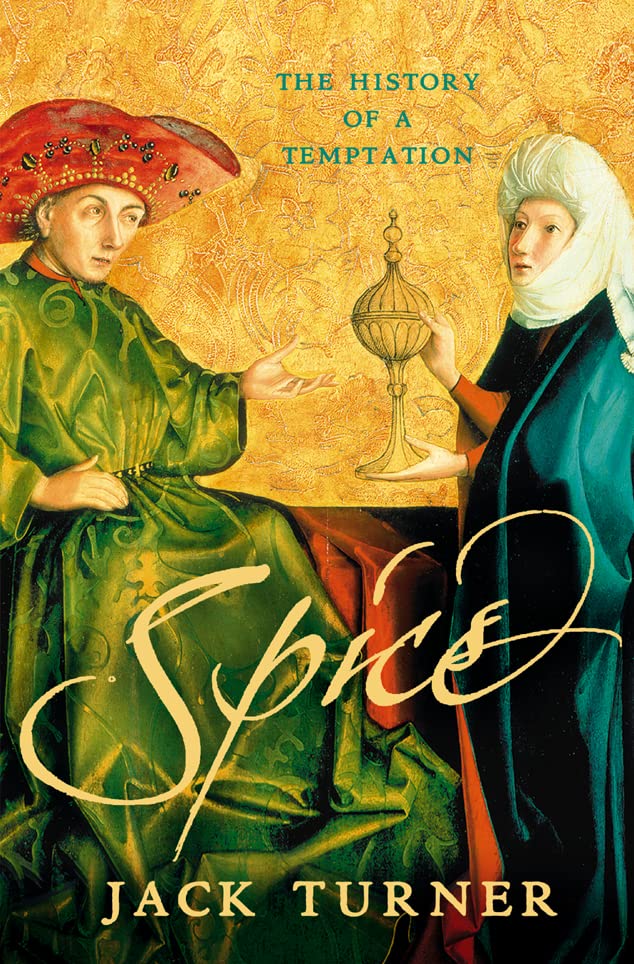
About Spice by Jack Turner: The History of a Temptation and the Flavours That Changed the World
Spice by Jack Turner carries readers far beyond the kitchen shelf. Its full title, Spice: The History of a Temptation, points to the book's main question: why did pepper, cinnamon, cloves, nutmeg, mace, and ginger once fill people with such wonder and desire? Today, many of these spices are cheap and easy to find. In earlier ages, they could mean wealth, medicine, faith, romance, danger, and power.
Turner follows their story from the ancient world through medieval Europe and the age of ocean travel. He shows how spices crossed great distances before maps were complete or travel was safe. Merchants risked money and life, rulers dreamed of control, and sailors searched for direct routes to distant growing lands. Small, dry plants helped connect Asia, Africa, Europe, and the Americas.
This is not only a history of buying and selling. It is a story of human appetite. Turner asks what people believed spices could do to food, bodies, love, health, worship, and the soul. The answers are sometimes useful, sometimes strange, and often surprising.
When a common ingredient hides a huge story
A jar of pepper looks ordinary now. It may sit beside salt and receive little thought. That makes it hard to imagine a time when people locked spices away, offered them in sacred rites, used them in medicine, and paid high prices to bring them across the world.
Many history books begin with kings, wars, and dates. This book begins with smell, taste, fear, hope, and desire. It uses familiar ingredients to explain larger changes. A simple meal can lead into questions about trade. A cure can reveal old ideas about the body. A sweet scent can open a path toward religion, status, or love.
What is Spice by Jack Turner about?
The book explains how spices gained value and meaning in many parts of life. Turner studies the people who searched for them, sold them, cooked with them, praised them, feared them, and built stories around them. He draws from history, myth, archaeology, travel writing, medicine, religion, and literature.
The first major part follows the spice seekers. It looks at the wish to reach Asian spice lands and the rivalry that grew around sea routes. Later parts move through the palate, body, love, and spirit. Readers meet ancient diners, medieval households, healers, priests, lovers, merchants, explorers, and rulers.
Follow the spice race across the world
For many centuries, valuable spices came to Europe through long chains of travel and trade. The people who used them often knew little about where they grew. Distance helped make the ingredients rare, costly, and mysterious. Stories filled the empty space left by poor information.
The search for direct access changed maps and empires. Portuguese and Spanish voyages form part of this story, followed by other European powers. The wish to control spice routes encouraged exploration, but it also brought greed, violence, conquest, and harsh rule.
Taste the ancient and medieval table
The food sections show how taste changes over time. Ancient Romans and medieval Europeans used spices in ways that may feel rich or strange today. Recipes, feasts, household records, poems, and stories help Turner rebuild a lost world of flavour.
Spices did not simply hide bad meat, a common claim that the book questions. Costly ingredients were too valuable for daily use by everyone, and wealthy households used them for pleasure, display, and fashion. A heavily spiced dish could tell guests that the host had money and wide connections.
Medicine mixed knowledge with hope
People once used spices in many remedies. Healers worked with ideas about heat, cold, balance, smell, and the movement of illness. Pepper, cinnamon, ginger, and other ingredients could appear in treatments for very different problems.
Some uses came from long observation, while others rested on beliefs that modern science does not support. Turner treats past people with care without asking readers to accept every cure. He explains why a remedy could seem sensible inside an older view of the body.
Love, desire, and the promise of heat
For centuries, many people linked spice with love and sexual power. Warmth, strong scent, rare origins, and bodily sensation made certain spices seem able to wake desire or improve performance. Wedding customs and private remedies carried these ideas forward.
Turner explores such beliefs through texts and stories, often with gentle humour. The claims reveal what people hoped for and worried about. They also show how sellers and writers could give an ordinary plant a powerful image.
This part is about cultural history, not health advice. The book studies old claims rather than proving that spice can solve modern medical or relationship problems. That clear difference lets readers enjoy the strange details while keeping fact and belief apart.
Sacred smoke and the scent of paradise
Spices entered temples, churches, burial customs, and private worship. Sweet smoke could mark a sacred place, honour the dead, welcome a god, or lift prayer upward. Rare scents seemed suited to moments that stood apart from normal life.
In some traditions, spices were connected with paradise. Their beauty and faraway origin helped people imagine a perfect garden beyond ordinary reach. This belief added spiritual wonder to commercial value. A merchant was not only selling a useful plant; the buyer could feel close to something holy or magical.
Turner follows these ideas without turning the book into a lesson for one faith. He studies how smell works in belief and memory. The result shows that history enters through the nose as well as the eye and ear.
Myths grew where knowledge was missing
Before travellers described spice plants clearly, people told amazing stories about their source. Dangerous animals, guarded valleys, strange lands, and the edge of paradise could all appear in tales. Such stories made spices more exciting and sometimes helped traders protect secrets.
Readers can watch fact and imagination meet. A real product arrived from a distant place, but its route was hidden behind many hands. The buyer knew the scent and taste while the plant itself remained unseen. Mystery increased desire.
This theme still feels fresh. Modern buyers may also want goods because of a story, name, package, or dream. Spice helps readers notice how value can grow from meaning as well as use. The objects change, but human longing often follows familiar paths.
History told through daily life
One strength of the book is its wide view. Turner can move from a royal feast to a sickroom, from a ship to a place of worship, or from an old poem to a trade dispute. Large events stay connected to what people ate, smelled, feared, and wanted.
The writing includes many unusual examples. These details keep the history lively, but they also serve a purpose. They show how deeply spices entered life. The story belongs not only to merchants and sailors but also to cooks, healers, lovers, believers, and families.
What makes this book worth opening
- A global subject links Asia, Africa, Europe, and the Americas.
- Clear themes connect spice with food, trade, medicine, love, magic, and faith.
- Ancient and medieval examples turn distant history into vivid human stories.
- Myths and written records show how people understood unknown lands.
- Exploration is presented with both its courage and its violence.
- Familiar ingredients make large economic and cultural changes easier to follow.
- Humour and curious details keep a serious subject enjoyable.
- Notes and an index support readers who want to check names or study further.
What readers can gain from the journey
First, the book can change how you see a kitchen shelf. Pepper or cinnamon may begin to look like a small piece of global history. The next meal can remind you of long voyages, changing tastes, old cures, and distant farms.
Second, it helps readers question simple stories. Exploration was not driven by one wish alone, medieval cooks did not use spice only to cover spoiled food, and old medical practice was more complex than a list of foolish ideas. Turner places common claims beside wider evidence.
Third, the book builds links between subjects often studied apart. Food history meets religion, economics meets desire, and geography meets literature. This joined view can help students form stronger questions and help general readers enjoy history as a living, connected story.
Good ways to read and use it
Spice is a strong choice for students of world history, food studies, trade, colonial history, cultural studies, and early modern Europe. It can support essays about exploration, luxury goods, medicine, faith, appetite, or the movement of ideas between regions.
General readers can take one chapter at a time. Keep a few common spices nearby, notice their smell, and mark where each one appears in the story. A map can help you trace routes between growing lands, trading ports, and European markets.
Book clubs can ask why people paid so much, which old belief seems most surprising, and whether modern products gain value through similar forms of desire. Cooks, travellers, teachers, and curious gift buyers can all find a different doorway into the same book.
Know the reading experience before ordering
This is narrative nonfiction, not a cookbook. It discusses recipes and food, but its purpose is to explain history rather than teach step-by-step cooking. It also does not offer modern medical guidance. Old cures and claims are part of the subject, not advice for personal treatment.
Some sections discuss sex, bodily concerns, disease, death, religious practice, colonial violence, and cruelty. The tone is learned and often witty rather than graphic, but the adult themes make the book better suited to mature teens and adults.
A comfortable edition for curious readers
Bookish Wonderland offers a reader-friendly copy made for steady reading, study, and later reference.
- Premium eye-soothing cream paper gives each page a soft appearance.
- Crystal-clear printing keeps names, dates, and detailed stories easy to follow.
- High-quality stitched and glue binding supports longer book life.
- A durable finish helps protect the copy at home, in class, or during travel.
Order easily from Bookish Wonderland
When comparing the Book price in Bangladesh for Spice by Jack Turner, consider the reading experience and delivery service along with cost. A good history should feel inviting when you begin and remain useful whenever you return to check a name, route, belief, or event.
Cash on Delivery is available nationwide, with delivery inside and outside Dhaka. Fast or urgent delivery is available in Dhaka when you need the book soon. Contact Bookish Wonderland through Facebook or Instagram for the current price, stock, edition, delivery time, or customization support.
Discover the world inside your spice jar
Pepper, cinnamon, cloves, nutmeg, mace, and ginger may seem ordinary today, yet they once carried dreams of pleasure, healing, holiness, wealth, and distant lands. People crossed oceans, fought for routes, made fortunes, and built myths around their scent and taste.
Spice by Jack Turner brings that lost wonder back. It turns small ingredients into a wide story about what people desire and what they may risk to obtain it. Read it to see food, travel, faith, medicine, and empire from a fresh angle.
Order Spice by Jack Turner from Bookish Wonderland today. Bring home an engaging history that can make every pinch of pepper and scent of cinnamon feel connected to centuries of human hope, invention, greed, courage, and change.
If you require any customization or have any questions, please inbox us via FB or Insta.
| Primary Specification | |
| Author | Jack Turner |
| Editor | Peter A. Andersen and Pamela G. Parker |
| Genre | Nonfiction, History, Food History, Social & Cultural History, Trade History |
| ISBN-13/ISSN | 978-0006551737 |
| ISBN-10 | 0006551734 |
| Publisher | Harper Perennial |
| Publishing Date | January 1, 2005 |
| Language | English |
| Reading Age | 16+ |
| Format | Printed Book |
| Physical Specification & Quality | |
| Paper Quality | Premium eye-soothing cream paper |
| Binding Quality | High quality stitched and glue binding (for longevity) |
| Print Quality | Crystal-clear print |
| Pages | 448 pages |
| Country | UK |
| Logistics Information | |
| Weight | 468 gm |
| Length | 8.5 inches |
| Width | 5.6 inches |
| Height | 1.1 inch |