

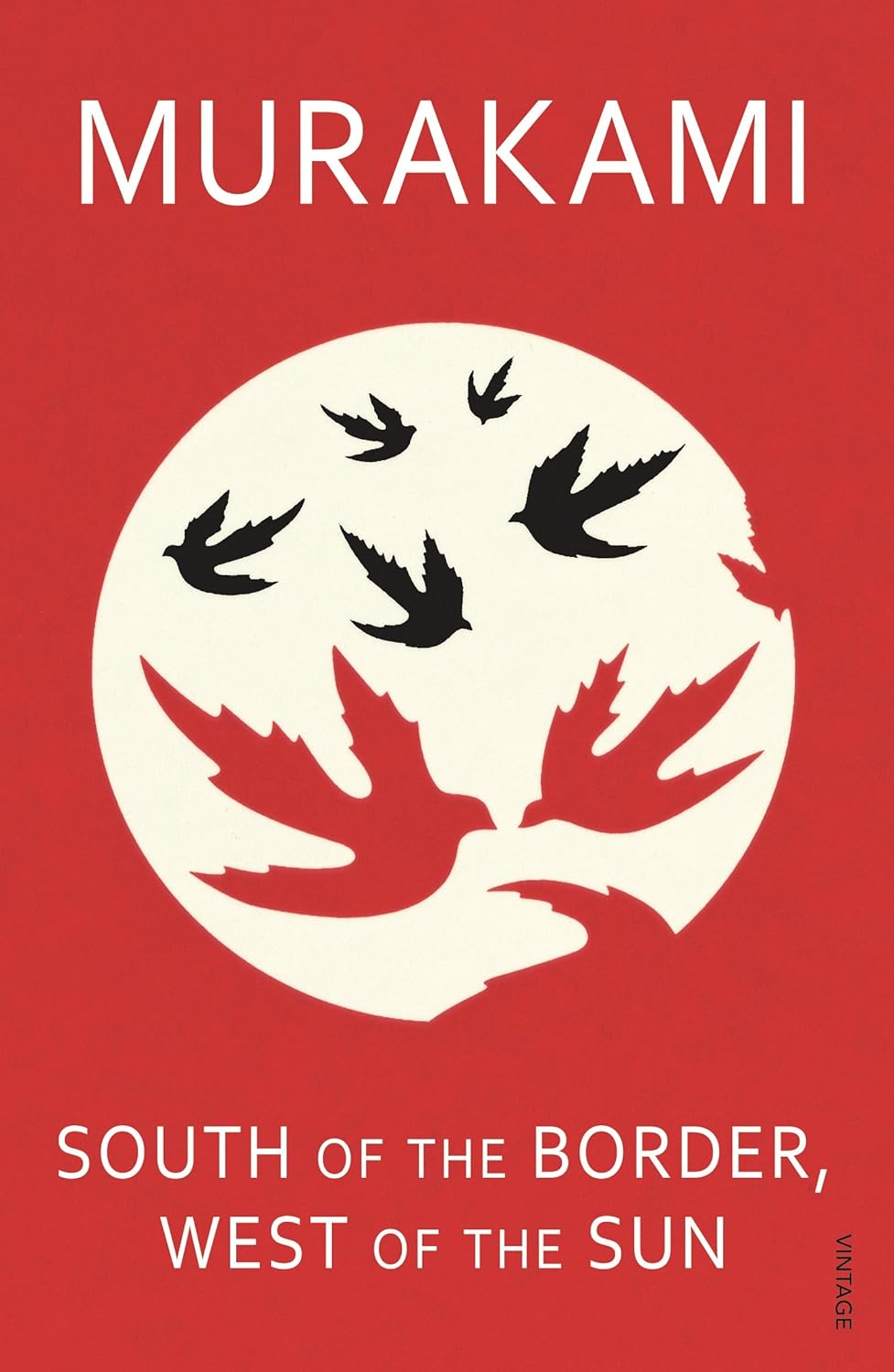
About South of the Border, West of the Sun by Haruki Murakami – A Quiet, Deep Story of Love, Memory and the Life We Almost Chose
Some love stories are about finding the right person. South of the Border, West of the Sun by Haruki Murakami is more interested in a harder question: what happens when someone from your past returns after you have already built a good life? This short, thoughtful novel follows Hajime, a man who seems to have everything he once wanted. He has a loving wife, two daughters, and successful jazz bars in Tokyo. Yet part of him still feels empty. Then Shimamoto, the girl who was his closest childhood friend, walks back into his life.
When Hajime and Shimamoto were children, both were only children. They spent quiet afternoons together, talked, listened to records, and formed a bond that stayed in Hajime’s memory long after they were separated. Years pass. Hajime grows up, makes mistakes, marries, becomes a father, and builds a successful life. But when Shimamoto returns as a mysterious adult, the old connection becomes powerful again. Hajime must face desire, memory, regret, and the danger of wanting a different life from the one he already has.
A Story About the Past That Refuses to Stay in the Past
Many people have someone they remember from childhood or youth. Sometimes that person becomes connected in our mind with a time when life felt simpler. Hajime carries that kind of memory. Shimamoto is not just an old friend to him. She represents a part of himself that he never fully left behind.
Their childhood connection is quiet. They share music, conversation, and the strange feeling of being understood by another person. When they lose contact, Hajime moves forward, but the memory does not disappear. His later relationships and choices are shaped by what he remembers and by what he thinks may have been possible.
That is why Shimamoto’s return feels so dangerous. Hajime is not lonely in the normal sense. He has a family and a successful career. His problem is that success has not removed every question inside him. Seeing Shimamoto again makes those old questions feel real. The book asks whether a person should follow a powerful feeling simply because it feels true, and what may be lost when desire becomes more important than responsibility.
Simple on the Surface, Strong Underneath
Murakami tells the story in a clear and calm way. There are no large battles, complicated mysteries, or long lists of characters. Most of the tension comes from thoughts, conversations, memories, and choices. That makes the novel easy to read, but not simple to forget.
Hajime often looks at the difference between the life he has and the life he imagines. This creates a feeling many adult readers understand. A person can be thankful for family, work, and comfort while still wondering about roads not taken. The book does not turn that feeling into an easy lesson. Instead, it lets the reader sit with the uncertainty.
This is one reason the novel works well for readers who enjoy emotional and literary fiction. The language feels smooth, but the ideas stay in the mind. You may finish a chapter quickly and then spend much longer thinking about why Hajime acted in a certain way, whether Shimamoto can be fully understood, and whether memories become more beautiful because they are incomplete.
Music Gives the Novel Its Mood
Music is important throughout South of the Border, West of the Sun. Hajime and Shimamoto first become close while listening to records together, and music remains connected with memory, desire, and the quiet mood of the story.
This fits Hajime’s adult life as well. He becomes the owner of jazz bars, places built around sound, atmosphere, late nights, and private conversations. The setting gives the novel a soft, almost dreamlike feeling. You can imagine dim lights, a record playing, glasses on a table, and two people speaking about things they have carried for years.
Readers who love music may enjoy this part of the book especially. Murakami often uses songs and records as emotional markers, but you do not need to know jazz to understand what they mean. The music works like memory. A song can take a person back to another place in seconds, just as Shimamoto takes Hajime back to the person he once was.
Love, Desire and the Cost of Choice
At the center of the novel is a difficult emotional conflict. Hajime loves his family, yet he is deeply drawn to Shimamoto. The book does not make this conflict clean or comfortable. That is part of its strength.
Hajime’s wife and daughters are not just background details. They represent a real life built through years of choices. Shimamoto represents something different: mystery, possibility, lost youth, and a feeling that cannot easily be explained. Hajime begins to move between these two worlds, and the reader can see that every choice has a cost.
This makes the novel much more than a simple romance. It is about desire, but also about responsibility. It asks whether wanting something strongly makes it right. It explores how people can hurt others while chasing something they believe they need. It also shows how memory can make the past feel perfect even when the truth may be more complicated.
Shimamoto and the Power of Mystery
Shimamoto is one of the main reasons the story keeps its strange pull. Hajime remembers her clearly from childhood, but the adult woman who returns is much harder to understand. She appears and disappears. She does not explain everything about her life. Her mystery becomes part of Hajime’s attraction.
For the reader, this creates uncertainty. We see Shimamoto mostly through Hajime, which means we are always close to his feelings and guesses. We know how powerful she seems to him, but we do not always know what she wants or what parts of her story remain hidden.
This uncertainty suits Murakami’s style. The novel is grounded in ordinary life, yet there is always a small feeling that something cannot be fully explained. The result is not a puzzle that needs one correct answer. It is an emotional mystery, where part of the reading experience comes from accepting that another person may never be completely known.
A Short Novel With Big Questions
One of the best things about South of the Border, West of the Sun is that it does not need a huge number of pages to explore large ideas. Depending on the edition, it is a relatively short novel, making it a good choice for readers who want serious literary fiction without starting a very long book.
The story touches on loneliness, marriage, desire, memory, regret, identity, and middle age. It asks what success means when a person still feels something is missing. It also looks at the difference between having a comfortable life and feeling completely alive.
These themes make the book useful for slow reading and rereading. A younger reader may focus on the romance and the lost childhood bond. An older reader may notice more about marriage, responsibility, and the fear of looking back at choices that cannot be changed. The same story can feel different depending on where you are in your own life.
A Good Starting Point for Haruki Murakami
Readers who are curious about Haruki Murakami but do not want to begin with one of his longest novels may find this book a strong starting point. It contains many things associated with his fiction: music, loneliness, memory, quiet urban spaces, emotional distance, mysterious women, and the feeling that ordinary life can suddenly become strange.
At the same time, the plot is easier to follow than some of his more surreal works. The focus stays close to Hajime and his relationships. This makes the book approachable for readers who normally read romance, contemporary fiction, or relationship stories but want to try modern Japanese literary fiction.
Who Should Read This Book?
South of the Border, West of the Sun is best suited to readers who enjoy thoughtful romance, literary fiction, Japanese fiction, and stories about complicated adult relationships. It may also appeal to people who like novels about old love returning, second chances, marriage, regret, and the choices that shape a life.
It is a good weekend read for someone who wants a book that can be finished fairly quickly but still offers plenty to think about afterward. It can also work well for book clubs because readers may disagree strongly about Hajime’s actions and about what the ending means.
Fans of calm, emotional stories may enjoy the soft pace. Readers who prefer constant action, crime, or fast twists should know that this book works differently. Its tension comes from feelings and decisions rather than outside danger.
A Premium Copy for Comfortable Reading
Bookish Wonderland offers this title for readers who want a comfortable physical copy for regular reading and long-term keeping. The edition uses premium eye-soothing cream paper, giving the pages a softer tone that is pleasant during longer reading sessions.
Crystal-clear printing helps the text stay sharp and easy to read. The book also uses high-quality stitched and glue binding, designed to give the copy better strength and longevity through normal use. These features work together to create a reader-friendly book that feels suitable for personal reading, gifting, collecting, or keeping on a home shelf.
The quality matters especially with a novel like this because many readers may want to return to certain scenes, thoughts, or conversations after finishing the story.
Easy Ordering Across Bangladesh
Readers looking for South of the Border, West of the Sun by Haruki Murakami price in BD can order through Bookish Wonderland with delivery available across Bangladesh. Customers can order from Dhaka or from other districts, and Cash on Delivery is available nationwide.
For customers in Dhaka who need the book sooner, a fast or urgent delivery option is available. This can help when you need a quick gift, want the book before a trip, or simply do not want to wait long to begin reading.
When comparing Book price in Bangladesh, it is useful to look at more than the price alone. Paper comfort, print clarity, binding quality, and reliable delivery all affect the value of a physical book, especially one you may keep for years.
A Quiet Book That May Stay With You
South of the Border, West of the Sun is not loud, but its questions are powerful. Hajime has built a life many people would call successful, yet the return of one person makes him question what he wants, what he remembers, and what he may be willing to lose.
That is the heart of the novel. It shows how the past can return without warning and how desire can make even a stable life feel uncertain. It also reminds us that every path we choose means leaving another path behind.
Order South of the Border, West of the Sun by Haruki Murakami from Bookish Wonderland if you want a thoughtful novel about love, memory, longing, and difficult choices. With nationwide delivery, Cash on Delivery, premium cream paper, clear printing, durable binding, and fast delivery options in Dhaka, it is easy to bring this quiet Murakami classic to your shelf. Start reading and discover why a simple reunion can change the way one man sees his entire life.
If you require any customization or have any questions, please inbox us via FB or Insta.
| Primary Specification | |
| Author | Haruki Murakami |
| Translator | Philip Gabriel |
| Narrator | Eric Loren |
| Genre | Literary Fiction, Contemporary Romance, Psychological Fiction |
| ISBN-13/ISSN | 978-0679767398 |
| ISBN-10 | 0679767398 |
| Publisher | Vintage |
| Publishing Date | March 14, 2000 |
| Language | English |
| Reading Age | 18+ |
| Format | Printed Book |
| Physical Specification & Quality | |
| Paper Quality | Premium eye-soothing cream paper |
| Binding Quality | High quality stitched and glue binding (for longevity) |
| Print Quality | Crystal-clear print |
| Pages | 213 pages |
| Country | Japan |
| Logistics Information | |
| Weight | 233 gm |
| Length | 8.5 inches |
| Width | 5.6 inches |
| Height | 1 inch |