

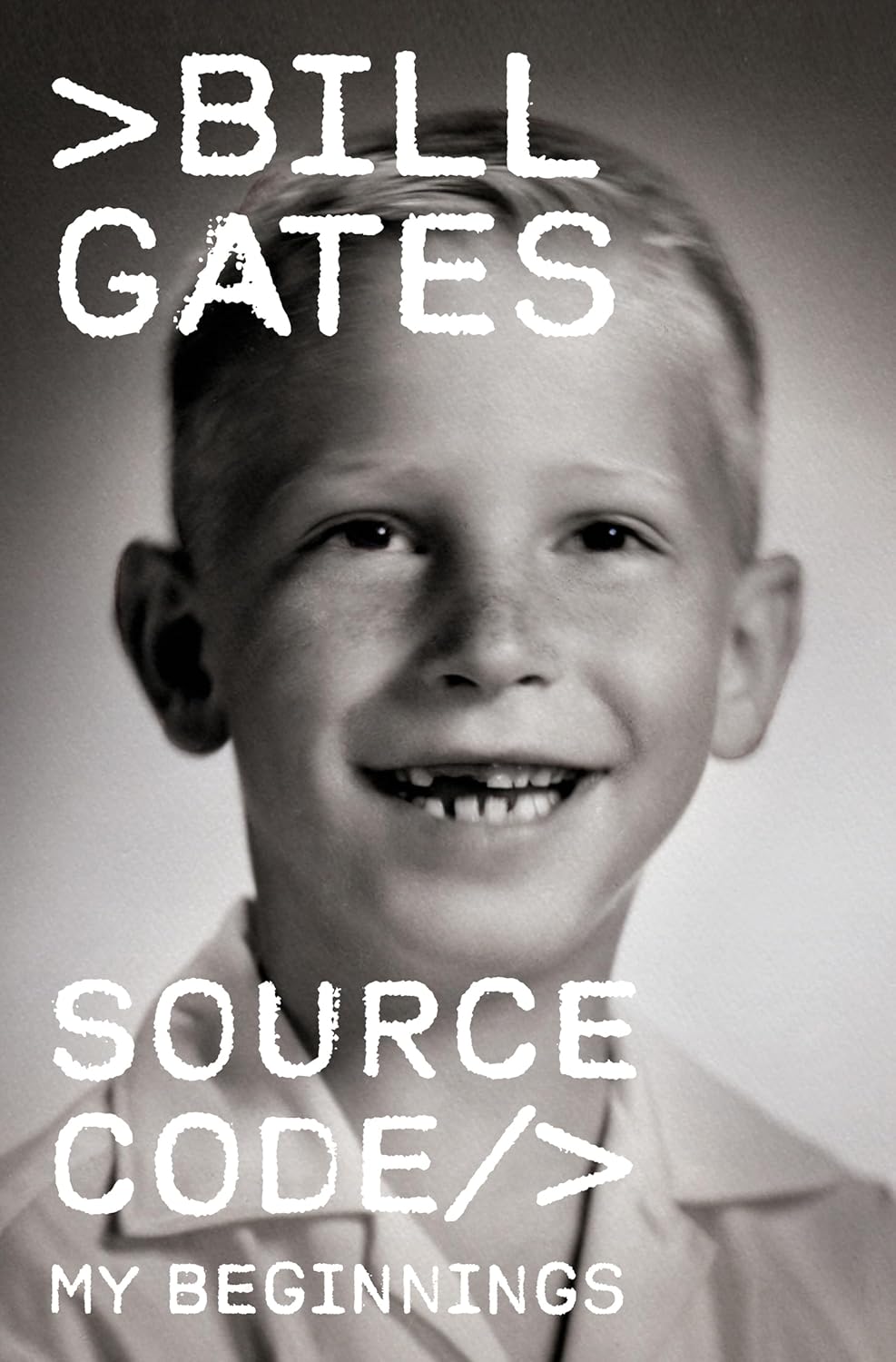
About Source Code by Bill Gates – The Personal Story Behind a Mind That Helped Change Computing
Source Code by Bill Gates is not a book about how to become rich, build a giant company, or predict the future of technology. It is something more personal. In this memoir, Bill Gates looks back at the years that shaped him before Microsoft became one of the most important technology companies in the world. He writes about childhood, family, school, friendship, loss, computers, ambition, mistakes, and the strange path that led him toward software.
The story begins long before Gates became a famous business leader. Readers meet a curious, competitive, sometimes difficult child growing up in Seattle. He loved reading, thinking, games, puzzles, and testing limits. He often wanted independence and did not always make life easy for his parents or teachers. Over time, the people around him helped him learn how to use his energy in better ways. The result is a memoir about becoming yourself before the world knows your name.
Before Microsoft, There Was a Curious Kid
Many people know Bill Gates as the cofounder of Microsoft. Source Code asks a different question: what was he like before all of that happened?
Gates looks back at his home, parents, sisters, grandparents, teachers, friends, and school years. He describes a childhood filled with books, competition, curiosity, and a strong need to understand how things worked. He was bright, but he was not always easy. He argued, pushed rules, and wanted control over his own time.
For readers, this creates a useful message without turning the book into a self-help guide. Talent matters, but the people, opportunities, mistakes, and lessons around a young person can matter just as much.
The Moment Computers Entered His Life
One of the most important parts of Source Code is Gates’s first contact with computers. He attended Lakeside School in Seattle, one of the rare schools at the time where students could gain access to computing. For a teenager who loved logic and puzzles, this new world was hard to resist.
That interest quickly became more than a hobby. He spent long hours learning, testing programs, fixing mistakes, and looking for more chances to use computers. The book shows how early access, deep curiosity, and repeated practice came together.
Readers interested in technology may enjoy seeing computing before it became normal. Younger readers can also see that even famous innovators had to begin with basic skills, errors, and many hours of learning.
Friendship With Paul Allen Changes the Direction
Paul Allen is one of the most important people in Gates’s early story. Their shared interest in computers became the foundation of a partnership that eventually created Microsoft.
Source Code looks at how the two young men learned together, challenged each other, and noticed opportunities in the fast-changing computer world. Their skills were not identical, and their personalities were different, but they shared a belief that software would become extremely important.
A famous turning point came in late 1974, when Allen showed Gates an issue of Popular Electronics featuring the Altair 8800. They saw the machine as a sign that personal computers were arriving. Instead of simply reading about the change, they wanted to be part of it.
That moment helped push them toward building software for the new computer market. Their work on BASIC became an early step toward Microsoft. The memoir makes this period feel less like a finished piece of business history and more like a group of young people trying to move quickly before an opportunity disappeared.
Loss Is Part of the Story Too
Source Code is not only about computers and ambition. Gates also writes about painful memories, including the sudden death of a close friend when he was a teenager.
Gates writes from the viewpoint of an older man looking back. This allows him to connect memories that may not have seemed connected when he was young. He can see how family, school, friendship, grief, competition, and computers slowly formed parts of the person he later became.
For readers who expect only a technology story, these sections may be surprising. They make the book more human and help explain why Gates describes Source Code as the story of his beginnings rather than the story of Microsoft.
Harvard, Risk, and a Very Different Future
Gates eventually entered Harvard, but the growing personal-computer industry pulled his attention away from a normal university path. The possibility of building software felt too important to ignore.
This part of the memoir shows a young person facing a difficult choice. Staying at Harvard offered a respected and safe path. Leaving to focus on software involved uncertainty. Gates and Allen did not know exactly how large the industry would become. They believed strongly enough in the opportunity to act before the answer was obvious.
The story is useful for readers interested in entrepreneurship because it shows that big decisions often happen before success is guaranteed. Gates was not choosing between failure and a known billion-dollar company. He was choosing between one clear path and another path that looked exciting but uncertain.
That distinction makes the early Microsoft story more meaningful. The outcome is famous now, but the people making the original decision did not have the benefit of knowing the ending.
This Is Not a Business Manual
Readers looking for a list of management rules should know what Source Code is before buying it. Gates is not giving a step-by-step guide to starting a company. He is telling the personal story of how his habits, relationships, interests, and early experiences led toward Microsoft.
This more honest view can help readers understand success without making it look simple. It shows that achievement is usually built from many pieces rather than one secret formula.
Why Students and Young Readers May Enjoy It
Source Code can be especially interesting for students who are curious about technology, coding, business, innovation, or entrepreneurship. The book begins with Gates as a child and teenager, so much of the early story happens before he has money, power, or a famous name.
That makes his curiosity easier to understand. He reads, experiments, competes, makes friends, breaks rules, and becomes deeply interested in one field. Students can see how a strong interest can grow when someone keeps learning.
The memoir also shows the value of teachers and mentors. Gates has written about educators who saw his potential even when his behavior made him difficult. They gave him responsibilities and created space for him to explore.
This does not mean every student should become a programmer or leave university. The stronger lesson is that learning becomes powerful when curiosity, opportunity, effort, and good guidance meet.
A Different View of a Famous Public Figure
Bill Gates has been in public life for decades, but Source Code focuses on the years before most people knew who he was. That changes the way readers see him.
Instead of beginning with wealth or global influence, the memoir begins with family arguments, school, friendships, cards, books, hiking, computer rooms, and teenage experiments. The famous future is always in the reader’s mind, but the young Gates inside the story does not yet know exactly where his interests will lead.
This creates one of the book’s strongest pleasures. Readers can watch small moments gain importance. A school computer becomes a doorway. A friendship becomes a company partnership. A magazine cover becomes a business opportunity. A childhood habit becomes part of an adult working style.
The title Source Code fits this idea well. In programming, source code contains the instructions behind software. In the memoir, Gates is looking for the experiences and people behind the person he became.
Who Should Read Source Code?
This memoir is a strong choice for readers who enjoy biographies, technology history, business stories, personal development, entrepreneurship, education, and true stories about famous people before fame.
It may also suit parents and teachers who are interested in how unusual interests develop in children. Gates openly describes being restless, competitive, independent, and difficult at times. The book shows how adults around him tried to guide those traits instead of simply removing them.
Technology readers can enjoy the early computing history. Business readers can see the beginnings of Microsoft. General readers can focus on family, friendship, loss, ambition, and growing up.
Because the writing is personal rather than highly technical, you do not need to know programming to follow the story. The computers matter, but the main subject is the person learning to use them.
A Premium Copy for Comfortable Reading
Bookish Wonderland offers Source Code for readers who want a comfortable physical copy for regular reading, study, gifting, or collecting. The edition uses premium eye-soothing cream paper, giving the pages a softer background for long reading sessions.
Crystal-clear printing keeps the text sharp and easy to follow. High-quality stitched and glue binding supports better strength and longevity, helping the pages remain secure through repeated reading and normal shelf use.
These features are useful for a memoir you may want to underline, revisit, or keep as part of a biography, technology, or business collection. The goal is simple: a durable reading copy that lets you focus on Gates’s story without poor print or weak construction getting in the way.
Easy Ordering Across Bangladesh
Readers checking Source Code by Bill Gates price in BD can order through Bookish Wonderland with nationwide delivery. Customers in Dhaka and other districts can place an order without needing to visit a physical shop.
Cash on Delivery is available across Bangladesh. Readers in Dhaka can also ask about fast or urgent delivery if the book is needed sooner for a gift, class, business reading list, trip, or personal collection.
When comparing Book price in Bangladesh, it is worth considering the whole physical reading experience. Paper quality, clear printing, secure binding, and reliable delivery can all matter when you plan to keep a book for a long time.
Start With the Story Before the Success
Source Code is interesting because the ending is already famous. We know Microsoft became enormous. We know Bill Gates became one of the best-known technology leaders in the world. The memoir asks readers to forget that outcome for a while and look at the years when none of it was certain.
You meet a child who wants independence, a teenager fascinated by computers, a friend learning alongside Paul Allen, and a college student facing a new industry that barely exists. You also see grief, family conflict, mistakes, mentors, luck, intense work, and moments when a small decision begins to change everything.
That makes Source Code more than a business origin story. It is a book about how a person develops. It shows how interests can become skills, how friendships can shape direction, and how opportunities matter most when someone is ready to act on them.
Order Source Code by Bill Gates from Bookish Wonderland if you want a personal, readable look at the early life behind one of technology’s most famous names. With nationwide delivery, Cash on Delivery, premium cream paper, crystal-clear printing, durable binding, and fast delivery options in Dhaka, adding this memoir to your shelf is simple.
If you require any customization or have any questions, please inbox us via FB or Insta.
| Primary Specification | |
| Author | Bill Gates |
| Narrator | Bill Gates, Wil Wheaton |
| Editor | Michael Collica |
| Genre | Memoir, Autobiography, Biography & Memoir, Technology/Business History. Penguin Random House categorizes the work as the personal origin story of Gates rather than a conventional Microsoft business history |
| ISBN-13/ISSN | 978-0593687468 |
| ISBN-10 | 0593687469 |
| Publisher | Vintage |
| Publishing Date | February 3, 2026 |
| Language | English |
| Reading Age | 18+ |
| Format | Printed Book |
| Physical Specification & Quality | |
| Paper Quality | Premium eye-soothing cream paper |
| Binding Quality | High quality stitched and glue binding (for longevity) |
| Print Quality | Crystal-clear print |
| Pages | 336 pages |
| Country | USA |
| Logistics Information | |
| Weight | 356 inches |
| Length | 8.5 inches |
| Width | 5.6 inches |
| Height | 0.76 inch |