

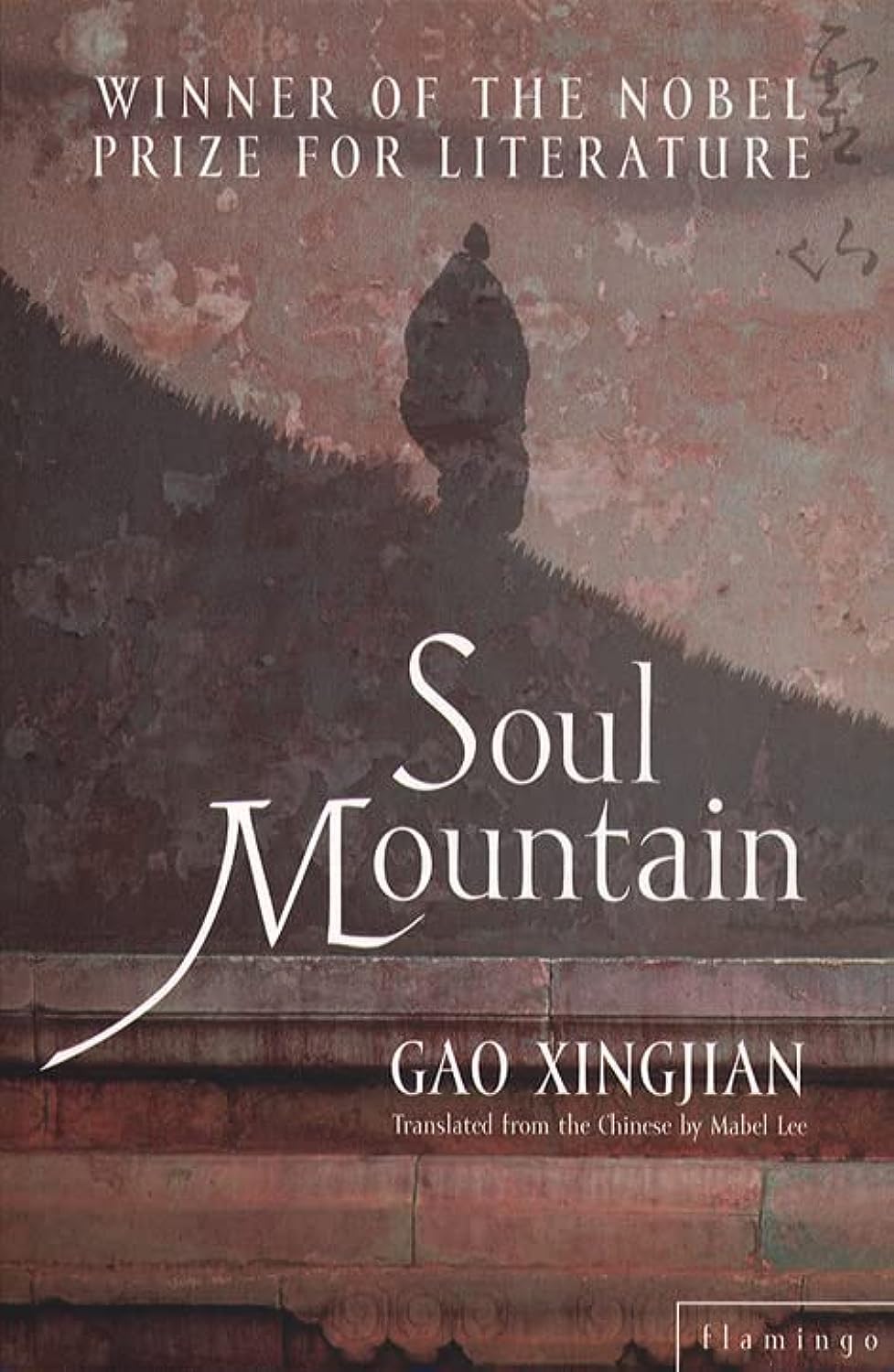
About Soul Mountain by Gao Xingjian: A Nobel Laureate’s Deep Journey Through Nature, Memory, Freedom, and the Self
Soul Mountain by Gao Xingjian takes readers on a long journey through the forests, rivers, villages, and old stories of China. A traveller hears about a hidden place called Lingshan, or Soul Mountain. The name pulls him forward, even though nobody can give him a clear map. His search soon becomes more than a trip to one mountain. It becomes a deeper search for freedom, truth, peace, and a self that belongs to no crowd.
The novel is partly shaped by Gao’s own travels. After a frightening lung cancer diagnosis was found to be wrong, he left his familiar life and moved through remote parts of China. In the book, the road passes through beautiful land and communities that hold folk songs, myths, beliefs, and painful memories. Nature offers wonder, but signs of damage, control, fear, and loss are never far away.
This is not a simple story with one hero moving from point A to point B. The voice changes between “I,” “you,” “she,” and “he.” Time shifts, memories return, and a meeting may feel real, dreamed, or imagined. These changing voices allow one person to speak with different sides of himself while asking a powerful question: who are you when the world stops telling you what to be?
When a normal travel story is not enough
Some travel books show famous places, tell readers what happened, and move on. They may describe a road without exploring the mind of the person walking on it. Other serious novels talk about history but forget the smell of wet trees, the sound of a song, or the fear held inside one memory.
Soul Mountain brings these parts together. It offers a physical journey, an inner search, local stories, history, dreams, nature writing, and deep thought in one large work. The changing form may feel strange at first, but it creates space for feelings that a straight plot cannot easily hold.
Readers who feel tired of predictable stories can find something rare here. The novel asks them to listen, notice, question, and wander. It does not give one quick answer. Instead, it makes the act of searching meaningful.
What is Soul Mountain about?
A man travels through rural China while trying to escape pressure, illness fears, and the rules of public life. During a train journey, he hears about Lingshan. The place sounds real, yet it also carries the pull of a dream. He begins moving toward it through forests, river lands, nature reserves, villages, temples, and places marked by old belief.
Along the way, he meets many people and hears their stories. Some speak about love or family. Others carry memories of violence, political campaigns, or traditions that may soon disappear. Folk songs, local tales, spiritual ideas, and everyday talk enter the book beside the traveller’s own thoughts.
Another voice, called “you,” moves through a journey with “she.” Their talks explore desire, trust, fear, loneliness, and the stories people create about each other. The voices may seem separate, but they also feel like parts of one mind. The mountain remains ahead while the deeper search turns inward.
Why do the voices change between I, you, she, and he?
The unusual pronouns are one of the novel’s main features. “I” can speak as the direct self. “You” creates distance, as if the mind steps outside and watches itself. “She” brings another person into the story, but she can also reflect desire, pain, or imagination. “He” adds even more distance.
This method may seem hard when you begin. After a while, it can feel like hearing different rooms inside one person. People often speak to themselves, remember an older self, imagine another choice, or hide feelings they cannot say aloud. Gao turns that common inner movement into the shape of the novel.
The changes also protect the book from one fixed truth. A story may alter when another voice tells it. A memory may be honest but incomplete. Readers must decide how the pieces relate, which makes reading an active experience rather than a passive one.
Nature is more than a pretty background
Forests, mountains, rivers, rain, animals, mist, and changing weather fill the book. Gao gives close attention to the living world, allowing a path or sound to slow the traveller and change his mood. The land often feels older than the human arguments carried across it.
Nature can offer calm, but it is not only gentle. Wild places can confuse, frighten, or test the traveller. He may feel free in a forest and small beside a river. The natural world does not explain itself for human comfort.
The novel also notices damage. Modern growth and human control can threaten old forests, animals, and ways of life. This gives the journey an environmental meaning. The traveller is not simply collecting lovely views; he is seeing what may be lost when speed, power, and profit reach every place.
History enters through personal memory
Memories of the Cultural Revolution and other political pressures appear throughout the journey. The novel does not teach this history like a school guide. It shows how public events enter private lives through fear, silence, damaged trust, lost work, and things people are afraid to remember.
Gao knew what it meant to work under strict cultural control. His fiction values the individual voice because systems can demand that people speak, think, and create in approved ways. The traveller’s wish to be alone is therefore not empty selfishness. It is a wish to keep an inner life safe.
At the same time, the book does not give one easy political speech. It remains interested in human weakness, desire, cruelty, and confusion beyond any single system. Its strongest defence is the freedom to observe and speak without becoming the voice of a group.
Mabel Lee carries the journey into English
Soul Mountain was written in Chinese, and the English edition was translated by Mabel Lee. Her work carries the changes in voice, folk material, poetic images, and long movements of thought into English. This is important because the novel depends on sound and perspective as much as event.
The translation lets English-language readers enter a work rooted in Chinese places and forms without making it feel like a simple Western travel tale. Names, beliefs, songs, and cultural details remain part of the reading experience.
Different editions may have different page counts, covers, and publishing details. Buyers who need a specific ISBN or publisher should ask Bookish Wonderland to confirm the available edition before ordering. The central reading experience remains Gao’s novel in Mabel Lee’s English translation.
Why this Nobel laureate’s novel still stands apart
Gao Xingjian received the Nobel Prize in Literature in 2000. The award honoured his body of work, including fiction and drama, rather than giving a separate prize to Soul Mountain. However, the novel holds a central place in discussions of his writing because of its bold form and personal reach.
It crosses the borders between novel, travel writing, memoir, folklore, philosophy, nature writing, and dream. Instead of choosing one shape, Gao allows each kind of writing to enter when the journey needs it. That freedom makes the book difficult to compare with ordinary fiction.
The result is a work that can feel ancient and modern at once. Old songs and myths meet a mind shaped by political fear and modern doubt. A remote path becomes a place to ask timeless questions about death, love, memory, truth, art, and the right to live as one person.
What makes this book worth reading
A journey through forests, rivers, villages, temples, and remote parts of China. A search for the mysterious place called Lingshan, or Soul Mountain. Changing “I,” “you,” “she,” and “he” voices that explore the divided self. Folk songs, myths, dreams, memories, and local stories woven into the journey. Strong nature writing that shows both beauty and environmental loss. Personal views of political fear, cultural control, and the Cultural Revolution. Deep questions about freedom, solitude, love, identity, and truth. Mabel Lee’s English translation of Gao Xingjian’s original Chinese novel. A complete standalone reading experience with no earlier book required.
These features make the novel more than a search for a mountain. It becomes a wide map of one person’s mind and a record of voices that may otherwise disappear.
Who will enjoy Soul Mountain?
Choose this book if you enjoy literary fiction, philosophical novels, travel writing, Chinese literature, folklore, nature, or stories about the search for self. Readers who like experimental forms and slow, thoughtful journeys may find it especially rewarding.
It works well for university study, a serious book club, a world literature challenge, or quiet personal reading. Discussion groups can explore what the pronouns mean, whether Lingshan is real, how nature supports freedom, and why private memory can challenge official history.
This is an adult literary novel, not a light adventure. It includes political trauma, death, illness fears, violence, sexual material, disturbing memories, prejudice, and emotional pain. Readers who want a fast plot may find it demanding, while patient readers may value the rich ideas, shifting form, and scenes that continue to grow in the mind.
A reader-friendly copy for a long journey
Bookish Wonderland offers a copy designed for steady reading, study, and later return.
Premium eye-soothing cream paper gives the pages a soft appearance, while crystal-clear printing keeps long passages and small details easy to follow. High-quality stitched and glue binding supports lasting use, and a durable finish helps protect the book during travel or shelf storage.
This edition suits a personal library, university course, reading group, world literature collection, or thoughtful gift. A deep book often asks readers to move slowly and revisit earlier pages, so physical comfort matters throughout the journey.
Easy ordering from Bookish Wonderland
When comparing the Book price in Bangladesh for Soul Mountain by Gao Xingjian, consider paper comfort, print clarity, binding strength, and delivery support along with cost. The book rewards careful reading, and a comfortable copy makes it easier to remain with its paths, layered voices, and questions.
Cash on Delivery is available nationwide, with delivery inside and outside Dhaka. Fast or urgent delivery is available in Dhaka when the book is needed soon. Contact Bookish Wonderland through Facebook or Instagram for the current price, stock, edition, delivery time, or customization support.
Begin the search for your own Soul Mountain
Some journeys are measured in miles. Others are measured in memories, questions, fears, and moments of sudden peace. Gao Xingjian brings both kinds together as his traveller moves away from crowded rules and toward a mountain that may exist in the world, the mind, or both.
Follow the paths through rain, forest, river country, villages, dreams, old songs, and wounded history. Listen as one voice becomes several voices and each new meeting changes the meaning of the road. The book does not promise a simple answer, but it offers something richer: the freedom to keep searching.
Order Soul Mountain by Gao Xingjian from Bookish Wonderland today. Bring home an unforgettable work of world literature that can change how you see nature, memory, storytelling, and the quiet inner self.
If you require any customization or have any questions, please inbox us via FB or Insta
| Primary Specification | |
| Author | Gao Xingjian |
| Translator | Mabel Lee |
| Narrator | Brian Keeler |
| Genre | Literary Fiction, Literary Modernism, Semi-autobiographical Fiction, Philosophical/Travel Fiction |
| ISBN-13/ISSN | 978-0060936235 |
| ISBN-10 | 0060936235 |
| Publisher | Harper Perennial |
| Publishing Date | October 23, 2001 |
| Language | English |
| Reading Age | 18+ |
| Format | Printed Book |
| Physical Specification & Quality | |
| Paper Quality | Premium eye-soothing cream paper |
| Binding Quality | High quality stitched and glue binding (for longevity) |
| Print Quality | Crystal-clear print |
| Pages | 528 pages |
| Country | China |
| Logistics Information | |
| Weight | 549 gm |
| Length | 8.5 inches |
| Width | 5.6 inches |
| Height | 1.2 inch |