

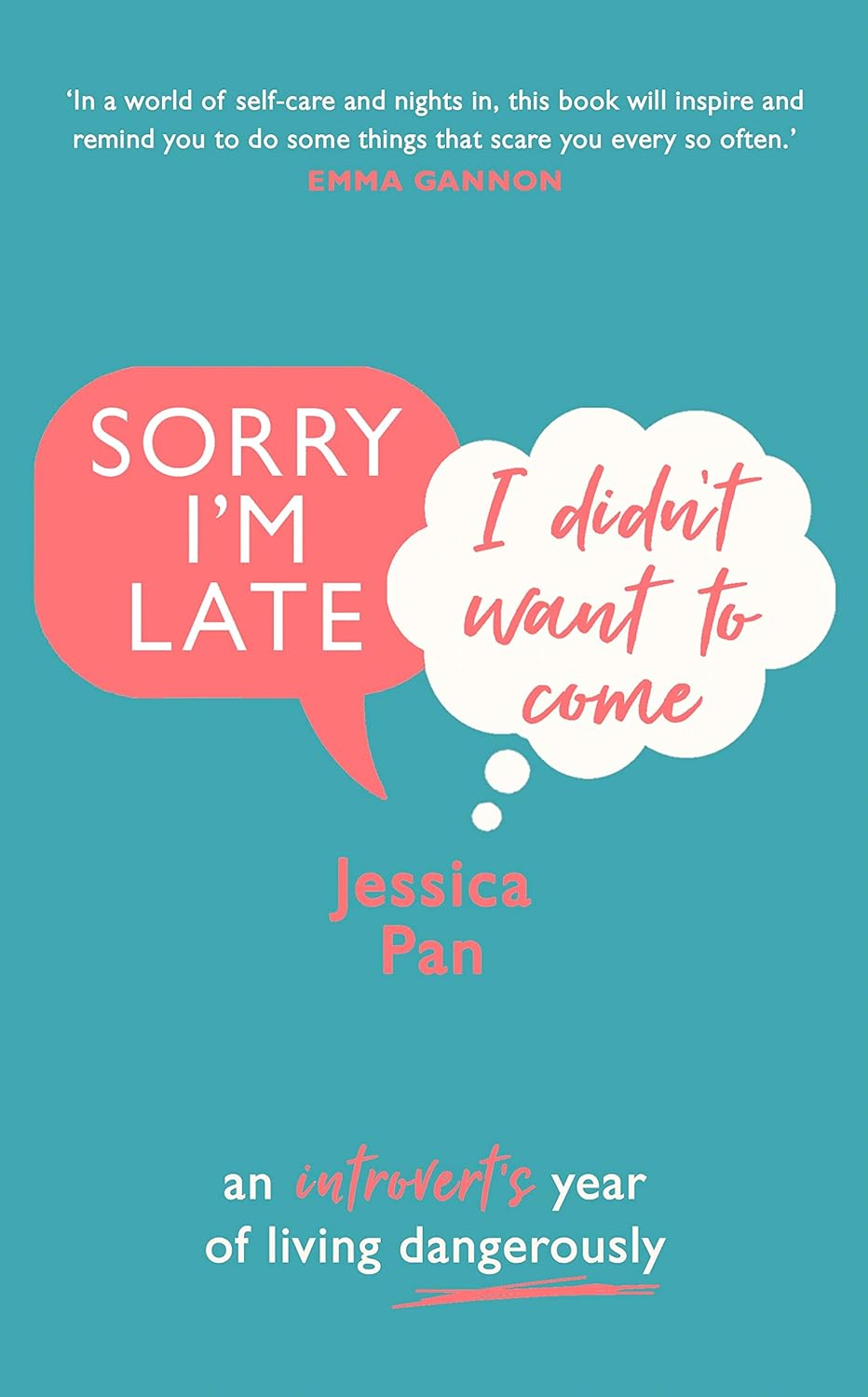
About Sorry I'm Late, I Didn't Want to Come by Jessica Pan: A Funny, Honest Year of Saying Yes Beyond the Introvert Comfort Zone
Sorry I'm Late, I Didn't Want to Come by Jessica Pan begins with a feeling many quiet people know well. Staying home feels safe, plans feel tiring, and a sofa can seem far more inviting than a room full of strangers. Jessica Pan calls herself a “shintrovert,” meaning she is both shy and introverted. Then she starts to wonder what she may be missing by always choosing the safest option.
Her answer is a brave and sometimes painful experiment. For one year, she decides to live more like an extrovert. With help from outgoing mentors, she speaks to strangers, tries to make new friends, takes improv lessons, performs stand-up comedy, hosts a dinner party, travels alone, and meets people on the road. Some efforts go well, while others bring fear, awkward silence, and comic trouble.
Pan shares what really happened. Her humour makes the hard parts easy to enter, while her honesty gives the journey real weight. The result is a book about loneliness, courage, friendship, and learning that a small uncomfortable step can open a larger life.
When staying safe starts to feel lonely
Introverts often enjoy time alone, and there is nothing wrong with needing quiet. The problem begins when fear makes every choice. A person may want a friend, a trip, a new job, or a deeper talk, yet still say no because the first step feels too hard. After many small refusals, a safe life can begin to feel narrow.
Pan reaches this point while living in London. She is not trying to prove that extroverts are better. She wants to learn whether acting with more social courage can improve parts of her life. Instead of waiting to feel ready, she builds a year around real tests. The book shows that action can come before confidence and that bravery can look nervous, messy, and funny.
What is Sorry I'm Late, I Didn't Want to Come about?
The book follows Jessica Pan through one year of “extroverting.” She chooses social challenges that she would normally avoid and seeks advice from people who understand confidence, communication, friendship, and performance. Each new task tests a different fear, from starting a small conversation to standing alone in front of an audience.
Her experiment is both personal and practical. Readers see the plan, the worry before it, the event itself, and the thoughts that follow. Pan does not turn every attempt into a neat victory. Some moments are embarrassing. Some connections do not last. Others show her that strangers can be kinder, funnier, and more open than fear suggests.
As the year moves forward, the deeper goal becomes clear. She is not trying to erase her introverted nature. She is learning how to keep the parts she values while becoming less controlled by avoidance. The story asks whether we can stretch our habits without losing ourselves, and whether saying yes at the right time can help us feel more alive.
Talking to strangers becomes the first door
A simple hello can feel huge when the mind expects rejection. Pan begins facing this fear by speaking to people she does not know. These encounters show how quickly worry can write a bad ending before a conversation has even started.
Talking to a stranger does not always create a friendship, but it can break the belief that every social risk will end in disaster. A short exchange can make a city feel less cold. It can also teach the speaker to listen, respond, and stay present instead of planning an escape.
This part of the memoir gives readers a clear, useful idea. Confidence does not need to begin with a grand speech. It can begin with one question, one honest reply, or one extra minute in a conversation. Small practice gives courage somewhere to grow.
Making friends as an adult takes real effort
Friendship often seems easy in school because people meet in the same place every day. Adult life is different. Friends move, work grows busy, families change, and meeting someone new can feel almost like dating. Loneliness may arrive even when a person lives in a crowded city.
Pan looks directly at this problem. She tries ways of meeting people and learns that friendship needs action, time, and the risk of showing interest. Someone has to send the message, suggest another meeting, or admit that they would like to stay in touch. Waiting for a perfect natural moment can mean waiting forever.
Her experiences are especially relatable for adults who have moved to a new city, work alone, or watched an old social circle become smaller. The book cannot promise an instant best friend, but it makes the search feel normal and possible in practice.
Stand-up comedy raises the stakes
Speaking to one stranger is difficult enough. Standing before a crowd and trying to make people laugh is another level of fear. Pan’s stand-up challenge becomes one of the clearest tests of her year because the audience’s response feels immediate and public.
The value of this section is not a promise that everyone should become a comedian. It shows what preparation, repeated practice, and willingness can do when a goal feels far beyond your normal identity. Pan has to shape material, face the stage, and accept that courage does not control how others react.
Her account keeps the fear human. She does not become a fearless star in one night. The reader sees the worry, work, and strange humour around the event. That honesty can encourage anyone preparing for a presentation, interview, class talk, or difficult public moment.
Travelling alone changes the shape of freedom
Solo travel can be exciting, but it removes many social shields. There may be no familiar friend to choose the restaurant, ask for help, or begin a conversation. Pan travels alone and tries to make friends on the road, placing herself in situations where she must act instead of waiting behind someone else.
The journey shows two sides of independence. Being alone can feel free and peaceful, which suits an introvert. It can also create moments when connection requires deliberate effort. Pan learns to move between solitude and company rather than treating them as enemies.
This section may speak to readers who dream about travel but worry about eating alone, getting lost, or meeting no one. The memoir does not pretend that every trip becomes magical. It shows that a person can carry fear and still cross the door.
The book respects introversion instead of trying to cure it
The title may suggest that Pan wants to become a completely different person, but her journey is more thoughtful. Introversion can include strengths such as deep focus, careful listening, rich inner thought, and comfort with solitude. These qualities do not need to disappear.
The real struggle is avoidance that blocks something genuinely wanted. A quiet evening chosen with joy is different from staying home because fear has taken control. Pan’s experiment helps separate those two experiences. She learns where her natural limits matter and where a little stretch may bring connection or growth.
This balance makes the memoir useful to introverts without telling them to act loudly all day. It also helps extroverted readers understand why common social tasks can require real effort for someone else.
What readers can take into daily life
The book offers encouragement through experience rather than perfect rules. Pan shows that a large change can begin with small, repeated actions. One conversation does not build a new social life, but it can weaken an old fear. One event may not create confidence, yet it can prove that discomfort is survivable.
Readers may also become better at noticing the stories they tell themselves. Thoughts such as “no one wants to talk” or “I will embarrass myself” can feel like facts before anything happens. Pan tests these ideas in public and learns that reality is often more mixed and more hopeful.
The greatest benefit may be permission to try badly. Growth does not require a perfect result. A person can feel awkward, make a mistake, need rest afterward, and still be proud that they showed up.
Who will enjoy this funny memoir?
Choose this book if you identify as shy, introverted, socially anxious, lonely, or simply stuck in a routine. It can also suit readers who have moved, started working from home, lost touch with friends, or reached adulthood and discovered that new relationships require planning.
Fans of personal experiments, humorous nonfiction, friendship stories, and gentle personal growth may enjoy Pan’s voice. The book works well for a weekend read, a travel bag, a book club, or a gift for someone who wants courage without a heavy lecture.
This is an adult memoir, not therapy or a medical guide. Readers facing severe anxiety or lasting distress should seek suitable professional support. The book offers one person’s lived experiment, funny observations, and practical hope rather than a cure that fits everyone.
A comfortable copy made for regular reading
Bookish Wonderland offers a reader-friendly edition designed for steady reading and later return. Premium eye-soothing cream paper gives the pages a soft appearance, while crystal-clear printing keeps Pan’s quick humour and personal reflections easy to follow. High-quality stitched and glue binding supports longer book life, and a durable finish helps protect the copy in a work bag, travel bag, or home library.
The edition suits personal reading, a reading group, a confidence journey, or a thoughtful gift. These features appear here once so buyers can understand the physical reading experience without meeting the same specifications in every section.
Easy ordering across Bangladesh
When comparing the Book price in Bangladesh for Sorry I'm Late, I Didn't Want to Come by Jessica Pan, consider paper comfort, print clarity, binding strength, and delivery support along with cost. A memoir filled with practical moments is worth keeping nearby when you need a friendly push.
Cash on Delivery is available nationwide, with service inside and outside Dhaka. Fast or urgent delivery is available in Dhaka when the book is needed soon. Contact Bookish Wonderland through Facebook or Instagram to confirm the current price, stock, edition, delivery time, or customization support before ordering.
Say yes to one brave, imperfect step
Jessica Pan begins on the sofa, wishing for more connection but fearing the work needed to find it. Her year takes her toward strangers, new friends, a comedy stage, a dinner table, and unfamiliar roads. She does not leave her whole personality behind. She learns that quiet people can still choose bold moments.
Read this memoir for the laughs, stay for its honest look at adult loneliness, and finish with a question of your own: what small yes could make life wider? You do not have to perform stand-up tomorrow. Your first step may be a message, an invitation, a class, or a simple hello.
Order Sorry I'm Late, I Didn't Want to Come by Jessica Pan from Bookish Wonderland today. Bring home a warm, funny, and relatable story that can help fear feel smaller and one possible adventure feel close enough to begin.
If you require any customization or have any questions, please inbox us via FB or Insta.
| Primary Specification | |
| Author | Jessica Pan |
| Narrator | Jessica Pan |
| Genre | Memoir, Nonfiction, Self-Help, Psychology, Humor |
| ISBN-13/ISSN | 978-1449499235 |
| ISBN-10 | 1449499236 |
| Publisher | Andrews McMeel Publishing |
| Publishing Date | May 28, 2019 |
| Language | English |
| Reading Age | 18+ |
| Format | Printed Book |
| Physical Specification & Quality | |
| Paper Quality | Premium eye-soothing cream paper |
| Binding Quality | High quality stitched and glue binding (for longevity) |
| Print Quality | Crystal-clear print |
| Pages | 272 pages |
| Country | USA |
| Logistics Information | |
| Weight | 293 gm |
| Length | 8.5 inches |
| Width | 5.6 inches |
| Height | 0.7 inch |