

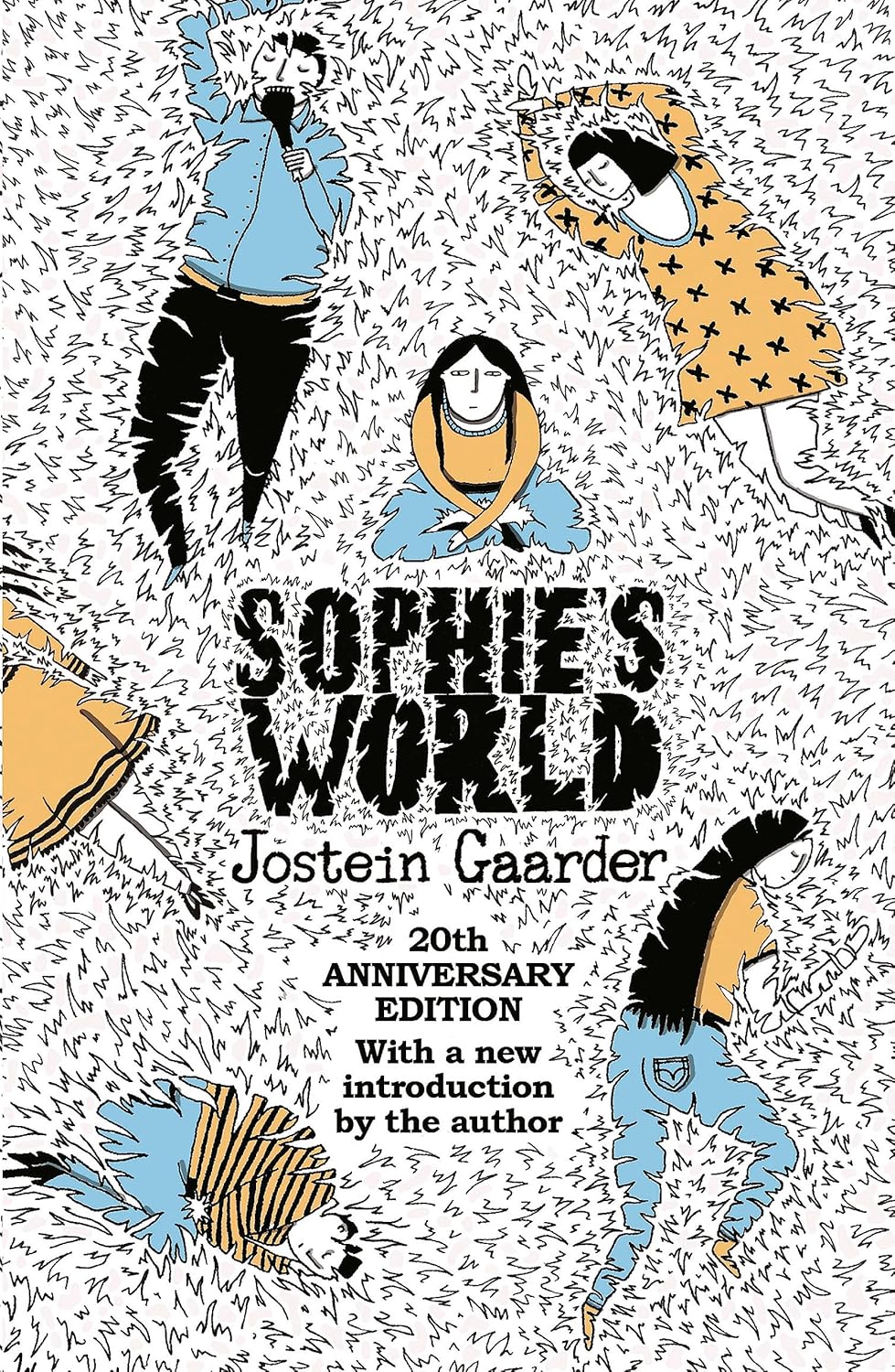
About Sophie's World by Jostein Gaarder – A Story That Turns Big Questions Into an Unforgettable Adventure
Sophie's World by Jostein Gaarder is a rare book that makes philosophy feel like a mystery you want to solve. The story follows fourteen-year-old Sophie Amundsen, an ordinary girl living in Norway. One day, she comes home and finds a strange note in her mailbox. It asks a simple question: “Who are you?” Soon another note arrives asking where the world comes from. These questions seem small, but they open a door to something much bigger.
Sophie begins receiving lessons from a mysterious philosophy teacher named Alberto Knox. Through these lessons, she learns about major thinkers and ideas from ancient Greece to modern times. At the same time, another mystery grows. Sophie keeps receiving postcards meant for a girl named Hilde. She does not know Hilde, but the messages seem connected to her own life.
The deeper Sophie goes into philosophy, the stranger her world becomes. What starts as a lesson about ideas turns into a puzzle about reality, identity, freedom, and whether the world around her is truly what it seems.
A Book for Anyone Who Has Ever Asked “Why?”
Many people think philosophy is difficult, full of hard words, or only useful in classrooms. Sophie's World solves that problem by turning ideas into a story.
Instead of giving readers a dry list of philosophers and theories, Jostein Gaarder lets Sophie learn step by step. She asks questions, gets confused, becomes curious, and keeps going. That makes the reader feel like a student beside her.
The book introduces ideas from thinkers such as Socrates, Plato, Aristotle, Descartes, Spinoza, Locke, Hume, Kant, Hegel, Kierkegaard, Marx, Darwin, Freud, Sartre, and others. You do not need to know these names before reading. The novel explains the main ideas in a simple way and connects them to everyday questions.
What is real? How do we know something is true? Do we have free will? What makes a person who they are? Where did the universe come from?
These questions make the book useful for young readers, adult beginners, students, and anyone who wants to understand philosophy without starting with a heavy textbook.
Sophie Makes Philosophy Feel Personal
Sophie is important because she is not shown as an expert. She begins as a normal teenager with school, friends, family, and daily routines.
The mysterious letters interrupt that normal life. Suddenly she has to think about things most people ignore. She begins to notice the world in a new way. A tree, an animal, the sky, or simply being alive can become a reason to wonder.
That change is one of the most enjoyable parts of the book. Sophie's lessons do not stay inside her notebook. They affect how she sees herself and the people around her.
The book quietly suggests that growing up should not mean losing your curiosity. Children often ask endless questions, but adults can become used to the world and stop wondering. Sophie learns to keep asking.
That idea makes the novel feel fresh even decades after it was first published.
A Mystery Runs Beside the Philosophy Lessons
If Sophie's World were only a simple history of philosophy, it might feel like a school book. Gaarder avoids that by building a mystery around the lessons.
Sophie does not know who is sending everything or why she has been chosen. Then the postcards for Hilde begin to appear. Hilde's father seems to know strange things about Sophie, even though Sophie has never met him.
Small details start feeling connected.
Who is Hilde? Why is her mail coming to Sophie? Who is Alberto Knox? Why do unusual events keep happening? How much control does Sophie really have over her own story?
These questions slowly change the novel. The reader begins to understand that the mystery is connected to the philosophy itself.
Ideas about reality, identity, and free will stop being only ideas. Sophie must use them to understand what is happening around her.
Learn the History of Western Philosophy Through One Story
One of the biggest benefits of Sophie's World is the amount of philosophy it covers.
The lessons move across centuries. Readers meet ancient Greek thinkers, learn about the Middle Ages and Renaissance, explore major changes in science, and move toward modern philosophy.
Gaarder does not explain every philosopher in full detail. That would make the novel too heavy. Instead, he gives readers a map. You learn who the major thinkers were, what questions they asked, and how one period of thought led to another.
For beginners, that map can be very useful.
After reading the book, names like Socrates, Plato, Kant, Hegel, Kierkegaard, Marx, Darwin, and Freud may feel less distant. A reader can then choose which thinker or idea they want to study more deeply.
This is why the novel is often useful for students as well as general readers. It gives context before deeper study.
The Story Also Asks What Reality Really Means
As Sophie's lessons continue, the book becomes more playful and surprising.
The mystery around Hilde leads Sophie toward questions that are difficult to discuss without spoiling the story. It is enough to say that reality itself becomes part of the puzzle.
This is where the novel's form becomes clever. The reader is holding a book about a girl learning philosophy, while the girl herself begins to question the nature of her own world.
That makes ideas about free will, authorship, reality, and existence feel immediate.
You may begin the novel because you want to learn philosophy. You may finish it thinking about your own life in a different way.
The book asks whether people truly choose their path, how much of life is controlled by forces outside us, and whether knowing more about the world makes us more free.
Why It Works for Beginners
The biggest fear many readers have about philosophy is that they will not understand it.
Sophie's World is built to reduce that fear.
The explanations often start from very basic questions. The language is much easier than reading original works by philosophers such as Kant or Hegel. Sophie also reacts like a learner, so the reader is allowed to be confused.
You do not need a philosophy degree. You do not need to memorize every name. You can simply follow the story and let the ideas build slowly.
Some sections are more detailed than others, so the book is not as fast as a normal thriller. But the mystery gives you a reason to continue.
For a reader who wants one friendly starting point before moving into philosophy books, Sophie's World can be a strong choice.
A Famous International Philosophy Novel
Sophie's World was first published in Norwegian as Sofies verden in 1991. The English translation by Paulette Møller followed in 1994.
The novel became an international success and has been translated into many languages. Macmillan's current 30th anniversary edition describes it as having more than fifty million copies in print.
That long reach matters because the book does something difficult. It takes a subject that can feel academic and makes it accessible to ordinary readers.
Jostein Gaarder also had experience teaching philosophy before becoming widely known as a novelist. That background helps explain why the lessons can feel organised and beginner-friendly while still fitting inside a fictional story.
A Comfortable Copy for Long Reading Sessions
Sophie's World is a book you may want to read slowly. Some chapters move quickly, while others invite you to stop and think about an idea before continuing.
Bookish Wonderland prepares this edition with premium eye-soothing cream paper, crystal-clear printing, and high-quality stitched and glue binding for better durability.
The softer cream paper is useful during longer reading sessions. Clear print helps the text stay easy to follow, especially in sections where you may want to read carefully. Strong binding helps the copy hold up through regular use, study, rereading, or note-taking.
These features also make the book suitable for a personal library, classroom use, or gifting to someone who enjoys ideas and thoughtful fiction.
Who Should Read Sophie's World?
This book is a strong match for readers who are curious about philosophy but do not know where to begin.
Teenagers and university students may enjoy it because Sophie is also learning from the beginning. Adult readers can use it as a simple return to ideas they may have heard about before.
It can also suit readers who enjoy mystery, coming-of-age stories, intellectual fiction, fantasy, or books that play with reality.
Teachers, book clubs, parents, and students may find many discussion topics inside it. The story can lead to conversations about truth, religion, science, free will, identity, society, history, and the meaning of life.
You do not have to agree with every thinker in the book. In fact, disagreement is part of the point. Philosophy begins when people ask questions, compare ideas, and think for themselves.
Looking for Sophie's World by Jostein Gaarder Price in Bangladesh?
If you are comparing the Book price in Bangladesh for Sophie's World by Jostein Gaarder, look at both the price and the reading quality.
This is not only a novel you may finish once. Many readers may want to return to certain philosophy lessons, use the book for study, or keep it as a reference when exploring other thinkers. A comfortable page, clear printing, and durable binding therefore add real value.
Bookish Wonderland aims to give readers a balance of quality and value. Check the current product listing for the latest price because book prices can change with stock, printing, and supply conditions.
Easy Ordering Across Bangladesh
Bookish Wonderland offers nationwide delivery, including addresses inside and outside Dhaka. Cash on Delivery is available across Bangladesh, making it easy to order even if you prefer not to pay online.
Fast or urgent delivery may also be available when you need the book sooner.
If you need customization or have a question about the order, you can contact Bookish Wonderland through its available Facebook or Instagram support channels.
Start With Two Questions and Enter a Much Bigger World
Sophie's World by Jostein Gaarder begins with two small questions, but those questions change everything.
Sophie starts as an ordinary teenager. Then philosophy teaches her to look again at the world she thought she knew. The mysterious Alberto Knox guides her through centuries of ideas, while the strange connection to Hilde turns the lessons into a puzzle about reality itself.
That combination makes the book special. You are not only reading about philosophy. You are watching ideas become part of a mystery.
By the time you finish, you may find yourself asking your own questions about identity, knowledge, freedom, belief, science, and existence.
If you want a book that can entertain you while also making you think, this is one of the most approachable places to begin. Add Sophie's World to your shelf, open the first mysterious letter with Sophie, and see how far one simple question can take you.
If you require any customization or have any questions, please inbox us via FB or Insta.
| Primary Specification | |
| Author | Jostein Gaarder |
| Translator | Paulette Møller |
| Narrator | Jacob Needleman |
| Editor | Maggie Goodman |
| Genre | Philosophical Fiction, Literary Fiction, Mystery, Fantasy, Coming-of-Age |
| ISBN-13/ISSN | 978-1250860491 |
| ISBN-10 | 1250860490 |
| Publisher | Picador |
| Publishing Date | October 29, 2024 |
| Language | English |
| Reading Age | 14+ |
| Format | Printed Book |
| Physical Specification & Quality | |
| Paper Quality | Premium eye-soothing cream paper |
| Binding Quality | High quality stitched and glue binding (for longevity) |
| Print Quality | Crystal-clear print |
| Pages | 544 pages |
| Country | Norway |
| Logistics Information | |
| Weight | 564 gm |
| Length | 8.5 inches |
| Width | 5.6 inches |
| Height | 1.36 inch |