

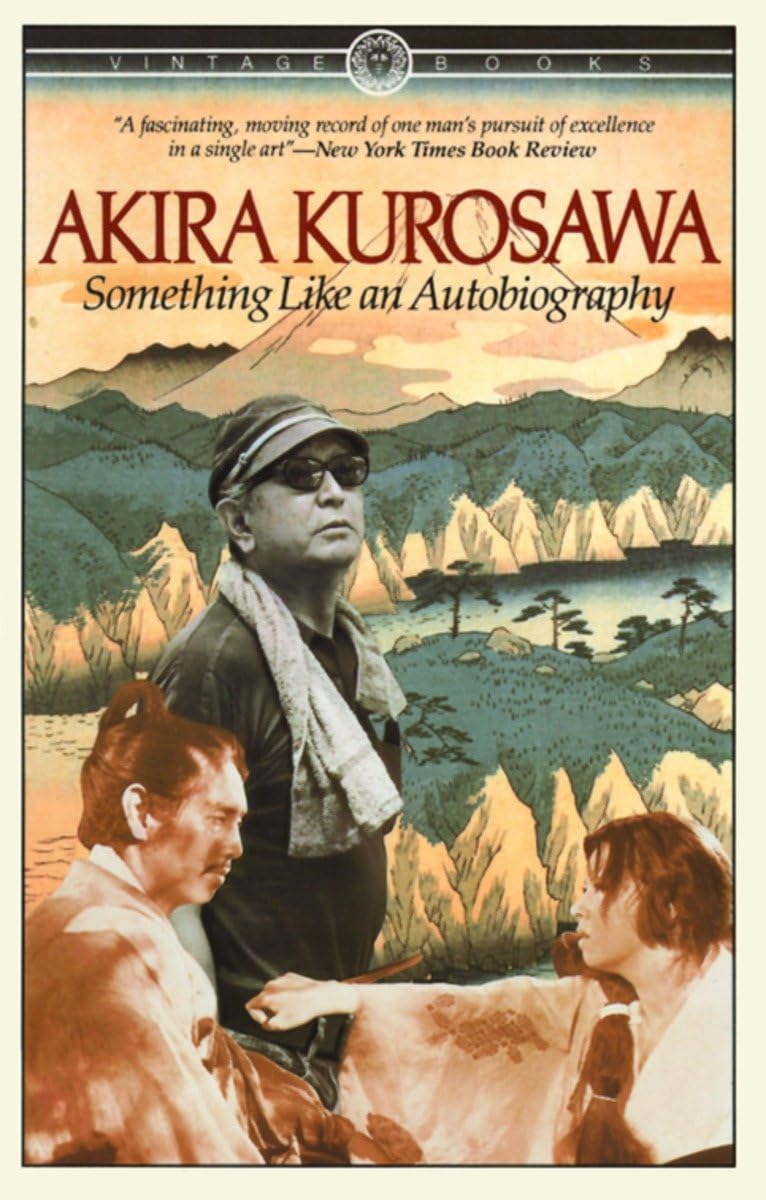
About Something Like an Autobiography by Akira Kurosawa – A Personal Journey Through Cinema, Life, and Creative Discipline
Something Like an Autobiography by Akira Kurosawa is a rare chance to hear one of world cinema’s great directors tell his own story in his own way. Kurosawa looks back on his childhood, family, school years, early struggles, artistic growth, and the road that led him into filmmaking. He writes with honesty, humor, and curiosity, showing not only the famous director he became, but also the shy boy, young artist, assistant director, and working filmmaker behind the name.
The book moves through memories rather than trying to cover every year of his life. Kurosawa explains the people who shaped him, the mistakes that taught him, and the experiences that later influenced his films. He also shares practical thoughts about scripts, directing actors, camera placement, editing, literature, and the discipline needed to make good cinema.
For film lovers, students, writers, and creative people, this is both a life story and a lesson in how artistic skill grows over time.
Meet Akira Kurosawa Before the Fame
Many readers know Kurosawa through films such as Rashomon, Seven Samurai, Ikiru, and Yojimbo. This book takes you behind those famous titles and shows where the filmmaker came from.
Kurosawa writes about growing up in Tokyo, his family, his education, and the people who affected the way he saw the world. His memories help readers understand that a great director does not suddenly appear fully formed. His eye for character, movement, conflict, and human behavior developed through ordinary life, observation, reading, painting, work, and failure.
That makes the book encouraging for young creators. You do not need to begin as a master. Kurosawa shows that creative skill can grow from curiosity, practice, discipline, and close attention to the world around you.
His memories are also personal rather than cold. He talks about teachers, friends, family members, workmates, and events that stayed with him. These small stories make the famous filmmaker feel human and easy to approach.
A Memoir That Reads Like a Conversation
The title itself is important. Kurosawa does not call the book a complete autobiography. He offers “something like” one. That choice fits the style. Instead of giving readers a strict record of every date and event, he selects memories that matter to him.
The result feels less like a formal history book and more like sitting with an experienced artist who is telling stories from his life. Some memories are funny. Some are painful. Some are about work. Others explain how a small moment later became important.
This loose structure makes the book easy to read in short sessions. You can enjoy one memory at a time and still build a larger picture of Kurosawa’s character and creative growth.
It also means readers should not expect a complete account of his whole career. The memoir mainly covers his life from childhood through the period when Rashomon brought him and Japanese cinema major international attention.
From Painting Dreams to the Film Studio
Before cinema became his life, Kurosawa wanted to be a painter. That early interest in visual art matters because his films later became famous for strong composition, movement, weather, space, and powerful images.
His path into filmmaking was not planned from childhood. He entered the Japanese film industry and began working as an assistant director. That stage became his real education.
Instead of learning only from theory, he learned by doing. He watched how films were planned, how scenes were staged, how crews worked, and how problems were solved under pressure. He also learned that directing requires far more than having good ideas. A director must understand writing, actors, images, rhythm, teamwork, and practical limits.
For anyone dreaming about a creative career, this part of the book is valuable because it shows the importance of apprenticeship. Kurosawa became better by working closely with experienced people and by taking every task seriously.
Why Screenwriting Matters So Much
One of the strongest lessons in Something Like an Autobiography is Kurosawa’s respect for the script. He believed that directors should understand screenwriting deeply rather than treating the script as someone else’s job.
The book’s additional material includes his thoughts on the importance of a strong screenplay and on scriptwriting as a key tool for directors. He also encourages wide reading, from major literature to detective stories.
That advice remains useful today. Good visual style cannot save a story that has no clear characters, conflict, or purpose. Kurosawa understood that the camera works best when there is already something meaningful to show.
Writers can learn from this too. Reading widely helps creators understand people, structure, language, emotion, and different ways of seeing the world. The lesson is simple: if you want to create strong stories, fill your mind with strong stories first.
Practical Lessons for Directors and Film Students
This memoir is not a step-by-step filmmaking textbook, but it contains many useful ideas for people who want to understand directing.
Kurosawa discusses working with actors, choosing camera positions, preparing scenes, and learning through experience. He makes filmmaking sound artistic and practical at the same time.
That balance is important. A director needs imagination, but also patience. A director needs vision, but also the ability to communicate. A beautiful idea must still become a real scene made by real people with real limits.
Film students can use the book as a companion to technical study. A camera manual can teach what a lens does. Kurosawa can help explain why a filmmaker chooses one image instead of another.
His lessons also apply beyond cinema. Writers, photographers, designers, and other creative people can learn from his focus on preparation, observation, persistence, and constant improvement.
The Road Toward Rashomon
Rashomon is one of the key points in Kurosawa’s story. The film later became internationally famous and helped draw worldwide attention to Japanese cinema.
The memoir leads readers through the years that made that moment possible. By the time success arrived, Kurosawa had already spent years learning, assisting, writing, directing, solving problems, and developing his style.
This is useful because famous success can look sudden from the outside. The book shows the long work behind it.
Kurosawa does not present creativity as magic. Ideas matter, but so do preparation and persistence. A filmmaker must keep learning even when recognition is uncertain.
For readers who admire Rashomon, the memoir gives valuable background on the person and working life behind the film. It also explains why the book stops where it does. Kurosawa chose to end around the period when Rashomon changed his international reputation rather than continuing through every later achievement.
More Than a Book for Kurosawa Fans
You do not need to have watched every Kurosawa film before reading this book. It can work as an introduction to him.
A reader who knows only one or two films can still understand the family stories, work struggles, creative lessons, and personal memories. After reading, you may want to watch his films with new attention.
The book is also useful for people interested in Japanese cultural history and twentieth-century cinema. Kurosawa lived through major social changes, and his memories offer a personal view of the world around him.
At the same time, this is not meant to be a complete history of Japan or Japanese film. It is one artist’s memory of his own path. That personal focus is part of its charm.
Who Will Enjoy Something Like an Autobiography?
This book is a strong choice for film lovers, directors, film students, screenwriters, actors, artists, writers, and readers who enjoy creative memoirs.
It suits people who want to understand how a major artist thinks about work rather than only learning facts about famous movies. It is especially useful for readers who enjoy practical lessons mixed with personal stories.
Teachers and students can also use it in film studies because it gives a direct voice from one of cinema’s most influential directors. Penguin Random House’s higher-education catalog places the book under film history, introduction to film studies, and directing.
The writing is accessible, so you do not need advanced film knowledge. The deeper your interest in cinema becomes, however, the more details you may notice.
A Premium Reading Copy from Bookish Wonderland
Bookish Wonderland offers Something Like an Autobiography as a premium reading copy designed for comfortable use. The pages use premium eye-soothing cream paper, which gives the book a softer reading surface during long sessions.
Crystal-clear printing helps names, memories, filmmaking ideas, and practical lessons stay sharp and easy to follow. The copy also uses high-quality stitched and glue binding for better longevity, helping the pages remain secure through normal reading, study, and repeated reference.
This is useful for a book you may want to return to while watching Kurosawa’s films, studying directing, or working on your own creative projects.
Something Like an Autobiography by Akira Kurosawa Price and Ordering in Bangladesh
Readers checking the Book price in Bangladesh for Something Like an Autobiography by Akira Kurosawa may also want to consider whether the physical copy is comfortable for study and repeated reading.
Bookish Wonderland provides nationwide delivery across Bangladesh, including customers inside and outside Dhaka. Cash on Delivery is available throughout the country. Readers in Dhaka can also ask about fast or urgent delivery when they need the title sooner.
This makes the book a practical choice for personal reading, film-school study, university work, gifting, or building a cinema and biography collection.
Why This Memoir Can Change the Way You Watch Films
A great film can make the finished result look effortless. This book shows the work behind that illusion.
Kurosawa’s memories remind readers that cinema is built from thousands of choices. A director has to read, observe, write, plan, listen, solve problems, work with actors, understand images, and keep learning.
After reading his thoughts, you may begin noticing different things when you watch a film. You may look more closely at where the camera stands, how actors move, how a scene begins, why one cut feels strong, or how a script prepares an emotional moment.
That is one of the biggest benefits of the book. It does not simply tell you what Kurosawa achieved. It helps you understand some of the habits and ideas behind the achievement.
Start Learning from One of Cinema’s Great Directors
Something Like an Autobiography by Akira Kurosawa is more than a record of a famous life. It is a personal guide to curiosity, craft, patience, storytelling, and the long process of becoming better at creative work.
The English edition is translated by Audie E. Bock, and the Vintage paperback runs 240 pages. It is short enough to approach easily but rich enough to reread as your knowledge of cinema grows.
Order your copy from Bookish Wonderland for nationwide delivery across Bangladesh. Cash on Delivery is available across the country, and customers in Dhaka can ask about fast or urgent delivery.
With premium cream paper, clear printing, and strong stitched-and-glue binding, this edition is made for readers who want to study, enjoy, and return to Kurosawa’s ideas. If you need book customization or have questions before ordering, contact Bookish Wonderland through Facebook or Instagram and bring home a memoir that belongs on the shelf of anyone serious about cinema and the patient work behind truly lasting art.
If you require any customization or have any questions, please inbox us via FB or Insta.
| Primary Specification | |
| Author | Akira Kurosawa |
| Narrator | Brian Nishii |
| Genre | Biography & Memoir, Film & Cinema, Performing Arts |
| ISBN-13/ISSN | 978-0394714394 |
| ISBN-10 | 0394714393 |
| Publisher | Vintage |
| Publishing Date | May 12, 1983 |
| Language | English |
| Reading Age | 16+ years |
| Format | Printed book |
| Physical Specification & Quality | |
| Paper Quality | Premium eye-soothing cream paper |
| Binding Quality | High quality stitched and glue binding (for longevity) |
| Print Quality | Crystal-clear print |
| Pages | 205 pages |
| Country | Japan |
| Logistics Information | |
| Weight | 211g |
| Length | 8.5 inches |
| Width | 5.6 inches |
| Height | 0.63 inches |