

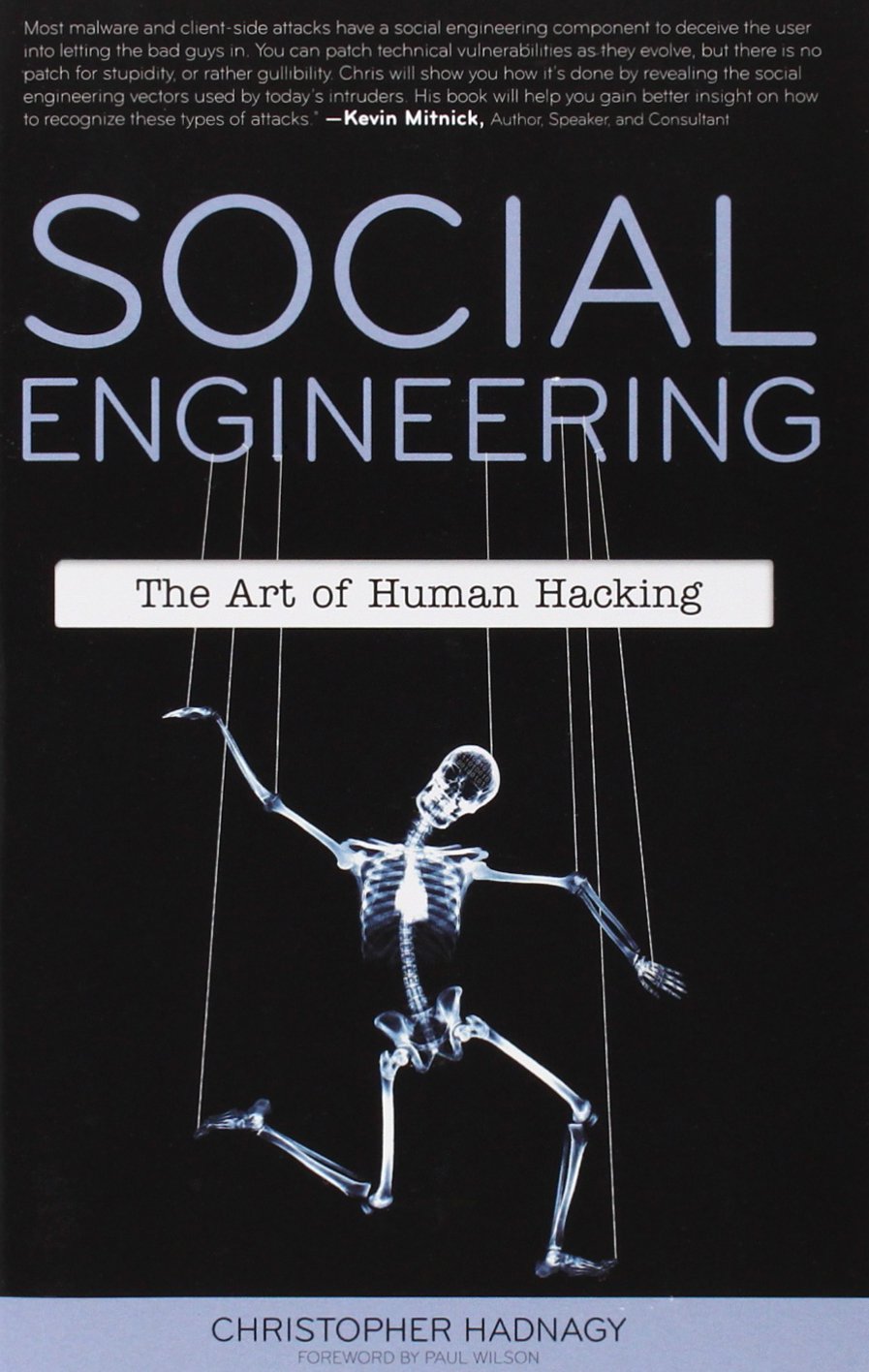
About Social Engineering by Christopher Hadnagy – Learn How Human Manipulation Works and How to Build Better Security
Social Engineering by Christopher Hadnagy is a practical cybersecurity book about one of the hardest security problems to control: people. Computers can have strong passwords, updated software, firewalls, and antivirus tools, but attackers often look for an easier route. Instead of breaking a system directly, they may try to convince a person to reveal information, open a door, trust a false story, click a harmful message, or take an action that helps the attacker.
Hadnagy explains why these attacks work and why normal human habits can become security risks. People want to be helpful. They respond to authority, urgency, fear, curiosity, friendliness, and trust. Social engineers study those reactions and use them to influence decisions. Understanding those methods can help readers notice warning signs before they become victims.
This book is useful for cybersecurity learners, IT teams, business owners, security professionals, managers, students, and anyone who wants to understand how manipulation can be used in the digital and physical world. Rather than treating security as only a technical problem, the book shows why human behavior must be part of any defense plan.
Why strong technology alone cannot solve every security problem
Many people think cybersecurity means software, passwords, encryption, and secure devices. Those tools matter, but they cannot stop every attack. A person can still be tricked into giving away information or allowing access.
That is the problem Social Engineering by Christopher Hadnagy focuses on. An attacker may not need to defeat a complex security system if an employee can be persuaded to reveal useful details. A fake phone call, believable email, convincing story, or carefully planned conversation can sometimes achieve what technical hacking cannot.
The solution begins with awareness. When people understand the methods used to influence them, they can slow down, ask better questions, verify requests, and follow safer procedures. Hadnagy helps readers look at everyday communication through a security lens. The goal is not to become suspicious of everyone. It is to recognize situations where trust is being pushed, rushed, or used against you.
For companies, this way of thinking can strengthen security training. For individuals, it can help with phishing messages, scam calls, fake identities, and other forms of manipulation that appear in daily life.
Understand the human side of cybersecurity
One of the book’s central ideas is that social engineering works because people make decisions emotionally as well as logically. Attackers may use urgency to stop someone from thinking carefully. They may pretend to be an authority figure. They may build quick trust by sounding friendly or familiar. They may ask small questions first and move toward more sensitive information later.
Hadnagy explores how communication, influence, rapport, observation, and human behavior can affect security. He also discusses common social engineering methods and how they appear in real situations. The purpose is to help readers understand what an attacker may look for and how defenders can prepare.
This makes the book useful even if you do not work as a programmer or technical security specialist. A receptionist, manager, sales employee, teacher, student, customer service agent, or small business owner can all face social engineering attempts. Anyone who handles information, accounts, money, customer data, or workplace access can benefit from learning why these attacks succeed.
Learn why phishing and impersonation can be so effective
A suspicious message is not always easy to spot. Good social engineering often works because it looks normal. The attacker may copy the style of a real company, pretend to be a coworker, claim to represent a bank, or create a believable reason for needing information quickly.
The revised Wiley edition discusses major attack vectors such as phishing, voice phishing, text-based attacks, and impersonation. These examples show that social engineering can happen through email, phone calls, messages, and face-to-face interaction.
For readers, the important lesson is not to memorize one scam. Scams change. The stronger skill is learning to notice patterns. Is someone creating unnecessary urgency? Are they asking you to ignore normal rules? Do they want private information that should not be shared? Are they relying on fear, authority, curiosity, or pressure?
See how trust can be built and misused
Trust is necessary in normal life. Workplaces could not function if every person treated every request as a threat. Social engineers take advantage of this fact.
Hadnagy explains how rapport and communication can lower resistance. A person who seems helpful, confident, informed, or similar to us may feel trustworthy very quickly. Attackers can use that feeling to make a request seem safe.
Learning about this process can make readers more careful without making them fearful. The goal is to separate friendliness from verification. Someone can sound polite and still need to prove who they are. A message can look professional and still deserve a second check.
This is an important lesson for modern work environments, where people often communicate with coworkers, clients, suppliers, and service providers they may never meet in person. Simple verification steps can protect sensitive information without damaging normal communication.
A practical book for cybersecurity students and professionals
Social Engineering by Christopher Hadnagy can be valuable for people entering cybersecurity because it covers an area that technical courses may not explain deeply enough. Networks, operating systems, malware, and security tools are important, but attackers also target decision-making.
Students can use the book to understand how human behavior fits into a larger security system. IT professionals can use it to think about employee awareness. Security teams can use its ideas when planning training, testing procedures, or defensive policies.
Managers can also benefit because many security decisions depend on company culture. Employees need clear rules for handling passwords, payment requests, visitors, phone calls, confidential files, and unusual instructions. If workers are afraid to question a senior person, an attacker pretending to be that person may have an advantage.
Useful for business owners and everyday internet users
You do not need to work in cybersecurity to find value in this book. Small business owners often handle banking, customer information, supplier communication, and online accounts themselves. A convincing scam can create serious problems.
The same is true at home. People receive fake delivery messages, account warnings, prize notices, investment offers, and calls pretending to come from trusted organizations. Many of these attacks depend on social engineering rather than advanced technology.
Reading about the psychology behind manipulation can help you recognize why certain messages feel urgent or believable. It can also encourage simple habits such as checking the sender, contacting organizations through official channels, refusing to share passwords or verification codes, and taking time before responding to pressure.
Real-world thinking instead of security theory alone
One reason Christopher Hadnagy’s work became well known is its focus on real social engineering situations. Wiley describes the revised edition as using case studies, current threats, and the author’s professional experience to explain how manipulation works and how organizations can defend against it.
That practical approach helps make the topic easier to understand. Instead of treating human behavior as an abstract idea, the book connects psychological principles with security events and everyday communication.
Readers can see why small details matter. Public information can help an attacker create a believable story. A job title can suggest who has access to certain systems. A social media post can reveal names, routines, travel plans, or workplace details. A simple conversation can sometimes provide information that looks harmless alone but becomes useful when combined with other facts.
What you can gain from reading this book
The biggest benefit of Social Engineering by Christopher Hadnagy is awareness. After learning how manipulation works, readers may begin to notice security signals that previously looked ordinary.
You can gain a clearer understanding of why people fall for scams, how attackers build believable stories, why authority and urgency influence decisions, and why technical defenses cannot replace human judgment. You can also learn why security policies need to be simple enough for people to follow in real situations.
For professionals, this knowledge can improve security awareness programs, incident prevention, and communication with employees. For students, it can make cybersecurity feel more complete by connecting technology with psychology. For general readers, it can improve everyday caution around suspicious calls, emails, messages, and requests.
Premium reading quality from Bookish Wonderland
Bookish Wonderland prepares this copy for readers who want a comfortable physical book for study, reference, and repeated reading. It uses premium eye-soothing cream paper, which gives the page a softer appearance than very bright white paper. Crystal-clear printing keeps diagrams, headings, and text sharp and easy to follow.
The book also uses high-quality stitched and glue binding. This construction is designed to give the pages stronger support during regular use and improve longevity when the book is handled and stored properly.
When this book can be most useful
This is a strong choice when you are starting a cybersecurity learning path and want to understand the human side of attacks. It can also help before building employee security training, reviewing company procedures, studying phishing risks, or preparing for work in information security.
Managers may use the ideas to think about how staff respond to unusual requests. Students may use the book alongside technical security courses. Business owners may read it to better understand scams aimed at employees or customers. General readers may simply want to become harder to fool online and over the phone.
Because social engineering changes with communication technology, the exact form of an attack may evolve. The human pressures behind many attacks, however, remain familiar: trust, fear, urgency, curiosity, authority, and the desire to help.
Why order it from Bookish Wonderland
Bookish Wonderland makes it easier to order English books across Bangladesh. Customers can receive delivery inside Dhaka and in districts outside Dhaka, with nationwide service available. Cash on Delivery is also available across the country, giving readers a simple payment option when ordering.
When comparing the Book price in Bangladesh for Social Engineering by Christopher Hadnagy, consider the reading quality as well as the listed price. A clear print, comfortable paper, durable binding, convenient payment method, and dependable delivery can make a study book much easier to use and keep.
Build a stronger human firewall
A strong password cannot protect you if someone convinces you to give it away. A secure office still has risk if an unauthorized person can talk their way inside. Technology matters, but people remain part of every security system.
Social Engineering by Christopher Hadnagy helps readers understand that gap. It shows why manipulation works, how communication can become a security tool, and why awareness is essential for both individuals and organizations.
If you are studying cybersecurity, managing a team, protecting a business, or simply trying to become more careful with suspicious messages and requests, this book can give you a useful new way to think about security.
Order Social Engineering by Christopher Hadnagy from Bookish Wonderland for a premium physical reading experience with comfortable cream paper, crystal-clear print, strong stitched and glue binding, nationwide delivery, and Cash on Delivery. For customization questions or urgent delivery support, contact Bookish Wonderland through Facebook or Instagram before placing your order.
If you require any customization or have any questions, please inbox us via FB or Insta.
| Primary Specification | |
| Author | Christopher Hadnagy |
| Narrator | Christopher Hadnagy |
| Genre | Cybersecurity, Information Security, Social Engineering, Technology |
| ISBN-13/ISSN | 978-1119433385 |
| ISBN-10 | 111943338X |
| Publisher | Wiley |
| Publishing Date | July 31, 2018 |
| Language | English |
| Reading Age | 16+ years |
| Format | Printed book |
| Physical Specification & Quality | |
| Paper Quality | Premium eye-soothing cream paper |
| Binding Quality | High quality stitched and glue binding (for longevity) |
| Print Quality | Crystal-clear print |
| Pages | 320 pages |
| Country | USA |
| Logistics Information | |
| Weight | 329g |
| Length | 8.5 inches |
| Width | 5.6 inches |
| Height | 0.8 inches |