

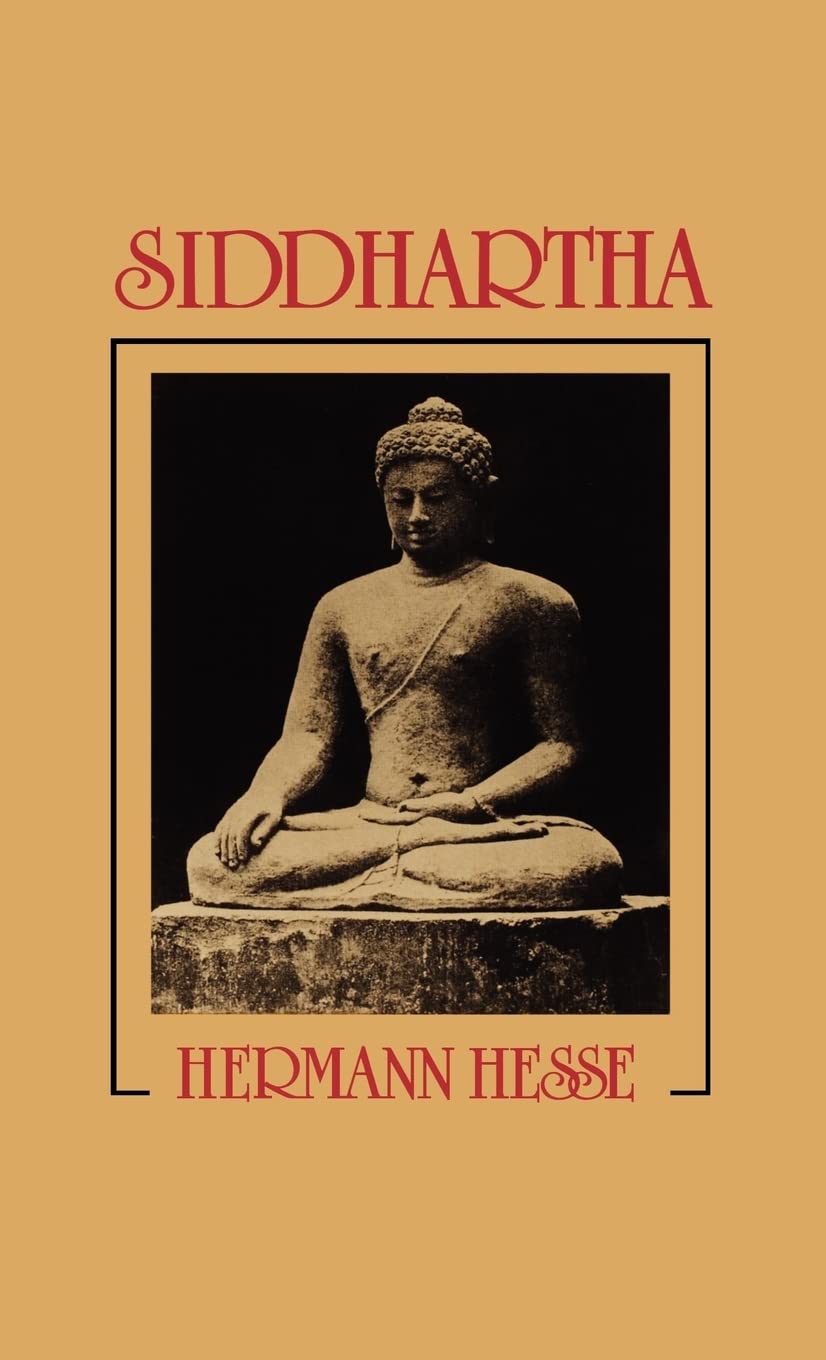
About Siddhartha Novel by Hermann Hesse – A Classic Journey Through Knowledge, Desire, Loss, and Inner Peace
Siddhartha Novel by Hermann Hesse follows a young man who leaves a comfortable life because he feels that the answers around him are not enough. Siddhartha is the son of a Brahmin and has been raised with prayer, study, ritual, and respect. He is intelligent and admired, but he still feels restless. He wants to understand life through direct experience instead of accepting wisdom only because teachers or traditions tell him it is true. His close friend Govinda joins him when Siddhartha leaves home. Together they spend time with the Samanas, wandering ascetics who practice fasting, discipline, and rejection of ordinary desires. Later they meet Gautama Buddha. Govinda chooses to follow the Buddha, while Siddhartha continues alone. The rest of the novel follows Siddhartha through love, wealth, business, disappointment, fatherhood, loss, and finally a quieter life beside a river. Each stage changes his understanding of what wisdom means.
Siddhartha Wants Experience, Not Borrowed Answers
The main problem in the novel is not a lack of teachers. Siddhartha meets intelligent and respected people. He studies religious ideas, learns from the Samanas, and later listens to Gautama Buddha himself. Yet he keeps feeling that another person’s wisdom cannot simply be transferred into him. This does not mean he thinks teachers are useless. He respects the Buddha deeply. His concern is that true understanding must become part of a person’s own life. That is why Siddhartha keeps moving. He wants to test ideas through experience. He wants to know hunger instead of only hearing about discipline. He wants to know desire instead of only rejecting it. He wants to know money, love, grief, pride, and failure. The book turns this search into a simple question: can wisdom be taught, or must some parts of it be lived?
Govinda Shows a Different Path
When the two men meet Gautama Buddha, Govinda decides to join the Buddha’s followers. Siddhartha does not. Govinda finds meaning through devotion and teaching. Siddhartha believes he must keep searching in his own way. Their lives separate, but their friendship remains important.
Siddhartha Is Not the Buddha
The name can confuse new readers. The main character Siddhartha is not Siddhartha Gautama, the historical Buddha. Gautama Buddha appears as a separate character in the novel. Hesse deliberately places his fictional Siddhartha in a world where the Buddha is already teaching. Siddhartha listens to him, respects him, and recognizes the strength of his peace. However, Siddhartha chooses not to become his disciple. This helps the novel make one of its central points: even a perfect teaching may not replace a person’s own path toward understanding. Readers interested in Buddhism should therefore treat the book as philosophical fiction influenced by Buddhist and Indian ideas, not as a Buddhist scripture or a biography of the Buddha.
Life With the Samanas Teaches Discipline but Not Completion
Siddhartha and Govinda join the Samanas because they want to move beyond comfort and desire. They fast, meditate, give up possessions, and train themselves to ignore ordinary needs. Siddhartha becomes very skilled at these practices. Still, he notices a problem. He can escape from himself for a time, but he always returns to being Siddhartha. This makes him question whether self-denial alone can bring lasting freedom. The experience is not wasted. The Samanas teach him patience, concentration, fasting, and control. Those skills stay with him and later help him in very different parts of life. The novel often works this way. A stage may fail to give Siddhartha the final answer, but it still gives him something he needs later.
Kamala Introduces Siddhartha to Love and Desire
After leaving the spiritual life of the Samanas, Siddhartha enters a very different world. He meets Kamala, an intelligent and confident courtesan who becomes his teacher in love. Siddhartha is attracted to her, but Kamala also expects him to become successful enough to enter her world. Through her, he begins learning about beauty, pleasure, desire, appearance, and social life. Kamala is not shown only as a romantic interest. She understands people, values independence, and sees that Siddhartha is unusual. Their relationship helps him enter a part of life he had previously rejected. This stage matters because Siddhartha cannot understand desire only by standing outside it. He chooses to experience it directly.
Kamaswami Teaches Him the World of Business
Kamala introduces Siddhartha to Kamaswami, a wealthy merchant. Siddhartha begins working with him and becomes involved in trade, money, negotiation, and business. At first, he treats business almost like a game. Because of his years with the Samanas, he knows how to wait, think, and fast. He is not easily controlled by fear. Over time, however, the world of money affects him more deeply. He becomes attached to wealth, comfort, gambling, status, and pleasure. The man who once rejected possessions slowly becomes absorbed by them. This change is important because Hesse does not make Siddhartha spiritually wise from the beginning. He has to become lost in another way before he can understand what that life gives and takes from him.
Success Does Not Give Siddhartha the Peace He Expected
Siddhartha becomes financially successful. He has money, good clothes, comfort, food, and access to pleasures he once ignored. But success gradually becomes empty. He begins to feel that his life has turned into repetition. The things that once seemed interesting no longer satisfy him. This part of the novel can connect strongly with modern readers because the problem is familiar. A person can reach goals, earn more money, buy better things, and still feel that something important is missing. Hesse does not argue that money itself is evil. The problem is attachment. Siddhartha starts letting wealth, gambling, desire, and status control his attention. Eventually, he leaves that life too.
The River Becomes the Most Important Teacher
After leaving his wealthy life, Siddhartha reaches a river. The river becomes one of the central symbols in the novel. Years earlier, a ferryman named Vasudeva had helped him cross it. Siddhartha returns and eventually stays with him. Vasudeva is quiet, patient, and deeply attentive. He does not give Siddhartha long speeches about truth. Instead, he teaches him to listen to the river. The river is always moving, yet it is also always present. Its different sounds seem to exist together rather than one after another. Through listening, Siddhartha begins to understand time, change, unity, suffering, joy, and the way different parts of life belong together. This stage is very different from his earlier searches because he is no longer trying to force an answer.
Fatherhood Gives Siddhartha a New Kind of Pain
Later in the story, Siddhartha discovers that he has a son. The boy comes into his life during a painful period, and Siddhartha quickly becomes deeply attached to him. This relationship teaches him something he could not learn through meditation, business, or romantic love. He experiences the fear of losing someone he loves. Siddhartha wants his son to stay with him, but the boy does not want the quiet life by the river. The situation mirrors Siddhartha’s own youth. Siddhartha once left his father because he needed to follow his own path. Now he has to face the same pain from the other side. The lesson is difficult because understanding an idea intellectually is not the same as accepting it emotionally.
The River Helps Him Understand Unity
The river teaches Siddhartha to listen without separating life into neat pieces. Youth and old age, pleasure and pain, success and failure, arrival and departure can all be part of one whole. This is where the novel’s idea of unity becomes clearer. Siddhartha stops trying to divide experience into things that are purely good and things that are purely bad. His years with the Samanas mattered. His life with Kamala mattered. His work with Kamaswami mattered. His failures mattered. His love for his son mattered. The wisdom comes from seeing how these experiences belong together. The famous sound of “Om” represents this sense of wholeness and completion.
Publication and English Translation Details
Siddhartha first appeared in Germany in 1922. The novel was written in German and is often published under the fuller original title Siddhartha: Eine Indische Dichtung. New Directions published Hilda Rosner’s English translation in the United States in 1951. Page counts vary greatly by edition. A current Pushkin Press paperback published in 2023 is listed at 160 pages and credits Hilda Rosner as translator. Penguin Random House also lists a 160-page Modern Library paperback edition published in 2007. Because different publishers use different layouts and formats, customers who need a particular cover, translation, or page count should check the edition before ordering.
About Hermann Hesse
Hermann Hesse was born in Calw, Germany, in 1877 and died in Montagnola, Switzerland, in 1962. He wrote novels, poetry, and essays. His work often explores self-knowledge, spirituality, inner conflict, freedom, and the search for an authentic life. The Nobel Prize organization notes that Hesse’s writing was influenced by figures and traditions including Buddha, Nietzsche, Dostoyevsky, and Francis of Assisi. In 1946, he received the Nobel Prize in Literature. Siddhartha remains one of his best-known works and became especially influential among international readers during the twentieth century.
Who Will Enjoy Siddhartha?
Siddhartha is a strong choice for readers who enjoy philosophical fiction, classics, spiritual journeys, self-discovery, Buddhism-inspired literature, coming-of-age stories, and short novels with symbolic meaning. It can also suit students studying literature, philosophy, religion, or twentieth-century European writing. The novel is not a fast action story. Much of its power comes from reflection, conversation, internal change, and symbolism. Readers who enjoy quiet books about meaning and personal growth may find it especially rewarding.
Book Quality at Bookish Wonderland
Bookish Wonderland offers this title with premium eye-soothing cream paper, crystal-clear printing, and high-quality stitched plus glue binding.
The softer cream paper supports comfortable reading, while the clear print keeps the short chapters and reflective passages easy to follow. Strong binding helps the book stay secure through repeated reading and shelf storage.
The copy is suitable for personal reading, gifting, school or university study, book clubs, or building a classics and philosophy collection.
Why Order from Bookish Wonderland?
Bookish Wonderland delivers books across Bangladesh, including inside and outside Dhaka. Cash on Delivery is available nationwide.
Customers in Dhaka can also ask about fast or urgent delivery when available.
If you are checking Siddhartha Novel by Hermann Hesse Book price in Bangladesh, it is useful to compare the physical quality of the copy along with the listed price.
Book customization is also available. For stock, customization, or delivery questions, you can contact Bookish Wonderland through Facebook or Instagram.
A Classic About Finding Wisdom Through Life
Siddhartha Novel by Hermann Hesse follows one person through very different stages of life. He studies, fasts, falls in love, earns money, becomes lost, becomes a father, suffers, listens, and changes. The novel does not tell readers that wisdom comes from one simple rule. Its central idea is that understanding grows through experience, attention, and the ability to see life as a whole. For readers who want a short classic about self-knowledge, change, spirituality, and inner peace, Siddhartha remains a thoughtful and accessible choice.
Order your copy from Bookish Wonderland for nationwide delivery, Cash on Delivery, premium cream paper, clear printing, and strong stitched plus glue binding.
If you require any customization or have any questions, please inbox us via FB or Insta.
| Primary Specification | |
| Author | Hermann Hesse |
| Narrator | James Langton |
| Genre | Philosophical Fiction, Spiritual Fiction, Literary Fiction, Classics |
| ISBN-13/ISSN | 978-8172343682 |
| ISBN-10 | 8172343682 |
| Publisher | Fingerprint |
| Publishing Date | January 1, 2012 |
| Language | English |
| Reading Age | 16+ |
| Format | Printed Book |
| Physical Specification & Quality | |
| Paper Quality | Premium eye-soothing cream paper |
| Binding Quality | High quality stitched and glue binding (for longevity) |
| Print Quality | Crystal-clear print |
| Pages | 144 pages |
| Country | Germany |
| Logistics Information | |
| Weight | 165 gm |
| Length | 8.5 inches |
| Width | 5.6 inches |
| Height | 0.59 inch |