

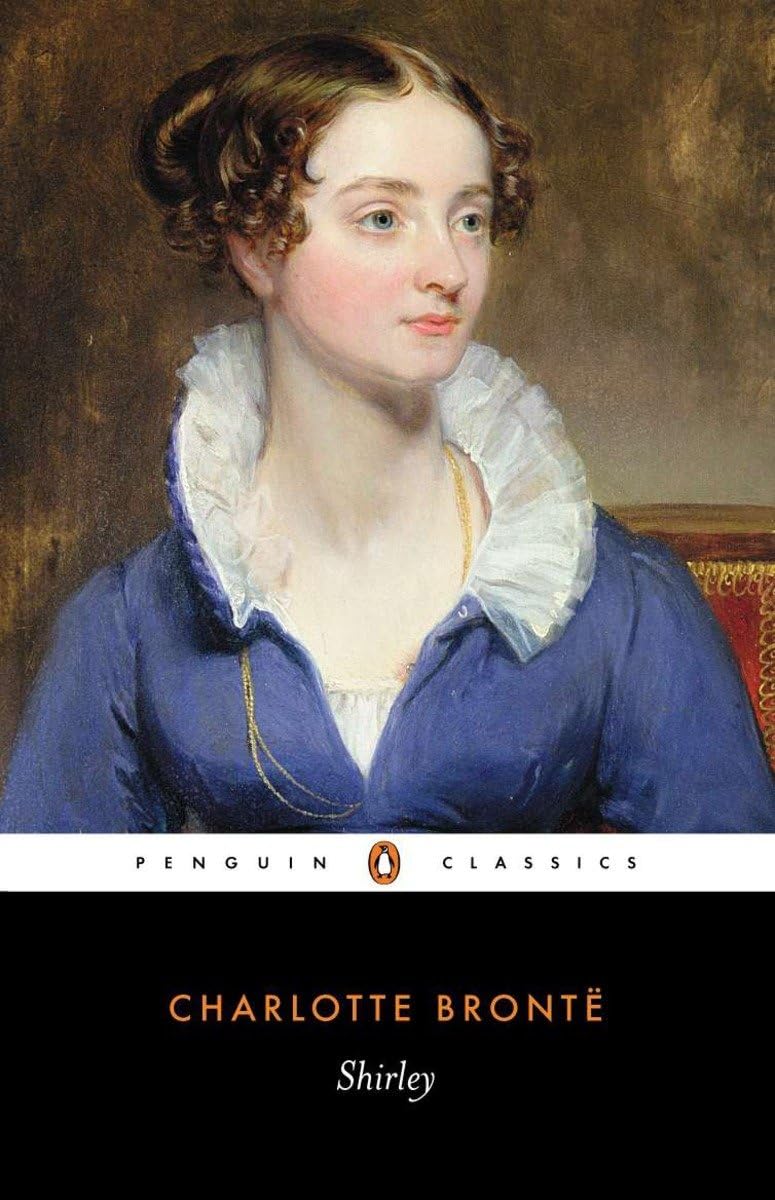
Shirley Novel by Charlotte Bronte – A Classic Story About Women, Work, Love, Class, and Industrial Change
Shirley Novel by Charlotte Bronte is a long social novel set in Yorkshire during 1811 and 1812, when war, trade problems, unemployment, and new machinery were changing daily life. The story follows two young women, Caroline Helstone and Shirley Keeldar, whose lives are very different because of money, family position, and freedom.
Caroline lives with her uncle, Reverend Helstone, and has little control over her future. She loves Robert Moore, a mill owner who is focused on keeping his business alive. Shirley is a wealthy landowner with more independence than most women around her. She becomes close to Caroline and later faces her own questions about love and marriage.
Caroline Helstone Has Very Little Freedom
Caroline is one of the two central women in the novel.
Caroline wants useful work and emotional purpose, but the society around her does not offer many paths.
Marriage is treated as one possible future, yet the book also asks what happens to women who do not marry or cannot marry the person they love.
This gives Caroline’s story importance beyond romance.
Robert Moore Is Under Business Pressure
Robert Moore runs a textile mill and is trying to survive a difficult economic period.
War has damaged trade, demand is weak, and his business is under financial strain.
He introduces labour-saving machinery because he believes lower production costs can help the mill survive.
For unemployed workers, however, the machines represent lost jobs and greater hardship.
This places Robert in direct conflict with people in the local community.
Bronte does not make the industrial problem completely simple.
Robert has real business pressures, while workers have real fears about income, hunger, and survival.
The conflict helps the novel examine what happens when economic change benefits one group while creating serious costs for another.
The Luddite Conflict Gives the Novel Its Historical Background
Shirley is set during the period of Luddite unrest in England.
The Luddites were workers who attacked machinery and factories because industrial changes threatened their employment and working conditions.
In the novel, anger around Robert Moore’s mill grows as machinery replaces some forms of labour.
The conflict eventually becomes violent.
This historical background makes Shirley different from a novel focused only on courtship or family life.
Readers interested in social history can therefore find as much to study here as readers interested in relationships.
Shirley Keeldar Brings a Different Kind of Female Character
Shirley Keeldar enters the novel after Caroline has already been established.
She is young, wealthy, confident, and the owner of property.
Her money gives her a level of freedom Caroline does not have.
Shirley can make decisions about her estate, speak openly with men, reject unwanted attention, and take part in conversations about business and politics.
Her independence does not make her free from every social rule, but it gives her more room to resist them.
Through Shirley and Caroline, Bronte shows how money can change the choices available to women.
Both women are intelligent, but their financial positions give them very different levels of power.
Shirley and Caroline Develop an Important Friendship
The friendship between Shirley and Caroline is one of the strongest relationships in the book.
At first, Caroline is lonely and uncertain about her future.
Shirley gives her companionship, conversation, and a wider social world.
They are different in temperament and position, but they respect each other.
Their friendship also allows the novel to compare two kinds of female life without turning the women into enemies.
This is important because Robert’s relationship with both women could easily create a simple romantic rivalry.
Bronte instead gives the friendship real weight.
The women talk about society, work, marriage, men, and their own hopes.
Robert’s Feelings and His Financial Needs Pull in Different Directions
Robert has feelings for Caroline, but he believes marriage to her would not solve his financial problems.
Shirley, by contrast, has money and property.
This creates pressure around the idea of marriage.
Robert begins considering whether a wealthy marriage could help his business position.
The situation shows how marriage in the novel is connected with economics as well as love.
People do not make choices in an empty space. Money, property, class, family expectations, and work all affect what seems possible.
Bronte uses these pressures to show how personal relationships can become tied to social systems.
Louis Moore Introduces Another Relationship
Louis Moore is Robert’s brother.
He works as a tutor and does not have Robert’s position as a mill owner.
Shirley has known Louis before, and their relationship develops as the novel continues.
Their connection creates another contrast.
Shirley has wealth and social position, while Louis has less money and works for others.
This reverses the more common situation in which a wealthy man chooses a woman with less financial power.
Shirley must decide whether she will follow family expectations or make her own choice.
The Novel Questions What Marriage Should Mean
Marriage appears throughout Shirley, but Bronte does not treat it as a simple happy ending.
The novel repeatedly asks what makes a good marriage possible.
Money matters. Character matters. Respect matters. Independence matters. Social expectations also matter.
Caroline fears a life without love or useful work.
Shirley faces pressure from people who believe her wealth should determine whom she marries.
Through both women, the novel asks whether marriage should be based on economic convenience, social approval, emotional connection, or mutual respect.
These questions remain understandable even though the social rules of the nineteenth century were different from those of today.
Women’s Work Is a Major Theme
Caroline repeatedly thinks about the problem of useful work for women.
She sees that men have professions, business, politics, and public roles, while women of her class are often expected to wait at home for marriage.
Bronte presents this as a serious social problem.
Without work, money, or independence, a woman can become dependent on relatives or marriage for security.
Shirley’s wealth protects her from some of this dependence, but Caroline does not have the same protection.
The contrast shows why financial independence matters.
Class Conflict Is Shown From More Than One Side
The novel includes mill owners, workers, clergy, landowners, servants, and people with different political views.
This gives Bronte room to show several sides of the community.
Robert worries about keeping his mill open.
Workers worry about losing wages and feeding their families.
Landowners and clergy often see the conflict through their own social position.
The book does not solve industrial inequality with one easy answer.
Instead, it shows a society where groups depend on one another while also competing over money, power, and security.
The Napoleonic Wars Affect Local Life
The story takes place during the Napoleonic Wars.
Government trade restrictions and war conditions make business harder for manufacturers such as Robert Moore.
This is important because Robert’s financial problems are not caused only by poor management.
Large political events affect a small Yorkshire community.
The novel shows how international conflict can reach local factories, homes, jobs, and relationships.
A war taking place far away can still change whether a mill can sell goods and whether workers can find employment.
Shirley Is More Social Than Jane Eyre
Readers who know Charlotte Bronte mainly through Jane Eyre should expect a different structure.
Jane Eyre is closely focused on one woman’s personal experience.
Shirley has a wider social view.
It moves among several characters and spends more time on politics, industry, class, religion, gender, and community life.
The novel is also told in the third person rather than through the first-person voice used in Jane Eyre.
This wider approach makes Shirley useful for readers who want to see Bronte working with both private relationships and public social problems.
The Book Requires Patient Reading
Shirley is a long nineteenth-century novel.
It contains detailed conversations, descriptions, social commentary, political discussion, and a large supporting cast.
The pace is slower than most modern commercial fiction.
Readers who expect a quick romance may find it demanding.
The best approach is to read it as a social and character novel rather than only as a love story.
Taking time with the conversations and historical setting makes the relationships easier to understand.
Publication and Edition Details
Shirley was first published in London by Smith, Elder & Co. on October 26, 1849.
It appeared under Charlotte Bronte’s pen name, Currer Bell.
The original edition was issued in three volumes and is commonly listed at a total of 572 pages.
Modern editions vary greatly.
Penguin lists a 704-page edition published in 2006, while Penguin Random House lists a 624-page Modern Library edition published in 1999.
Different page counts reflect differences in type size, notes, introductions, and layout.
Customers who need a particular edition should check the ISBN and format before ordering.
About Charlotte Bronte
Charlotte Bronte was born in Yorkshire in 1816.
She worked as a teacher and governess and also studied in Brussels.
Her first published novel, Jane Eyre, appeared in 1847 under the name Currer Bell and became a major success.
Shirley was her second published novel, followed by Villette.
The Professor was published after her death.
Bronte’s novels often examine women’s independence, work, education, class, love, and the limits placed on women by society.
She died in 1855.
Who Will Enjoy Shirley?
Shirley is a strong choice for readers who enjoy English classics, Victorian fiction, historical settings, social novels, women’s writing, industrial history, and slow character development.
It may especially interest readers studying Charlotte Bronte beyond Jane Eyre.
Students of literature can use the novel to explore gender, class, work, industrialization, marriage, and nineteenth-century society.
Readers should expect older language, a long structure, and detailed social discussion.
Book Quality at Bookish Wonderland
Bookish Wonderland offers this title with premium eye-soothing cream paper, crystal-clear printing, and high-quality stitched plus glue binding.
The cream paper supports comfortable reading through a long classic, while clear printing helps keep detailed dialogue and older language easy to follow. Strong binding supports repeated reading and shelf storage.
The copy is suitable for personal reading, gifting, school or university study, book clubs, or building an English classics collection.
Why Order from Bookish Wonderland?
Bookish Wonderland delivers books across Bangladesh, including inside and outside Dhaka. Cash on Delivery is available nationwide.
Customers in Dhaka can also ask about fast or urgent delivery when available.
If you are checking Shirley Novel by Charlotte Bronte Book price in Bangladesh, it is useful to compare the physical quality of the copy along with the listed price.
Book customization is also available. For stock, customization, or delivery questions, you can contact Bookish Wonderland through Facebook or Instagram.
Why Shirley Is Still Worth Reading
Shirley Novel by Charlotte Bronte gives readers a wider view of nineteenth-century life than a simple romance would provide.
Caroline and Shirley show two different levels of freedom for women. Robert’s mill brings business, unemployment, and industrial change into the story. Louis adds another view of class and marriage.
Together, these characters allow Bronte to examine how private choices are affected by money, work, gender, family, and social position.
For readers who enjoy long classics with social history and detailed character relationships, Shirley offers a thoughtful look at a society changing under economic and industrial pressure.
Order your copy from Bookish Wonderland for nationwide delivery, Cash on Delivery, premium cream paper, clear printing, and strong stitched plus glue binding.
If you require any customization or have any questions, please inbox us via FB or Insta.
| Primary Specification | |
| Author | Charlotte Brontë |
| Genre | Classic Fiction, Historical Fiction, Social Novel, Literary Fiction |
| ISBN-13/ISSN | 978-1918966039 |
| ISBN-10 | 1918966036 |
| Publisher | The Lost Book Project |
| Publishing Date | June 3, 2026 |
| Language | English |
| Reading Age | 16+ |
| Format | Printed Book |
| Physical Specification & Quality | |
| Paper Quality | Premium eye-soothing cream paper |
| Binding Quality | High quality stitched and glue binding (for longevity) |
| Print Quality | Crystal-clear print |
| Pages | 495 pages |
| Country | UK |
| Logistics Information | |
| Weight | 517 gm |
| Length | 8.5 inches |
| Width | 5.6 inches |
| Height | 1.12 inches |