

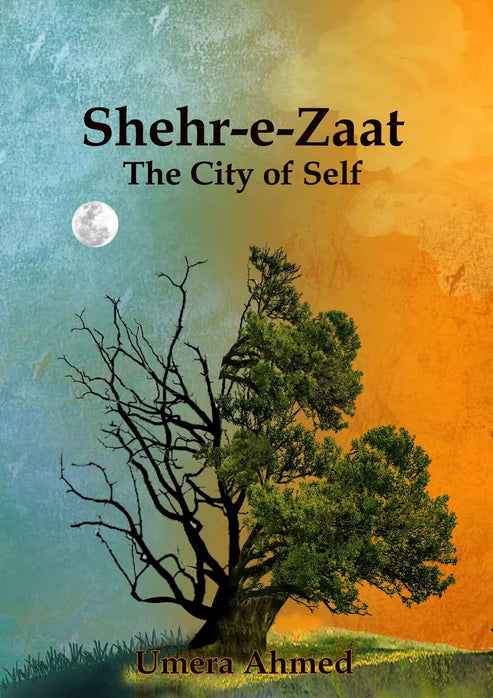
About Shehr-e-Zaat: City Of Self by Umera Ahmed – A Spiritual Story About Love, Ego, Loss, and Finding What Truly Matters
Shehr-e-Zaat: City Of Self by Umera Ahmed begins with a woman who seems to have everything. Falak Sher Afgan is beautiful, rich, and used to getting what she wants. She studies fine arts and lives in comfort until she meets Salman, a man who looks almost exactly like the face she once shaped in a sculpture.
For Falak, it feels like fate. She becomes deeply attached to him and slowly builds her happiness around their relationship. When that love breaks her heart, the confident world she trusted suddenly feels empty.
That pain starts another journey.
Instead of remaining only a story about romance and betrayal, Shehr-e-Zaat turns toward faith, humility, self-examination, and the difference between loving another person and placing that person at the center of your existence.
When Having Everything Still Feels Empty
Falak grows up surrounded by money, beauty, comfort, and attention. She has little reason to believe that life will ever deny her something important.
That confidence shapes the way she sees herself.
She is proud of her beauty and position, and she is used to being noticed. The people around her often support the comfortable world she knows. She does not begin the story searching for spiritual answers because she does not think she needs them.
Then Salman enters her life.
Falak sees him as the man she has been waiting for, and winning his love starts to feel like the most important thing in the world.
Umera Ahmed uses this to ask what happens when a person builds happiness on something that can change.
Falak and Salman Are Not a Simple Love Story
At first, Falak's feelings for Salman can look like the beginning of a romantic dream. She wants him, pursues the relationship, and eventually believes she has found the life she imagined.
But the story does not stay inside that dream.
Falak's love becomes tied to pride, beauty, and the belief that she deserves the person she wants. When her marriage begins to fail, she cannot understand how the world could move against her.
The pain is not only that Salman hurts her. Falak also has to face the fact that what she trusted most cannot protect her from loss.
Her beauty cannot control another person's heart. Money cannot repair every wound. Social position cannot guarantee peace.
A Broken Heart Opens a Bigger Question
Heartbreak is often shown as the end of a love story. In Shehr-e-Zaat, it becomes the beginning of another kind of story.
Falak is forced to look at herself in a way she never did before.
For much of her life, she has looked outward. She notices beauty, status, people, desire, and the life she wants others to see. After her world falls apart, she begins looking inward.
Why was one person able to control so much of her happiness? Why did she believe beauty made her secure? Why had she never thought deeply about her relationship with Allah before life became painful?
These questions change the direction of the story. The title City Of Self fits this journey because Falak must move through her own ego before understanding what she has been missing.
From Human Love to a Deeper Kind of Love
One of the central ideas in Shehr-e-Zaat is the contrast between ishq-e-majazi, human love, and ishq-e-haqeeqi, love of God.
The book does not say that caring for another person is wrong. The problem comes when human love becomes an obsession and replaces everything else.
Falak gives Salman a place in her heart that no human being can safely hold forever. Her sense of worth becomes connected to whether he loves her.
When that love fails, she feels as if her whole identity has been destroyed.
Her spiritual journey begins when she understands that no person can provide complete certainty or endless emotional security.
This change is not easy. Falak moves through anger, grief, humiliation, questions, and painful self-awareness.
Pride Is One of Falak's Hardest Lessons
Falak's suffering is not only about losing Salman.
She is also wounded because the situation attacks her pride.
She has always believed that beauty, education, class, and wealth give her a certain place in the world. When life refuses to follow those rules, she is forced to question ideas she once accepted without thinking.
That makes her growth uncomfortable.
It is easier to blame another person than to examine your own ego. Falak has to do both. She can recognize the harm done to her while also asking what her own beliefs reveal about the way she judged people and valued herself.
The story does not only ask, "Who hurt Falak?" It also asks, "Who was Falak before she was hurt, and who might she become afterward?"
Faith Enters Through Pain, but the Story Is About Change
Falak does not begin as someone deeply focused on religion. Her spiritual awareness grows after her life becomes difficult.
That can make the book meaningful for readers who have experienced a period when loss changed the questions they were asking.
When life is comfortable, it can be easy to think only about the next goal, relationship, purchase, success, or plan. A crisis can suddenly make those things feel smaller.
Falak begins to notice what she previously ignored.
She learns to think about patience, humility, gratitude, forgiveness, and her relationship with Allah. The process also changes the way she sees other people.
The spiritual message is not presented as a quick trick for removing pain. Falak still has to live with what happened. The difference is that pain no longer becomes the only thing defining her.
Why the Story Feels Personal
The social world of Shehr-e-Zaat is specific, but its central emotional problem is easy to understand.
Many people have placed too much hope in another person, achievement, or form of approval.
The book asks what happens after that idea fails, even if a reader's life looks nothing like Falak's.
You do not need her wealth or her exact problems to understand attachment, pride, disappointment, or the wish to feel loved.
Umera Ahmed takes those familiar emotions and connects them with spiritual questions about identity and purpose.
A Short Story with a Large Emotional Journey
Shehr-e-Zaat is often described as a novella rather than a long novel. That shorter form gives the story a focused feeling.
The main concern is Falak's transformation.
There is romance, marriage, betrayal, family influence, and social pressure, but all of those elements lead back to the same central journey: a woman who has built her identity around the visible world begins searching for something deeper.
Readers who prefer shorter books may find this especially appealing because the story does not require hundreds of pages to reach its main ideas.
It can be read quickly, but the questions may stay in your mind much longer.
The Story Became a Well-Known Television Drama
Shehr-e-Zaat was adapted into a Hum TV drama in 2012, with Mahira Khan as Falak and Mikaal Zulfiqar as Salman.
Readers who know the drama may enjoy returning to Umera Ahmed's written story. Reading lets you slow down and focus more closely on Falak's emotional and spiritual change.
Who Will Enjoy Shehr-e-Zaat?
This book is a strong choice for readers who enjoy spiritual fiction, emotional stories, Pakistani literature, Urdu fiction, and books about personal change.
It also suits readers who like romance but want something more reflective. The relationship matters, but it is not the final destination.
The deeper subject is Falak herself: her ego, her pain, her beliefs, and the person she becomes when the life she trusted stops making sense.
Readers interested in faith-based fiction may connect with the contrast between worldly attachment and spiritual love.
It is also a thoughtful choice for book clubs because readers can discuss Falak's choices, Salman's behavior, pride, materialism, forgiveness, and what genuine inner change looks like.
More Than a Story About Betrayal
It would be easy to describe Shehr-e-Zaat only as a story about a husband hurting his wife.
That would miss most of what makes the book important.
The betrayal breaks Falak, but the story is really interested in what happens after the break.
Does she stay trapped inside anger? Does she rebuild the same version of herself? Or does she begin to understand why her old life, despite looking perfect, had an empty center?
That is where the book finds its emotional strength.
Falak's greatest change is not about becoming more attractive, richer, or more successful. She already had those things.
She has to learn a different way of measuring a life.
A Book for Quiet Reading and Reflection
This is the kind of story that works well when you have time to think after a chapter.
The important movement happens inside Falak.
You may think about your own attachments. What do you believe you cannot live without? How much of your confidence depends on another person's approval? Do comfort and success always create peace?
The book does not need every reader to have the same answer.
Its value comes from opening those questions.
That makes it useful for personal reading, faith-centered discussion, literature study, or a book club looking for a short work with deeper themes.
A Comfortable Edition for Meaningful Reading
Bookish Wonderland offers this title with premium eye-soothing cream paper, crystal-clear printing, and high-quality stitched plus glue binding.
The softer paper tone makes longer reading sessions more comfortable, while sharp printing keeps every page clean and easy to follow. The strong binding is made for repeated reading and shelf use.
It is a practical choice if you want a copy you can return to, lend to someone close, or keep in your collection.
Why Order from Bookish Wonderland?
Bookish Wonderland delivers books across Bangladesh, both inside and outside Dhaka. Cash on Delivery is available nationwide, and customers in Dhaka can ask about fast or urgent delivery when available.
If you are checking Shehr-e-Zaat: City Of Self by Umera Ahmed Book price in Bangladesh, it is worth looking at the physical quality of the copy as well as the listed price.
Book customization is also available. For stock, customization, or delivery questions, you can contact Bookish Wonderland through Facebook or Instagram.
Read a Story That Begins with Love and Goes Much Deeper
Shehr-e-Zaat: City Of Self by Umera Ahmed begins with beauty, desire, and the dream of perfect romantic love. Then that dream breaks, and the real journey starts.
Falak loses the certainty she once had about herself and slowly begins asking questions that money and admiration cannot answer.
What is left when the person you built your happiness around disappoints you? What happens when pride can no longer protect you? Where do you turn when the world you trusted suddenly feels empty?
For Falak, those questions open the path toward faith, humility, and a different understanding of love.
That is why this story can stay with readers after the romance itself is over.
Order your copy from Bookish Wonderland if you want an emotional spiritual story that is easy to read but gives you plenty to think about. With premium cream paper, clear print, durable stitched plus glue binding, nationwide delivery, and Cash on Delivery, it is a meaningful book to read, reflect on, and keep.
If you require any customization or have any questions, please inbox us via FB or Insta.
| Primary Specification | |
| Author | Umera Ahmed |
| Genre | Spiritual Fiction, Islamic Fiction, Romance |
| ISBN-13/ISSN | 978-9383582730 |
| ISBN-10 | 9383582731 |
| Publisher | Ferozsons |
| Publishing Date | January 1, 2016 |
| Language | English |
| Reading Age | 16+ |
| Format | Printed Book |
| Physical Specification & Quality | |
| Paper Quality | Premium eye-soothing cream paper |
| Binding Quality | High quality stitched and glue binding (for longevity) |
| Print Quality | Crystal-clear print |
| Pages | 54 pages |
| Country | Pakistan |
| Logistics Information | |
| Weight | 78 gm |
| Length | 8.5 inches |
| Width | 5.6 inches |
| Height | 0.12 inch |