

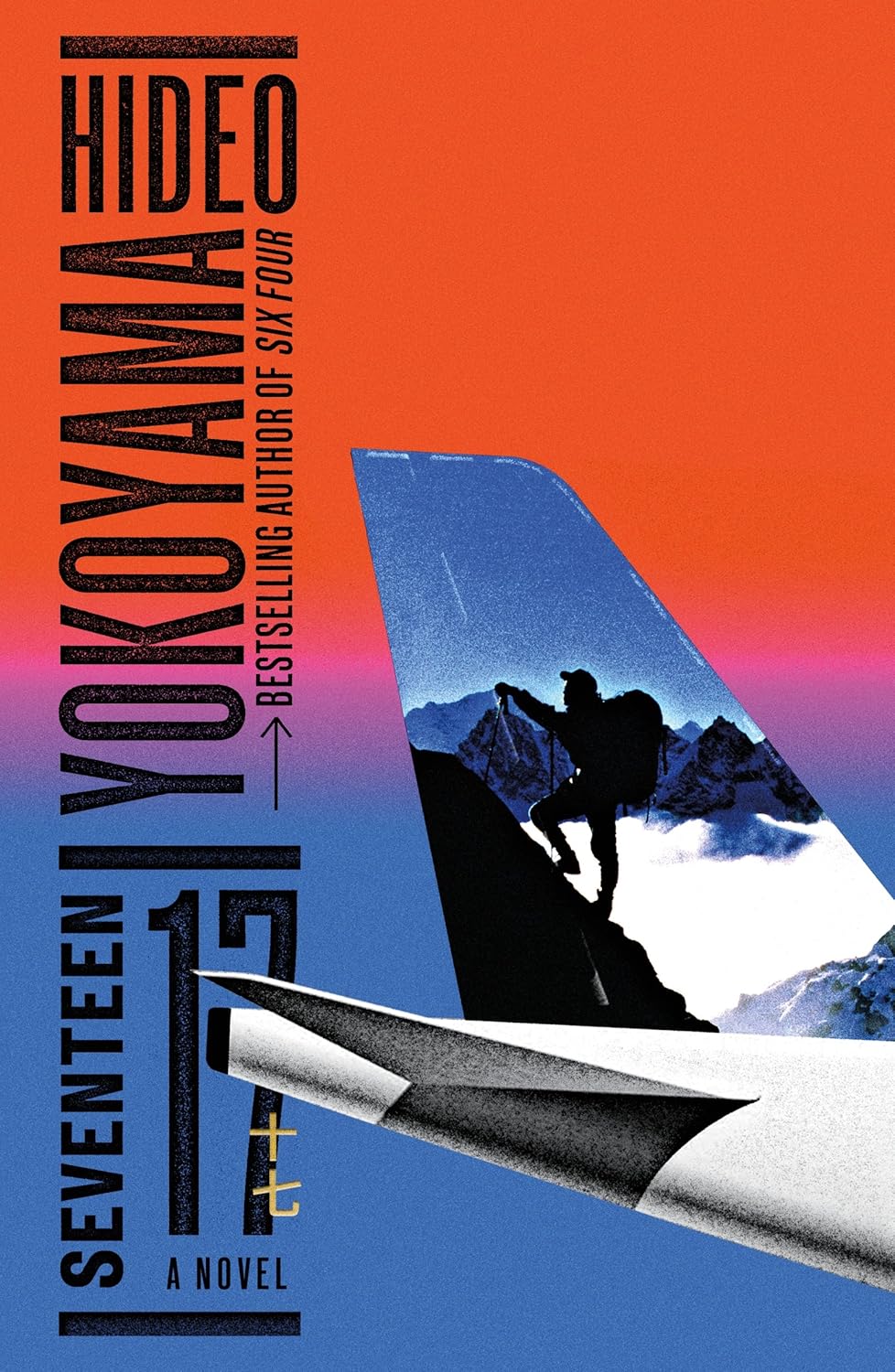
About Seventeen Novel by Hideo Yokoyama – A Japanese Newsroom Novel About Journalism, Disaster, Pressure, and Responsibility
Seventeen Novel by Hideo Yokoyama follows Kazumasa Yuuki, a veteran reporter at the fictional North Kanto Times in Gunma Prefecture. In August 1985, Japan Airlines Flight 123 crashes in the mountains near the newspaper’s home region. Yuuki is suddenly placed in charge of the paper’s coverage of the disaster, which killed 520 people and became one of the deadliest single-aircraft accidents in history.
The assignment forces Yuuki to manage reporters, editors, deadlines, internal rivalries, limited information, and the emotional weight of reporting on hundreds of deaths. The novel also moves seventeen years forward, when Yuuki returns to Mount Tanigawa to complete a difficult climb connected to his old friend Anzai.
Yokoyama worked as a newspaper reporter and covered the real 1985 crash. He uses that experience to create a detailed workplace novel about how news is gathered, checked, argued over, and finally printed.
The Story Begins With a Planned Mountain Climb
Before the crash, Yuuki is preparing to climb with his friend Kyoichiro Anzai. Their goal is the Tsuitate rock face on Mount Tanigawa, a dangerous challenge that has long interested them.
The climb never happens as planned.
News arrives that a Japan Airlines jumbo jet has gone down in the mountains of Gunma Prefecture. Yuuki is ordered to become desk chief for the newspaper’s coverage.
At almost the same time, Anzai suffers a medical emergency and falls into a coma.
These two events become linked in Yuuki’s memory. One belongs to his professional life and the other to his private life, but both force him to think about fear, responsibility, unfinished promises, and the choices people make when time is limited.
Yuuki Is an Experienced Reporter Who Avoids Management
Kazumasa Yuuki has spent years working as a reporter. He knows how to gather information, speak with sources, and understand the pressures of a newsroom.
He has not wanted a management role.
Earlier experiences left him doubtful about his ability to supervise other people, and he has stayed away from the normal promotion path. The Flight 123 assignment changes that immediately.
As desk chief, Yuuki is no longer responsible only for his own reporting. He has to decide where reporters should go, which stories should receive space, what information can be trusted, and when the newspaper should publish something that competitors may also be chasing.
The Crash Changes the Entire Newspaper
The North Kanto Times is a regional newspaper, not a large national publication.
When Flight 123 crashes in its area, the paper suddenly has the biggest story it may ever cover.
Reporters rush toward the mountains. Editors wait for information. Telephone calls, wire reports, rumours, official statements, eyewitness accounts, and internal instructions arrive at the same time.
Yokoyama shows how a major disaster can expose every weakness inside an organisation. Old rivalries become more serious. Departments fight over control. Senior managers think about reputation and circulation. Reporters want space for their work. Editors worry about accuracy, deadlines, and whether a competitor has information they do not.
Journalism Is the Main Source of Suspense
Seventeen is often described as a thriller, but much of its tension comes from newspaper work rather than crime.
Yuuki has to decide which facts are strong enough to print.
A report that appears reliable may turn out to be wrong. An exclusive story can help the newspaper, but publishing too early can damage its credibility. Waiting too long may mean losing the scoop.
Hundreds of families are waiting for information about people who were on the aircraft.
The paper is competing with other media organisations, but the people named in its pages are not simply part of a competition. They are victims, survivors, relatives, officials, rescuers, and witnesses.
The Real Flight 123 Disaster Gives the Novel Its Background
Japan Airlines Flight 123 crashed on August 12, 1985 after departing Tokyo for Osaka.
There were 524 people aboard. Four survived and 520 died.
The aircraft came down in a mountainous part of Gunma Prefecture, making access extremely difficult for reporters, rescuers, and investigators.
Yokoyama was working as an investigative and police reporter at a local newspaper in Gunma at the time. He later wrote that he trekked for hours to reach the crash area and spent a night on the mountain.
The Book Looks at Competition Inside the Newsroom
Not all of Yuuki’s problems come from outside the newspaper.
The North Kanto Times has its own hierarchy, grudges, departments, and power struggles.
People disagree about what should lead the paper. Some protect their positions. Others want recognition. A strong story may become part of an internal argument over who deserves credit.
Yuuki has to work inside this structure while trying to keep the crash coverage moving.
This workplace element is important because the novel does not present journalism as a simple battle between reporters and hidden truth.
Even when facts are available, people still have to decide what to do with them.
The Victims and Their Families Change Yuuki’s Priorities
The scale of the crash makes it difficult to think about news only as a product.
Yuuki sees how much the newspaper matters to people searching for names, explanations, and details about the dead.
That awareness affects the way he approaches the work.
A headline, photograph, list, or article may be judged inside the newsroom by its importance or exclusivity. For a family member, the same page may contain the most painful information they have ever received.
Yuuki feels the energy of handling a historic story, but he also understands that the event creating that opportunity has killed hundreds of people.
Anzai Gives the Novel a Second Personal Story
While Yuuki is consumed by the crash, his friend Anzai is in hospital.
Anzai had been the more experienced climber and had planned the difficult ascent with Yuuki.
His sudden collapse leaves Yuuki with another problem he cannot solve through reporting.
He visits the hospital when he can, but the newsroom demands most of his time.
The unfinished climb becomes a symbol of something Yuuki has left unresolved.
Seventeen years later, the novel returns to Mount Tanigawa. Yuuki prepares to face the mountain again, this time carrying memories of both the crash and Anzai.
The Title Refers to Seventeen Years of Memory
The original Japanese title is Climber’s High.
That phrase refers to the intense state in which a climber can become so stimulated that fear seems to disappear.
The English title, Seventeen, points toward the years separating the 1985 disaster from the later climbing story.
News can disappear quickly from public attention, but the people involved may carry it for decades.
Yuuki’s later climb shows that the seven days of crash coverage did not simply end when the newspaper moved on to another story.
The Novel Also Examines Family
Yuuki’s demanding career has affected his home life.
He is not presented as a perfect husband or father. Work often comes first, and his relationship with his son is strained.
The book connects this family distance with the larger question of what professional dedication costs.
Yuuki can spend enormous energy trying to report responsibly for strangers while struggling to communicate with people in his own home.
The later sections allow him to look back at the choices he made and the relationships he neglected.
The Writing Focuses on Process and Pressure
Readers should know that Seventeen contains a large newsroom cast and a great deal of workplace detail.
There are reporters, editors, managers, photographers, company officials, and people connected with different newspaper departments.
Some English editions include a character guide and organisational information to help readers follow the hierarchy.
The novel spends time on meetings, telephone calls, editorial decisions, deadlines, story placement, and arguments over information.
The tension comes from watching professionals make difficult decisions with limited time and imperfect facts.
The result is a workplace story where editorial judgment matters as much as action, and readers can see how pressure changes people inside a demanding professional system.
Louise Heal Kawai Translated the English Edition
Seventeen was translated from Japanese into English by Louise Heal Kawai.
The Japanese novel was originally published in 2003 under the title Climber’s High.
The English translation appeared in 2018.
Riverrun published the UK edition, while MCD/Farrar, Straus and Giroux published the US edition.
The US hardcover is listed at 368 pages, while the Riverrun edition is commonly listed at 416 pages. Different formats therefore have different pagination.
The translation brings Yokoyama’s detailed newsroom story to English-language readers while keeping the Japanese workplace setting and professional hierarchy central to the novel.
The Story Was Also Adapted for Screen
Climber’s High was adapted for Japanese television and later into a 2008 feature film directed by Masato Harada.
The film keeps the main focus on Yuuki, the regional newspaper, the Flight 123 crash, and the ethical pressure of covering a disaster.
Readers who watch the adaptation after the novel may notice that the book has more room for newsroom politics, internal thought, and the slower development of Yuuki’s personal conflicts.
Who Will Enjoy Seventeen?
Seventeen is a strong choice for readers interested in journalism, Japanese fiction, workplace novels, historical events, aviation disasters, media ethics, and character-driven thrillers.
It may especially appeal to readers who enjoy stories about professionals working under pressure.
The novel is not a conventional murder mystery. There is no detective hunting a serial killer, and most of the major tension comes from reporting, office politics, ethical decisions, memory, and personal responsibility.
The book includes descriptions connected to a mass-casualty air disaster, death, bodies, grief, and traumatic reporting.
Readers sensitive to those subjects should consider that before starting.
Book Quality at Bookish Wonderland
Bookish Wonderland offers this title with premium eye-soothing cream paper, crystal-clear printing, and high-quality stitched plus glue binding.
The cream paper provides a softer page tone for longer reading sessions. Clear printing helps with the large cast, Japanese names, dialogue, and detailed newsroom scenes. Strong binding supports repeated reading and shelf storage.
The copy is suitable for personal reading, gifting, journalism students, book clubs, or readers building a collection of Japanese fiction in translation.
Why Order from Bookish Wonderland?
Bookish Wonderland delivers books across Bangladesh, including inside and outside Dhaka. Cash on Delivery is available nationwide.
Customers in Dhaka can also ask about fast or urgent delivery when available.
If you are checking Seventeen by Hideo Yokoyama Book price in Bangladesh, it is useful to compare the physical quality of the copy along with the listed price.
Book customization is also available. For stock, customization, or delivery questions, you can contact Bookish Wonderland through Facebook or Instagram.
A Detailed Novel About Reporting Under Extreme Pressure
Seventeen Novel by Hideo Yokoyama uses one week of disaster reporting to examine journalism, ambition, responsibility, grief, friendship, family, and memory.
Yuuki has to lead a newsroom team through a story larger than anything the local newspaper has handled before. Every decision carries professional consequences, while the scale of the human loss makes ordinary newsroom competition feel different.
The later climbing story shows how those seven days continue to affect him seventeen years afterward.
Readers who enjoy detailed workplace fiction and journalism stories will find a novel built around difficult choices rather than easy heroes.
Order your copy from Bookish Wonderland for nationwide delivery, Cash on Delivery, premium cream paper, clear printing, and strong stitched plus glue binding.
If you require any customization or have any questions, please inbox us via FB or Insta.
| Primary Specification | |
| Author | Hideo Yokoyama |
| Translator | Louise Heal Kawai |
| Narrator | Tom Lawrence |
| Editor | Abby Kagan |
| Genre | Literary Fiction, Investigative Thriller, Contemporary Japanese Fiction |
| ISBN-13/ISSN | 978-1250238139 |
| ISBN-10 | 1250238137 |
| Publisher | Picador |
| Publishing Date | November 26, 2019 |
| Language | English |
| Reading Age | 18+ |
| Format | Printed Book |
| Physical Specification & Quality | |
| Paper Quality | Premium eye-soothing cream paper |
| Binding Quality | High quality stitched and glue binding (for longevity) |
| Print Quality | Crystal-clear print |
| Pages | 368 pages |
| Country | Japan |
| Logistics Information | |
| Weight | 390 gm |
| Length | 8.5 inches |
| Width | 5.6 inches |
| Height | 0.82 inch |