

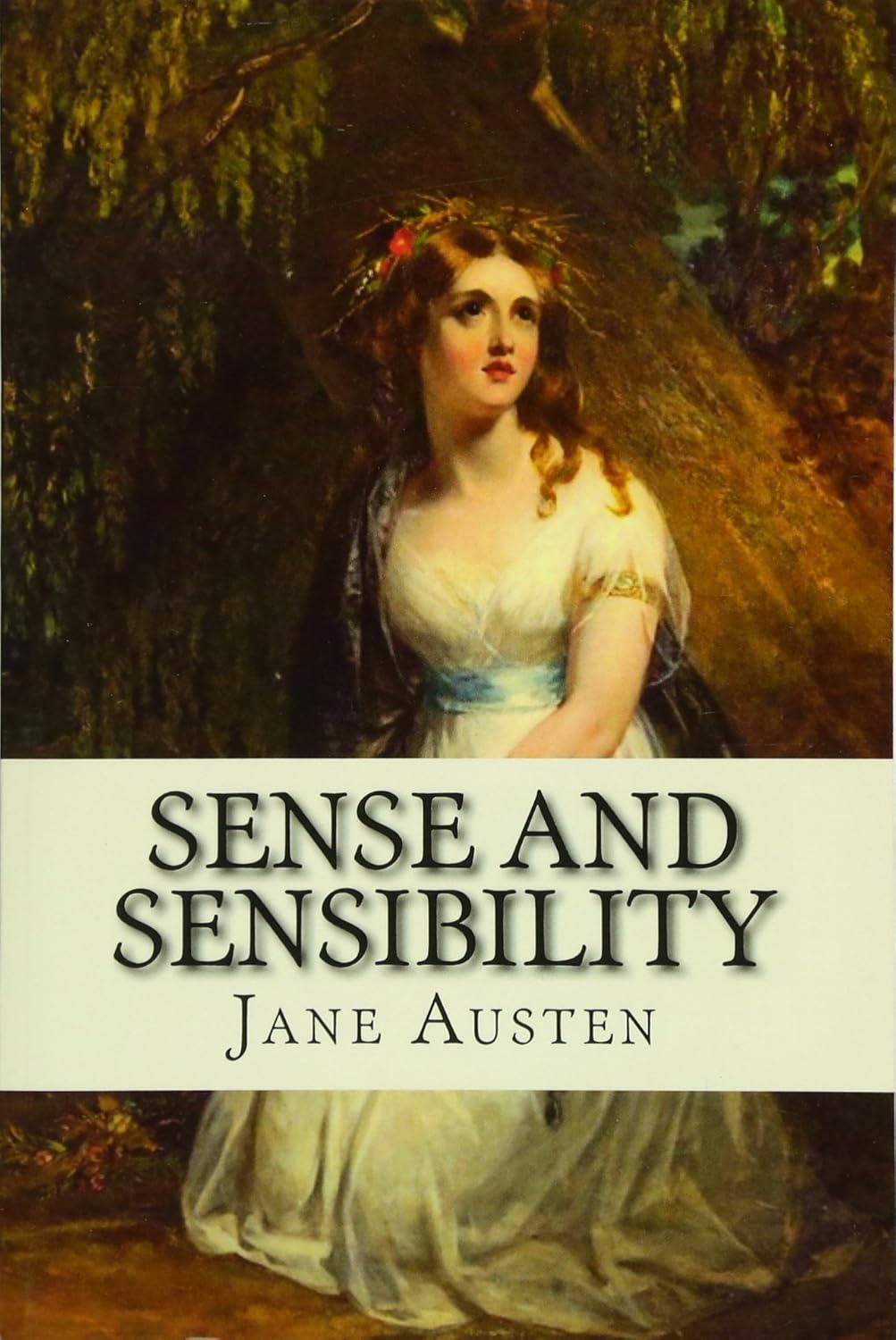
About Sense and Sensibility by Jane Austen – A Classic Novel About Two Sisters, Love, Money, Family, and Learning to Balance Feeling With Judgment
Sense and Sensibility by Jane Austen follows sisters Elinor and Marianne Dashwood after the death of their father changes the family’s financial position. Because inheritance laws favor their half-brother John, Mrs. Dashwood and her three daughters cannot remain comfortably at Norland Park. They move to Barton Cottage in Devonshire and begin a new life with much less money.
Elinor is calm, careful, and private with her feelings. Marianne is open, emotional, romantic, and quick to trust what she feels. Both sisters fall in love, but their different ways of handling hope, disappointment, and uncertainty lead them through very different experiences.
The novel combines romance with social observation. Austen looks closely at money, inheritance, marriage, family duty, reputation, class, and the limited choices available to women. The title refers to the balance between “sense,” or practical judgment, and “sensibility,” or strong feeling.
The Dashwood Family Loses Financial Security
The story begins with an inheritance problem.
Mr. Henry Dashwood expects that his wife and daughters will remain financially secure after his death, but the Norland estate passes to his son John from an earlier marriage.
John promises his father that he will help Mrs. Dashwood and his half-sisters.
His wife Fanny quickly talks him into giving them much less support than he first considered.
This early scene introduces one of Austen’s main concerns: money affects relationships even when people prefer to speak about generosity, duty, or affection.
The Dashwood women must therefore leave Norland and adjust to a smaller income.
Their reduced circumstances shape nearly every romantic and social choice that follows.
Elinor Represents Practical Judgment
Elinor is the eldest Dashwood daughter.
She feels deeply, but she usually controls what she shows.
She thinks about consequences before speaking and often tries to protect her mother and sisters from unnecessary worry.
Her calm manner does not mean she has fewer emotions than Marianne.
In fact, much of Elinor’s difficulty comes from carrying strong feelings privately.
Her relationship with Edward Ferrars becomes one of the main examples.
Elinor cares for Edward, but his family situation, uncertain future, and hidden obligations make the relationship difficult.
She often has to remain polite and composed even when she is hurt.
Marianne Trusts Strong Feeling
Marianne is younger, more expressive, and more romantic.
She values strong emotion and dislikes behavior that feels cold or overly practical.
When she meets John Willoughby, she quickly sees him as someone who shares her tastes in books, music, nature, and conversation.
Their connection develops rapidly.
Marianne does not hide her feelings because she sees openness as honest.
This makes her relationship with Willoughby especially important to the novel.
She believes that powerful emotion is evidence of sincerity.
Austen gradually shows that feeling can be real while judgment is still necessary.
Edward Ferrars Is Quiet and Uncertain
Edward Ferrars is very different from the dramatic romantic hero Marianne admires.
He is reserved, thoughtful, and uncomfortable with the career expectations placed on him by his family.
His mother wants him to pursue a path that fits her ideas of status and success.
Edward is less interested in wealth and public ambition.
His connection with Elinor grows quietly at Norland.
However, important information about his past later complicates their future.
His story raises questions about promises, responsibility, family pressure, and whether keeping one’s word can become painful when circumstances change.
John Willoughby Makes a Strong First Impression
Willoughby meets Marianne after she injures her ankle while walking in the countryside.
He helps her home and soon becomes a frequent visitor.
He is handsome, confident, lively, and interested in many of the same things Marianne enjoys.
Their closeness becomes obvious to the people around them.
Marianne expects their relationship to lead toward marriage.
However, Willoughby leaves suddenly for London without giving her the clear explanation she wants.
His later actions force Marianne to reconsider how well she understood him.
Willoughby becomes one of Austen’s clearest examples of charm without enough reliability.
Colonel Brandon Is Easy for Marianne to Misjudge
Colonel Brandon is older than Marianne and behaves with patience and restraint.
At first, Marianne considers him too serious and too old to interest her.
She prefers Willoughby’s energy and immediate emotional connection.
Brandon, however, remains kind and dependable.
As the novel continues, readers learn more about his past and the reasons behind some of his choices.
His character creates another contrast between appearance and substance.
Marianne initially values excitement, while Brandon’s strengths become visible more slowly.
Lucy Steele Creates a Difficult Situation for Elinor
Lucy Steele is socially clever and understands how to use private information.
When she tells Elinor about her secret engagement to Edward Ferrars, Elinor must absorb the news without revealing her own feelings.
Lucy’s confidence in Elinor places her in an uncomfortable position.
Elinor has to listen, respond politely, and keep the secret even though it directly affects her own hopes.
This part of the story shows why Elinor’s self-control matters.
It also shows the cost of hiding emotion too completely.
Money Shapes Marriage Choices
Marriage in Sense and Sensibility is closely connected with financial security.
The Dashwood sisters do not have large fortunes.
Edward’s family uses money to pressure him.
Willoughby also makes choices connected with wealth and social position.
These financial pressures are not side details.
For women of the Dashwoods’ class, marriage could determine housing, income, status, and long-term security.
Austen therefore treats romance and money as connected parts of the same social system.
Characters may speak about love, but income and inheritance often influence what they are able or willing to do.
The Novel Questions Both Sense and Sensibility
The title can sound as if Elinor represents the correct way to live and Marianne represents the wrong one.
The novel is more balanced than that.
Marianne must learn that uncontrolled feeling can lead to poor judgment.
Elinor also learns that constant self-control has a cost and that emotion should not always be hidden.
Both sisters change.
The point is not to become completely practical or completely emotional.
A healthier life requires some balance between feeling honestly and thinking carefully.
This is one reason the novel remains easy to discuss today.
Sisterhood Is as Important as Romance
Elinor and Marianne have different personalities, but their relationship with each other is central to the book.
They disagree, worry about each other, misunderstand each other, and gradually learn from each other.
Elinor often protects Marianne.
Marianne later begins to understand how much Elinor has been carrying privately.
Their growth as sisters gives the novel emotional weight beyond the romantic plots.
The book is therefore not only about whom each woman marries.
It is also about how two sisters become more aware of each other’s inner lives.
Austen Uses Humor to Criticize Society
Sense and Sensibility contains many serious subjects, but Austen often presents them with dry humor and irony.
Characters reveal themselves through conversation.
Fanny Dashwood can make selfishness sound reasonable.
Mrs. Jennings can be nosy but kind.
Sir John Middleton enjoys constant company and social activity.
Lucy Steele uses politeness strategically.
Austen rarely needs long explanations to show a character’s weakness.
Small comments, social visits, family discussions, and money conversations often do the work.
This makes the book enjoyable for readers who like social comedy as well as romance.
The Novel Is About Growing Up
Both sisters begin with strong ideas about how people should behave.
Elinor trusts restraint and responsibility.
Marianne trusts feeling and sincerity.
Experience makes both positions more flexible.
They learn that people can be weak without being completely evil, kind without being perfect, and sincere while still making mistakes.
This makes Sense and Sensibility a coming-of-age story as well as a romance.
The sisters gain better judgment by living through disappointment rather than simply being told what to think.
Publication and Edition Details
Sense and Sensibility was Jane Austen’s first published novel.
Jane Austen’s House states that Thomas Egerton published it at the end of October 1811.
The first edition appeared anonymously in three volumes, with the title page identifying the author only as “By a Lady.”
Austen had earlier worked on a version called Elinor & Marianne and revised the story several times before publication.
Modern editions vary widely in page count.
Penguin Random House lists a Modern Library paperback published in 2001 at 304 pages with ISBN 9780375756733. Other editions are longer because of different layouts, introductions, notes, and type sizes.
About Jane Austen
Jane Austen was born in Steventon, Hampshire, in 1775.
She wrote about families, marriage, money, class, reputation, and the social limits faced by women.
Her major novels include Sense and Sensibility, Pride and Prejudice, Mansfield Park, Emma, Northanger Abbey, and Persuasion.
Sense and Sensibility was the first of these to appear in print.
Austen’s novels are known for clear character observation, irony, dialogue, and close attention to social behavior.
She died in 1817.
Who Will Enjoy Sense and Sensibility?
Sense and Sensibility is a strong choice for readers who enjoy English classics, Regency fiction, family stories, slow-burn romance, social comedy, sister relationships, and novels about money and marriage.
It is also useful for school or university study because it supports discussion of gender, inheritance, class, reputation, emotion, and social expectations.
The language is older than modern romance, so new classic readers may need time to adjust.
Readers who enjoy character-focused stories and careful dialogue are likely to appreciate it most.
Book Quality at Bookish Wonderland
Bookish Wonderland offers this title with premium eye-soothing cream paper, crystal-clear printing, and high-quality stitched plus glue binding.
The cream paper supports comfortable reading through a longer classic, while clear printing helps keep Austen’s dialogue and older language easy to follow. Strong binding supports repeated reading and shelf storage.
The copy is suitable for personal reading, gifting, school or university study, book clubs, or building an English classics collection.
Why Order from Bookish Wonderland?
Bookish Wonderland delivers books across Bangladesh, including inside and outside Dhaka. Cash on Delivery is available nationwide.
Customers in Dhaka can also ask about fast or urgent delivery when available.
If you are checking Sense and Sensibility by Jane Austen Book price in Bangladesh, it is useful to compare the physical quality of the copy along with the listed price.
Book customization is also available. For stock, customization, or delivery questions, you can contact Bookish Wonderland through Facebook or Instagram.
Why Readers Still Choose Sense and Sensibility
Sense and Sensibility by Jane Austen gives readers two sisters who respond to love and disappointment in different ways.
Elinor protects her feelings and thinks carefully before acting. Marianne speaks and feels openly. Both approaches have strengths, and both create problems when taken too far.
Their experiences with Edward Ferrars, Willoughby, Colonel Brandon, Lucy Steele, family expectations, and money gradually change how they understand themselves and other people.
For readers who want a classic that combines romance, family, social comedy, and questions about judgment and emotion, Sense and Sensibility remains an accessible and useful choice.
Order your copy from Bookish Wonderland for nationwide delivery, Cash on Delivery, premium cream paper, clear printing, and strong stitched plus glue binding.
If you require any customization or have any questions, please inbox us via FB or Insta.
| Primary Specification | |
| Author | Jane Austen |
| Narrator | Olivia Lane |
| Editor | Ros Ballaster |
| Genre | Classic Fiction, Romance, Social Commentary, Comedy of Manners |
| ISBN-13/ISSN | 978-0141439662 |
| ISBN-10 | 0141439661 |
| Publisher | Penguin Classics |
| Publishing Date | April 29, 2003 |
| Language | English |
| Reading Age | 12+ |
| Format | Printed Book |
| Physical Specification & Quality | |
| Paper Quality | Premium eye-soothing cream paper |
| Binding Quality | High quality stitched and glue binding (for longevity) |
| Print Quality | Crystal-clear print |
| Pages | 368 pages |
| Logistics Information | |
| Weight | 388 gm |
| Length | 8.5 inches |
| Width | 5.6 inches |
| Height | 0.98 inch |