

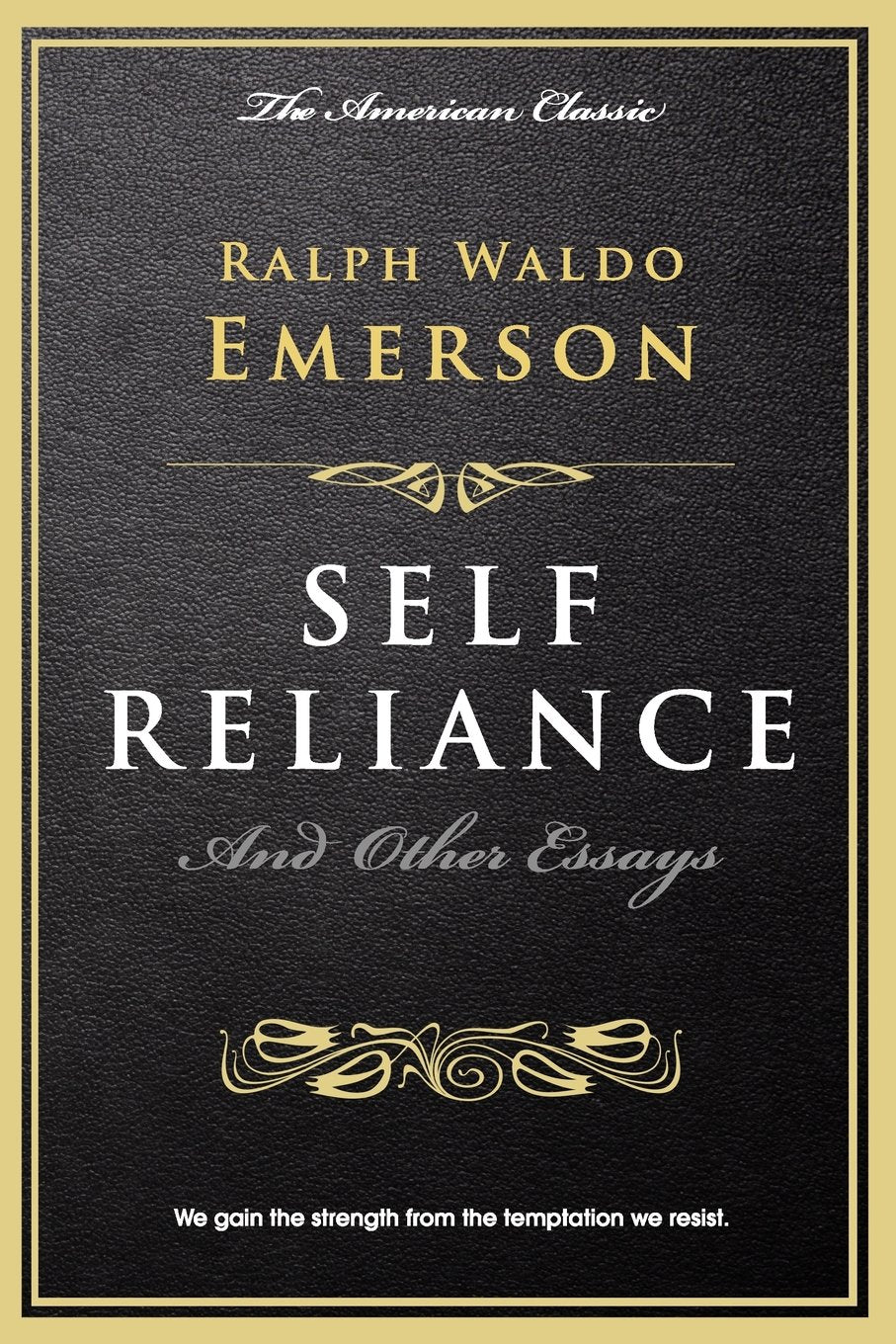
About Self-Reliance & Other Essays by Ralph Waldo Emerson: Timeless Ideas for Trusting Yourself and Living with Courage
Self-Reliance & Other Essays by Ralph Waldo Emerson brings together famous ideas in American thought. Emerson asks a bold question: what could happen if you stopped copying the crowd and started listening to your own honest mind? His answer is a call to think, grow, and live with courage.
The title essay, “Self-Reliance,” is the heart of the collection. It asks readers to trust their own ideas, even when other people do not agree. Together, the essays show why an independent mind still needs wisdom and a strong moral centre.
This is a classic book, but its main problem feels modern. Every day, people see endless advice, opinions, trends, and rules. It can become hard to hear your own voice. Emerson helps the reader slow down and ask a simple question: “What do I truly think?” That question can change how you study, work, create, choose friends, and face fear.
When the crowd becomes louder than your own mind
Many people know what it feels like to follow a path just because others expect it. A student may choose a subject to please everyone. A worker may hide a good idea because it sounds different. A young person may copy a trend to avoid being left out. Over time, this can make life feel small and borrowed.
Emerson offers a different way. He does not tell readers to be rude, selfish, or careless. He asks them to stop giving away their judgment. Listen, learn, and respect others, but do not let fear make every choice. A strong life begins when a person can test an idea, accept the truth, and act from a clear inner belief.
Independent thought can feel lonely. People may disagree or misunderstand. Emerson still argues that honest thought is better than safe imitation. His words can move readers from “What will people say?” to “What is right for me?”
What is Self-Reliance & Other Essays about?
This collection explores how a person can live with freedom, purpose, and attention. “Self-Reliance” focuses on trust in one’s own mind. “History” shows how the past lives through human experience. “Friendship” looks at honest bonds between people. “The Over-Soul” explores a shared spiritual life. “The Poet” describes the person who sees the world clearly and gives it new words. “Experience” faces change, loss, distance, and the limits of what people can know.
The widely read Dover Thrift edition also includes Emerson’s Harvard Divinity School Address. It challenges cold religious habit and calls for a living sense of truth. These works come from the nineteenth century, so some ideas need slow reading. Yet their main questions remain close to life today.
What should guide you when the world gives mixed advice? How can friendship stay real? Where does a new idea begin? Can nature teach us anything? What gives a life meaning? Emerson does not hand over one small answer. He gives readers a set of ideas to question, test, and carry into their own days.
Trust yourself without closing your mind
The phrase “trust yourself” can sound simple, but Emerson gives it weight. He does not mean that every first thought is right. He means that people should take their own minds seriously. They should not reject an honest insight only because it is new, unpopular, or hard to explain.
Real self-trust also includes growth. You may understand more tomorrow than you do today. Emerson warns against holding one old view only to look consistent. If a better truth appears, a thinking person must be free to change. This makes self-reliance active rather than stubborn. It asks for courage and also for attention.
That idea can help with daily choices. Before saying yes, ask whether you mean it. Before copying a plan, ask whether it fits your life. Before dropping a creative idea, ask whether fear is speaking. The book offers no fixed plan, but it can build a stronger habit of thought.
See history as part of human life
In “History,” Emerson asks readers to see the past as more than names and dates. Great events, old stories, art, and myths matter because human minds can still meet them. The same hopes, fears, struggles, and acts of courage appear in new forms across time.
This view makes history feel alive. By using imagination, readers can find human meaning inside old events. Students can ask not only, “What happened?” but also, “Why did people act this way?” Emerson turns study into a meeting between the past and the present.
Find a deeper kind of friendship
Emerson’s “Friendship” is not about having the largest group. It is about truth, respect, warmth, and space. A real friend does not need constant praise or false agreement. Good friendship lets two people be honest while still caring for one another.
This idea feels useful in a time of fast messages and public likes. Emerson values the quieter bond in which both people speak plainly and meet without pretending. He makes readers ask if they listen well, tell the truth with kindness, and respect another person’s space. Such simple questions can lead to stronger relationships.
Explore the soul, nature, and shared truth
“The Over-Soul” reaches into the spiritual side of Emerson’s thought. He suggests that human life is linked to a greater truth. People may feel separate in daily life, yet there is something larger that joins mind, soul, nature, and the search for goodness.
Readers do not need to accept every spiritual claim to find value here. The essay invites them to look beyond ego. It asks whether wisdom can come through stillness, wonder, conscience, and close attention. It also asks whether a person is more than status, money, or praise.
Discover why poets and creators matter
In “The Poet,” Emerson describes more than someone who writes verse. His poet is a person who truly sees. The poet notices meaning in common things and finds words that help others see them too. In this sense, the essay is also about artists, writers, thinkers, and anyone who can give fresh form to an idea.
The piece celebrates imagination, but it also demands honesty. Great work does not come from copying a fashionable style. It grows when a creator pays close attention to life and speaks in a voice that feels alive. This connects directly with self-reliance: original art needs a person who is willing to notice and say what others have missed.
Face life when clear answers do not come
“Experience” gives the collection a more difficult and human mood. Emerson looks at how life can feel distant, changing, and hard to hold. People want firm answers, but feelings move. Joy passes. Pain can make the world seem unreal. Even close events may be hard to fully understand.
This essay matters because it stops the book from becoming a plain speech about confidence. Self-trust does not remove grief, doubt, or confusion. A strong mind still meets loss. A thoughtful person still has days when life makes little sense. Emerson allows these limits to remain.
Still, he looks for movement. Life continues through change, action, surprise, and new sight. Readers who have faced a hard season may find this essay demanding but honest. It offers company when certainty is out of reach.
A classic that rewards slow reading
Emerson’s style is rich, tight, and full of ideas. One paragraph can hold enough thought for a whole journal page. This is not always a book to rush through. It works best when the reader pauses, rereads, and asks what each key idea means in real life.
Keep a pencil nearby. Underline one line that surprises you. After each essay, name the main idea in one sentence. Decide where you agree, disagree, and want to test the thought. This turns an old classic into a live talk between the author and you.
The deeper reward is a clearer view of your beliefs. You may notice where fear controls a choice, habit has replaced thought, or a true idea needs courage. Even disagreement can help because it makes you explain your own view.
What makes this collection worth owning
The book brings major pieces of Emerson’s thought into one short, focused volume. It covers personal courage, independent thinking, friendship, history, creativity, spiritual life, grief, and change. Each essay can stand alone, yet the pieces speak to one another. The reader sees the same call return in many forms: wake up, look closely, and do not live by imitation alone.
It is useful for both first reading and later return. A student may use it to understand American Transcendentalism. A writer may revisit “The Poet.” A reader making a hard choice may return to “Self-Reliance.” Someone thinking about faith may spend more time with “The Over-Soul” or the Divinity School Address.
Because the book raises questions instead of giving a fixed program, it can stay meaningful as a reader grows. A strange line may later feel clear, while a brave idea may need more care. The book keeps asking the reader to take part.
Who will enjoy reading it?
Choose this collection if you enjoy philosophy, personal growth, classic essays, nature, spiritual thought, or books about independent minds. It suits students, teachers, writers, artists, leaders, and thoughtful readers who want more than quick motivation. It can also make a meaningful gift for someone beginning university, changing careers, starting a creative project, or learning to make brave choices.
The book works well for a reading group because people may read Emerson in different ways. One may love his courage. Another may ask if self-reliance can go too far. That difference can start a rich talk about duty, kindness, and freedom.
This is an older text, so some words may feel formal. Read slowly, use notes when needed, and begin with the title essay. You do not need to understand every line at once. Meet the ideas and let your understanding grow.
A comfortable copy for study and reflection
Bookish Wonderland offers a reader-friendly copy designed for steady reading and later return. Premium eye-soothing cream paper gives each page a soft look. Crystal-clear printing keeps dense lines easy to follow. High-quality stitched and glue binding supports regular use, while a durable finish helps protect the book in a bag or on a shelf.
This copy is a practical choice for personal reading, class notes, a home library, a book club, or a thoughtful gift. The physical design helps readers focus on the essays, mark key thoughts, and come back to important pages without making the reading experience feel tiring.
Easy ordering from Bookish Wonderland
When comparing the Book price in Bangladesh for Self-Reliance & Other Essays by Ralph Waldo Emerson, look at reading comfort, print clarity, binding, and delivery service along with cost. A classic that invites notes and rereading deserves a copy made for regular use.
Cash on Delivery is available nationwide, with service inside and outside Dhaka. Fast or urgent delivery is available in Dhaka when you need the book soon. Contact Bookish Wonderland through Facebook or Instagram for the current price, stock, edition, delivery time, or customization help.
Begin with one brave, honest thought
You do not need to agree with every page to gain something strong from this book. Emerson’s gift is the question he leaves in the reader’s mind: are you living from a truth you have tested, or from a rule you never chose?
Open the book when the crowd feels loud, a choice feels hard, or a creative idea needs courage. Let the essays challenge old habits and wake up your power to notice, judge, and choose.
Order Self-Reliance & Other Essays by Ralph Waldo Emerson from Bookish Wonderland today. Bring home a lasting classic that can help you think with care, trust your honest voice, and build a life shaped by courage instead of imitation.
If you require any customization or have any questions, please inbox us via FB or Insta.
| Primary Specification | |
| Author | Ralph Waldo Emerson |
| Narrator | Mikael Naramore |
| Genre | Philosophy, Transcendentalism, Essays |
| ISBN-13/ISSN | 978-1684222087 |
| ISBN-10 | 1684222087 |
| Publisher | Martino Fine Books |
| Publishing Date | April 16, 2018 |
| Language | English |
| Reading Age | 14+ |
| Format | Printed Book |
| Physical Specification & Quality | |
| Paper Quality | Premium eye-soothing cream paper |
| Binding Quality | High quality stitched and glue binding (for longevity) |
| Print Quality | Crystal-clear print |
| Pages | 106 pages |
| Country | USA |
| Logistics Information | |
| Weight | 128 gm |
| Length | 8.5 inches |
| Width | 5.6 inches |
| Height | 0.27 inch |