

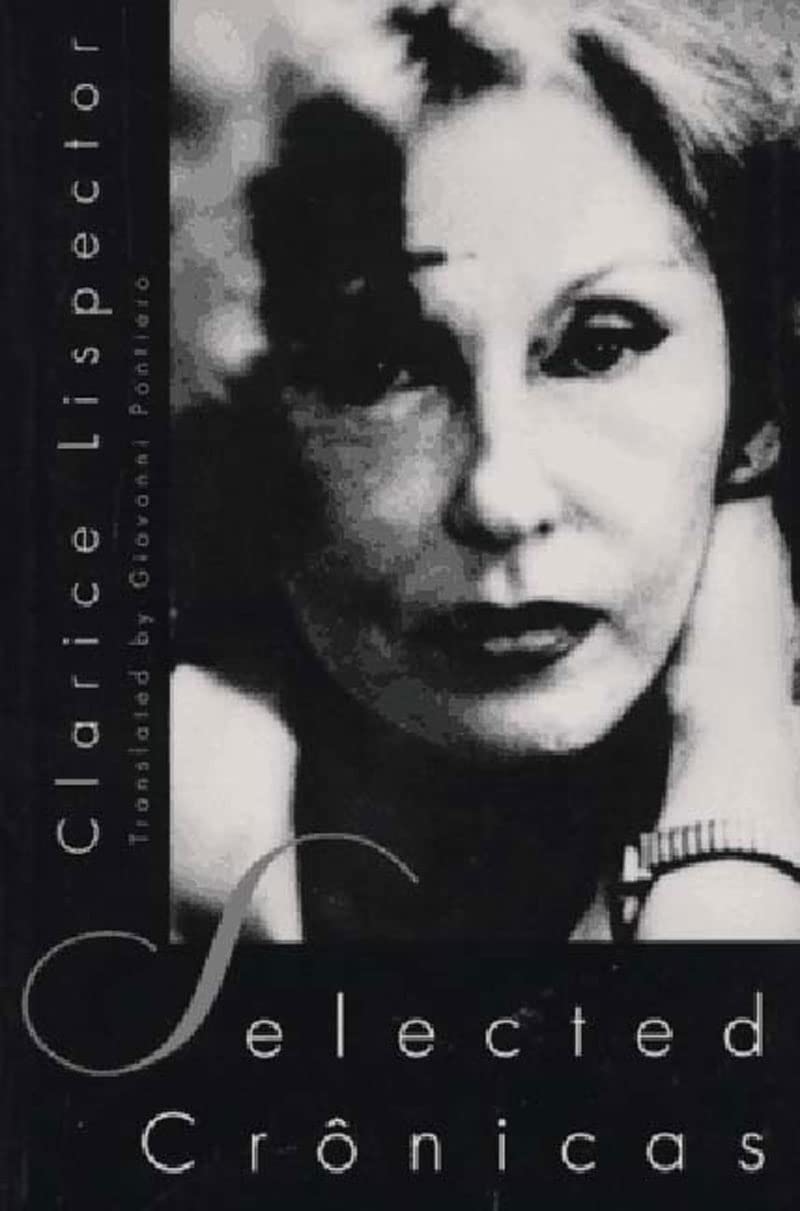
About Selected Cronicas Book by Clarice Lispector: 156 Intimate Pieces on Daily Life, Love, Memory, and Writing
Selected Cronicas Book by Clarice Lispector gathers 156 short pieces that make ordinary life feel new. A taxi ride, a pet, a child’s question, a memory, a strange thought, or a quiet fear can become a doorway to something much larger. Lispector looks at small moments until they reveal wonder, pain, humour, beauty, and mystery.
These pieces first appeared in her Saturday column for the Jornal do Brasil, a leading newspaper in Rio de Janeiro. She wrote the column from 1967 to 1973 and used it with unusual freedom. Instead of staying with one topic or form, she moved between personal memories, essays, short stories, aphorisms, conversations, questions, and sudden ideas.
Translated from Portuguese by Giovanni Pontiero, this English collection lets readers meet a warm, playful, and direct side of Lispector. Her novels can feel private and dreamlike, but the crônicas often sound like a writer speaking across a table. She still asks deep questions, yet she brings them close through daily life.
When a famous writer feels hard to approach
Many readers hear that Clarice Lispector is brilliant, but they also hear that her books can be difficult. Her novels often follow thought more than action. A first-time reader may worry about hidden meanings, unusual sentences, or stories that do not move in a normal line.
Selected Crônicas offers a welcoming place to begin. Most entries are short, so you can read one piece without following a long plot. If a thought feels strange, you can pause and return later. Another entry may be simple, funny, or open like a friendly chat.
The collection does not remove Lispector’s mystery. It gives that mystery a familiar home. She thinks about cooking, friendship, money, children, animals, work, loneliness, and the act of writing. These subjects help a new reader enter her world through things already known.
What is Selected Crônicas about?
Selected Crônicas is a collection of newspaper writings rather than one novel with a single story. The word crônica names a Brazilian form that can mix journalism, memoir, fiction, reflection, and everyday observation. A crônica may begin with something that happened that morning and end with a question about being alive.
Lispector uses this open form to follow her mind wherever it needs to go. She records meetings, remembers earlier years, speaks about books, notices animals, answers readers, and studies her own feelings. Some pieces tell clear events. Others are only a page of thought, a small scene, or a few lines that hold one sharp idea.
Together, the 156 entries create a changing portrait of a writer and her world. They show public life in Rio, private life at home, and the inner life that can appear in any place. The result feels like a notebook, newspaper column, story collection, and personal conversation living inside one book.
The crônica turns a small event into discovery
A crônica does not need a grand plot. Its power often comes from attention. Lispector can watch a person, hear a sentence, or remember an animal and then follow the feeling beneath it. What looked unimportant begins to carry a question about love, fear, identity, or freedom.
This makes the book useful for readers who enjoy slow noticing. You may finish an entry in minutes, but the idea can remain for hours. The best pieces do not explain everything. They leave a door open so the reader can add a memory or question of their own.
The form also gives Lispector room to change her tone quickly. One page may feel like a short tale. The next may be an honest confession, a joke, a letter, or a thought that is almost a poem. That movement keeps the collection lively even when read over many days.
Meet the person behind the literary name
Lispector does not appear as a distant figure in these pages. She writes about doubt, deadlines, money, family, tiredness, readers, and the problem of finding words. She can sound sure in one piece and uncertain in the next. That change makes her voice feel human rather than carefully polished.
Her contact with newspaper readers shapes the collection. A column enters homes every week, and Lispector often writes with that closeness in mind. She may explain herself, challenge an idea, share a private memory, or speak as if she expects an answer.
Readers who know her novels may be surprised by this open voice. The same deep mind is present, but it is joined by warmth, humour, and daily detail. The book does not solve the mystery of who Clarice Lispector was. It makes the mystery more personal and inviting.
Love and loneliness share the same space
Love in Selected Crônicas is not limited to romance. It can mean care for a child, memory of a friend, closeness to an animal, attention to a stranger, or the wish to be understood. Lispector shows how love can make a person feel alive while also making loss possible.
Loneliness appears beside that need for connection. Even in a busy city or family home, a person may remain partly unknown. Words can bring people together, but they can also fail. Lispector keeps returning to the space between what someone feels and what that person can say.
This emotional honesty gives the collection lasting value. The events belong to another time, yet the feelings remain familiar. Readers who have struggled to explain themselves may recognise the relief and danger of speaking openly.
Writing becomes part of the story
Lispector often turns her attention toward her own work. She asks why people write, where an idea begins, what words can hold, and what happens when language fails. These questions are not presented as formal lessons. They grow from the daily task of making a newspaper column.
Her honesty can encourage new writers. She shows that uncertainty does not always mean a lack of talent. Doubt may be part of looking closely. A blank page can feel frightening, but it can also offer a place where a thought becomes visible for the first time.
Readers interested in journaling, essays, memoir, flash fiction, or creative nonfiction can learn from the range of forms. Lispector demonstrates that one voice can move between fact and imagination without losing its centre. She also shows how a short piece can hold the emotional weight of a much longer work.
Rio de Janeiro is more than a background
The crônicas grew from a newspaper relationship with Brazilian readers, and Rio is part of their life. Streets, homes, taxis, social meetings, and public habits create the space around Lispector’s thoughts. The city brings strangers close while allowing each person to remain private.
Readers do not need detailed knowledge of Brazil to follow the book. Daily scenes provide a clear way in. At the same time, the local setting matters because the crônica belongs strongly to Brazilian newspaper culture. Its mix of public address and personal freedom shapes the voice on every page.
For readers in Bangladesh, this form may feel both new and familiar. Newspaper columns can also turn public space into personal talk. The book offers a chance to meet Rio through one writer’s eye while noticing how city life connects people across countries.
Giovanni Pontiero carries the voice into English
Translation is important in a book built from tone, rhythm, and sudden changes. Giovanni Pontiero brings these Portuguese texts into English while preserving their movement between plain speech and poetic thought. The result allows an English reader to hear intimacy without making the voice feel flat.
Because the pieces change form, the translator must follow many kinds of language. Conversation needs to sound natural. Reflection needs room to breathe. A brief line must keep its force, while a playful passage must not lose its timing.
This edition is a strong choice for readers exploring translated literature. It can also support discussion about how culture, voice, and genre travel from one language to another. Readers who know Portuguese may enjoy comparing choices, while English-only readers can simply follow the living flow of the prose.
What makes this collection worth keeping
The book offers 156 separate entries, so it gives both variety and strong rereading value. You can read it from start to finish or open it at random. A piece that feels light today may feel deeper after a new experience, while a difficult page may become clear at another time.
The collection also gives students and writers many tools to study. It shows how voice creates closeness, how a small detail can carry a large idea, and how nonfiction may borrow the freedom of fiction. These benefits make the book more than a one-time read.
Who will enjoy Selected Crônicas?
Choose this book if you enjoy personal essays, literary columns, memoir, flash fiction, philosophy, or writing about everyday life. It is well suited to readers of Virginia Woolf, Franz Kafka, Katherine Mansfield, Hélène Cixous, or other writers who explore thought and inner experience.
The book is also a good starting point for anyone curious about Clarice Lispector. Readers who already love The Hour of the Star, The Passion According to G.H., or her short stories can discover another side of her voice. New readers can begin with brief entries before moving to the novels.
Use it for personal reading, a literature class, a translation course, a creative writing group, or a book club. It can also be a thoughtful gift for someone who keeps a journal or enjoys books that make common life look strange and bright.
Some entries touch on death, fear, loneliness, social pressure, family pain, and emotional uncertainty. The treatment is literary rather than graphic, but readers looking only for a simple, plot-led book should know that this collection values thought, mood, and open questions.
A reader-friendly copy for returning often
Bookish Wonderland offers a premium copy designed for short reading sessions, study, and future returns.
- Premium eye-soothing cream paper gives every page a soft appearance.
- Crystal-clear printing keeps brief entries and longer reflections easy to follow.
- High-quality stitched and glue binding supports lasting use.
- A durable finish helps protect the book at home or while travelling.
These features suit a collection that invites readers to mark a favourite thought, revisit an entry, or open the book in a new place. The copy works well for a home library, class, book club, writing desk, or meaningful gift.
Easy ordering from Bookish Wonderland
When comparing the Book price in Bangladesh for Selected Cronicas Book by Clarice Lispector, consider translation, paper comfort, print clarity, binding quality, and delivery support together with cost. A book made for frequent browsing should remain comfortable each time you return.
Cash on Delivery is available nationwide, with service inside and outside Dhaka. Fast or urgent delivery is available in Dhaka when the book is needed soon. Contact Bookish Wonderland through Facebook or Instagram for the current price, stock, edition, delivery time, or customization support.
Let an ordinary moment become something more
Open Selected Crônicas anywhere. You may meet a child, an animal, a taxi driver, a reader, a memory, or a question with no easy answer. In a few lines, the familiar world can shift and show a side you had not noticed.
Read one piece in the morning and carry its thought through the day. Return at night and find a different voice waiting. Share a favourite entry with someone who loves small books of large ideas, or keep the collection close for quiet moments of your own.
Order Selected Cronicas Book by Clarice Lispector from Bookish Wonderland today. Bring home 156 intimate and surprising pieces that turn daily life into art and make reading feel like a private conversation with one of Brazil’s most original writers.
If you require any customization or have any questions, please inbox us via FB or Insta.
| Primary Specification | |
| Author | Clarice Lispector |
| Translator | Giovanni Pontiero |
| Genre | Literary Essays, Autobiographical Prose, Literary Fiction, Philosophical Literature |
| ISBN-13/ISSN | 978-0811213400 |
| ISBN-10 | 0811213404 |
| Publisher | New Directions |
| Publishing Date | November 17, 1996 |
| Language | English |
| Reading Age | 18+ |
| Format | Printed Book |
| Physical Specification & Quality | |
| Paper Quality | Premium eye-soothing cream paper |
| Binding Quality | High quality stitched and glue binding (for longevity) |
| Print Quality | Crystal-clear print |
| Pages | 296 pages |
| Country | Brazil |
| Logistics Information | |
| Weight | 321 gm |
| Length | 8.5 inches |
| Width | 5.6 inches |
| Height | 0.6 inch |